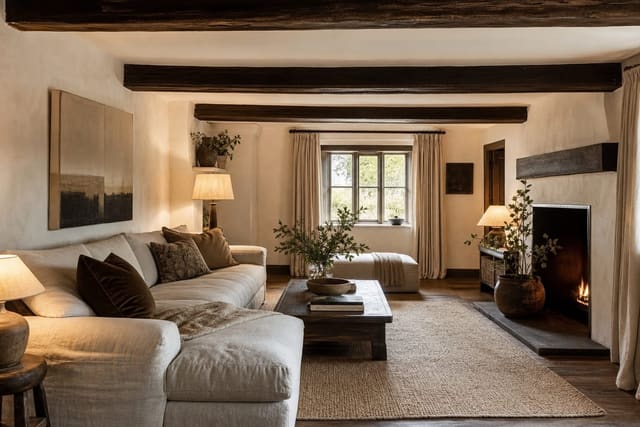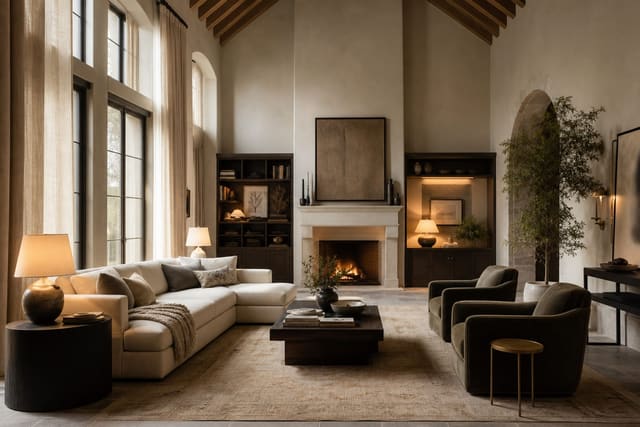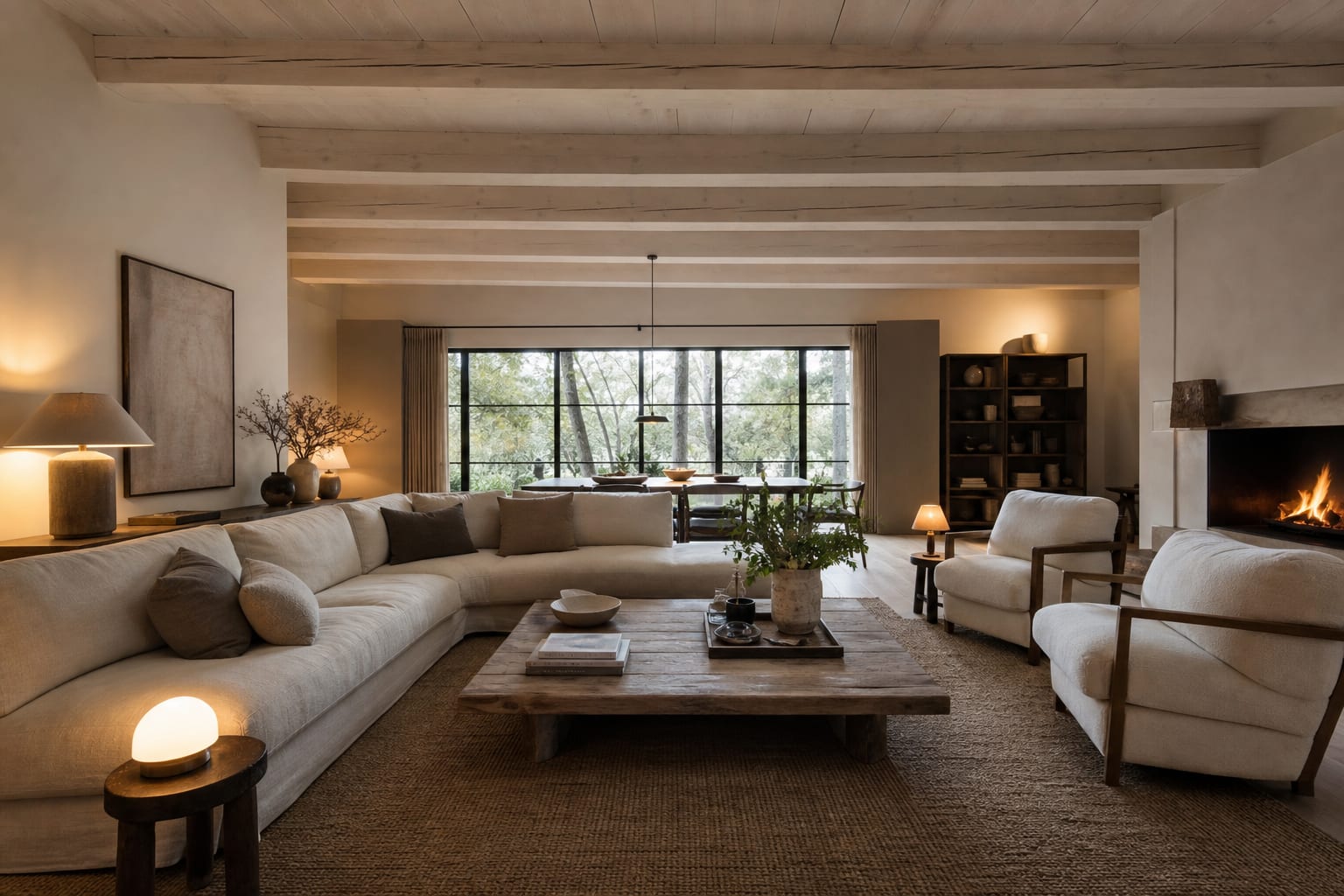
Exposed beam ceiling modern design works by painting or staining beams to reduce contrast, adding warm layered lighting, and choosing low, broad furniture that answers the ceiling's visual weight. Beams read modern when they feel like architecture, not theme. Get the color and light right and the rest of the room follows.
What makes exposed beams feel modern instead of rustic?
The fastest shift is color, not demolition. Dark brown beams against a white ceiling can look handsome in a tall, sunlit room, but in an 8-foot room they often feel like stripes pressing down overhead. Decide whether beams should blend, contrast softly, or become one controlled feature.
- Blend: paint beams the same color as the ceiling in low, narrow, or busy rooms.
- Soft contrast: use one or two shades deeper than the ceiling for definition without a cabin effect.
- Full contrast: keep black, espresso, or raw orange wood only where height, daylight, and quiet furnishings support it.
Finish matters as much as color. Glossy varnish makes old beams look sticky and dated, especially near recessed lights. A matte clear coat, diluted stain, limewashed wood, or satin paint usually reads more current; calm an orange or gray undertone rather than burying good grain automatically.
If your beams make the ceiling feel lower, review the proportion advice in rooms with low ceilings and dark beams before choosing a dramatic finish. The darker the beam, the more disciplined the rest of the room needs to be.
Which beam and ceiling color combination works best?
The cleanest modern beam rooms keep beam, ceiling, and wall color in one undertone family. Warm oak beams pair better with warm white, clay, mushroom, or greige than icy white paint; charcoal beams need walls with enough depth to hold them.
Sample paint directly beside the beam, not across the room, using at least two 12x12 inch swatches viewed morning, afternoon, and after dark. Flat ceiling paint hides uneven plaster better than eggshell, and satin on beams is usually safer than high gloss.
| Ceiling height | Recommended approach |
|---|---|
| 8 feet | Beams and ceiling in the same warm white; let texture do the work |
| 9-10 feet | Soft contrast: pale plaster ceiling with natural oak beams, or clay walls with slightly deeper beams |
| 10+ feet | Stronger contrast works if furniture below has enough scale |
For fake beams, use even more restraint. Faux beams that are too dark, too evenly grained, or too chunky can look staged; keep a 4-6 inch face in most average rooms, and reserve 10-inch beams for rooms with real height. If comparing boxed beams to a grid ceiling, the costs in a coffered ceiling DIY cost guide can help decide between beams, coffers, or less carpentry.
Test this on your own room photo with ReDesign before you commit, keeping the doorway, walls, windows, main furniture, and fixed features visible so the preview solves the room you actually have.
How should furniture, rugs, and lighting balance the beams?
A beamed ceiling feels modern when the room below has enough visual weight to answer it. Thin furniture under heavy beams looks nervous; overly bulky furniture looks trapped. The middle path is low, broad, and clean: sofas around 30-34 inches high, simple-armed lounge chairs, long consoles, and a rug large enough to organize the floor.
- Use an 8'x10' rug for a compact seating group, 9'x12' for a full sofa with two chairs.
- Let front legs sit on the rug by 6-10 inches.
- Keep 14-18 inches between sofa and coffee table.
Lighting should live both on and below the ceiling. Recessed lights between beams work, but avoid peppering every bay with identical bright dots; use fewer, carefully aligned fixtures at 2700K for living rooms and bedrooms or 3000K for kitchens and work areas. Add side light with table lamps, sconces, picture lights, or a floor lamp so beams aren't the only thing visible after sunset.
Mount curtain rods 4-8 inches above the casing (or 2-4 inches below the beam line if the architecture allows), extending 6-10 inches beyond each side. If the room runs dim, pair beam updates with the same moves used to fake natural light in any room: matte pale surfaces, warm layered lamps, and mirrors aimed at real daylight.
Common exposed beam ceiling mistakes
- Staining every beam darker for drama. In rooms under 9 feet, dark beams can chop the ceiling into strips; test a painted or softened finish first.
- Matching every wood tone to the beams. Repeat the wood once or twice, then bring in plaster, linen, wool, metal, or painted furniture so beams can breathe.
- Hanging a tiny pendant under a heavy beam. Over a dining table, keep the fixture bottom 30-36 inches above the tabletop; maintain roughly 7 feet of clearance in a walking path.
- Leaning on rustic accessories. Iron wagon-wheel fixtures, barn doors, and distressed signs drag good beams toward theme-restaurant territory; modernizing usually means subtraction.
- Ignoring beam spacing when placing furniture. Center the main furniture zone under the most logical bay, or make an off-center layout look deliberate with a larger rug and balanced lighting.
How can you preview a beamed ceiling before committing?
Beams are hard to judge from a paint chip because the ceiling changes the whole room at once. Upload a straight photo and test beam finish, ceiling color, rug size, lighting, and furniture scale together before you sand, paint, or order a fixture.
Prompt with the actual condition: "living room with exposed ceiling beams painted warm white, matte plaster ceiling, low linen sofa, 9'x12' wool rug, oak coffee table, black picture lights, 2700K lamps, no rustic decor." Run a second version in natural oak, a third in taupe paint, and a fourth in darker beams only if the ceiling height supports it.
Judge proportion and mood: does the ceiling still feel heavy, do the beams look intentional from the doorway, does the rug give the furniture enough weight below the architecture? Renters can preview reversible changes (bulbs, rugs, sconces, curtain height, art scale); owners can test permanent work like stripping varnish, painting beams, or changing ceiling paint.
Frequently Asked Questions
Can a beamed ceiling work in a modern room?
Yes. Modern beam treatments include painting beams white to match the ceiling, high-contrast dark stain against white plaster, or rift-cut oak wraps. All three read intentional next to modern furniture instead of rustic.
Should beams match or contrast the ceiling color?
For a calm room, paint beams the same color as the ceiling so they read as structure, not decoration. For a bolder look, dark beams against a white ceiling create a graphic line, but this needs enough height and daylight to carry.
What furniture style pairs with modern beamed ceilings?
Low-profile sofas under 32 inches tall, leather or boucle upholstery, and blackened-steel or rift-oak case goods work best. Avoid carved or heavily distressed pieces, which push the room back toward a rustic reading.
What lighting works with modern beamed ceilings?
Use warm 2700-3000K recessed or surface-mount fixtures between the beams plus one statement pendant on the central beam. Avoid yellow incandescent bulbs and avoid pot lights that spotlight every beam edge.
Should the floor pick up the beam tone?
Yes. Repeating the beam tone in a warm white oak or walnut floor ties the beams into the room's overall structure. A clashing floor tone makes the beams look like an afterthought rather than part of the design.
> Try this: Ready to see this on your own room? Open ReDesign and run the preview.
Three transformations to try
1. Beams painted white to match ceiling 2. Dark stained beams against white plaster 3. Rift-cut oak beam wraps with low sofa