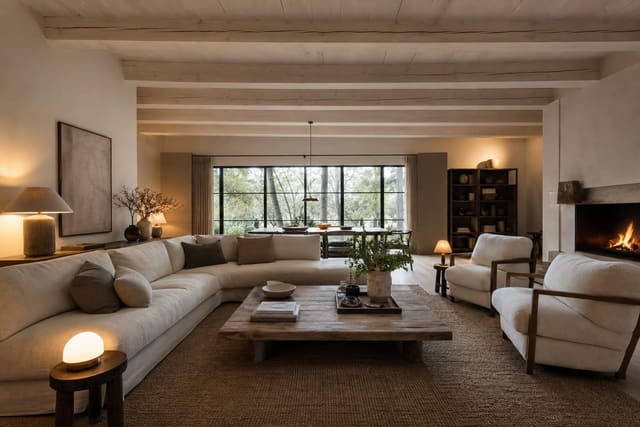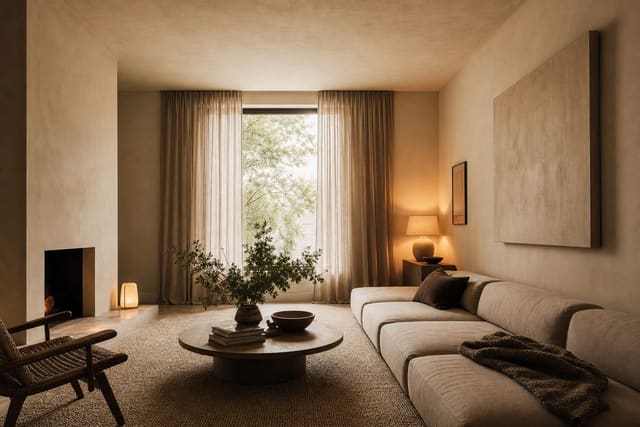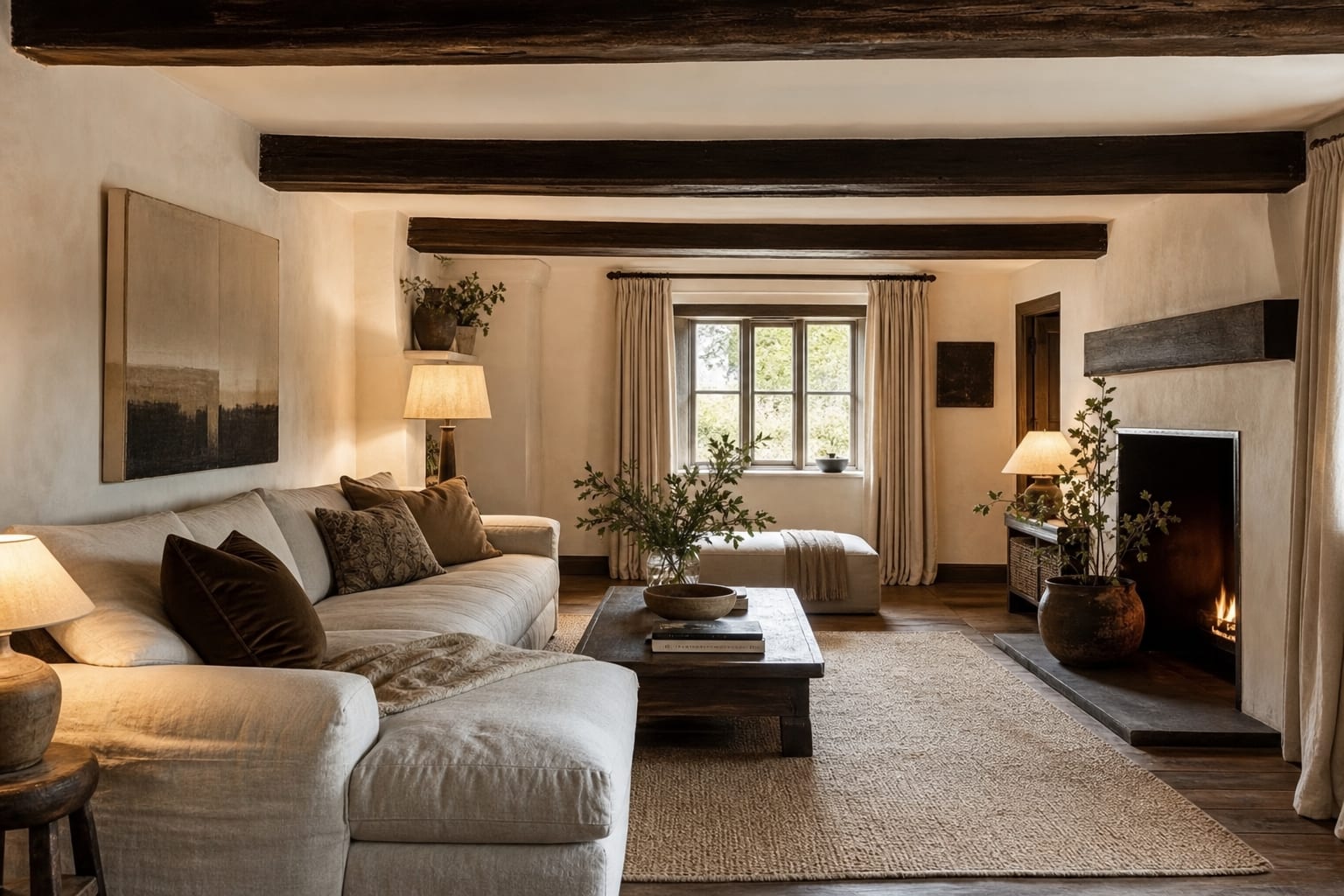
Low ceiling dark beam room design works when ceilings run at least 8 feet, beams sit flush on the ceiling plane rather than boxed down, walls stay light, and warm layered light bounces off the beam tops. Skip any of those and dark beams shorten the room. Done right, beams read as rhythm and character instead of a lid pressing down on the space.
What makes low ceilings with dark beams feel intentional?
Reduce contrast around the ceiling, add warm light at multiple heights, and choose lower furniture so the beams feel deliberate rather than oppressive. The room doesn't need pale plaster pretending the beams aren't dark — it needs enough brightness below them that the lines read as structure, not weight.
Start with the infill between the beams. Muddy beige, cold gray, or nicotine cream makes beams look lower; a warm white, chalky cream, or soft plaster tone keeps the ceiling bright without making the timber look dirty by comparison next to stark gallery white.
Walls should match that family of tone. Avoid a hard dark picture rail or heavy crown molding on an 8-foot or lower ceiling — it chops the wall visually before the beams even start. Use low ceiling room design tricks as your base layer: strong horizontal lines stay low, curtains run as high as possible, and the upper third of the room stays uncluttered.
How much contrast can the beams carry?
The real decision isn't whether beams should be dark — it's how much contrast the room can hold before charm turns into compression. Dark beams look striking against pale infill when the rest of the room has air: light walls, low furniture, a pale rug, lamps that glow upward. They turn oppressive when everything else goes dark too — espresso floors, black fixtures, heavy leather, dark curtains, a tall cabinet nearly touching the beams.
If beams are original, don't paint them white on reflex. Clean them, strip orange varnish if needed, and consider a softer brown or muted charcoal stain only if the current finish is glossy or red — matte or satin reads calmer than a shiny beam flashing across a low ceiling.
If beams are fake, be ruthless. A faux beam sitting 6 inches below an already-low ceiling has to earn its place; slimming it, removing extra cross pieces, or painting it closer to the ceiling color may beat celebrating a detail that steals headroom without adding history. Compare your space against modern beamed ceiling design before adding rustic lanterns or heavy farmhouse pieces — a dark beam looks cleaner over simpler, lighter furniture.
Test the room with ReDesign before committing — keep doorway, walls, windows, main furniture, and fixed features visible so the preview solves your actual room.
Which dark beam ideas actually earn their inches?
- Low, horizontal furniture with visible legs. A sofa back around 30-34 inches, coffee table 16-18 inches high, and open-base chairs keep the lower room relaxed, softening the beam line above.
- One large pale rug instead of scattered dark mats. An 8x10 rug suits a compact seating group; 9x12 balances a larger room with multiple beams overhead — the floor should bounce light back up.
- Curtains as high as the beam layout allows. Use any 4-8 inch gap between casing and beam; if there's none, mount an inside-frame Roman shade instead of forcing hardware into the conflict zone.
- Layered light at multiple heights. Warm bulbs around 2700-3000K, combined across table lamps, floor lamps, picture lights, and sconces — a single central fixture leaves the ceiling looking dark and flat. Weak daylight rooms can also borrow from fake natural light for any room.
- Shallow, quiet storage. A 12-15 inch deep bookcase feels lighter than a 20-inch dark armoire rising into the beam line; if you need height, pick one tall piece and let the walls around it breathe.
What mistakes make low beamed ceilings feel worse?
- Painting every wall dark. One deep wall or a dark fireplace breast can work, but four dark walls under dark beams needs much lighter lamps, rugs, and upholstery to balance.
- Hanging a pendant into the lowest point. Under 8 feet, use a flush mount, a semi-flush fixture under 12 inches tall, or wall lighting instead of a dangling chandelier.
- Using tiny art between heavy beams. Choose one larger piece, roughly half to two-thirds the furniture width, hung 6-10 inches above it for a confident center below the ceiling.
- Overloading the beam bays with texture. Whitewashed boards or plaster look calm; high-contrast stripes or multiple ceiling colors make the eye count every low section.
- Buying tall, dark furniture for a "traditional" look. Cottage and farmhouse rooms can still use slimmer silhouettes, pale upholstery, and lighter woods — character doesn't require heaviness.
How does AI design help with dark beam ceilings?
The hard part is judging weight — a paint chip can't show whether beams stay charming once walls brighten, and a lighting plan on paper can't show whether a corner still looks gloomy at night. Upload a doorway shot, a shot of the main seating or bed wall, and an angle showing the beams running across the room, keeping windows and furniture visible.
Run a few directions: dark original beams with warm white infill, pale walls, low linen furniture, 3000K sconces, and a wool rug; then softened brown beams with cream walls, inside-mount shades, low oak storage, and no pendant; then a painted-beam version if the timber is fake or too busy for the room.
Check the doorway view first — do the beams read as a feature or press the room down before you notice the furniture? Is the rug lightening the floor enough, and are the lamps creating glow at face height instead of leaving a dark stripe field overhead?
AI won't tell you the safe way to strip old beams or verify structural timber — see the complete guide to what AI design does and doesn't do for those limits. It will show whether the room needs more contrast, softer light, or lower furniture before you spend a weekend repainting the ceiling.
After choosing a direction, test it physically: tape curtain heights, place lamps where planned, lay a light blanket where a pale rug would sit, and prop cardboard where art might hang. A low beamed room changes fast once the lower half gets brighter and calmer — the beams don't need to disappear, just cleaner contrast, warmer light, and fewer competing lines near the ceiling.
Frequently Asked Questions
Do dark beams shorten a low ceiling?
They can — beams hanging below the ceiling plane make the room read shorter, but beams mounted flush against a light ceiling read as graphic detail without lowering perceived height.
How wide should beams be in a low-ceiling room?
Keep beams 4-6 inches wide and 3-4 inches deep for a slim profile. Chunky beams over 8 inches overwhelm ceilings under 9 feet and make the room feel shorter.
Should I paint walls light if I have dark beams?
Yes. Warm white or cream walls give dark beams a high-contrast architectural frame, while dark walls paired with dark beams compress the room and erase the ceiling detail entirely.
What lighting works best with dark beams in low ceilings?
Wall sconces and recessed lights set between beams work best; surface-mount ceiling fixtures compete with the beams visually and add bulk exactly where the room has the least height to spare.
Can AI preview dark beams in my actual room?
Yes. Upload a straight room photo and AI previews beam spacing, profile, and finish against your existing ceiling height and lighting before you commit to any physical install.
> Try this: Ready to see this on your own room? Open ReDesign and run the preview.
Three transformations to try 1. Slim dark beams flush to ceiling 2. Dark beams + warm white walls 3. Sconce-lit room with dark beams