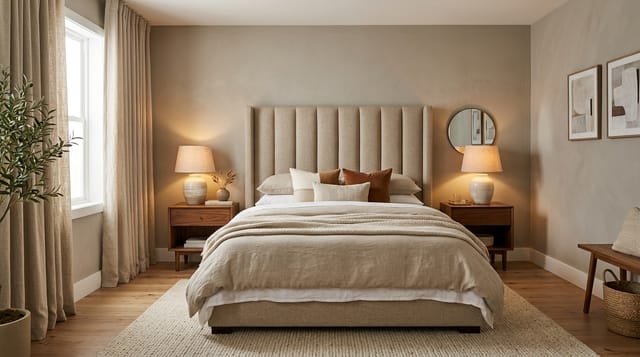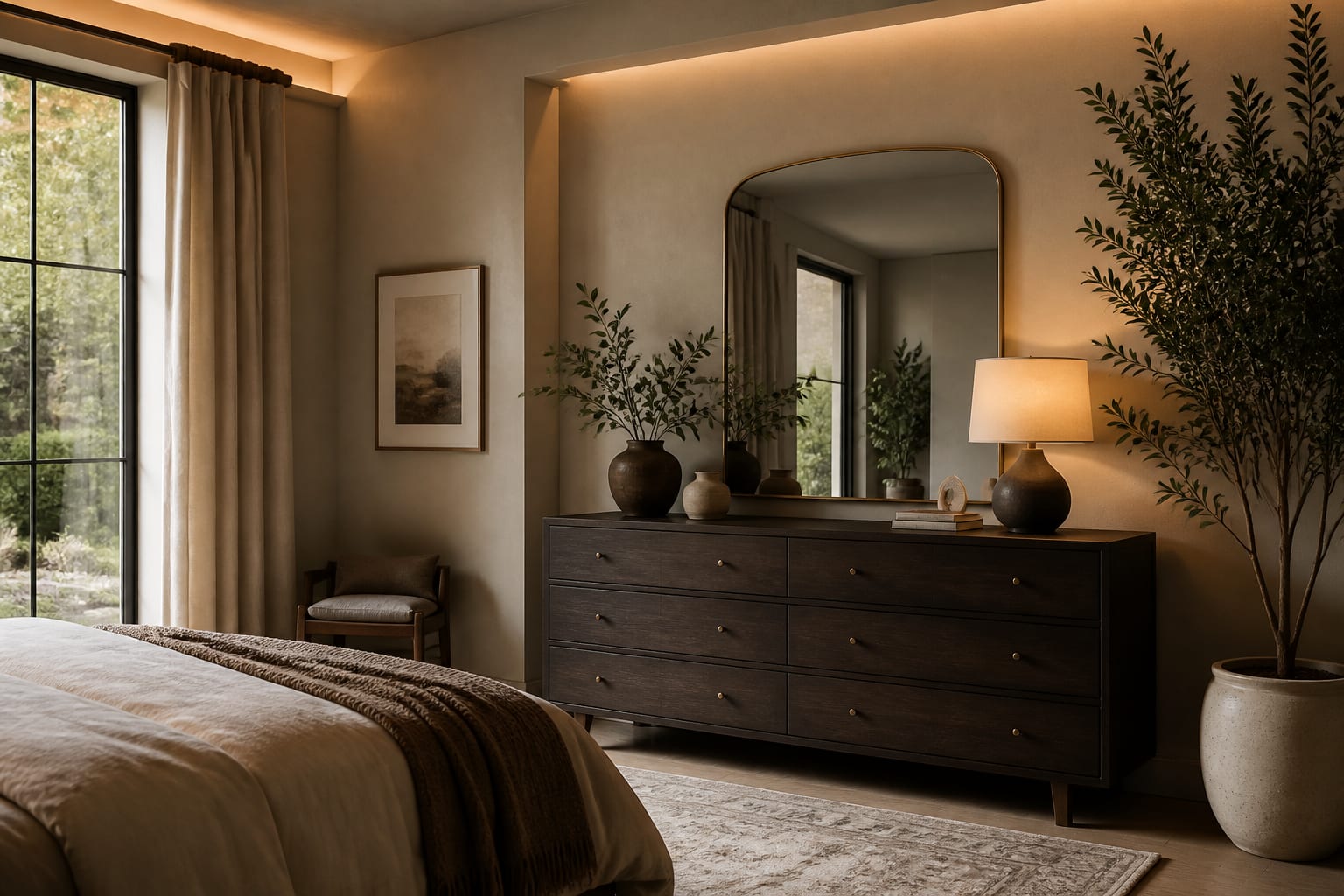
A dresser is the one bedroom piece expected to do two jobs at once, and most people only plan for one. They buy for storage and forget the dresser occupies a prime stretch of wall, seen every single day. The smarter approach treats it as both a workhorse and a focal point: choose a height that doubles as a surface for a lamp and art, a finish that holds the room together, and a footprint that leaves clear walking paths. A well-chosen dresser can carry a wall the way a console carries an entry. These ideas cover sizing, styling, and the mistakes that turn it into clutter.
How to size and place a bedroom dresser
Start with the wall, not the drawer count. A dresser that is too small floats awkwardly on a wide wall, while an oversized one crowds the room and blocks light from a window. Measure the available wall and aim to fill roughly two-thirds to three-quarters of it. A long horizontal dresser, often called a 6-drawer or double dresser at around 60 inches wide and 32 to 36 inches high, suits a generous wall and gives you a wide top to style. For a narrow wall or a corner, a vertical chest of drawers near 30 inches wide stacks storage upward and keeps the footprint small.
Placement matters as much as size. The dresser wants a clear approach: leave at least 30 inches in front so the deepest drawer can open fully and you have room to stand and fold. Avoid placing a tall chest where it blocks a window or fights the door swing. In a primary bedroom, a long dresser on the wall opposite the bed creates a natural balance with the headboard, and the surface becomes a place for a lamp and a few objects. For a wider plan of how the dresser fits with the bed, nightstands, and lighting, our AI bedroom design ideas guide shows how the pieces resolve into one layout.
Choosing a finish and style that lasts
The finish does more to set the room's tone than the silhouette. A warm walnut or white-oak dresser brings grain and softness and pairs with almost any palette. A painted dresser in a deep green, navy, or charcoal becomes a deliberate accent, while a creamy white or pale gray keeps a small room feeling open. Match the dresser's wood tone to at least one other piece in the room, such as the bedside nightstands or the bed frame, so the furniture reads as a collected set rather than mismatched leftovers.
Hardware is the fastest way to change a dresser's personality. Swapping builder-grade knobs for unlacquered brass cup pulls or long matte-black bar handles can shift a plain chest from generic to tailored for under $60. Pay attention to construction too: dovetailed drawers, solid-wood or plywood cases, and smooth-gliding runners separate a dresser that lasts 20 years from a particleboard box that sags in two. A quality solid-wood dresser runs roughly $800 to $2,500, while a well-built flat-pack with upgraded hardware can look far more expensive than its $300 to $500 price.
Styling the top like a designer
A bare dresser top looks unfinished, and a cluttered one looks chaotic. The reliable method is to style in three heights so the eye travels. Start with something tall on one side, such as a table lamp at 24 to 28 inches or a piece of framed art leaned against the wall. Add a medium element like a short stack of books, a ceramic vase, or a small plant. Finish with something low and useful: a tray to corral jewelry and keys, or a shallow dish.
Keep these styling principles in mind when arranging the surface:
- Group objects in odd numbers, usually threes, so the arrangement feels collected rather than rigid.
- Hang art or a mirror so its bottom edge sits 6 to 10 inches above the dresser top, tying the piece to the surface below.
- Leave at least a third of the top empty so the dresser still functions as a place to set things down.
- Repeat one metal finish across the lamp base, tray, and hardware so the metals read intentional.
- Use a mirror above the dresser to bounce light and double the dressing-area function near the closet.
A mirror above a dresser is one of the highest-value moves in a bedroom, turning the surface into a dressing station while reflecting light deeper into the room. Center it on the dresser, not the wall, if the two differ.
Common mistakes to avoid with bedroom dressers
Most dresser problems come from skipping the planning step, and they repeat across rooms. Watch for these:
- Buying for drawer count alone and ending up with a dresser too wide or too narrow for the wall, throwing off the room's balance.
- Pushing a deep dresser into a tight walkway so the bottom drawer cannot clear the bed or open past 30 inches.
- Leaving the top either bare or buried, instead of styling it in three heights with a third of the surface kept clear.
- Mixing four different metal finishes across the hardware, lamp, and accessories so the surface looks accidental.
- Skipping a wall anchor on a tall chest, a genuine hazard since a loaded dresser can top 150 pounds and tip when drawers are open.
- Choosing a flimsy particleboard case with stapled joints that sag within a year instead of dovetailed or plywood construction.
The anchor mistake is the one worth fixing first. A $10 tip-restraint kit screwed into a stud takes ten minutes and removes a real risk, especially in a child's room.
See it first in Re-Design
It is genuinely hard to picture whether a 60-inch walnut dresser will balance your bed or whether a painted navy chest suits your wall. Rather than measuring tape and imagination, upload a photo of your bedroom to Re-Design and drop different dressers into the actual space to compare widths, finishes, and placements against your real walls and flooring. You can test a long low dresser opposite the bed versus a tall chest in the corner, try a brass-handled version against a black-handled one, and see whether a mirror above the surface opens up the room, all before you spend a dollar or haul anything up the stairs.
Frequently Asked Questions
How tall should a bedroom dresser be?
Most dressers stand 32 to 36 inches high, which is a comfortable surface for styling and tall enough to use as a landing spot for a lamp and tray. A vertical chest of drawers can rise to 48 inches or more to maximize storage in a small footprint. Choose a height that lets you reach the top drawer easily and still see a mirror hung above it.
How wide should a dresser be for the wall?
Fill roughly two-thirds to three-quarters of the available wall. A long double dresser around 60 inches suits a generous wall, while a 30-inch chest fits a corner or narrow stretch. A dresser that is too small floats and looks lost, while one that is too large crowds the room and can block light or a doorway.
How much clearance does a dresser need in front?
Leave at least 30 inches of clear floor in front so the deepest drawer opens fully and you have room to stand and fold laundry. In a tight bedroom, choose a shallower dresser or a vertical chest so the open drawer does not collide with the bed or block the walking path.
Should I anchor a dresser to the wall?
Yes. A loaded dresser can weigh well over 150 pounds and tip forward when drawers are open, which is a serious hazard around children. A tip-restraint strap kit costs about $10, installs in minutes into a wall stud, and removes the risk entirely. It is the single most important step after the dresser is in place.