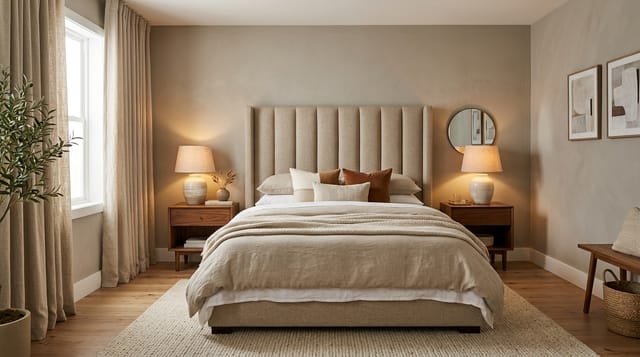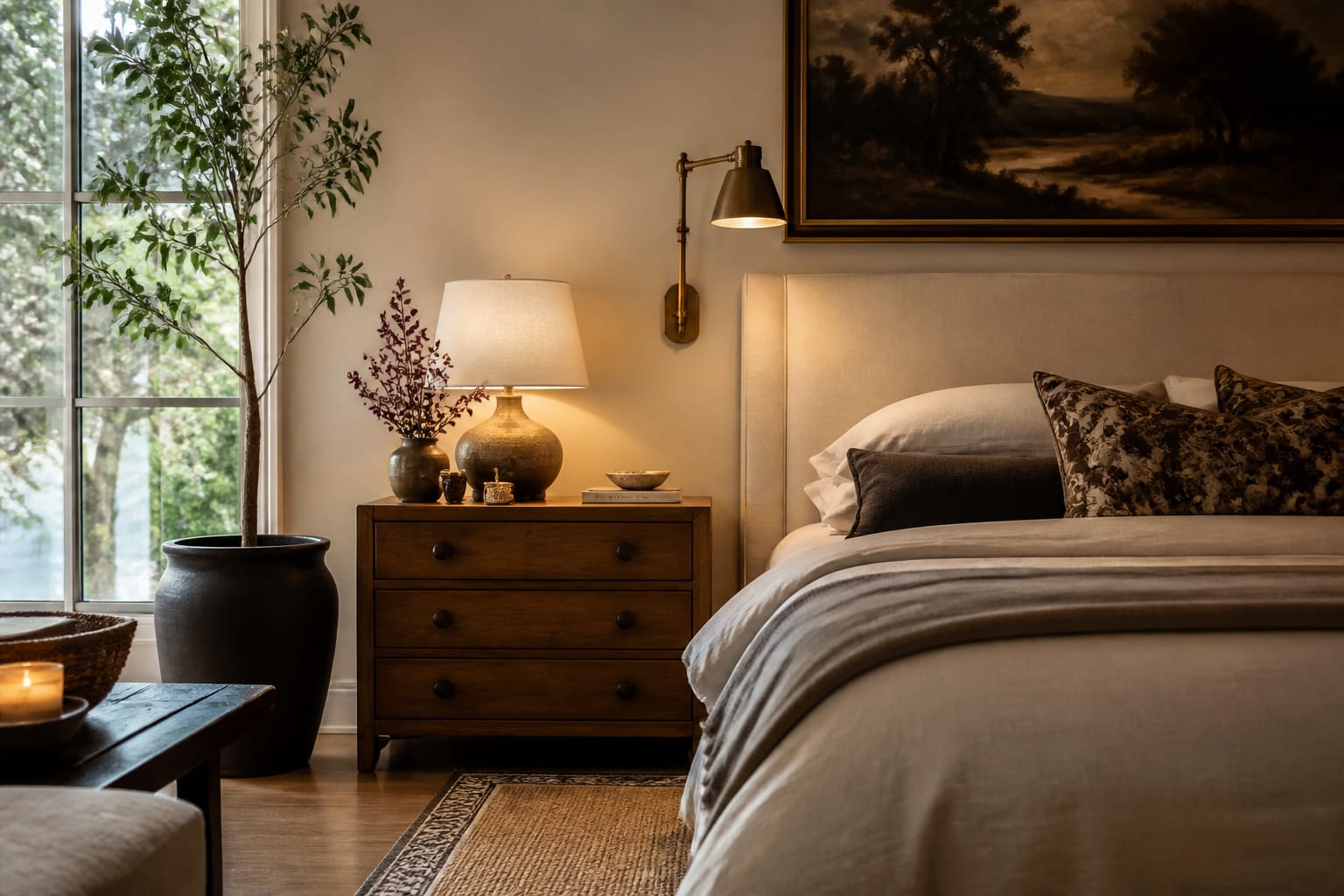
My read is that the right nightstand is the one whose top lands within a couple of inches of your mattress height, because everything else, style, storage, material, only matters once you can reach the lamp and a glass of water without leaning down or up. To choose a nightstand, match its height to your bed, its width to the wall gap beside it, and its storage to what you actually keep at the bedside, in that order.
I think people shop for nightstands backwards: they fall for a finish or a shape first and discover the proportions are wrong after it's in the room. Get the three measurements right and almost any style works; get them wrong and the prettiest piece still feels awkward every single night.
Get the height and width right first
Height is the spec that makes or breaks a nightstand. Measure from the floor to the top of your mattress, then choose a nightstand whose top lands within about 2-4 inches of that number, ideally level or just below. A tall platform bed with a thick mattress can sit 28-30 inches off the floor, so a standard 24-inch nightstand leaves you reaching down; a low bed wants a lower table. This is the same proportion discipline that makes any bedroom feel resolved, the kind of thing I weigh across a whole AI bedroom design plan.
Width and depth come next. Leave 2-4 inches between the nightstand and the bed frame so you can make the bed and open a drawer without a fight. In a generous room, a nightstand 20-26 inches wide feels balanced against a queen or king; in a tight room, drop to 14-18 inches or go floating. Depth of 12-16 inches gives you a usable surface without eating the walkway, and you want at least a 24-30 inch clear path to move around the bed.
Proportion against the bed matters as much as the raw numbers. A massive sleigh bed or a tall upholstered headboard can swallow a dainty 14-inch table, so it wants a fuller nightstand with visual weight to match. A low platform bed with a slim profile looks unbalanced beside a chunky three-drawer chest, and reads better with a light, leggy table. Stand back and look at the bed and nightstand as one composition rather than measuring the nightstand in isolation, because the eye judges the pair together every time you walk into the room.
Style and storage ideas that earn their footprint
Once the size is right, decide what the nightstand has to hold. A bedside that only carries a lamp and a phone can be an open table or a small stool; one that swallows chargers, medications, books, and a journal wants a drawer plus a shelf. Be honest about the clutter you generate at night, because the storage you choose is what keeps the surface clear.
What to look for when you compare nightstand options:
- A surface of at least 12x12 inches so a lamp base and a glass both fit.
- One drawer to hide cables and small clutter, plus an open shelf for books.
- A finish that ties to the bed or dresser without matching it exactly.
- Rounded corners if the nightstand sits along a walkway you pass nightly.
- A built-in or nearby outlet, or a lamp with a USB port, for charging.
Styling the top is a three-object job at most: a lamp, something low like a tray or a small stack of books, and one personal piece. Coordinating the nightstand with the larger case goods keeps the room calm, which is why I size it alongside the bedroom dresser rather than picking each in isolation. A matched pair flanking the bed reads serene and symmetrical; a deliberate mismatch, two different tables of similar height, adds character in a more eclectic room as long as the heights stay close.
Floating and small-space nightstand ideas
When floor space is tight or you want a cleaner look, a floating wall-mounted nightstand is my go-to. Mounted so the top lands at mattress height, it frees the floor underneath, makes the room feel larger, and works at a slim 12-16 inches deep. It also lets you mount a reading sconce just above and skip the table lamp entirely, which clears the surface for actual use.
Other small-room moves: a wall-mounted shelf with a lip, a slim console only 10-12 inches deep, a stack of vintage suitcases, or a stool that doubles as extra seating. If your bedside lamp competes with a ceiling fan overhead for the room's airflow and light, coordinate the two so neither fights the other; the placement logic in my bedroom ceiling fan ideas covers keeping fixtures and bedside lighting from clashing. Whatever you choose, hold the height rule: even the cleverest small-space nightstand fails if the top sits four inches above or below where your hand naturally lands.
Common mistakes to avoid
The common mistakes to avoid start, predictably, with height. A nightstand far above or below mattress level is uncomfortable every night, no matter how good it looks, so measure before you buy. Right behind it is width: a piece so wide it crowds the bed frame, or so narrow a lamp barely balances on it, throws the whole wall off.
From there, the errors are about clutter and proportion. Choosing an open table when you actually stash chargers, pills, and books guarantees a messy surface, so match storage to your real habits. Oversized lamps are another one; a lamp taller than about 28 inches or wider than the nightstand top dominates the corner and glares in your eyes when you read. People also forget charging, then run cords across the floor; plan an outlet or a USB lamp from the start. Last, don't over-style the top, since three objects look composed and seven look like a junk drawer with a lamp on it.
Use AI design to preview your nightstand before you commit
The trouble with nightstands is that the height and width problems only show up once the piece is beside your actual bed, and by then it's assembled and the box is gone. Before you order, upload a photo of your bedroom with the bed in place to Re-Design and let the AI re-render the bedside with different nightstand heights, widths, and styles next to your real mattress and headboard.
Because you upload your genuine room, the AI design judges proportions against your true mattress height, your real wall gap, and the lamp you already own, not a staged showroom. Test a floating wall-mounted version against a two-drawer table, try a matched pair versus a deliberate mismatch, and see which one lands at the right height and fills the gap cleanly, all before anything ships to your door.