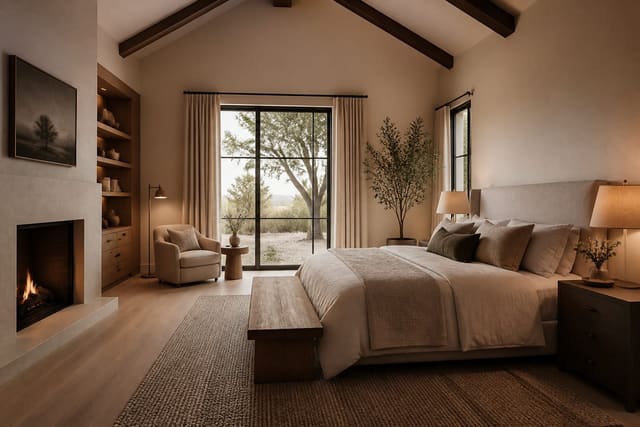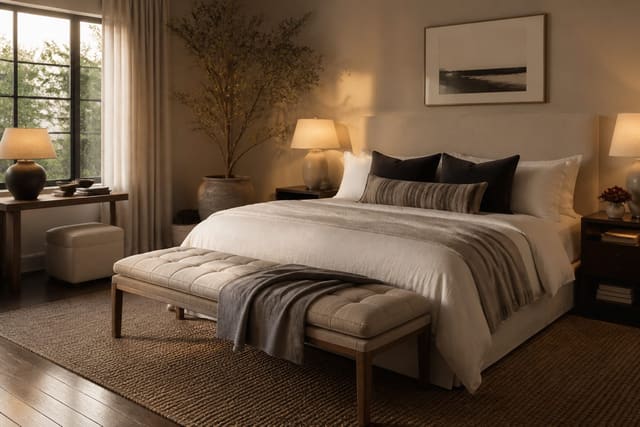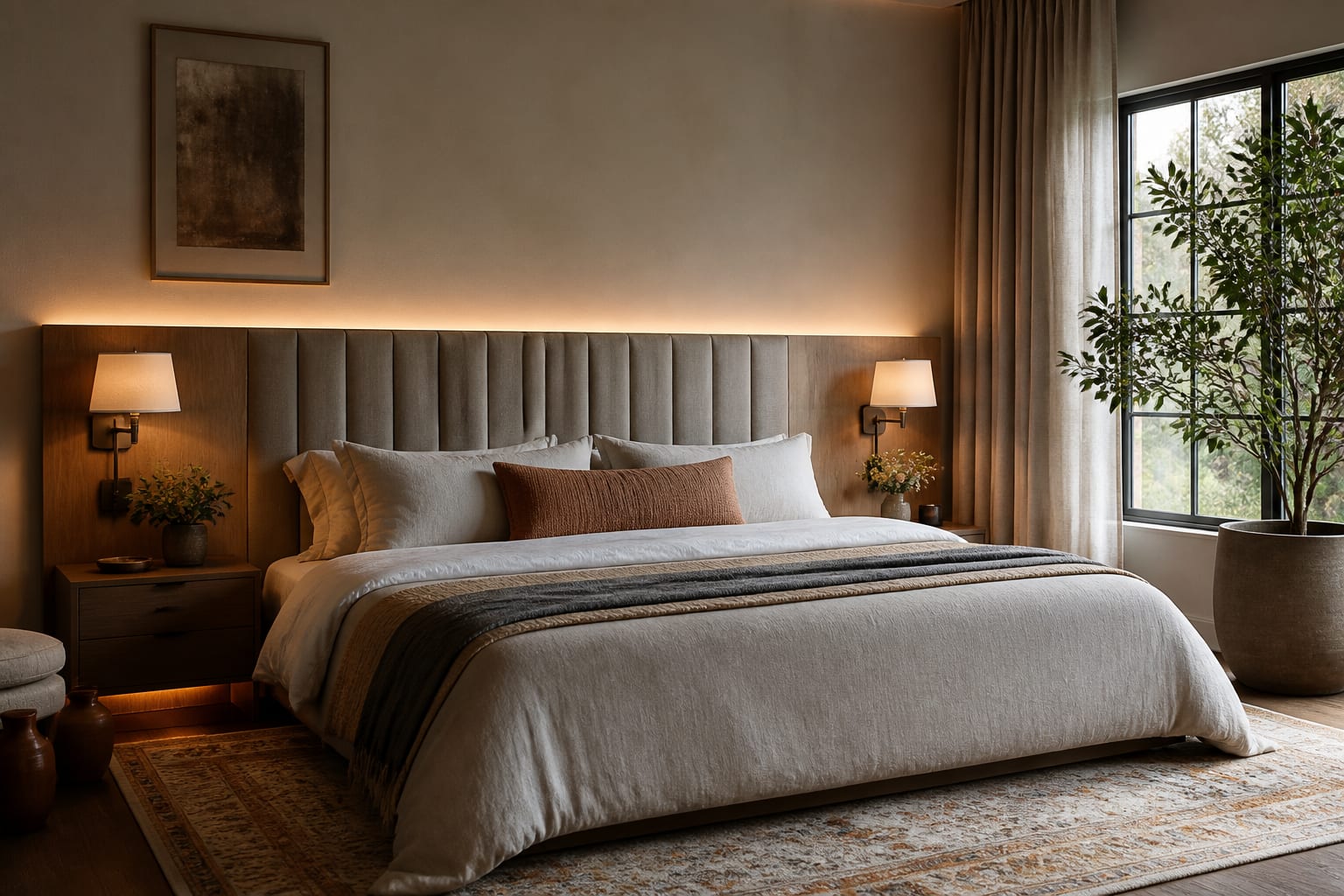
A headboard does more work than almost any other piece in a bedroom, and most people undersize it. The instinct is to buy a headboard that matches the mattress width and call it done, but the result usually looks thin and apologetic against a tall wall. The better move is to size for presence: go wider than the mattress, taller than you think, and let the headboard set the mood for the whole room. A queen bed deserves a headboard that reads as architecture, not an afterthought bolted to a frame. The ideas below run from soft upholstery to caned wood to weekend builds.
Upholstered headboards that soften the room
Upholstery is the most forgiving way to add comfort and quiet to a bedroom. A padded headboard absorbs sound, gives you something soft to lean against while reading, and brings in color or pattern without committing to a painted wall. Linen and performance velvet are the two fabrics worth considering first: linen reads relaxed and breathable, while velvet catches light and feels richer under warm 2700K lamps. For a primary bedroom, a tall channel-tufted or wingback shape in a muted clay, olive, or oatmeal tone fills the wall and pulls the eye up.
Scale is where upholstered headboards live or die. A standard store-bought panel often tops out around 48 inches, which can look low under an 8-foot or 9-foot ceiling. If your ceiling is tall, hunt for a headboard that reaches 54 to 58 inches, or have one made. Keep the fabric practical: a performance weave with a stain-resistant finish survives oily hair and morning coffee far better than raw linen. For a fuller look at coordinating the surrounding pieces, our master bedroom ideas guide covers how the headboard, bedding, and lighting layer together into one calm composition.
Wood and cane headboards for warmth and texture
Wood brings grain, age, and a sense of permanence that upholstery cannot. A solid oak or walnut headboard with a simple rectangular profile suits a modern or transitional room, while a spindle or carved frame leans cottage or farmhouse. The version designers reach for most right now is caned: an open woven panel set inside a wood frame that lets the wall color show through. Cane keeps a headboard from feeling heavy, which matters in a small bedroom where a solid 60-inch panel would dominate.
Reclaimed and live-edge wood headboards add character but demand restraint elsewhere, so let the wood be the star and keep bedding neutral. If you like the warmth of wood but want softness too, a slatted wood frame with a thin upholstered cushion clipped to the front gives you both. Wood headboards also pair naturally with woven and rattan accents, so a caned headboard, a jute rug, and linen drapes read as one coherent material story rather than a pile of unrelated textures.
Built-in, DIY, and budget headboard ideas
Not every headboard needs to be bought. Some of the best-looking bedrooms skip the freestanding piece entirely and build the headboard into the wall. Here are distinct directions worth considering, from no-build tricks to weekend projects:
- Mount a horizontal run of wood paneling or shiplap behind the bed, painted or stained, so the wall itself becomes the headboard and spans the full bed-plus-nightstand width.
- Hang a large woven tapestry or a flat-weave rug from a slim wood dowel for a soft, textile headboard that costs under $80.
- Build an upholstered panel from a sheet of half-inch plywood, two-inch foam, batting, and fabric for roughly $120 to $200 in materials.
- Lean two tall framed art panels or antique shutters against the wall behind the bed for a renter-friendly, no-drill look.
- Paint a tall arched or rectangular shape directly on the wall in a contrasting color to suggest a headboard where there is none.
- Install a floating wood ledge 8 to 10 inches above the mattress and prop pillows against the wall below it for a clean, minimalist effect.
A painted-shape headboard costs only the price of a sample pot, around $8 to $12, and is the fastest way to test whether you even want a headboard at that height. For a DIY upholstered panel, French cleats let you hang the finished piece on the wall so it floats above the bed rather than bolting to the frame.
Matching the headboard to the rest of the room
A headboard never works in isolation. Its height should relate to the nightstands and lamps flanking it: a tall headboard wants taller lamps or a pair of sconces mounted at 30 to 36 inches above the mattress so the light reads at the right level. Its width should account for what sits beside the bed, and a headboard that extends past the nightstands creates a built-in, hotel-suite feel. Color is the last lever. A headboard in the same family as the wall recedes and calms the room, while a contrasting upholstered panel becomes the focal point.
Think about the foot of the bed too, since the headboard sets a tone the rest of the furniture should answer. A substantial upholstered headboard pairs beautifully with a bench at the end of the bed in a complementary fabric, closing the composition and giving the room a finished, layered look rather than a bed floating in space.
See it first in Re-Design
Guessing whether a 58-inch caned headboard will overwhelm your bedroom, or whether an oatmeal linen panel suits your wall color, is hard from a product photo on a white background. Upload a picture of your bedroom to Re-Design and swap in different headboard styles, heights, and finishes to watch how each one behaves over your actual bed, against your real wall and light. You can compare a tall tufted velvet against a low caned wood frame, or test a painted headboard shape before you touch a brush, so you commit to the piece that fits the room instead of one that looked right only on the showroom floor.
Frequently Asked Questions
How wide should a headboard be?
Match the mattress at minimum, but 2 to 4 inches wider on each side looks more intentional and frames the bedding. Wall-mounted headboards can run even wider, extending past the nightstands for a built-in feel. A headboard narrower than the mattress almost always looks undersized and pinched against the wall behind it.
How tall should a bedroom headboard be?
For a standard 8-foot ceiling, a top edge around 48 inches off the floor reads well, while taller 9-foot rooms can carry a headboard reaching 54 to 58 inches. Taller headboards draw the eye up and make the bed feel grander, so err high if your ceiling allows it rather than choosing a low panel that gets lost.
Are upholstered or wood headboards better?
Neither is universally better; they solve different problems. Upholstered headboards add softness, sound absorption, and a comfortable surface for reading in bed. Wood and caned headboards bring warmth, texture, and durability with less maintenance. Choose upholstery for comfort and color, wood for grain and longevity, or a slatted frame with a cushion to get a bit of both.
Can I make a headboard myself?
Yes, and a basic upholstered panel is one of the easiest furniture builds. A sheet of half-inch plywood, two-inch foam, batting, and a yard or two of fabric runs roughly $120 to $200, and French cleats let you hang it on the wall. No-build options like a hung tapestry or a painted shape cost even less and skip the tools entirely.