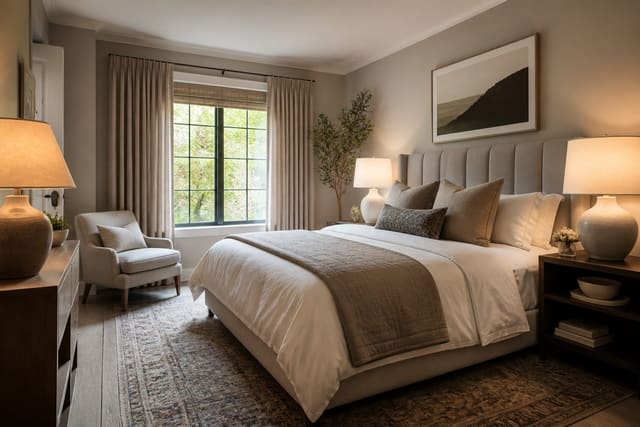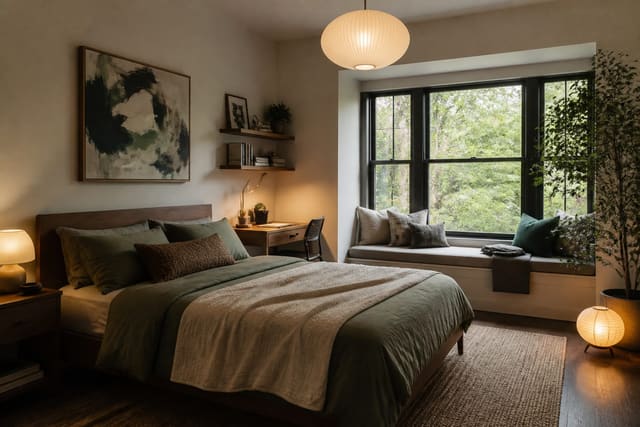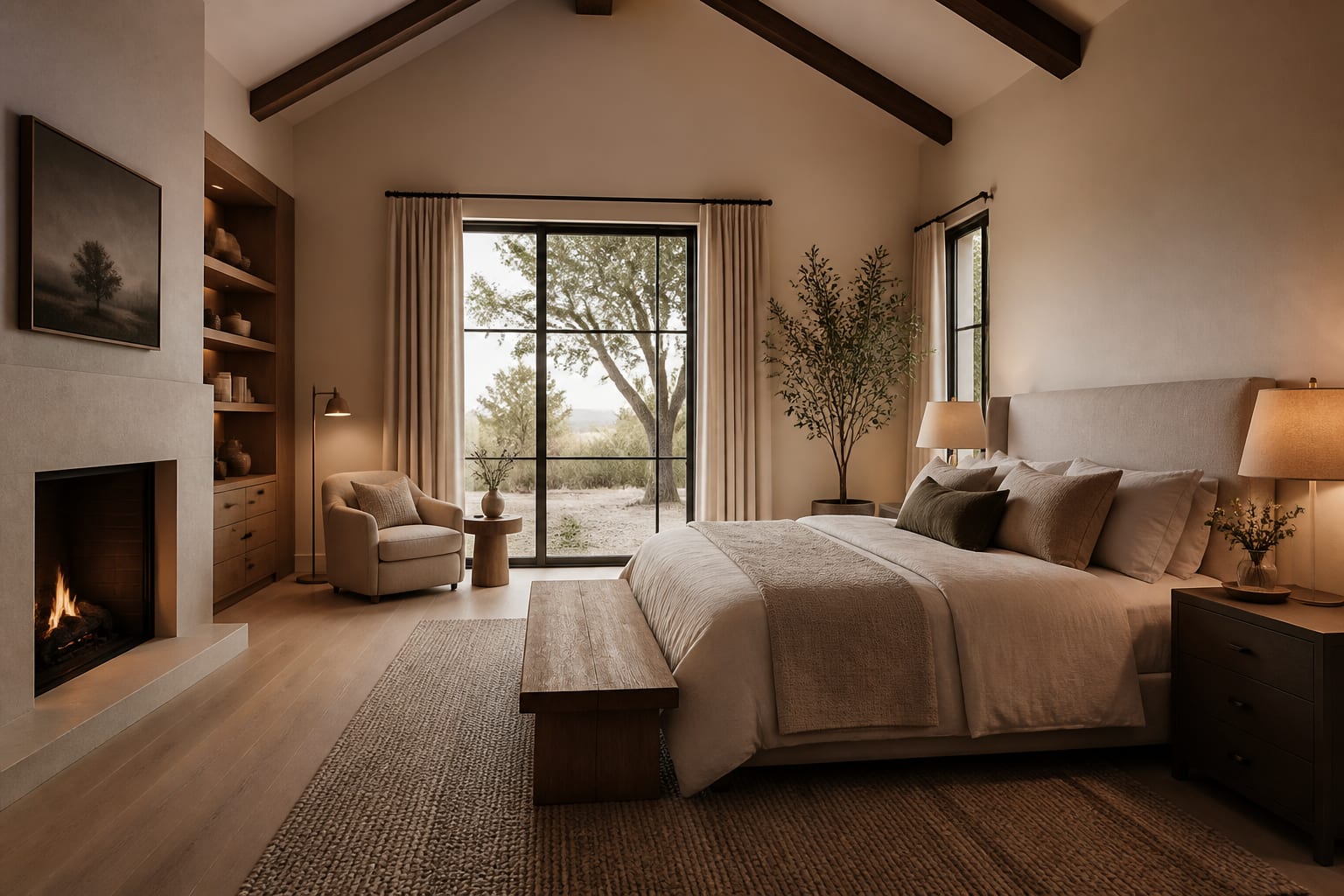
The master bedroom is the room most homeowners under-invest in, and it shows — a great sofa, a considered kitchen, and a bedroom that looks like the furniture just arrived and never got arranged. The bedroom should be the most deliberate room in the house precisely because it is the one you use while your defenses are down.
A bedroom that actually functions as a retreat requires three things done well: a lighting plan that works at multiple times of day, a textile layering strategy that makes the bed the visual center, and a palette that reduces rather than adds stimulation. Every idea below starts from those priorities.
Bed Frame and Headboard Ideas That Set the Tone
The bed frame is the anchor of every master bedroom design decision, and choosing it first — before wall color, before rugs, before lighting — is the correct sequence. An upholstered headboard in linen, velvet, or bouclé is the most versatile option because the fabric introduces softness and texture that hard wood or metal cannot replicate. Floor-to-ceiling upholstered headboards that extend to within 6 in of the ceiling are particularly effective in rooms with ceilings between 9 ft and 11 ft — the vertical scale creates a focal-wall effect that makes the entire room feel more considered.
Bed frame height matters more than most people account for. A platform bed at 14 in to 16 in off the floor creates a low, horizontal visual plane that reads as modern and grounded. A higher frame at 24 in to 28 in creates a more traditional, formal look and has practical implications for mattress access. Choose based on the ceiling height — low ceilings below 9 ft benefit from lower frames that create more visual breathing room above the bed.
For bed sizing, the minimum clearance between the side of the bed and a wall or major piece of furniture is 24 in; in a primary bedroom, 30 in to 36 in of clearance feels comfortable and allows easy movement. Do not compromise this dimension to fit a larger bed than the room can proportionally accommodate.
See also our guide to Guest Bedroom Ideas for more on master bedroom ideas.
Bedroom Lighting Ideas for a True Retreat Feel
Overhead lighting in a bedroom should supplement, not dominate. A single ceiling fixture as the only light source in a master bedroom is one of the most common design failures in residential interiors — it produces a flat, utilitarian light that does not distinguish the bedroom from a hallway. Layer light from at minimum three sources: a low-level ambient source, bedside lamps at 48 in to 52 in height from the floor, and at least one floor lamp or sconce for soft fill.
All bedroom lighting should be dimmable and set at 2700K to 2800K. This color temperature reinforces the body's natural shift toward sleep in the evening, while still being bright enough for reading at 70 percent to 80 percent brightness. Wall-mounted swing-arm sconces above the bedside tables free up surface area on the nightstand and place the light source at exactly the right height for reading in bed without spilling light onto a sleeping partner.
Natural light control is the other half of the bedroom lighting equation. Blackout lining on curtains or blinds is worth every penny in a master bedroom because sleep quality is directly tied to light exposure in the early morning hours. Pair blackout linings with a sheer underlay so the room can be lightened incrementally — sheer only, then sheer plus blackout at varying positions — rather than toggling between full light and full dark.
For a related angle on master bedroom ideas, read Teen Bedroom Ideas.
Textile and Soft Furnishing Ideas for the Master Bedroom
The bed should be the most visually complex surface in the master bedroom, and achieving that complexity requires deliberate textile layering rather than simply adding more pillows. The base layer is a fitted sheet and top sheet or duvet insert. The second layer is a coverlet or quilted blanket in a tone slightly different from the duvet cover — same color family, different texture and value. The third layer is a chunky-knit or woven throw folded across the foot of the bed. This three-layer system photographs beautifully and functions practically across seasons.
Cushion and pillow logic should follow a clear size hierarchy: two Euro square cushions at the back at 26 in by 26 in, two standard sleeping pillows in front of those, two or three decorative lumbar or square cushions in the foreground. Vary texture — one velvet, one linen, one woven — within a tonal palette that either matches the bed or introduces one complementary color.
Window treatments in a master bedroom warrant more investment than in any other room. Floor-length linen or cotton-linen curtains hung 6 in to 8 in above the window frame and extending 12 in beyond the frame on each side maximize the apparent window size and the quality of natural light entering the room. The curtain panel width should be 2 to 2.5 times the window width to allow for full, generous folds when the panels are open.
Master Bedroom Layout and Storage Ideas
Bedroom layout decisions should prioritize the bed's relationship to the door and windows above all other considerations. The ideal position places the bed on the wall opposite the entry door, in the line of sight from the doorway but not directly in the path of the door swing. This creates a natural focal point from the entry and ensures the first thing you see on entering is the bed — the visual and functional centerpiece of the room.
Nightstand sizing often goes wrong in one of two directions: too small to be functional or too large for the clearance the room can offer. A nightstand surface of at minimum 16 in by 20 in accommodates a lamp, a glass of water, a book, and a phone without requiring a second surface. Bedside tables should be within 2 in of the mattress height so the surface is naturally reachable without reaching up or down from a lying position.
Storage integration deserves more thought in a master bedroom than in any other room because clutter in the bedroom directly affects sleep quality. Built-in wardrobes with interior organization — dedicated hanging zones, shelved sections for folded items, and a drawer unit for small items — remove the daily decision overhead that open shelving and freestanding furniture require. If built-ins are not possible, choose a bed frame with integrated storage drawers for an immediate under-bed storage solution that keeps the room visually clean.
- Mount swing-arm sconces at 52 in from the floor above each nightstand to free up surface space and optimize reading light.
- Install blackout lining behind sheer curtain panels so the room can transition from full daylight to complete darkness.
- Choose a low-profile platform bed at 14 in to 16 in height to open up visual space in rooms with ceilings under 9 ft.
- Layer four distinct textures on the bed — smooth cotton, matte linen, woven coverlet, chunky-knit throw — within a single palette.
- Add a bench or ottoman at the foot of the bed to create a transition zone that also gives the room a more finished, hotel-like quality.
- Use a single large-format piece of art hung centered above the headboard instead of a gallery wall for a calmer, more anchored look.
- Keep both nightstands matched or nearly matched in scale — significant asymmetry between bedside pieces fragments the room's calm.
Bring the look home with Re-Design
Re-Design lets you test master bedroom ideas against your actual room before moving any furniture or ordering a single item. Upload a photo and the AI previews different bed frame styles, wall colors, and textile palettes in your specific space, accounting for your room's proportions and natural light. Whether you are deciding between an upholstered headboard and a platform frame or comparing two wall tones, Re-Design makes the decision visual and concrete rather than a guess.
Frequently Asked Questions
What is the most important upgrade in a master bedroom?
Bedside lighting on dimmers is almost always the single highest-impact upgrade in a master bedroom, because it changes how the room feels in the hours you actually use it most. A well-placed swing-arm sconce or quality table lamp at 2700K on a dimmer transforms a bedroom from functional to genuinely comfortable more reliably than any furniture change.
How do I make a master bedroom feel more like a hotel room?
Three elements define the hotel-bedroom quality most people are chasing: a large, well-made bed with a generous textile layer, clean surfaces with very few visible objects, and consistent warm lighting at a low level throughout the room. Remove anything from the bedroom that does not serve a clear function, invest in quality bed linens, and put every light source on a dimmer.
What size rug should I use in a master bedroom?
The rug should extend at least 18 in to 24 in beyond the sides and foot of the bed so that your feet land on the rug when you get out of bed. In a room with a queen bed, a 8 ft by 10 ft rug is the minimum that achieves this. In a king bed room, a 9 ft by 12 ft rug is more appropriate. Placing only a small rug at the foot of the bed is the most common bedroom rug mistake and makes the room feel unfinished.