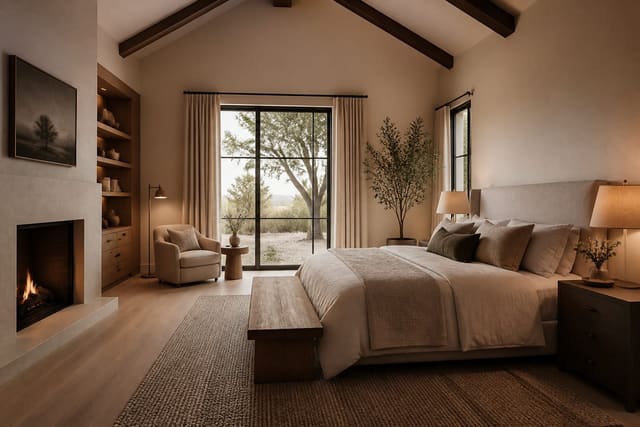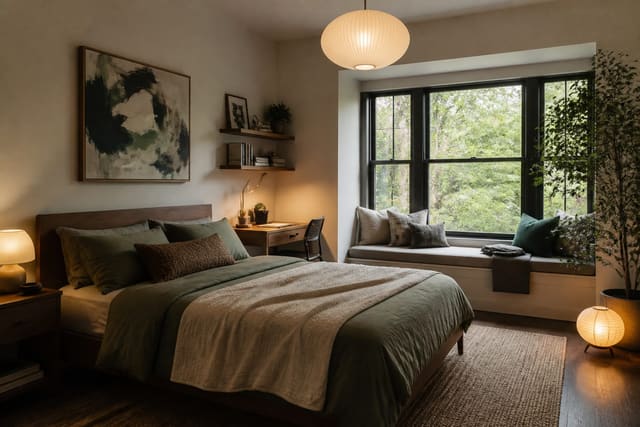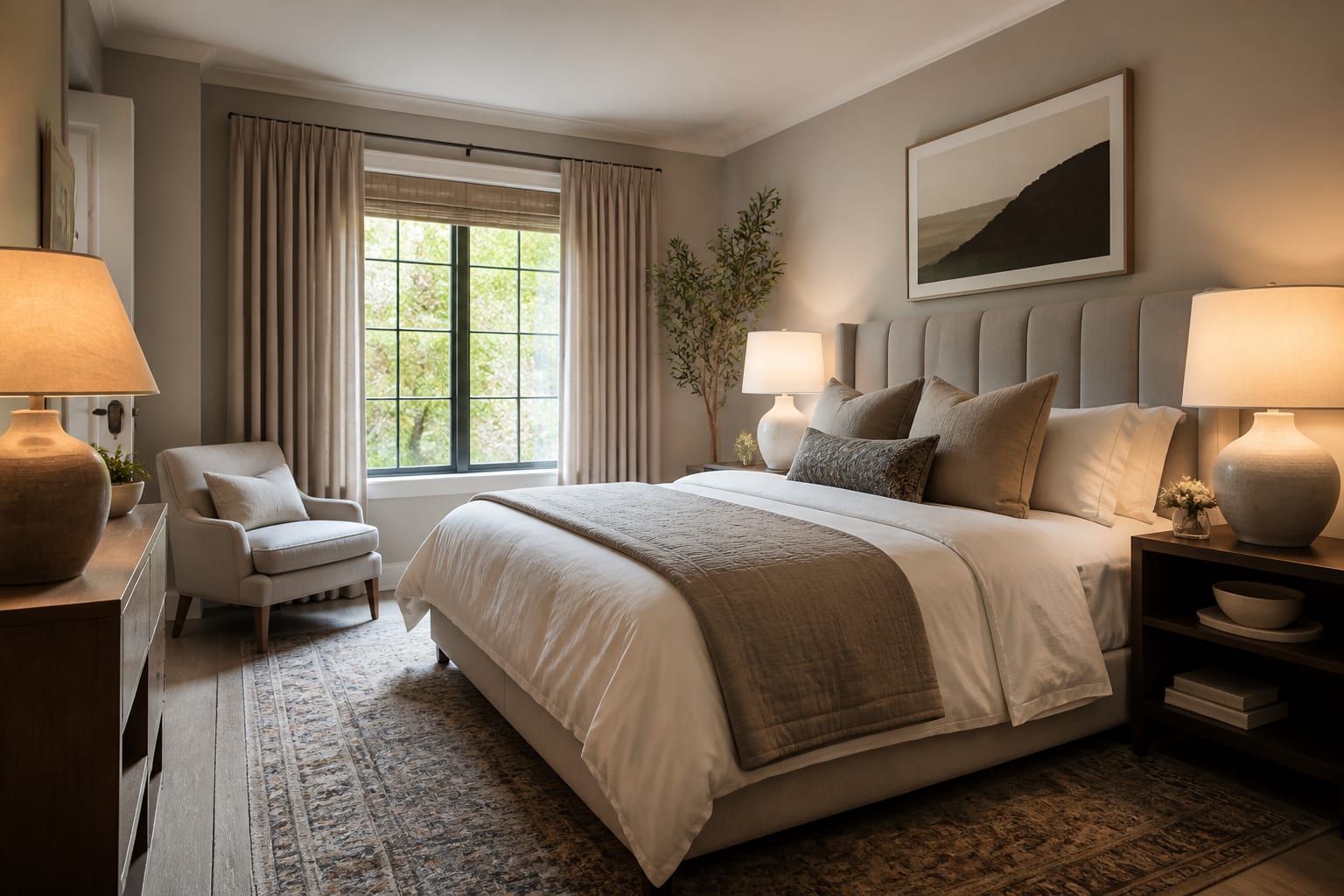
A guest bedroom is the most honest room in the house, because it reveals exactly how much you thought about someone else's comfort. The best ones feel like a small, considerate hotel: a genuinely comfortable bed, a clear surface to set a phone and glasses, and a few quiet touches that answer a guest's needs before they ask. Most spare rooms fail by becoming storage with a mattress in it. These guest bedroom ideas focus on the details that turn a leftover room into a space people are quietly sad to leave, even when the square footage is modest.
Start With a Bed Guests Actually Want to Sleep In
The bed is the whole assignment in a guest room, so it deserves the budget first. A worn-out hand-me-down mattress is the fastest way to send a visitor home tired and quietly resentful. A quality medium-firm queen suits the widest range of bodies, and a queen rather than a full gives two guests room to actually rest. If the room is tight, a good full or a pair of twins still beats a sagging older queen.
Dress the bed in layers so guests can adjust to their own comfort. Start with crisp cotton sheets, add a light blanket, and fold a heavier quilt or duvet at the foot for anyone who runs cold. Two pillow firmnesses, one soft and one medium, let a guest choose rather than suffer whatever you happened to have. Keep an extra blanket visible in a basket or on a bench so no one has to dig through a closet at midnight.
Lighting at the bedside seals the deal. A lamp each guest can reach without getting up, ideally on a dimmer or with a warm bulb, means they can read and then turn off the light from the pillow. A spare outlet or a small charging station on the nightstand spares them hunting behind furniture for a place to plug in a phone. Get the bed and its immediate surroundings right and you have already done eighty percent of the work of a memorable guest room.
See also our guide to Master Bedroom Ideas for more on guest bedroom ideas.
Make the Room Earn Its Keep Between Visits
Most guest rooms sit empty far more often than they host anyone, so the smartest ones do a second job the rest of the year. A daybed with a trundle reads as a sofa and seating area day to day, then sleeps one or two when company arrives. A wall-mounted fold-down Murphy bed gives you back the entire floor for a desk, a workout corner, or a hobby table the other fifty weeks.
If you work from home, pairing the guest room with an office is the most common and most practical combination. Keep the desk on one wall and the bed on another so neither feels like an afterthought, and choose a desk chair handsome enough to sit out rather than hide. A slim console or a closed cabinet hides work clutter quickly when a guest is on the way, so the room flips from workspace to bedroom in minutes.
Whatever the second use, protect the guest experience by keeping the conversion fast and the storage honest. A guest should never arrive to a room half-buried in your overflow. Give your own belongings a defined home behind closed doors, leave the bed and nightstand permanently guest-ready, and the dual-purpose room never feels like a compromise. Done well, a double-duty guest room is the most efficient square footage in the house: useful every single day and ready for company on short notice.
For a related angle on guest bedroom ideas, read Teen Bedroom Ideas.
Storage and Surfaces That Welcome a Suitcase
The detail that quietly separates a thoughtful guest room from a thoughtless one is whether a visitor can unpack. Living out of a suitcase on the floor for three nights is a small misery, and it is entirely avoidable. Clear at least one empty drawer and a short stretch of closet rod with a few hangers so guests can hang a jacket and stow folded clothes the moment they arrive.
Give the suitcase itself a home. A folding luggage rack or a sturdy bench at the foot of the bed keeps the bag off the floor and off the mattress, and doubles as a spot to lay out tomorrow's clothes. A nightstand on at least one side of the bed, with a clear top surface, gives a guest somewhere to set glasses, a phone, and a book without balancing them on the mattress edge.
Don't overlook the small landing zones near the door. A hook or two for a robe and a bag, a mirror for a last glance before heading out, and a dish for keys and earrings cover the little rituals of staying somewhere new. The goal across all of it is to anticipate what a guest reaches for and have it already there. When every object has an obvious place to land, a visitor settles in within minutes and the room feels generous rather than borrowed.
Small Touches That Feel Like Real Hospitality
The finishing touches are what people actually remember, and almost none of them cost much. Borrow the hotel playbook: a folded stack of fresh towels left on the bed, a small carafe or bottle of water with a glass on the nightstand, and a basket holding travel-size essentials for the things guests inevitably forget. Toothbrush, toothpaste, a phone charger, and a couple of pain relievers in that basket save a guest an awkward late-night ask.
Give thought to light and air control too. Blackout curtains or a good shade let a visitor sleep past dawn on a different schedule, and a small fan or easy access to the thermostat lets them set the temperature they like. Note where the bathroom is and how the shower works, even a sticky note inside the door, and you spare guests the small embarrassment of guessing in someone else's home.
Finally, keep the palette calm and personal touches light. A neutral, restful color scheme welcomes anyone, while a few warm details, a stack of books, a plant, soft lighting, make the room feel cared for rather than sterile. Leave a little local information out, a Wi-Fi password on a card and a note on the best nearby coffee, and you turn a place to sleep into genuine hospitality. These are the touches that make a guest text you afterward to say it felt like a getaway.
- Spend the budget on a quality medium-firm mattress, since the bed is the room's entire reason for existing.
- Layer the bed with crisp sheets, a light blanket, a foot-of-bed quilt, and two pillow firmnesses to choose from.
- Clear one empty drawer and a few closet hangers so guests can unpack instead of living from a suitcase.
- Add a luggage rack or sturdy bench so the suitcase stays off the floor and the bed entirely.
- Set a small basket of travel essentials: toothbrush, charger, pain relievers, and a couple of fresh towels.
- Choose a daybed or fold-down Murphy bed so the room works as an office or den between visits.
- Hang blackout curtains and place a reachable bedside lamp so guests control light and sleep past dawn.
- Leave out the Wi-Fi password and a note on nearby coffee to make the stay feel genuinely hosted.
Bring the look home with Re-Design
Before you redo a spare room, it helps to see the whole scheme together. Upload a photo of your guest bedroom to Re-Design and preview bedding palettes, a daybed-versus-queen layout, and calming wall colors rendered in the actual room. Seeing how a neutral scheme, a luggage bench, and warm bedside lighting come together lets you commit to a welcoming, double-duty space with confidence, rather than buying linens and furniture that clash once they are all in the room.
Frequently Asked Questions
What makes a guest bedroom feel welcoming?
Start with a genuinely comfortable medium-firm mattress and layered bedding, since the bed is the room's whole purpose. Add a clear nightstand and a reachable lamp, an empty drawer and a few hangers for unpacking, and a small basket of essentials like a charger and spare towels. Calm, neutral colors and a couple of warm touches make it feel cared for rather than borrowed.
Can a guest room also be a home office?
Absolutely, and it is the most practical dual use. Keep the desk on one wall and the bed on another so neither feels like an afterthought, or use a fold-down Murphy bed to reclaim the floor for work between visits. Hide work clutter in a closed cabinet so the room flips to guest-ready in minutes, and keep the bed and nightstand permanently set up.
What small touches do guests appreciate most?
Borrow from hotels: fresh towels on the bed, a water carafe and glass, and a basket with a charger, toothbrush, and pain relievers for forgotten items. Blackout curtains let guests sleep in, a reachable bedside lamp lets them read and switch off from bed, and a card with the Wi-Fi password spares an awkward ask. These small details are what people remember.