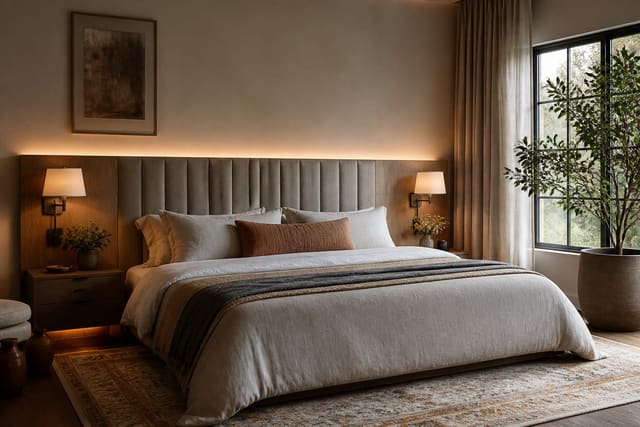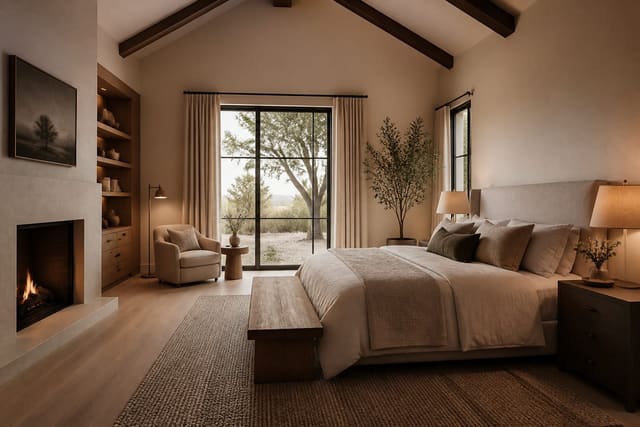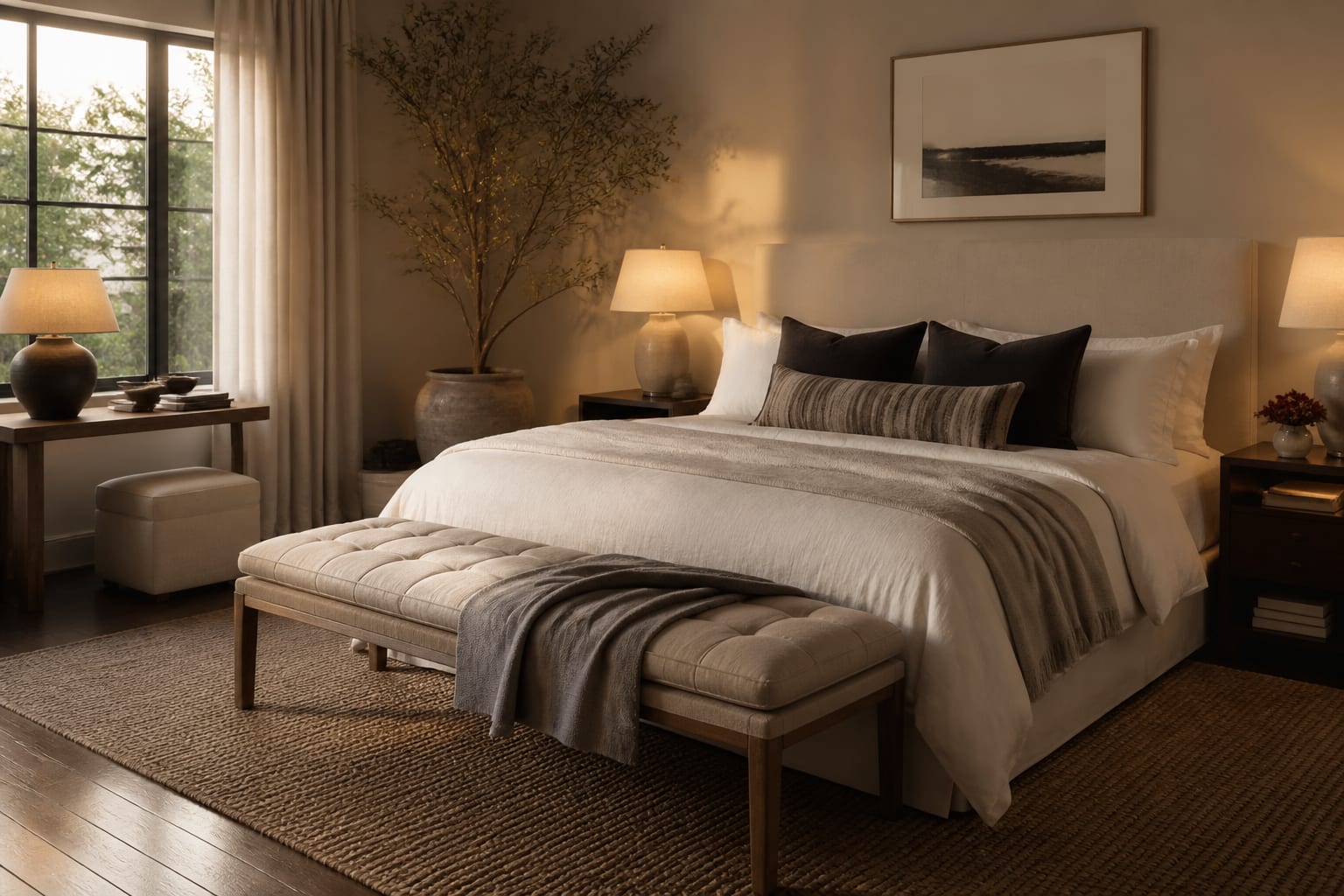
An end-of-bed bench is the most overlooked piece in the bedroom, and it does more than people expect. The common assumption is that a bench is purely decorative, so it gets skipped to save money. That is a missed opportunity: the right bench closes the composition of the bed, gives you a place to sit while dressing, hides off-season bedding inside a hinged lid, and stops a large bedroom from feeling unfinished. Choose one sized to the mattress and matched in tone, and it pulls the whole arrangement together. These ideas cover styles, storage, and sizing.
Upholstered benches that soften the foot of the bed
An upholstered bench is the most popular choice for good reason: it adds a soft, tailored layer exactly where a bed otherwise ends abruptly. A cushioned top in performance velvet, boucle, or linen invites you to sit and pull on shoes, and the fabric becomes a chance to repeat a color from the bedding or drapes. A channel-tufted or button-tufted top reads more formal and traditional, while a clean slab cushion on tapered legs leans modern. For a primary suite, a bench upholstered in the same family as the headboard fabric bookends the bed and makes the whole arrangement feel designed as a set.
The fabric choice should account for wear. The foot of the bed collects tossed clothes, suitcases, and the occasional pet, so a performance weave or a tight-pile velvet survives far better than delicate raw silk. A bench around 48 to 54 inches long suits a queen, while a king wants something closer to 60 inches. Keep the seat at roughly 18 inches high so it sits just below the mattress top and relates to the bed rather than floating at a random level.
Storage benches that earn their footprint
If your bedroom is short on closet space, a storage bench is the most practical idea on this list. A hinged-lid bench or a pair of cube ottomans at the foot of the bed swallows spare duvets, pillows, and seasonal sweaters, keeping them close but out of sight. This is where a bench stops being decorative and starts doing genuine work, especially in older homes where closets run small. Look for a lid with a soft-close hinge or a safety stay so it does not slam, and check the interior depth, since a shallow 8-inch cavity holds far less than a 14-inch one.
For small bedrooms or studios where every piece must multitask, a bench earns its place the same way a Murphy bed does, by combining functions in one footprint. A storage bench can serve as a luggage rack, a folding station, extra seating when guests visit, and hidden storage all at once. Two woven baskets tucked under an open-base bench give you the same stash-it-fast utility without a hinged lid, and they read lighter in a tight room.
Bench styles for every bedroom
The right bench depends on the room's mood as much as its function. Here are distinct directions worth considering, each suited to a different style of bedroom:
- An upholstered storage bench in velvet or linen for a soft, hotel-suite feel with hidden storage inside.
- A woven rattan or cane bench for a relaxed, coastal, or boho room that wants warmth and texture.
- A solid-wood bench with turned or tapered legs for a farmhouse or traditional space that needs a grounding piece.
- A leather-topped bench on a metal base for a modern or industrial room, durable enough to take daily wear.
- A backless settee or low daybed-style bench for a generous primary suite where you want a real spot to lounge.
- A pair of matching ottomans or cube stools that split apart to use as extra seating around the room.
- A vintage or antique trunk repurposed as a bench, adding patina and storage with a one-of-a-kind look.
Mixing materials is fine as long as one tone repeats elsewhere in the room. A leather bench works in a room with leather accents on a chair or a lamp; a rattan bench wants jute, linen, or other natural fibers nearby so it does not stand alone.
Getting the placement and scale right
A bench fails when its proportions ignore the bed. Width is the first lever: aim for a bench spanning about 75 to 85 percent of the mattress width so it looks deliberate. A bench much narrower than that looks stranded, while one wider than the bed overhangs awkwardly. Height is the second: a seat near 18 to 19 inches keeps the bench tied to the mattress line, while a too-tall or too-low piece reads disconnected.
Leave room to move. A gap of 14 to 24 inches between the footboard or mattress edge and the bench gives you a walking path and clearance to lift a storage lid. In a tight room, the bench can sit slightly off to one side or be replaced by a single chair if a full-width bench would block the path. Anchor the bench to the bed visually by repeating a color or material from the bedding, the overall bedroom scheme, or the rug so it joins the composition instead of looking like spare furniture parked at the end.
See it first in Re-Design
A bench is easy to get wrong on scale, and a product listing rarely shows it at the foot of a real bed. Upload a photo of your bedroom to Re-Design and place different benches at the end of your actual bed to judge width, height, and color against your real bedding and floor. You can line up a tufted velvet bench beside a woven rattan one, test whether a 54-inch bench suits your queen or looks short, and confirm there is enough walking clearance behind it, all before you order a piece that turns out too small or too tall once it arrives.
Frequently Asked Questions
How wide should a bedroom bench be?
Aim for about 75 to 85 percent of the bed's width so the bench looks intentional. A queen bed pairs well with a 48-to-54-inch bench, and a king wants something closer to 60 inches. A bench much narrower than the mattress looks undersized, while one wider than the bed overhangs and crowds the side paths around it.
How much space should be between the bed and the bench?
Leave 14 to 24 inches between the foot of the bed or footboard and the bench. That gap gives you a walking path and enough room to lift a storage lid without hitting the bed. In a small room, you can shrink the gap slightly or shift the bench to one side rather than skip it entirely.
Are storage benches worth it?
Yes, especially in homes with limited closet space. A hinged-lid bench hides spare bedding, pillows, and seasonal clothing while still serving as a seat and a landing spot. Look for a soft-close hinge and a deep 14-inch interior cavity, since a shallow build holds surprisingly little despite taking the same floor space.
What height should an end-of-bed bench be?
Keep the seat around 18 to 19 inches high, close to the height of the mattress top. That keeps the bench visually tied to the bed instead of floating too high or sitting awkwardly low. A seat near standard chair height is also comfortable for sitting while you put on shoes or fold laundry.