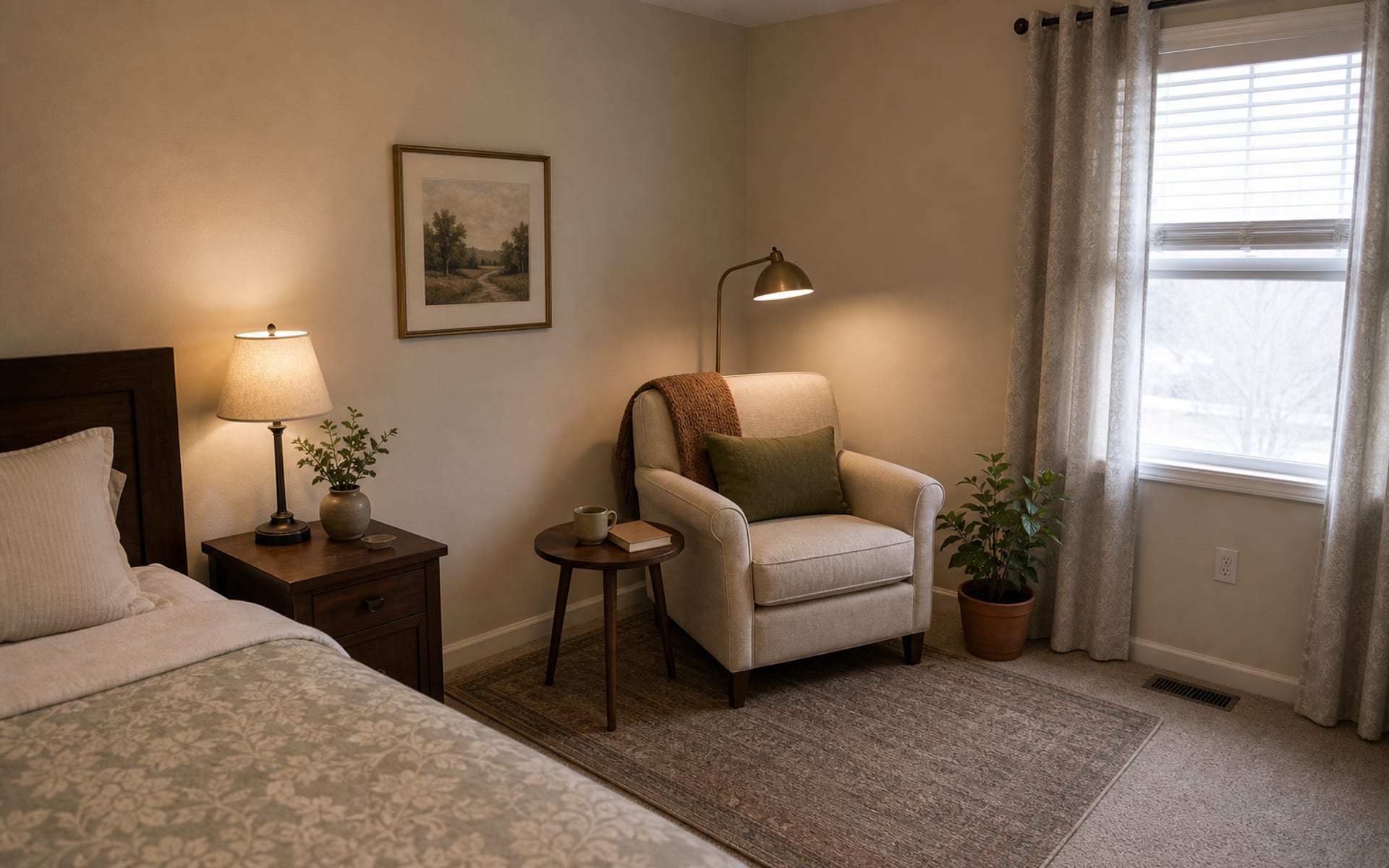
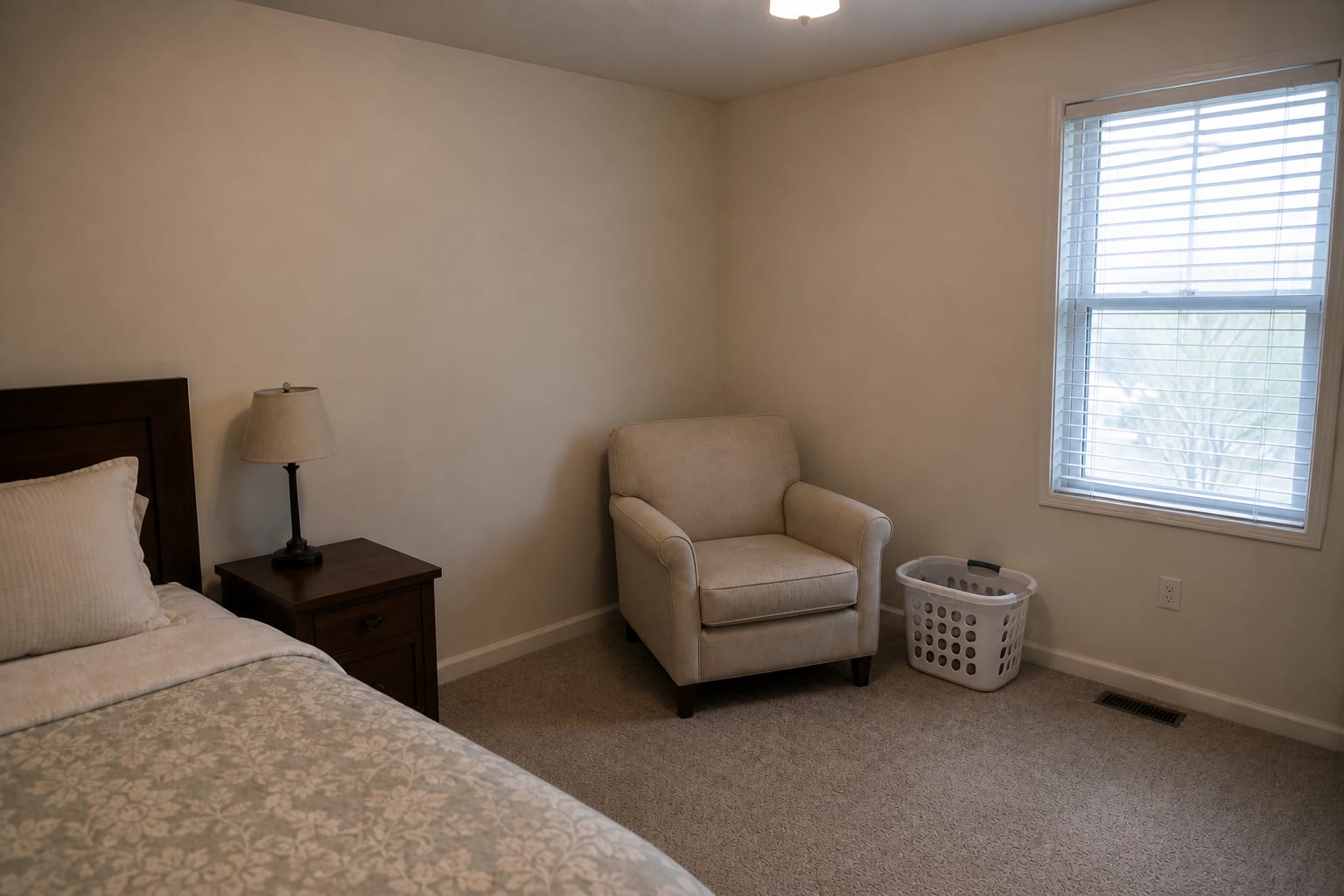
A bedroom reading nook works when it pairs a supportive chair, shoulder-height lamp, and reachable side table in a corner with a clear 30 to 36 inch path. Skip any of the three and the space becomes decor instead of a place you actually sit. Check the doorway sight line, daily traffic path, and fixed furniture before choosing pieces, since the room's real constraints decide what the nook can become.
What makes a reading nook pull you in
A chair without a lamp becomes a laundry landing. A lamp without a table becomes awkward to use. A table without enough clearance becomes clutter. The broader planning discipline in Master Bedroom Design matters here because the nook has to survive the room you already have, not a blank slate.
Work in this order: photograph the room straight on, list what can't change, and adjust one variable at a time. Keep clearances honest: 30 to 36 inches for the main path, 16 to 18 inches between the chair and table, and enough swing room for any nearby door or drawer. These numbers decide whether the nook survives Monday morning, not just the first photo.
Chair, lamp, and table dimensions
Look for a chair deep enough for a chapter but not so deep it blocks a closet or bed path. Keep the side table within 12 to 18 inches of the chair arm. Position the lamp so the shade bottom sits around shoulder height when seated. If the style direction starts to wander, compare it against Bedroom Ceiling Wallpaper Ideas: Quiet Drama for the Plane You Stare At to keep the look grounded.
- Small bedroom: compact upholstered chair, wall sconce, tiny round table.
- Large bedroom: anchor with a 5 by 8 rug or a floor lamp with a bigger shade.
- Rental bedroom: plug-in sconce and freestanding table instead of hardwired lighting.
- Guest room: a chair that can also hold a suitcase without turning into permanent clutter.
Use this list as a quick audit before buying anything custom. If the piece blocks a door, steals the only bright wall, or depends on a fixture you can't install, the idea isn't ready. A better version usually changes fewer things and makes those few things more precise.
Where to put it, room by room
Good spots include a window corner, the wall opposite the bed, a dormer, or a quiet side of a dresser. Avoid corners where door swing, closet access, or a hamper route will fight the chair daily. For photographing and prompting the space accurately, keep AI Interior Design Small Spaces: Getting More From Every Square Foot open as a reference.
A bedroom nook needs quieter light since it sits near rest, while a similar idea in a kitchen has to leave task light and cleanup access intact. A bathroom punishes extra depth faster than a living room. A rental version has to leave cleanly; an older house version has to respect whether the original detail is an asset or a constraint.
Pick the one viewpoint that matters most, usually the doorway view or the seat you'll use daily, and check whether the change improves that view without creating a worse problem outside the frame. The strongest nook isn't the most dramatic version. It's the one that makes the room easier to use and understand.
Common mistakes to avoid
- Choosing a chair too small for actual reading, making the corner decorative only.
- Relying on the ceiling fixture, which creates glare and leaves the page in shadow.
- Skipping a table, so books and mugs end up on the floor or bed.
The deeper mistake is ignoring the room's existing evidence. Floors, window placement, ceiling height, door swings, and natural light already tell the nook what it can become. A single inspiration image usually hides the dull constraints: outlet location, radiator, cabinet door, or an awkward window height. Translate the inspiration into measurements and materials before you translate it into a cart.
Use AI to preview the nook before you commit
Re-Design starts from your actual photo instead of a blank mood board. Upload a straight, well-lit image showing the floor, ceiling line, windows, doors, and the piece or surface you're unsure about. Then ask for a version that keeps the room's architecture and daily path intact.
Try three focused prompts rather than one fantasy renovation:
- Preview a reading chair with a warm floor lamp
- Test a window-corner reading nook
- Compare a plug-in sconce reading corner
Judge results by usefulness, not drama. Did the preview keep the same window, floor, and doorway? Did it respect the 30 to 36 inch path clearance? Did it preserve the storage, sink access, or bed clearance that matters most? If the output invents architecture or hides the hard part, rerun it with stricter instructions before spending money.
Frequently Asked Questions
What chair is best for a bedroom reading nook?
A supportive upholstered chair, compact lounge chair, or small wing chair works best, as long as it fits the path and lets your feet land comfortably on the floor.
How much room do I need?
A tight nook can work in roughly a 36 by 36 inch corner if the lamp is wall-mounted and the table is small. Larger chairs need more clearance around them.
Do I need a rug?
Not always, but a small rug helps define the nook and keeps the chair from looking stranded in an otherwise open corner.
What light is best for reading?
Use warm 2700K to 3000K light with a shade that directs light downward onto the page rather than out into the room, which prevents glare.
Can a bedroom reading nook work in a rental?
Yes. Use plug-in sconces, freestanding lamps, removable shelves, and furniture that can move with you when you leave.