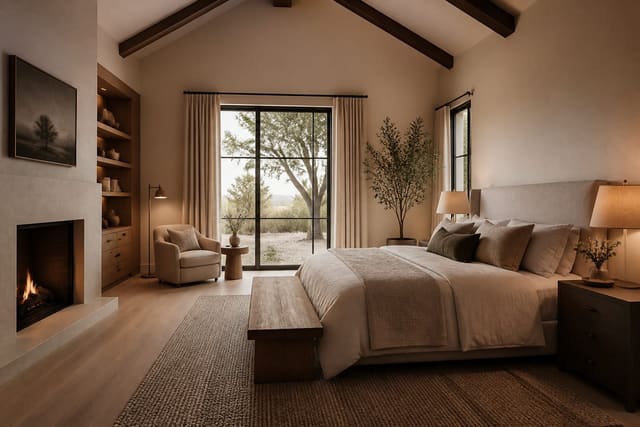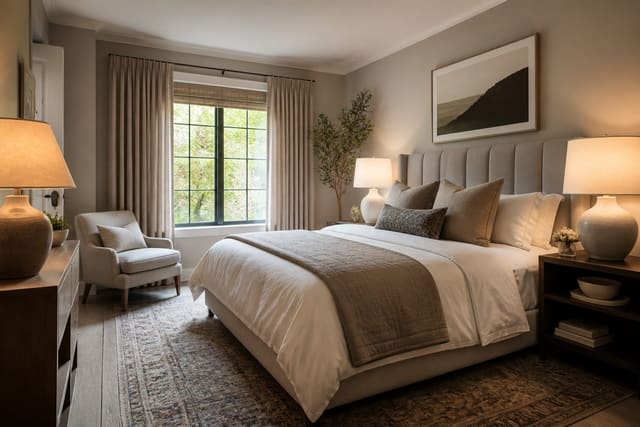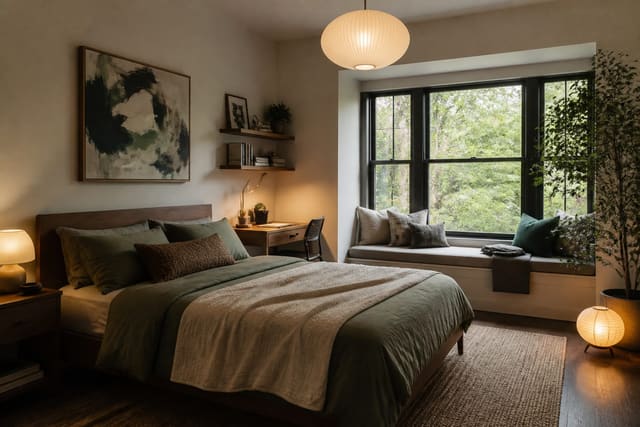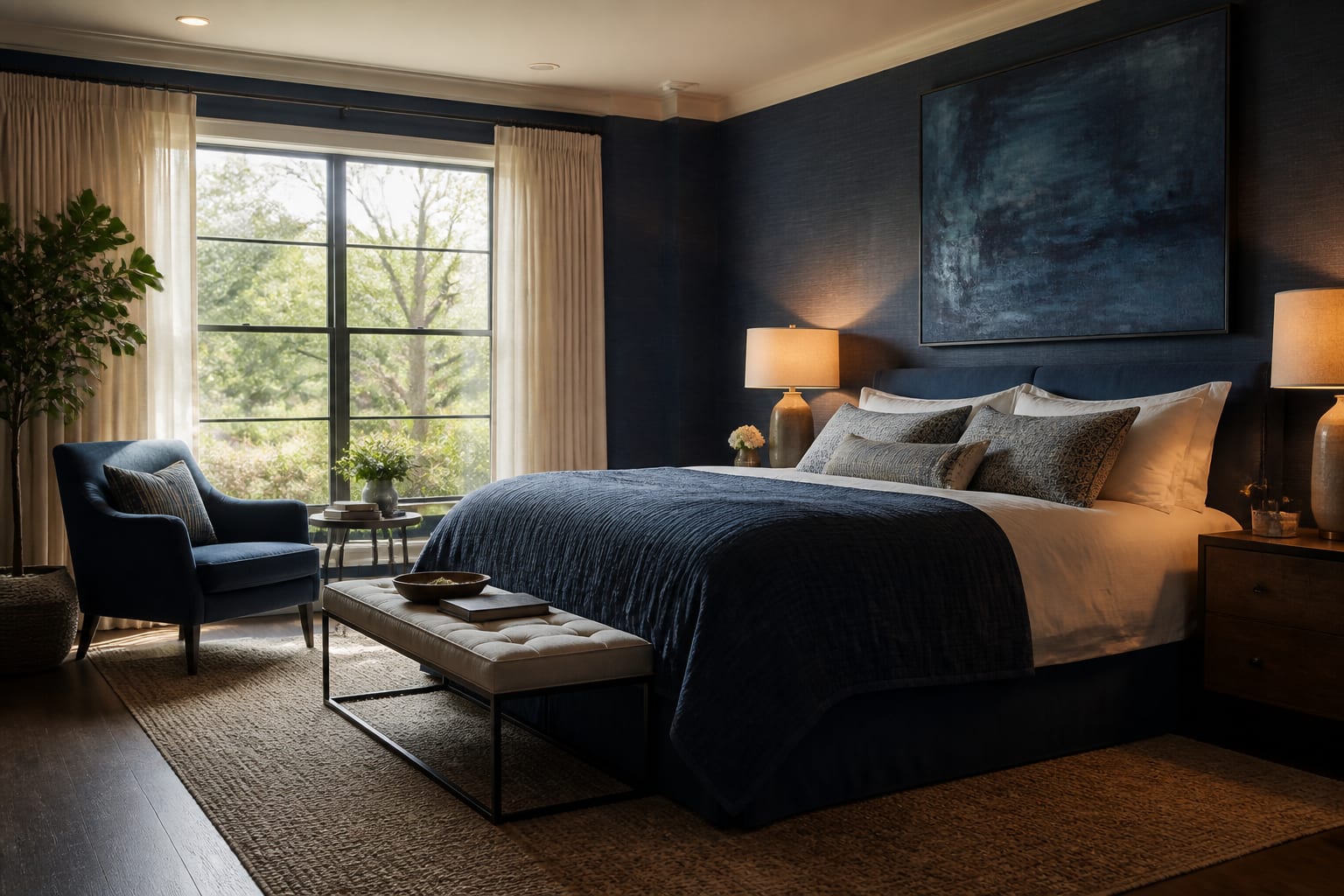
Blue is the most reliably restful color for a bedroom, but the wrong blue can read cold, like a hospital corridor instead of a retreat. The difference comes down to undertone and warmth: a blue with a hint of gray or green feels soft and grounded, while a pure icy blue feels clinical. Pair any blue with warm partners, wood, brass, cream, and a warm bulb, and even a deep navy bedroom feels like a cocoon rather than a cold box. The choice between an airy dusty blue and an enveloping midnight should follow how much light your room gets and how cozy you want it.
Which blue suits your bedroom?
The right blue depends on your room's light and the mood you want. Dusty blue, a soft grayed-down blue, is the easiest to live with: it keeps a small or north-facing bedroom feeling calm and open without going cold, and it pairs with almost any wood or metal. A classic navy sits in the middle, rich and grounding, ideal for a feature wall behind the bed or for a room with enough daylight to balance the depth. Midnight blue, nearly black with a blue cast, is the most dramatic and enveloping; it turns a bedroom into a dim, cozy retreat and looks best in a room with decent natural light during the day so it does not feel like a cave.
Undertone is what keeps blue from feeling clinical. Blues with a touch of gray or green read soft and earthy, while pure, saturated blues can feel cold and sharp. Paint a 2 by 2 foot sample and watch it across a full day, because a north-facing bedroom pulls blue cooler and a west-facing room warms it with afternoon light. The deeper the blue, the more your light changes it, so midnight especially needs a real-world test before you commit. For deeper guidance on planning a primary suite around a strong wall color, see our Master Bedroom Ideas guide.
How do you keep a blue bedroom from feeling cold?
The complaint about blue rooms is almost always that they feel chilly, and the fix is to surround the blue with warmth. Wood is the first and most important partner: oak and rattan keep a dusty blue room light and airy, while walnut deepens a navy or midnight scheme into something that feels like a study or a private library. Bare blue walls with cool white furnishings will feel cold, but the same blue against warm wood reads instantly inviting.
Metals and textiles carry the rest of the warmth. Brass and aged gold lamps, frames, and hardware add a glow that flatters every shade of blue, where chrome and cool nickel reinforce the chill you are trying to avoid. On the bed, layer cream, oatmeal, and natural linen so the bedding brings warmth and breaks up the color, then add a second, lighter blue or a soft terracotta cushion for contrast. Texture matters as much as tone: a chunky knit throw, a nubby boucle bench, and heavy linen curtains all add the tactile softness a cold-looking room lacks. The principle is simple: for every cool blue surface, give the room a warm material or a warm light to answer it.
How much blue should you use, and where?
The dose of blue sets the entire mood, from a soft hint to a total envelope. Here are concrete ways to bring blue into a bedroom at different commitment levels:
- Paint all four walls a deep midnight blue for an enveloping, cocoon-like room that flatters good daylight.
- Use navy on a single accent wall behind the headboard and keep the other walls a warm cream.
- Keep the walls a pale dusty blue and let warm oak furniture and brass lamps carry the warmth.
- Anchor a neutral room with a navy upholstered bed or a velvet headboard as the one bold piece.
- Layer dusty blue and indigo cushions across white bedding for a low-commitment dose of color.
- Run a deep blue up the ceiling as a fifth wall to make a high-ceilinged bedroom feel intimate.
- Pair a navy lower wall with a paler blue or cream above, split by picture-rail molding at 60 inches.
- Add a pair of blue-and-cream patterned lampshades to echo the wall color in a softer, smaller way.
For most rooms, the navy accent wall behind the bed is the sweet spot: it gives the headboard a strong backdrop and a focal point without surrounding you in color, and it keeps the rest of the room bright. Reserve the all-four-walls treatment for when you genuinely want a dim, moody retreat. If the bedroom doubles as a place to host overnight visitors, the bedding and storage tips in Guest Bedroom Ideas layer well over any of these blue schemes.
How do you light and finish a blue bedroom?
Lighting is what decides whether a blue bedroom feels restful or stark, and warmth is everything. Use bulbs at 2700K throughout, since this warm tone keeps navy and midnight looking soft and inviting, where a cool 4000K bulb turns blue gray and harsh. Put the overhead on a dimmer and lean on bedside lamps for the actual evening light, so the room glows from low, warm sources rather than a flat ceiling fixture. A pair of matching bedside lamps at roughly 24 to 28 inches tall flanks a bed at the right height for reading.
Sheen and texture finish the room. A flat to matte wall finish, around 2 to 5 percent sheen, makes a deep navy or midnight wall look velvety and conceals minor flaws, which is why it suits dark bedroom walls so well; keep eggshell for the trim. Dress the windows in heavy linen or a blackout-lined drape hung high and wide so the fabric softens the room and helps you sleep. A teen room can carry the same blue logic with bolder accents, and the layout and storage ideas in Teen Bedroom Ideas adapt easily to a navy or dusty blue palette. Keep the surfaces edited and the warm metals consistent so the blue stays the calm, restful star of the space.
See it first in Re-Design
Deep blues are the colors most likely to look different on the wall than on the chip, so previewing yours first prevents a moody plan from turning cold. Upload a photo of your bedroom to Re-Design and try a dusty blue across all the walls, a navy accent behind the headboard, or a full midnight envelope, all against your existing wood and bedding. You can compare how warm 2700K lamplight versus cooler light changes the same blue, and test whether brass or black hardware suits the shade you picked. Seeing the blue in your own room with your real light removes the guesswork that makes dark colors so risky to commit to.
Frequently Asked Questions
What is the best shade of blue for a bedroom?
It depends on your light and the mood you want. Dusty blue keeps a small or darker room calm and open, navy grounds a room with good daylight and works well as an accent wall, and midnight blue creates an enveloping, cozy retreat best suited to a room with decent natural light. Choose blues with a gray or green undertone so they feel soft rather than clinical.
How do I stop a blue bedroom from feeling cold?
Surround the blue with warmth. Pair it with oak or walnut wood, brass and aged-gold metals, and cream or oatmeal bedding, then light the room with warm 2700K bulbs. Add texture through knit throws, boucle, and linen. For every cool blue surface, answer it with a warm material or a warm light, and the room reads inviting instead of chilly.
Is navy too dark for a small bedroom?
Not if you use it deliberately. Navy on all four walls of a small dark room can feel heavy, so in tight spaces it works best as a single accent wall behind the headboard, with the other walls kept cream or pale blue. If you want navy throughout a small room, lean hard on warm lighting, mirrors, and light bedding to keep it from closing in.
What metals and colors pair with a blue bedroom?
Brass and aged gold are the best metals because they warm every shade of blue. For accent colors, cream and oatmeal keep it calm, soft terracotta or blush adds warmth, and a second lighter blue builds tonal depth. Avoid leaning on chrome and cool nickel, which reinforce the chill that makes blue rooms feel cold.