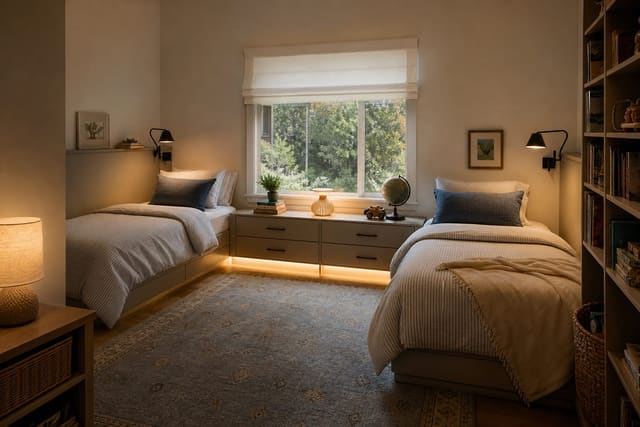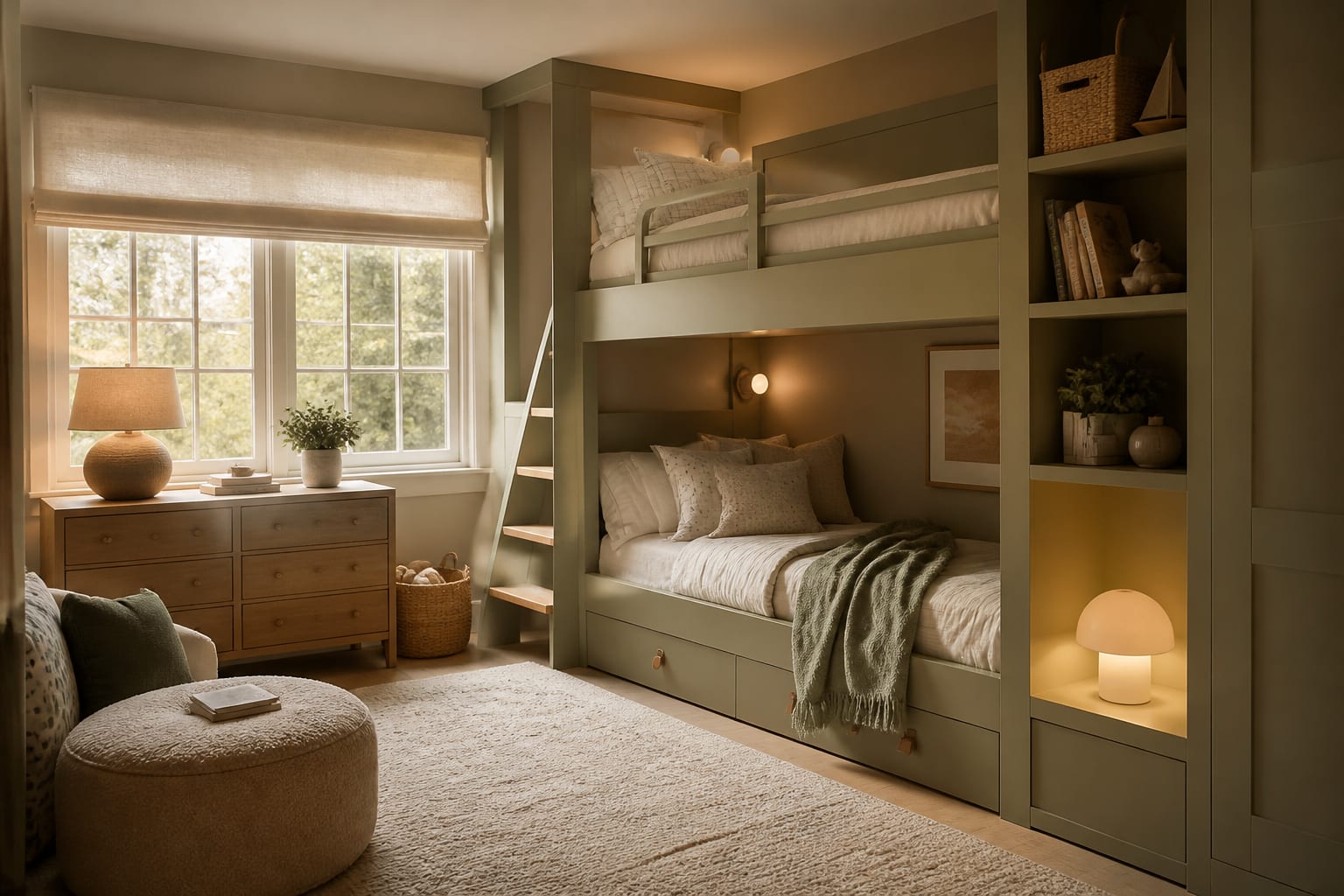
A bunk bed is the rare piece of kids' furniture that solves a real problem and delights the kids at the same time, but only if you nail safety before style. Most regret comes from buying for the fantasy, the slide, the tent, the loft desk, and discovering the guardrails are too short or the top bunk skims the ceiling fan. Get the clearances and the safety specs right first, and then the fun ideas have a solid frame to hang on. A well-planned bunk reclaims half a room's floor space and becomes the feature the kids brag about, which is exactly the payoff you want.
Lock down the safety specs first
Nothing about a bunk bed matters until it is safe, and the numbers here are not suggestions. The top-bunk guardrails must extend at least 5 inches above the top of the mattress, and they need to run along both sides, including the wall side, because kids roll. Any gap in the guardrail, and the space between the rail and the mattress, should stay under 3.5 inches so a head or limb cannot wedge through. Check the foundation slats are fixed in place, not just resting, since a top bunk that shifts is a failure waiting to happen.
The age rule is simple and worth repeating: children under 6 do not sleep on the top bunk. Their balance and judgment are not there yet, and most falls involve younger kids. Mattress thickness is the spec people overlook: a top bunk is built for a mattress around 6 to 7 inches thick, because a thicker one raises the sleeping surface and shrinks the guardrail's effective height below that 5-inch minimum. Buy a thin, firm mattress for the top and save the plush one for a bed on the floor.
Mind the ceiling and the ladder
Vertical clearance decides whether the top bunk is comfortable or claustrophobic. Leave at least 33 to 36 inches between the top mattress and the ceiling so a child can sit up without ducking, and check what is on that ceiling, because a fan or a flush light fixture above a top bunk is a hazard, not a detail. In a room with a standard 8-foot ceiling, a standard bunk leaves comfortable headroom, but a loft bed or a triple bunk can run tight, so measure the real distance, not the catalog's promise.
The ladder is where small falls happen, so treat it as a real feature. A slightly angled ladder is far easier for a child than a dead-vertical one, and flat, wide rungs beat round dowels that little feet slip off. Better still, a staircase with built-in drawers trades a few inches of floor for a far safer climb and bonus storage. Mount the ladder or stairs solidly so they cannot shift underfoot. A shared room benefits from these decisions twice over, since two kids use the climb every day; the same clear-traffic thinking that makes a shared kids' bedroom work applies directly to how the ladder lands on the floor.
Make it fun without making it dangerous
With the safety frame set, this is where a bunk earns its delight. The space under a loft or top bunk is prime real estate: a 42-inch desk, a reading fort with a curtain, a cubby wall, or a low play table all fit in a footprint the bed would otherwise waste. Theme it lightly, a house-frame bunk, a half-height loft for a younger child, or a simple tent over the lower bunk, so the room can grow up without a full replacement. Heavy built-in themes look great at 5 and embarrassing at 11.
Lighting and personalization carry a lot of the fun for little cost. Give each bunk its own clip-on or wall-mounted reading light at about 4000K so one kid can read while the other sleeps, and add a small shelf or a hanging organizer at each level for the books, water bottle, and stuffed animal that otherwise end up on the floor. A bunk is the centerpiece of a kids' room, so coordinating the bedding and wall color around it, the way any strong kids' bedroom scheme builds around its main feature, keeps the whole room feeling designed rather than assembled from parts.
Bunk bed ideas worth trying
With safety and clearance handled, here are concrete configurations kids actually love: - An L-shaped bunk that frees a corner and opens a footprint for a desk or play zone underneath. - A loft bed over a 42-inch desk for an older child who needs a study spot more than a second mattress. - A staircase bunk with drawers built into each step, trading a little floor for storage and a safer climb. - A triple bunk or an L-shape with a trundle for sleepovers, sleeping three or four without a third piece of furniture. - A house-frame bunk with a peaked top that doubles as a canopy for string lights and a draped fort. - A low half-height bunk for younger siblings, keeping the top sleeping surface closer to the floor. - Curtains on a tension rod around the lower bunk to give each child a private, cave-like sleeping nook.
See the bunk in the actual room with Re-Design
A bunk bed dominates a kids' room, so getting the scale and color right before it arrives saves a lot of grief. Upload a photo of the room to Re-Design and the app drops a bunk into your real space, so you can judge whether a loft, an L-shape, or a staircase model fits the floor and clears the ceiling fan before you order. Test bedding colors and a wall scheme around it, see how much play space survives underneath, and confirm the ladder lands somewhere sensible rather than blocking the closet. Picturing the finished room with your own walls and windows turns a big, awkward purchase into a confident one.
Frequently Asked Questions
How tall do bunk bed guardrails need to be?
The guardrails on a top bunk must rise at least 5 inches above the top of the mattress and run along both sides, including the wall side, because children roll in their sleep. Any gap, including the space between the rail and the mattress, should stay under 3.5 inches so a head or limb cannot wedge through. Use a thin top mattress around 6 to 7 inches so it does not raise the sleeping surface and shrink that rail height.
What age can a child sleep on the top bunk?
The widely followed rule is that no child under 6 sleeps on the top bunk, because younger kids lack the balance and judgment to climb and sleep up high safely, and most bunk falls involve them. Keep younger siblings on the bottom, save the top for older children, and add a nightlight near the ladder so any nighttime climb down is well lit and far less likely to end in a slip.
How much ceiling clearance does a bunk bed need?
Leave at least 33 to 36 inches between the top mattress and the ceiling so a child can sit up without ducking, and check what is mounted overhead, since a ceiling fan or a flush light above the top bunk is a real hazard. A standard 8-foot ceiling gives a standard bunk comfortable headroom, but a loft or triple bunk can run tight, so measure the actual distance in your room rather than trusting the product listing.