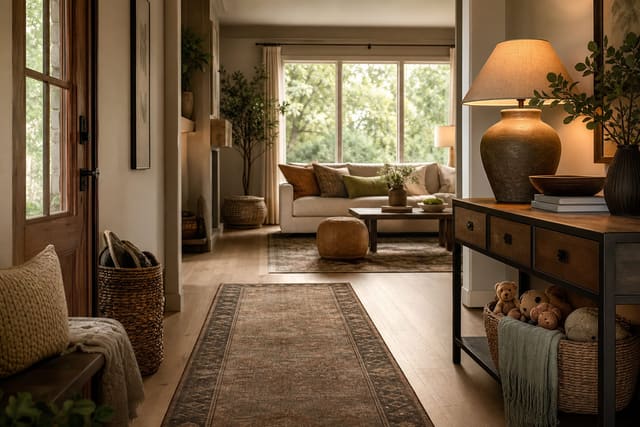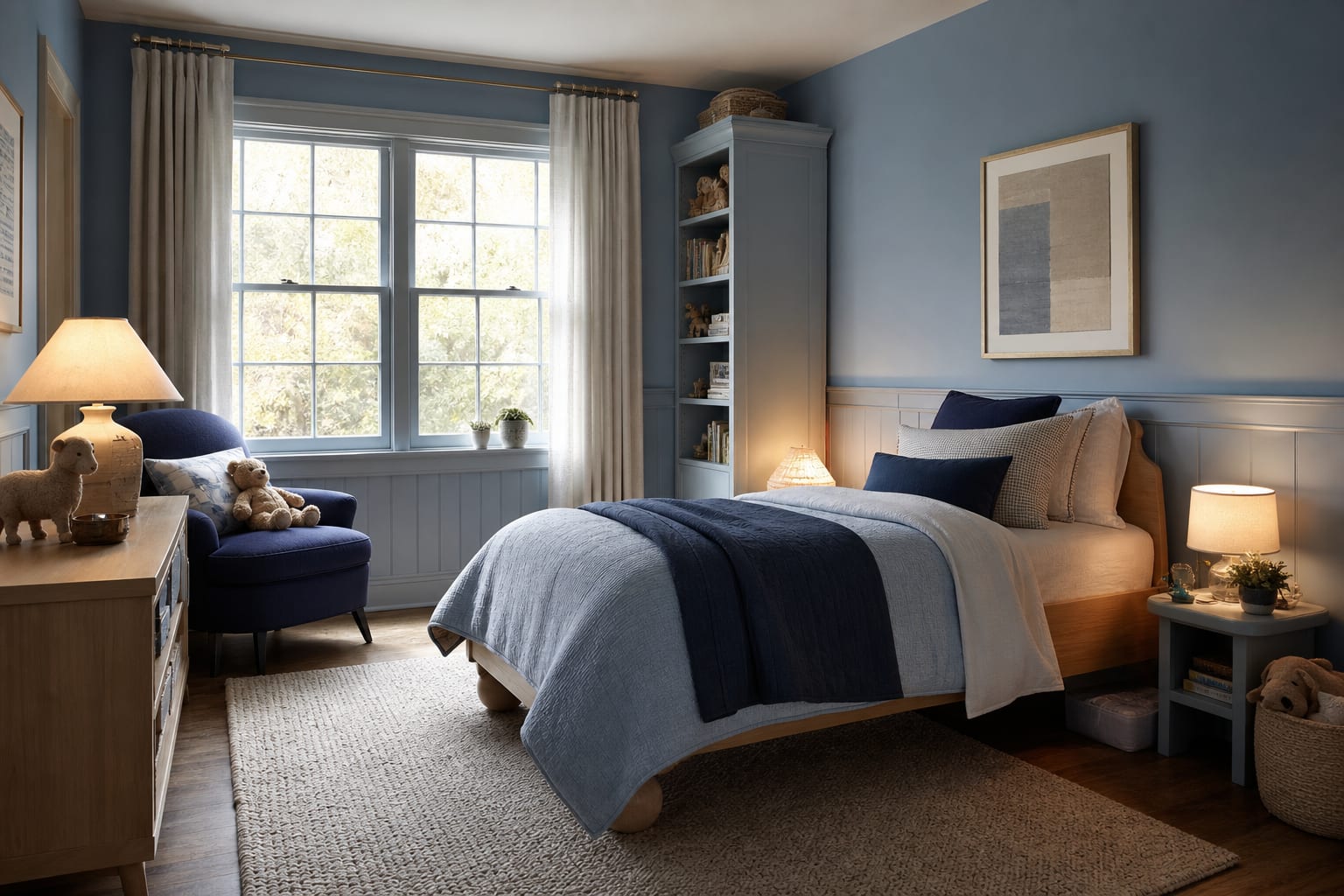
Child-safe paint is zero-VOC water-based latex in a scrubbable finish: eggshell for walls, satin or semi-gloss for trim and high-touch zones, matte only on ceilings, cured 7-14 days before kids fully re-enter the room. Choose the cleanest formula you can afford, then match sheen to how hard the wall gets touched. This guide separates the safety decision from the color decision so the room stays calm, washable, and livable.
What paint finishes and colors are safest for a child's bedroom?
The safest picks are zero- or low-VOC water-based interior paint in washable eggshell or satin, paired with soft, muted colors like warm white, pale blue, gentle green, clay beige, or dusty pink. "Non-toxic paint kids room" is shopping shorthand, not a guarantee — the wall still needs ventilation, drying time, and a real cure before a child sleeps beside it.
Look for a can labeled zero VOC or low VOC, interior acrylic or latex, and ideally a third-party certification such as GREENGUARD Gold. Skip exterior paint indoors even if the color is perfect; its additives are built for weather, not bedrooms. For trim, doors, or built-ins, use a water-based enamel instead of oil-based unless a contractor specifies otherwise.
Finish matters because kids touch walls constantly. Flat paint burnishes when scrubbed, so eggshell is the safer bedroom default. Use satin around bunk-bed ladders, closet doors, and the 36 inches of wall beside a desk or bed. Save semi-gloss for trim, not full walls, or every drywall patch will announce itself.
Muted paint also supports a sensory-friendly bedroom for children: fewer visual jolts, softer contrast, nothing demanding attention at bedtime.
The durability decision that matters after safety
Match sheen to abuse instead of chasing one "toughest" finish. Use eggshell on main walls, satin on wipe-heavy zones, and semi-gloss on baseboards, casings, and shelves — cleanable where it counts, soft everywhere else.
Drying and curing aren't the same thing. Most paint feels dry in hours but can take days or weeks to cure hard enough for scrubbing, so follow the label before shoving a bed tight to the wall. Keep a 2-3 inch gap behind headboards early on, ventilate with a cracked window and an exhaust fan, and let the child sleep elsewhere the first night if possible.
Prep decides whether a safer paint performs like an expensive one. Wash sticky spots, sand glossy patches, patch holes, and prime raw drywall, dark color changes, or crayon and marker stains. Zero-VOC topcoat can't bond over wax or dust.
In a rental, get the approved paint line in writing, save the formula sticker, and test a 12-inch sample board first. If only white is allowed, pick washable warm white over stark blue-white — it forgives scuffs and reads less clinical under warm bulbs.
Test this on your own room photo with ReDesign — keep the doorway, walls, windows, furniture, and fixed features visible so the preview reflects your actual room.
How to choose colors that calm the room and hide real life
Color safety isn't chemical safety, but it shapes sleep and upkeep. Best bets: misty blue, eucalyptus, oatmeal, mushroom, warm ivory, muted lavender, dusty rose, soft terracotta. Worst bets: neon green, candy red, high-chroma turquoise, and pure white in a room full of toys.
Test color at real scale. Paint two coats on poster board at least 8x10 inches, then hold it behind the bed, near the closet, and by the window. Check it in morning light, afternoon shadow, and under the actual bulb — 2700K warms beige and pink, while 4000K can flatten the same wall.
Skip cool, blue-white in north-facing rooms; it reads chilly. In strong western light, test greens and pinks carefully since late sun intensifies them. In a small bedroom, a same-color ceiling can soften corners as long as the value stays light to medium.
Coordinate paint with plants and textiles too, the same way a bedroom plants guide treats shape and placement as part of the palette — sage walls with oak furniture, or warm white walls with green plants and cream bedding.
Common child-safe paint mistakes to avoid
- Choosing flat paint for looks. It shows handprints and cleaning halos; use eggshell unless the product is specifically sold as washable matte.
- Confusing "low odor" with safe. Check the label for VOC content, indoor-use rating, and recoat time (often 2-4 hours) instead of trusting smell alone.
- Painting too close to bedtime. Paint earlier in the day, vent air outward, and give the room maximum drying time, especially for babies or kids sensitive to odor.
- Matching walls to themed bedding. Kids outgrow character sets fast; pull a quieter color from the pattern instead, like the gray-blue shadow or muted green leaf.
- Ignoring layout and energy. A bold accent wall behind the bed can feel loud at night; a feng shui bedroom guide can help with bed position and color intensity.
Use AI to preview the child's bedroom before you commit
Paint color shifts with flooring, bedding, daylight, and clutter more than people expect, so preview before buying a gallon. Upload a clear room photo and test the same color in eggshell, with satin trim, the bed in place, and the real rug or curtains included.
A good preview answers real questions: Does pale green yellow the carpet? Does warm white vanish next to oak furniture? Does dusty pink clash with red toy bins? Run a few versions, then sample only the top two in the room.
Photograph the bedroom in daylight with lights off, stand in a corner so two walls show, and clear distracting mess but not everyday furniture. Ask for muted washable paint, eggshell walls, satin trim, and a calm bedtime palette. If the preview only looks good with every toy gone, the design is too fragile for real use.
The final choice should pass three tests: it's rated for indoor sleeping spaces, the sheen wipes clean, and the color still feels gentle at night.
Frequently Asked Questions
Are all paints VOC-free now?
No. Many big-box paints are still low-VOC, not zero-VOC. For a child's room, specify zero-VOC water-based latex (Benjamin Moore Natura, Sherwin-Williams Harmony, ECOS), which tests at undetectable emission levels.
What paint sheen handles fingerprints and washing best?
Eggshell survives weekly wipe-downs on walls; satin or semi-gloss handles daily scrubbing on trim and chair rails. Flat and matte finishes mark instantly and rarely clean up fully.
How long should kids stay out of a freshly painted room?
With zero-VOC paint, 24-48 hours of open windows is usually enough. With low-VOC paint, wait 5-7 days before sleeping in the room and 14 days before treating walls as fully washable.
Is chalkboard or magnetic paint safe for kids?
Modern water-based chalkboard and magnetic paints are kid-safe once fully cured, but they need more coats (4-6) and a longer cure window, so ventilate aggressively while applying and drying.
Does AI help me pick a child-safe paint color?
Yes. Upload the room photo and preview color options against existing furniture and natural light so you commit to a final palette before buying test pots or full cans.
> Try this: Ready to see this on your own room? Open ReDesign and run the preview.
Three transformations to try
1. Childrens bedroom in zero-VOC eggshell pastel 2. Playroom with satin scrubbable trim 3. Chalkboard accent wall in nursery