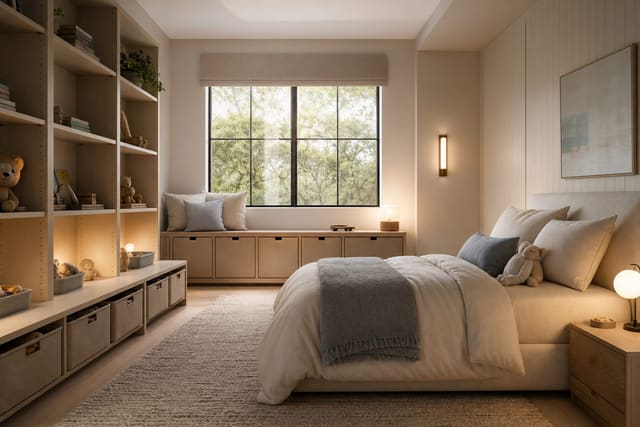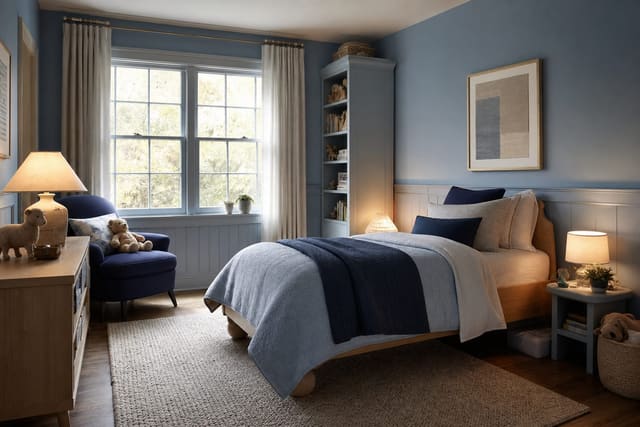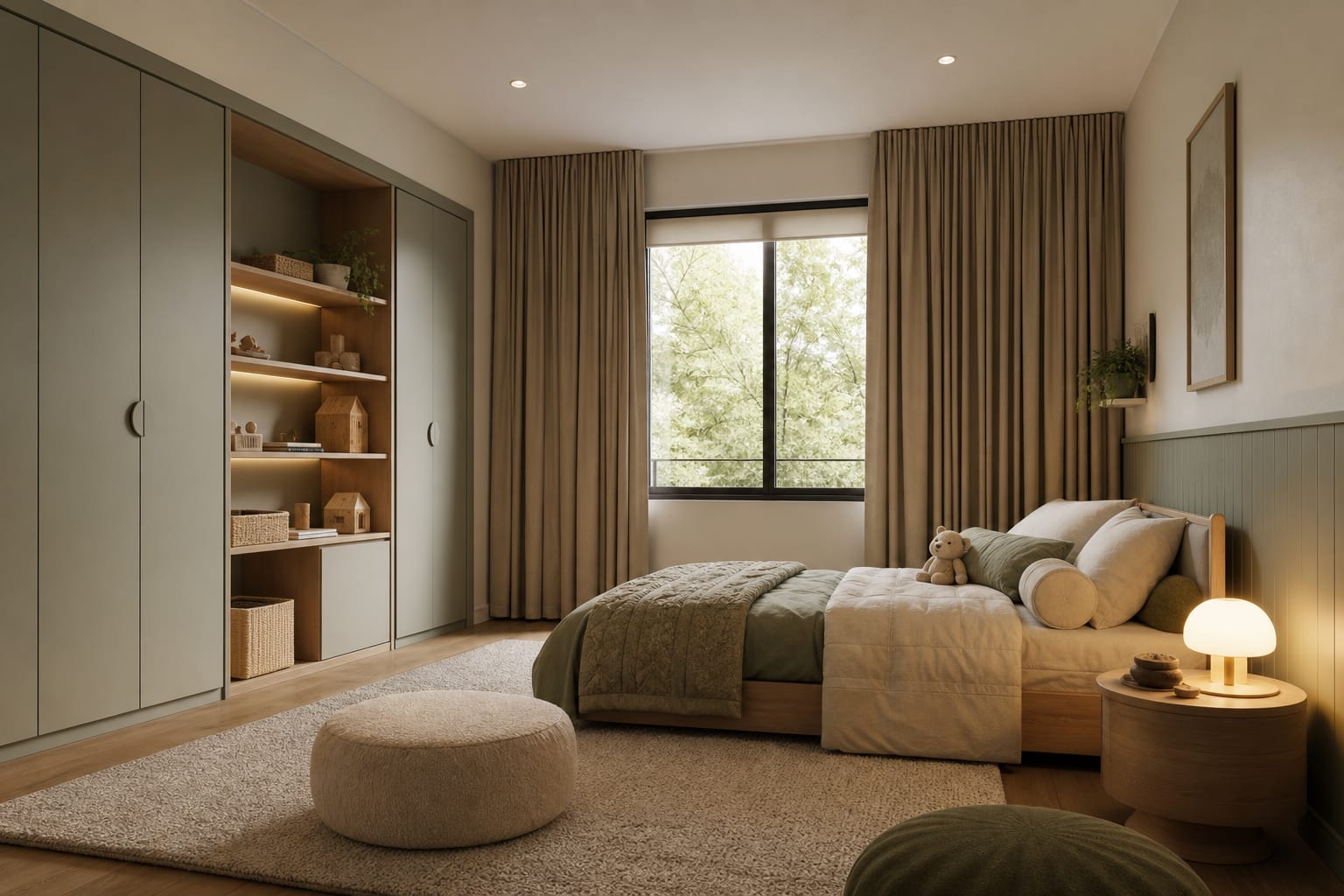
A sensory-friendly bedroom keeps light at 2200-2700K with dimmers, sound under 35 dB at the bed, predictable textures across bedding and rug, and one calm-down corner with a weighted blanket, low light, and a swing or rocking chair. Skip themed decor, bright novelty bedding, and open toy displays; they add visual and sensory load. The goal isn't a beige showroom, it's fewer surprises and more predictable comfort for a nervous system that's already working hard.
What makes a bedroom feel safe to a sensory-sensitive child?
Reduce load first, then add comfort: soft controllable light, predictable storage, gentle textures, clear floor paths, and a bed that feels protected. A room with six colors, exposed bins, blinking toys, scratchy sheets, and a buzzing fixture isn't neutral to a sensitive child, it's background noise with furniture.
Keep the palette to one main wall color, one wood or white furniture tone, and one small-dose accent. Muted blue, sage, warm ivory, mushroom, clay, and dusty mauve beat primary red, neon green, or sharp black-and-white contrast. If repainting, use the same logic as child-safe paint finishes and colors: low-odor interior paint, washable eggshell, and full drying time before the child sleeps in the room.
Anchor the bed against a solid wall with a view of the door (not head-in-doorway), and leave 24-30 inches of walking space beside it. A low upholstered headboard, wall-mounted cushion panel, or padded rail defines the bed without trapping heat like a fort.
Match texture to the child: cotton percale, jersey, or washed linen for kids who dislike slick fabric; fleece or flannel only for kids who actively seek warmth and pressure. Get professional guidance on weighted blankets if there are medical, mobility, or breathing concerns. Two pillows, one comfort item, and bedding that stays put beat a mountain of decorative cushions.
How should light, sound, and temperature be handled?
Light turns a sensory bedroom hostile fastest. Skip exposed bulbs, sparkle fixtures, and cool white lamps; use warm 2700K bulbs, fabric shades, and a flicker-free dimmer. For bedtime reading, mount a shaded sconce 18-24 inches above the mattress line so light lands on the page, not the eyes.
Blackout curtains should extend 6-10 inches beyond the window casing and hang close to the floor, since edge light leaks are what kids often notice. In rentals, use tension shades or wraparound rods instead of drilling. Avoid mini blinds where cord safety, rattling, or striped light patterns cause stress.
Soften sound before masking it: a rug under the bed, felt chair pads, fabric bins, and curtains do more than a louder sound machine. An 8x10 rug in a 10x12 room usually quiets footsteps and protects knees. If a sound machine helps, keep it low and steady, placed across the room, not beside the pillow.
Temperature matters too. Use easy-to-adjust layers, a fitted sheet, a breathable blanket, and one comforter, instead of three loose throws. Skip memory-foam toppers for kids who overheat; add a washable cotton blanket at the foot of the bed for kids who seek warmth, rather than raising the room temperature for everyone.
Test this on your own room photo with ReDesign before finalizing the layout, keeping the room structure, daylight, ceiling line, and main path visible.
The storage decision that changes the whole room
Storage controls visual volume. Open shelves look organized only when every item is styled, and kids don't live that way; closed storage and fewer visible categories make the room easier to scan when a child is tired.
Let daily items stay visible (pajamas, current book, one comfort object) and put noisy categories away: blocks, dress-up clothes, craft supplies, electronics. A child who loves lining up objects may need one intentional display ledge, not every surface surrendered to collections.
Keep everyday bins reachable without climbing, roughly 18-42 inches from the floor depending on age. Skip deep toy chests, they hide sharp plastic and create overstimulating rummaging. For adaptable pieces, see children's bedroom storage that grows: adjustable shelves, labeled drawers, and modular units.
Match labels to how the child understands the room, words, photos, color blocks, or one icon per drawer. Keep them large, high contrast, and consistent; five tiny categories is an adult filing system, not a bedtime support.
Common sensory bedroom mistakes to avoid
- Making the room too visually exciting. Murals, tents, fairy lights, and rainbow rugs look fun on a mood board but the child has to sleep inside the collage. Pick one playful element and keep the rest quiet.
- Adding a bed tent before fixing the room around the bed. Tents can trap heat, block airflow, and complicate caregiving. Try a half canopy, a wall corner, or curtains behind the headboard first, and keep one side of the bed reachable.
- Treating sensory design as only softness. Some kids need pressure or movement, others need a room that stops touching them. Test one texture at a time for several nights before overhauling the whole room.
- Ignoring the path from door to bed. Keep a 24-inch minimum clear path from door to bed and bed to bathroom, with a low amber night light, not a bright blue-white plug-in beside the pillow.
- Adding plants without checking scent and mess. Strong-smelling flowers, prickly leaves, and messy soil can create new problems. See the bedroom plants guide for sturdy, low-scent, low-maintenance options.
Should you use AI design to preview a child's bedroom?
Yes: previewing catches conflicts before you buy, paint, assemble, and regret. A gentle wall color can turn loud next to a red rug, and a low bed can look peaceful until the dresser and shelf create a narrow obstacle course.
Upload a corner photo showing two walls, the bed, the window, and the main storage area, keeping the real dresser, toy category, and floor space intact. Ask for muted colors, closed storage, warm 2700K lighting, blackout curtains, soft rug coverage, and a protected bed position. Change one variable at a time (bed placement, curtain color, storage style, rug size) across versions.
The useful preview isn't the prettiest one, it's the version that reads calm at 8 p.m. when everyone is tired. Watch for harsh contrast, exposed clutter, tight walkways, or anything charming in daylight but busy at bedtime. If the best version still depends on hiding every toy, the design is too fragile for a real child.
For the broader upload workflow, use the AI design complete guide as the parent checklist, then return here for scale, light, and layout choices.
Frequently Asked Questions
What lighting works in a sensory-friendly bedroom?
Use a 2200-2700K warm dimmable overhead, blackout cellular shades, and an amber nightlight around 1700K. Avoid blue or daylight LEDs and flickering CFLs, which trigger many sensory-sensitive kids.
How do I reduce sound triggers in a child's bedroom?
Add a 6x9 wool rug, lined curtains, and a soft acoustic panel; aim for under 35 dB at the pillow. Use a white-noise machine on low if outside traffic or HVAC clicks intrude.
What textures are best for sensory bedding?
Stick with cotton or bamboo sheets at 200-300 thread count and a weighted blanket sized to about 10 percent of body weight plus 1 lb. Use the same rug texture under the bed and at the calm corner so transitions stay predictable.
Where does a calm-down corner go?
Place it away from the door and toy storage, ideally window-adjacent or under a loft, with a swing, rocking chair, or floor cushion. This lets the child self-regulate without crossing the room's active zone.
What about visual clutter and color?
Use one muted wall color (blue, sage, or pale grey), keep visible toys to 5-8 items, and rotate the rest through closed bins. High-contrast murals and primary colors overstimulate many sensory-sensitive kids.
> Try this: Ready to see this on your own room? Open ReDesign and run the preview before you buy, paint, drill, or move furniture.
Three transformations to try
1. Muted blue walls with weighted-blanket bed and swing corner 2. Blackout cellular shades with amber nightlight and rocking chair 3. Acoustic panel art with wool rug and rotating closed-bin storage