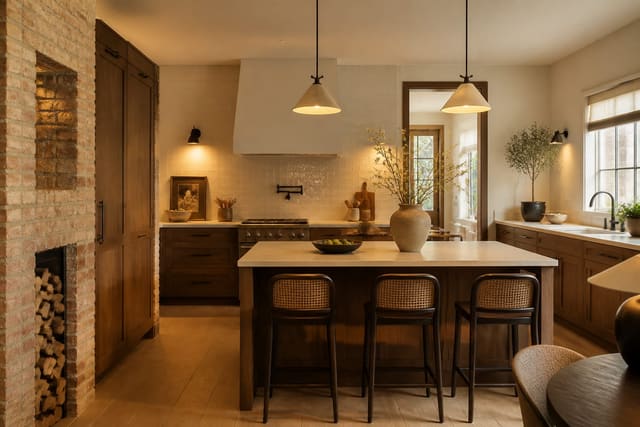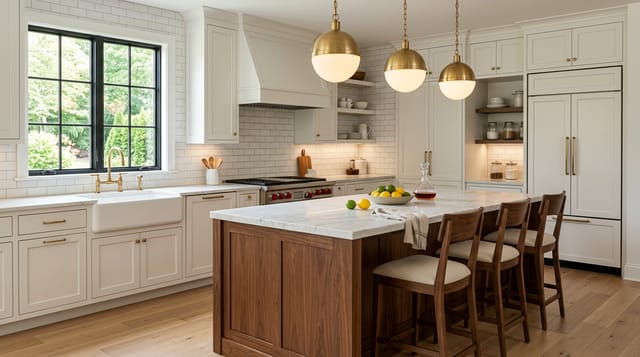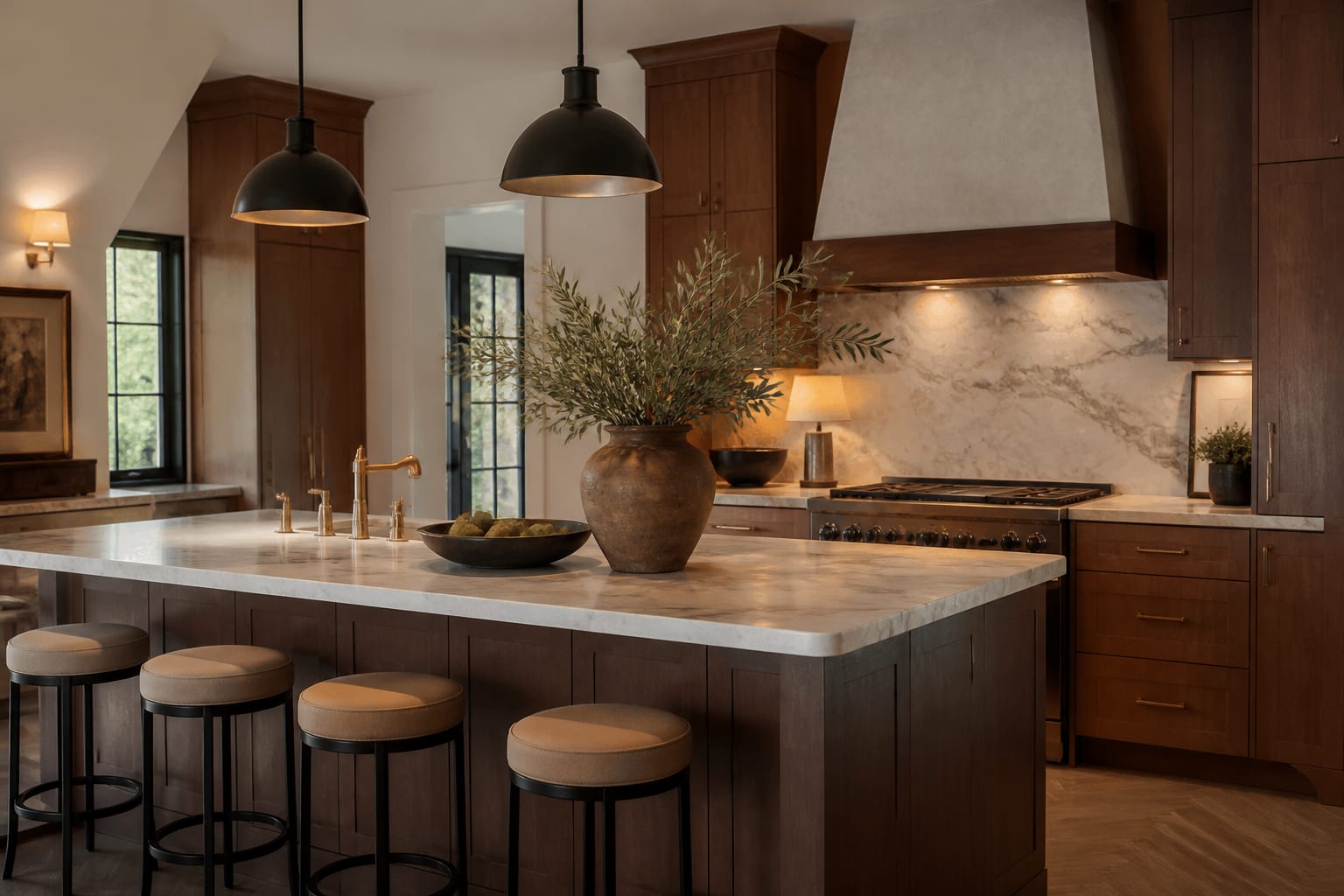
The edge profile is the detail most people forget until the fabricator asks, and then they decide in thirty seconds something they will look at every day for fifteen years. My read: for most modern kitchens the eased or a thin square edge is the right call, because it looks clean and current and never dates. The answer to which countertop edge profile you should choose comes down to your counter material, your style, and how much drama you want at the perimeter.
The edge is where the slab meets your hand and your eye a thousand times a week. It deserves more than a rushed pick from a sample board, so here is how the common profiles actually behave.
The profiles that matter and how they read
Start with the workhorses. An eased edge is essentially a square edge with the sharp corner sanded to a tiny radius so it does not chip or feel knife-like. It is the default for quartz and modern stone because it looks crisp without being severe. A true square edge takes that further with a harder 90-degree line, popular in minimalist and industrial kitchens, though it shows chips more readily on natural stone.
Beveled edges add a 45-degree facet, commonly around 1/4 inch, that catches light and reads a touch more formal. Bullnose, whether full or half, rounds the profile completely, which feels soft and forgiving for households with kids but can look like a holdover from older kitchens. Ogee, with its carved S-curve, is the most traditional and the most expensive to fabricate. Match the edge to the cabinetry, the same way edge and door style get coordinated in a thoughtful shaker cabinet plan.
There are a couple of profiles people overlook. A pencil edge rounds just the top corner to a small, tight radius, giving most of the crispness of a square edge with a friendlier touch where your forearm rests. A demi-bullnose, or half-round, softens only the top half of the edge and reads cleaner than a full bullnose while still being gentle. For very thin contemporary looks, a knife edge or a chamfered underside can make a thick slab appear to float, though those are fragile on natural stone and best reserved for quartz. The point is that the menu is wider than the four names everyone knows, and the in-between profiles are often the smarter pick.
Matching the edge to material and layout
The right edge depends partly on the slab. Quartz and porcelain take crisp eased and square edges cleanly because they are dense and consistent. Natural stones like marble and softer granites chip more easily on a hard square edge, so a slightly eased profile protects the corner. For a thin, modern look on quartz, fabricators can miter two pieces to fake a thick 2 inch or even 4 inch edge without the cost of a full-thickness slab.
Layout matters too. A waterfall edge, where the counter material turns 90 degrees and runs to the floor at an island end, is a strong contemporary statement that depends entirely on grain matching, so it shines on dramatic veined quartz and marble. It also eats material and labor, so plan it into the budget early as you settle the overall kitchen layout. A few things to weigh when choosing your edge:
- Material hardness: dense quartz handles sharp profiles; softer natural stone prefers an eased corner.
- Household use: rounded and eased edges are kinder to hips and toddler heads than a hard square.
- Style era: eased and square read modern; bullnose and ogee read traditional.
- Thickness: standard slabs run 2cm or 3cm, and a mitered edge can build the look of a thicker counter.
- Budget: simple profiles cost least per linear foot; waterfalls and carved edges add real money.
Style direction and the look you are after
The edge should agree with the rest of the kitchen. A flat-panel, handle-light contemporary kitchen wants a thin eased or square edge, or a bold waterfall on the island. A warmer, more classic kitchen with framed cabinetry can carry a beveled or gentle ogee without looking fussy. The mistake is mixing a heavily carved edge with sleek slab-front cabinets; the details fight.
If you are unsure, default to eased. It is the profile that disappears in the best way, letting the stone and the cabinetry carry the room, which is exactly the restraint that holds up across the looks in most AI-driven kitchen schemes. Drama at the edge is a choice you should make on purpose, not by accident.
Consistency across the kitchen is the quiet rule most people miss. The perimeter counter, the island, and any built-in desk or bar should usually share one edge profile so the room reads as a single design rather than a sampler of details. If you want the island to stand apart, the cleaner way to do it is through color or a contrasting material, not a different edge shape, which tends to look like an oversight. The edge is a supporting detail, and supporting details work best when they repeat.
Think about thickness in the same breath as profile. A standard 3cm slab carries a fuller, more substantial edge than a 2cm slab, and on a 2cm material fabricators often laminate a strip underneath to build the apparent thickness back up. That laminated buildup creates a seam line on the edge face, which is invisible on solid colors but can be obvious on heavily veined stone. If you love a busy marble-look quartz, plan the edge and thickness together so the seam does not land somewhere it will bother you.
Common mistakes to avoid
The most common mistake is choosing an ornate edge to "get your money's worth" and ending up with a counter that looks dated the day it is installed. Carved ogee profiles on a modern kitchen are a frequent regret. A second common mistake is putting a hard square edge on soft natural stone, where the unprotected corner chips within a year of normal use. Match the profile to the material's hardness, not just the look you saw online.
Other mistakes to avoid: forgetting that a waterfall edge requires careful grain matching and adds 25% to 40% to the slab cost, picking a bullnose by default and later wishing for a crisper line, and deciding the edge at the fabricator's counter under time pressure. Choose it deliberately, ideally after seeing it rendered in your own kitchen.
Touch the samples before you sign, not just look at them. Run your hand along each profile the way you will a hundred times a day while cooking, because comfort at the edge is as real as appearance. A hard square edge looks sharp in photos and can feel sharp against your wrists; a heavily rounded bullnose feels soft but can read clunky. Ask your fabricator which profiles add cost on your specific material, since a simple eased edge is usually included while waterfalls, mitered thick edges, and carved profiles add real money. Decide with both your eyes and your hands, and you will not second-guess the counter every time you lean on it.
Use AI design to preview your countertop edge profile before you commit
An edge profile is locked into the stone the moment it is fabricated, so there is no changing your mind later without recutting. Before you sign off, it helps to see the edge in the context of your cabinets, backsplash, and island. With Re-Design you upload a photo of your kitchen and re-render the counters with a clean eased edge, a beveled detail, or a full waterfall so you can judge which one suits the room.
That preview turns an abstract sample-board decision into something you can actually evaluate in place. Upload your kitchen photo, compare a quiet eased edge against a statement waterfall on the island, and commit to the profile once you have seen it living against your real cabinetry instead of guessing from a one-inch corner sample.