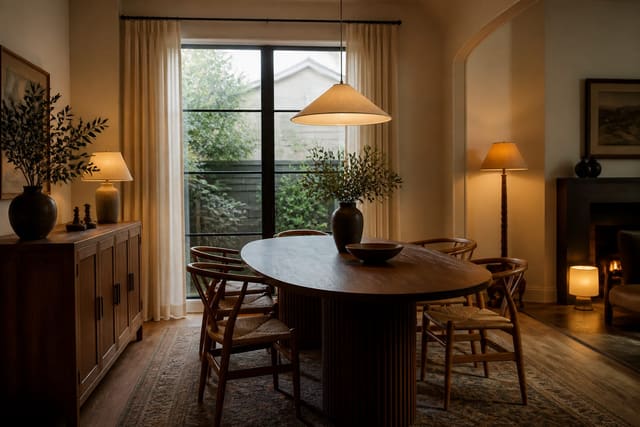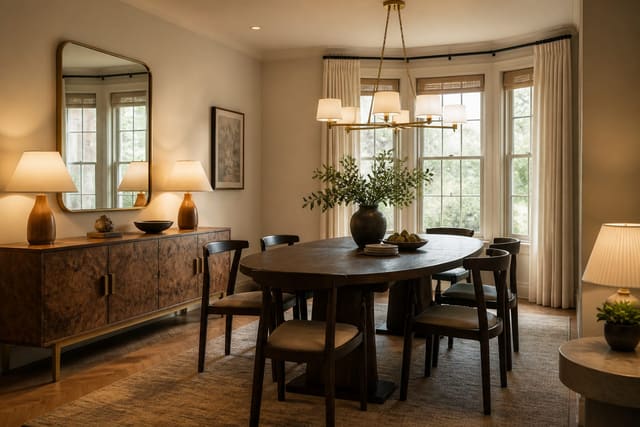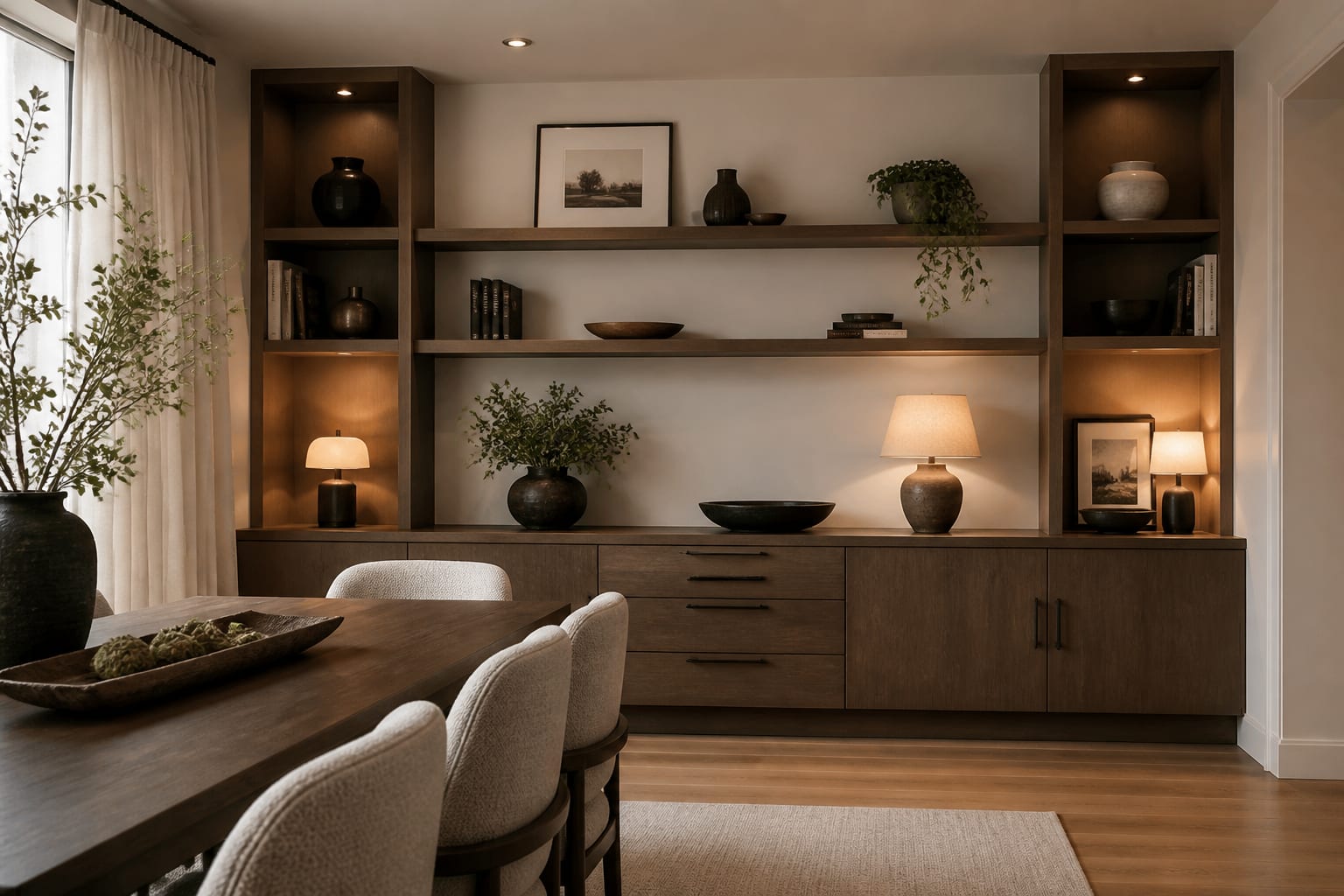
A credenza sideboard solves real dining storage by adding closed cabinets, a serving surface, and a wall anchor in one piece. Size it to roughly two-thirds to three-quarters of your table's length, keep its height near 30 to 34 inches, and leave at least 36 inches of clearance to the table so the room still functions for hosting, not just for looks.
How big should a credenza be?
A sideboard fails most often because it's the wrong size for the wall and table, not because it's ugly. Choose a piece roughly two-thirds to three-quarters the length of your table, so a 72-inch table pairs with a 48- to 54-inch sideboard. Go shorter and it looks stranded; go longer and it overwhelms the room and can block doorways. Depth matters too: most sideboards run 16 to 20 inches deep, enough for platters without jutting into the walking path.
Clearance is the proportion people forget. Leave at least 36 inches between the back of the dining chairs and the front of the credenza so chairs pull out and guests can pass behind seated diners; 42 to 48 inches is more comfortable in a busy room. A shallow or wall-hung piece gives you storage without stealing floor space in a tight room.
What height and storage should you choose?
Most sideboards land between 30 and 36 inches tall. The sweet spot sits near your table's roughly 30-inch height or slightly above, so the top doubles as a serving extension when plating food. Too low (under 30 inches) reads like a TV stand and forces you to stoop; too tall (above 38 inches) feels like a hutch base and is awkward to serve from. Aim for 32 to 34 inches when in doubt.
Inside, prioritize closed storage. Dining rooms collect clutter you don't want on display: spare linens, chargers, candles, serving pieces, and bottles. Look for a mix of deep drawers for flatware and napkins plus cabinets with an adjustable shelf for tall pitchers and stacked platters. Pairing the piece with the right table is half the equation; our guide on how to choose a dining table covers the rest.
How do you style the top without it becoming a dump zone?
The surface of a credenza is prime real estate, and the temptation is to let it collect keys, mail, and chargers. Resist that. Anchor the wall above with art or a mirror hung 6 to 10 inches over the top, then arrange a small, deliberate vignette below: a tall element on one side (a lamp or stacked books, 12 to 16 inches), balanced by something low and organic like a bowl or vase, with open space left on purpose.
Lighting gives the piece a second job. A pair of small lamps or one sculptural lamp turns the credenza into a soft light source for evening dinners, and warm bulbs around 2700K flatter both food and room. The same layered-light thinking runs through our dining room lighting ideas guide. Keep at least half the top clear so it still works as a landing spot for a tray when you host.
What mistakes should you avoid with a credenza?
- Sizing the piece to the wall instead of the table, so it dwarfs or strands the dining set.
- Ignoring the 36-inch clearance rule, leaving no room to pull chairs out or pass behind guests.
- Choosing open shelving, which puts linens, bottles, and clutter permanently on display.
- Picking a height under 30 or over 38 inches, too low to serve from or too tall to plate on.
- Hanging art too high instead of anchoring it 6 to 10 inches above the top.
- Letting the surface turn into a daily drop zone for keys and mail.
The clearance mistake is the one you feel at every meal. A credenza that looks perfect in a showroom can make a real dining room unworkable if it squeezes the path below 36 inches. Measure that gap before you fall for a piece.
See it first in Re-Design
A credenza is a big horizontal commitment against one wall, and proportion is hard to judge from a product listing. Upload a photo of your dining room to Re-Design and preview sideboards of different widths, heights, and finishes against your actual table and wall, so you can see whether a 54-inch walnut piece anchors the space or a leaner 48-inch profile keeps the clearance you need. Test a light oak against a dark painted finish and place art at the right height before you order anything.
Frequently Asked Questions
How wide should a credenza be compared to the dining table?
Aim for roughly two-thirds to three-quarters of your table's length. A 72-inch table pairs well with a 48- to 54-inch sideboard. Shorter pieces look stranded on a long wall, and longer ones overwhelm the room and risk blocking doorways. Most sideboards are 16 to 20 inches deep, enough for platters without crowding the path.
What is the ideal height for a sideboard?
Most run 30 to 36 inches tall, with the best sitting near your table's 30-inch height or just above so the top works as a serving extension. Below 30 inches it reads like a TV stand; above 38 it feels like a hutch base and is awkward to plate from. Aim for 32 to 34 inches when unsure.
How much clearance do I need around a credenza?
Leave at least 36 inches between the back of the dining chairs and the front of the sideboard so chairs pull out and people can pass. In a busy room, 42 to 48 inches is more comfortable. Measure this gap before buying, since tight clearance makes a dining room frustrating to use at every meal.
Should a credenza have open or closed storage?
Closed storage works better in a dining room, since the space collects linens, chargers, candles, serving pieces, and bottles you don't want on display. Look for deep drawers for flatware and napkins plus cabinets with an adjustable shelf for tall pitchers and stacked platters, so overflow stays hidden and tidy.