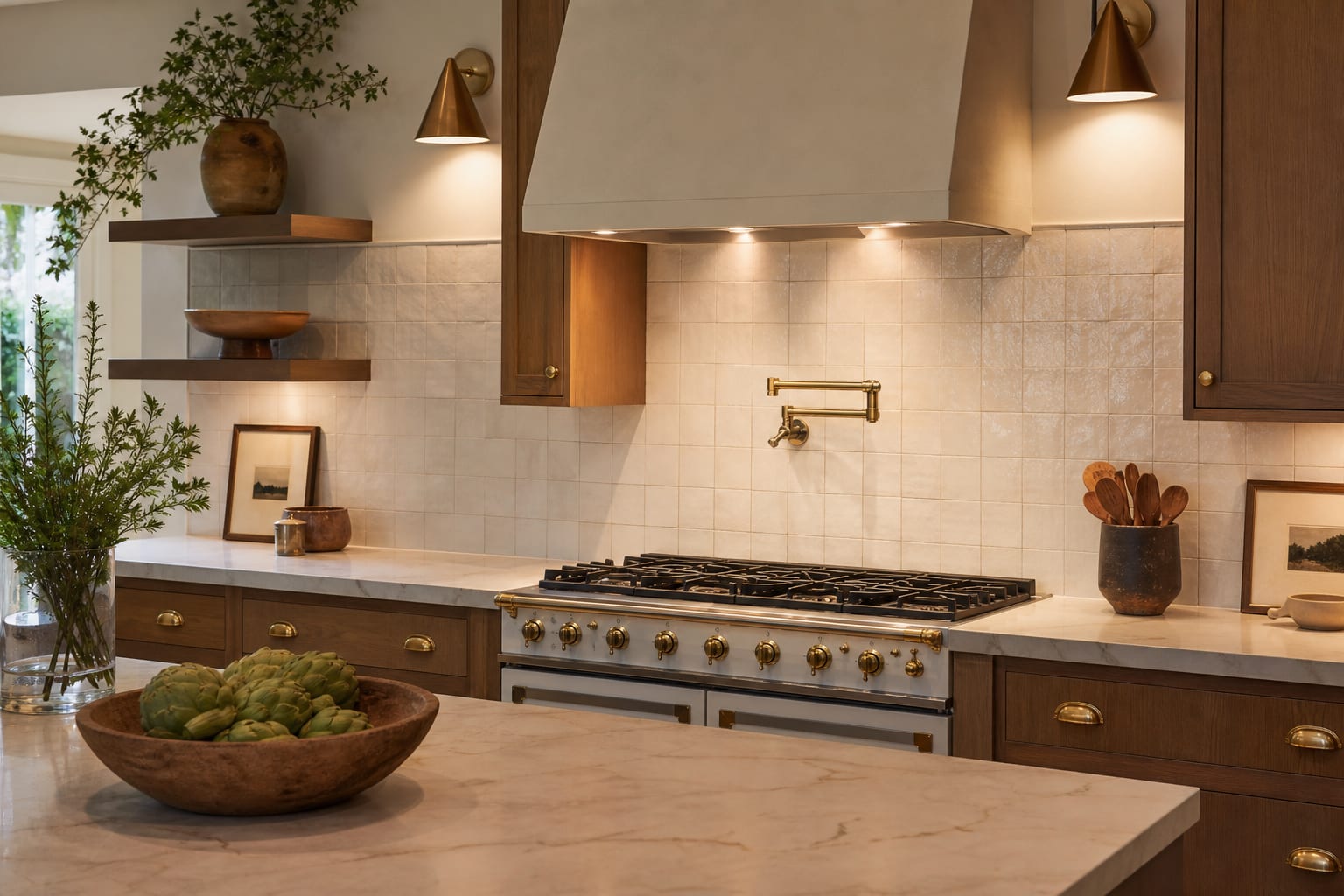
Update old kitchen tile by recoloring the grout, shifting cabinet and wall color to complement the tile's undertone, and swapping one fixture — hardware, faucet, or pendant — to pull the tile into your current palette. No removal required. Replace tile only when it is failing; paint or regrout everything else.
Which fix should you choose: regrout, paint, or replace?
Regrout sound tile, paint only low-wear vertical surfaces like a backsplash, and replace tile that is cracked, loose, water-damaged, badly installed, or so visually dominant that surface fixes cannot calm it. Grout fixes neglect, paint buys time, and replacement fixes the wrong material.
First separate ugliness from failure. Run a fingernail across the grout lines. Stained, sandy, or missing grout means the first project is grout repair, not demolition.
Next, judge location. A backsplash behind a coffee maker lives easier than a floor or counter; painted tile survives splashes but not the abrasion of shoes and pans.
Finally, weigh how much of the room the tile controls. A quiet four-inch backsplash may only need fresh grout and better lighting; a busy mosaic from counter to ceiling may keep shouting no matter how clean the lines are. If the tile is only part of a larger update, compare it against cabinet refacing versus replacement costs before spending the whole budget on tile alone.
When is regrouting the smartest fix?
Regrouting works when the tile is not moving under pressure, edges are not lifting, and tapping several pieces produces no hollow sound. It is the lowest-risk move because it respects the existing pattern while making the surface read cleaner.
If grout is only surface-stained, a deep clean or grout colorant may be enough. If it is powdery, missing, or patched in several colors, remove it to a consistent depth before regrouting.
Grout color is the underrated design choice. Matching the tile makes the grid recede; a dark contrast grout makes every cut and bevel more obvious. If the tile is already busy, pick grout within one or two shades of it. For white subway or cream ceramic, warm gray usually hides cooking marks better than stark white, which looks clean for a week and dingy soon after.
Test this on your own kitchen photo with ReDesign before committing — keep the doorway, walls, windows, and fixed features visible so the preview solves the room you actually have.
When does painting kitchen tile make sense?
Paint kitchen tile only when it is vertical, structurally sound, lightly used, and ugly enough to justify the maintenance tradeoff. Tile paint is a coating, not new tile, and it lives or dies on prep.
A painted backsplash works best on ceramic or porcelain that is not glossy with grease, loose, or exposed to standing water:
- Clean with a degreaser and scuff the surface.
- Repair any failed grout.
- Tape edges precisely.
- Apply a bonding primer and a coating system rated for tile.
Choose a color quieter than your frustration — warm white, cream, clay, or muted green-gray — especially if counters or floors are already busy. Satin or semi-gloss wipes clean more easily, but too much shine highlights brush marks.
If you want a new-backsplash look without mortar, see peel-and-stick backsplash pros and cons before painting. Peel-and-stick is more reversible; paint looks calmer over uneven tile shapes. Neither should sit behind a serious range unless rated for that heat.
When is replacement worth the mess?
Replace tile that is broken, loose, badly proportioned, sitting on a failing substrate, or so loud that no smaller fix calms it. If backsplash tiles are popping off, the wall feels soft near the sink, or repaired grout keeps cracking, the problem is behind the surface.
Replace floor tile sooner than backsplash tile when cracks recur — that usually points to subfloor movement or missing expansion space, not impact damage. New floor tile needs a stable substrate, proper underlayment, and consistent expansion clearance at appliances and doors.
Backsplash replacement is cleaner than people fear but still touches the room: countertops can chip during demo, drywall may need patching, outlets may need extenders, and a new tile thickness can change how trim and range gaps look.
Scale matters as much as color. In a small kitchen, giant veined slabs can overwhelm short cabinet runs, while tiny mosaics can feel fussy behind busy counters. A simple field tile, handmade-look square, narrow rectangle, or slab-look porcelain with fewer grout lines is a reliable middle path. If storage is also lacking, weigh small pantry versus walk-in storage before putting the whole budget into tile.
Common mistakes that make old tile look worse
- Grout color that fights the tile. Dark charcoal on beige can look harsh; bright white around cream can make tile look yellow. Test samples beside the actual counter and cabinets first.
- Painting floor tile and expecting factory durability. A kitchen floor under stools, pets, and wet shoes will wear paint fast; treat it as short-term and add rugs at high-traffic spots.
- Replacing tile without fixing lighting. Old tile looks worse under cool bulbs or a single overhead fixture. Use warm 2700K–3000K bulbs with high color rendering.
- Choosing tile in isolation. A backsplash touches cabinets, counters, trim, and metal finishes. Bring 4-by-4-inch samples home, hold them vertically, and check them in morning and evening light.
Use AI design to preview your kitchen tile fix before you commit
Upload a straight photo of the kitchen and test three versions: fresh grout on the existing tile, a painted backsplash, and full replacement. Keep cabinets, counters, flooring, and lighting consistent across versions so the tile decision is what's actually being tested.
Photograph from the entrance or a back corner so the backsplash, counters, cabinet faces, floor, and a window or light source are all visible. If you cook at night, take a second shot under the lights you actually use, since glossy tile changes dramatically after dark.
Look for the smallest fix that makes the kitchen feel cleaner. If regrout alone sharpens the cabinets, stop there. If every successful preview replaces tile, cabinets, counters, and lighting together, tile isn't the only issue and the budget needs a bigger plan.
Frequently Asked Questions
Can I refresh dated kitchen tile without replacing it?
Yes. Recolor the grout for high contrast (charcoal against white tile, light grout against terracotta), repaint cabinets in a coordinating tone, and upgrade hardware. That trio reframes existing tile as a design choice rather than a dated leftover.
Should I paint over dated kitchen tile?
Paint and epoxy refinishing work on low-traffic backsplash tile in dry zones, but they fail on floor tile and near sinks. For those higher-wear zones, recolor the grout and shift the surrounding cabinet and wall colors instead of painting the tile itself.
What grout color modernizes dated tile?
Switch beige or off-white grout to charcoal for graphic contrast against a white-tile field. Switch dark grout to oat or warm gray for a softer, modern read on terracotta or earth-tone tile.
Should cabinet color match the tile or contrast it?
For dated terracotta or honey tile, paint cabinets a deeper warm tone like sage, navy, or walnut to give the tile a partner color. Matching honey cabinets to honey tile reads dated; deliberate contrast reads designed.
Can AI preview the refresh before I commit?
Yes. Upload a kitchen photo and preview regrout color, cabinet color shifts, and hardware swaps against the existing tile before buying anything, so you can compare options side by side without demolition.
> Try this: Ready to see this on your own room? Open ReDesign and run the preview.
Three transformations to try
1. Charcoal grout on white tile backsplash 2. Sage cabinets against honey terracotta tile 3. Brushed brass hardware refresh on tile kitchen