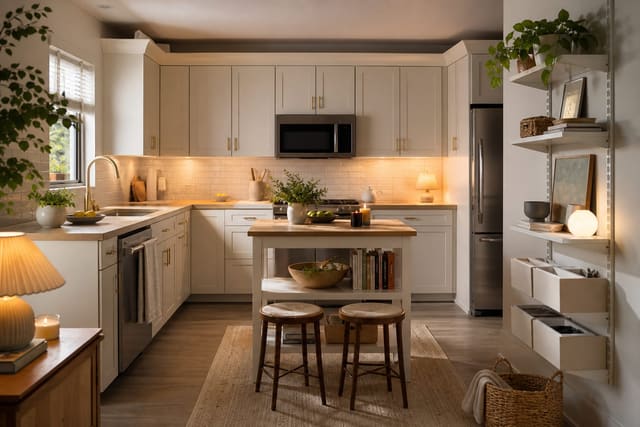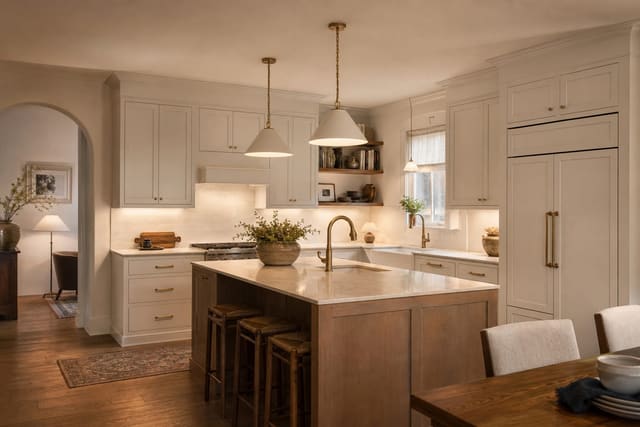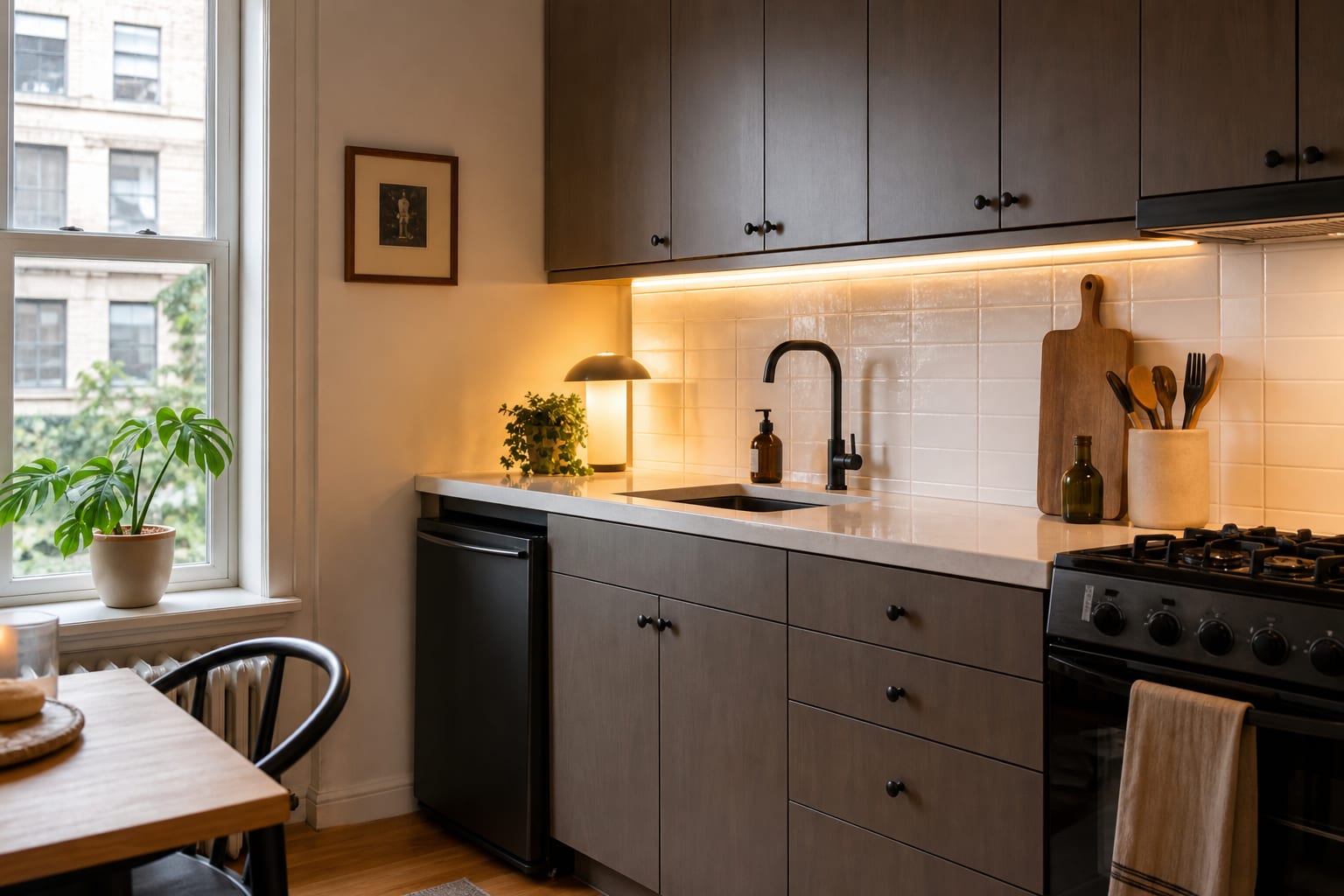
Peel-and-stick backsplashes hold up only in low-moisture kitchens with smooth painted drywall. Smart Tiles and Daltile Stick & Go survive 18 to 36 months over a typical sink; vinyl-printed knockoffs peel at the cooktop within 6 months, and no peel-stick belongs behind a working range. The products that fail are the ones asked to cover texture, bridge bad corners, or fight direct heat.
Which peel-and-stick backsplash products actually hold up?
Peel-and-stick backsplash tiles hold up best as thin panels or individual tiles with strong pressure-sensitive adhesive, installed on a smooth wall that's been degreased and dried fully. Adhesion, heat clearance, seam behavior, and wall texture matter more than pattern.
The most reliable renter option is a flexible vinyl or gel panel with a lightly raised tile face. It bends around small wall waves and cuts with a utility knife. Look for panels around 10" x 10", 12" x 12", or 12" x 24" since smaller sizes are easier to dry-fit around outlets than giant sheets. A printed or molded grout line around 1/16" to 1/8" reads more believable than a wide gray line.
Rigid PVC or composite panels look cleaner at the seam but are less forgiving on old plaster or bowed drywall. On orange-peel texture or old paint drips, a stiff panel touches only the high spots, leaving air pockets that become lifted corners.
Individual tiles with a real metal, glass, or stone cap look more permanent but are the riskiest rental choice. They're heavier, harder to remove, and more likely to damage weak paint. Use them only on a wall you own, or on a removable backing board behind a coffee station.
Where peel-and-stick backsplash fails first
Failure almost always starts at the edge closest to heat, water, or grease. Keep peel-and-stick at least 6" from a gas flame when the manufacturer gives no heat rating, and avoid placing vinyl directly behind a high-output burner. Behind an electric or induction cooktop, check the product's stated heat limit rather than assuming all adhesive behaves the same.
Steam is the second problem. A panel behind a kettle or sink can loosen where moisture keeps hitting the same seam. Run seams vertically away from the splash zone, press each panel with a roller for 30-60 seconds, and degrease the wall first — soap residue and cooking oil ruin an otherwise decent product.
Texture is the third problem and the most underestimated. Peel-and-stick tile needs full contact; on a sandpaper-like wall, adhesive grabs only tiny peaks instead of a plane. Test one sample square for 48 hours near the worst area before ordering a full box. If it lifts, the fix is a different surface strategy, not stronger tape.
Edges decide whether the project reads intentional or temporary. Stop at the underside of the upper cabinet, the end of the counter, or a trim line. Pair the backsplash decision with these rental kitchen updates that leave no trace so the wall treatment isn't the only polished piece in the room.
Test this on your own room photo with ReDesign before you order anything; keep the doorway, walls, windows, and fixed features visible so the preview solves the room you actually have.
How to compare removable backsplash tile before you buy
Order samples, not boxes. Tape each one to the wall for two days and view it in morning light, evening light, and under-cabinet light — glossy white can look clean at noon and harsh at night under a cool bulb. Warm-white, soft gray, and pale zellige-style patterns are usually safer than high-contrast marble or busy mosaic.
Compare thickness next. Very thin film (under 1 mm) behaves like contact paper and shows wall imperfections; thicker gel panels (2-3 mm) hide more texture but can look bulky at an exposed edge. Plan a clean termination — factory edge, slim trim strip, or a stop under a cabinet side.
Check the pattern repeat too. A faux marble with the same vein every 12" looks fake fast in a small galley kitchen. Subway, square, stacked rectangle, and handmade-tile prints hide repetition better because it's already part of real tile's language.
Outlet cuts separate careful installs from sloppy ones. Turn off the breaker before removing plates, cut an X inside the opening, trim slowly, and reinstall the cover on top of the panel. If the backsplash is meant to distract from dated cabinets or a tired counter, compare it against the whole kitchen — this dated kitchen tile fix guide can help you decide whether to cover, clean, or work around existing tile.
Common mistakes that make temporary backsplash look cheap
- Too much shine. High-gloss plastic catches every ripple and shadow; satin or softly glazed finishes read more convincing in a builder-grade kitchen.
- Ignoring the counter line. Panels that climb or dip even 1/8" make the whole wall look crooked. Snap a level pencil guide and dry-fit the first row first.
- Wrapping every wall. A logical stopping point beats covering every return and side wall just because panels are available.
- Fighting counter clutter. A busy pattern behind five small appliances won't look designed. Clear the 18"-24" zone above the counter first; if storage is the real problem, compare a small pantry versus walk-in storage setup instead.
- Skipping removal planning. Save a spare panel and the product label. At removal, warm one corner with a hair dryer, pull low and slow at a shallow angle, and use a plastic scraper instead of metal.
Use AI to preview your kitchen before you stick tile to the wall
AI design helps here because peel-and-stick is cheap enough to buy impulsively and annoying enough to remove if it looks wrong. Upload a straight-on photo showing the counter, upper cabinets, outlets, range, sink, and the edge where the backsplash would stop, with everyday appliances left in frame.
Preview three restrained options first: a white stacked rectangle, a warm off-white handmade-tile look, and a soft gray square tile. Test one bolder option only if the kitchen still feels flat afterward. Use the preview to settle real specs — matte or satin, white or warm-gray grout, panel size, and stop point — and treat it as inspiration rather than a shopping plan if it erased outlets or invented new lighting.
For renters, compare the reversible version against no backsplash at all; sometimes warmer bulbs and cleaner counters do more work. For owners, the same preview answers whether removable tile is a short-term test before real tile or whether the wall deserves a permanent material from the start.
Frequently Asked Questions
Do peel-and-stick backsplashes actually work over a sink?
Yes, when the brand uses real gel adhesive (Smart Tiles, Daltile Stick & Go) and the wall is smooth painted drywall. Over textured walls or unprimed surfaces, every brand fails within months regardless of price.
How long do peel-and-stick backsplashes last?
Plan on 18 to 36 months from quality brands and 3 to 12 months from cheap vinyl prints. Lifespan depends almost entirely on substrate prep and adhesive quality, not brand marketing.
Which peel-and-stick brand is the most durable?
Smart Tiles (gel polymer) and Daltile Stick & Go (real ceramic with adhesive backing) outperform vinyl-printed brands. The price gap is tiny compared to replacing a wall in year three.
Can peel-and-stick go behind a stove or range?
No. Direct heat above a range degrades adhesive within months, and vinyl near gas flames is an actual fire concern. Cap the peel-stick run at the counter and use a metal or tile insert behind the range itself.
How do I remove peel-and-stick backsplash without ruining the wall?
Heat each panel with a hair dryer for 30 to 60 seconds, then pull slowly at a 45-degree angle. Cold-pulled panels tear paint and drywall paper, especially on flat-finish walls.
> Try this: Ready to see this on your own room? Open ReDesign and run the preview.
Three transformations to try
1. Smart Tiles backsplash above renter counter only 2. Daltile Stick & Go over painted drywall 3. Capped peel-stick run with metal insert behind range