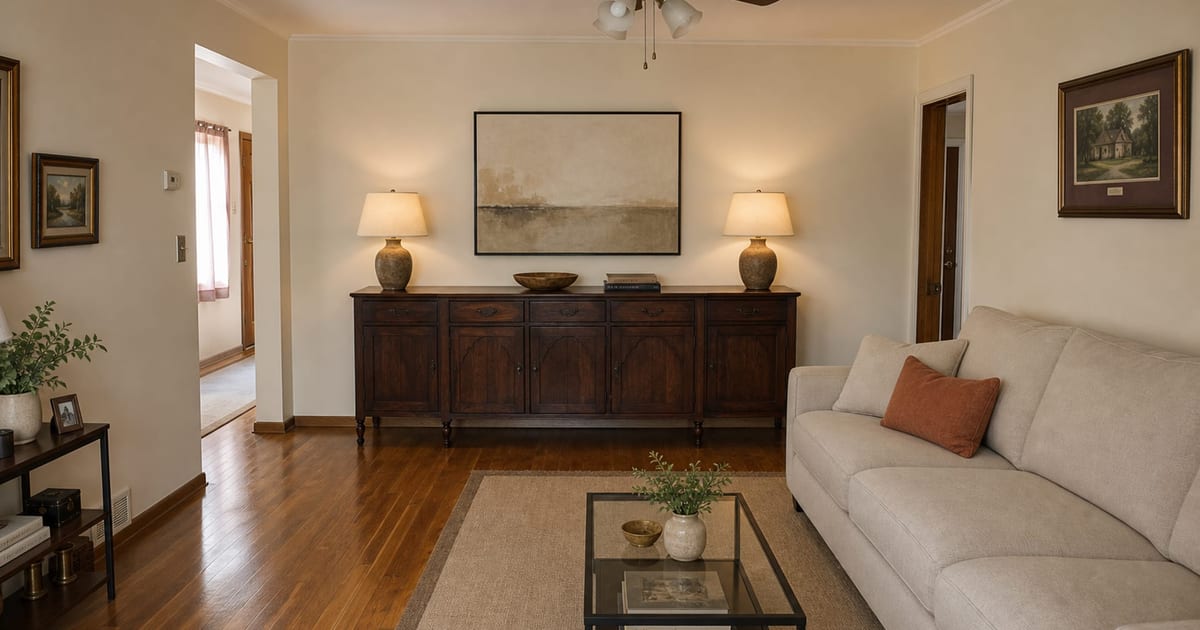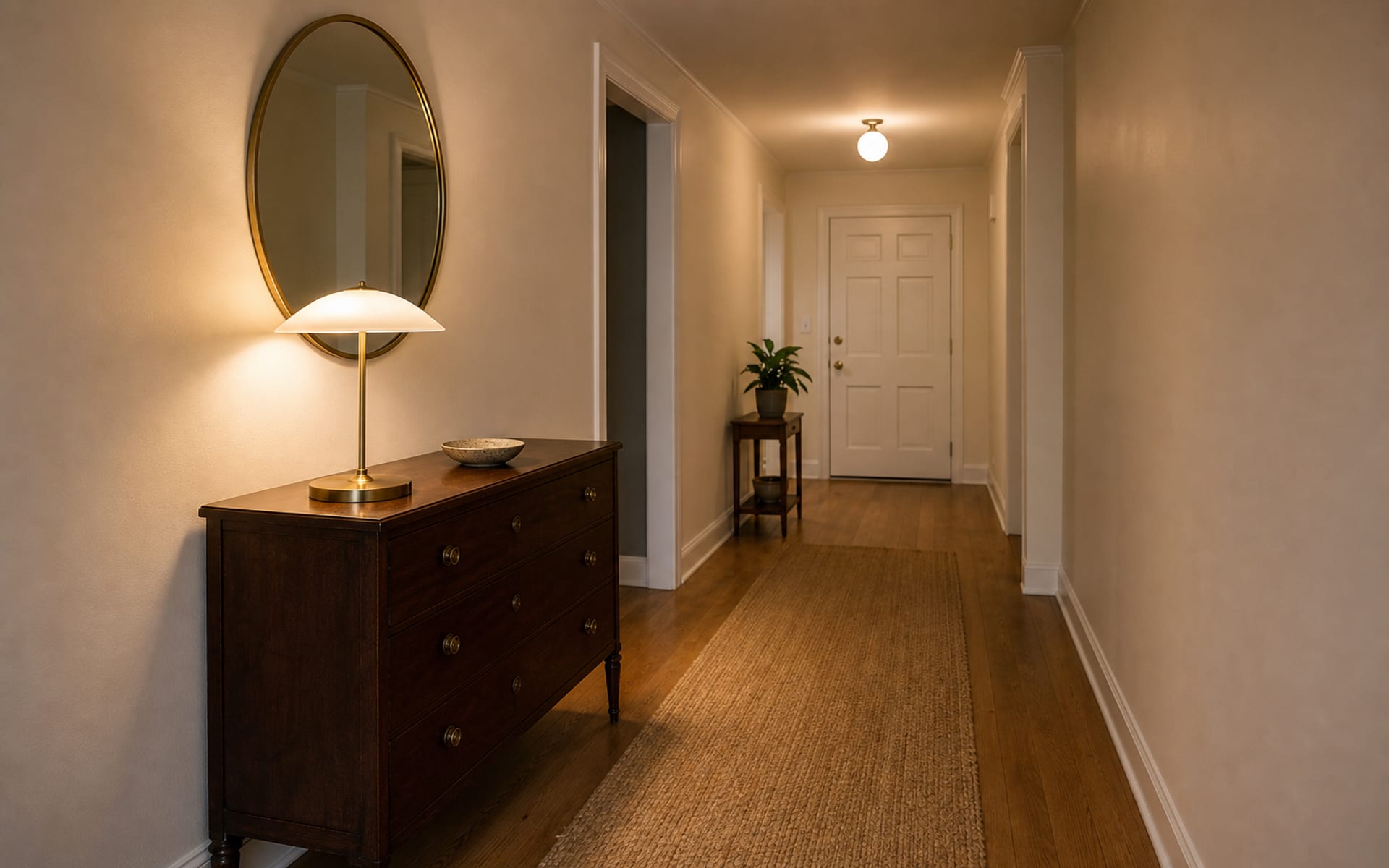
Decorating with antiques and modern furniture works when the modern pieces stay simple enough to let the antiques speak. Pick one anchor antique per room and surround it with lower-ornament shapes in neutral upholstery or clean materials. An antique earns its place when one modern piece in the room agrees with it.
Why do antique-modern rooms often go wrong?
The usual problem is visual weight. A carved chest, heavy sideboard, or ornate chair already carries detail. If every new piece also has rolled arms, turned legs, nailheads, and patterned fabric, the room has no quiet place to rest. The broader planning discipline in Mix Old and New Decor: A Rule-Based Way to Make Heirlooms Feel Modern matters because the idea has to survive the room you already have.
Start by photographing the room straight on, listing what stays and what changes, and checking the sight line from the doorway, the daily path, and the fixed surfaces you can't wish away. Keep clearances honest: 30 to 36 inches for a main walking path, 16 to 18 inches between seating and a table, and enough door or drawer swing that the finished room stays livable. These numbers decide whether the pairing survives Monday morning, not just a photo.
What is the anchor-and-echo rule?
Choose the antique that deserves attention, then echo one part of it elsewhere. A mahogany chest can connect to a walnut frame. Brass hardware can connect to one table lamp. A curved antique chair can connect to one rounded modern ottoman. The echo should feel like agreement, not duplication, so compare style direction against Ai Design Complete Guide if the look starts drifting.
- Entry: one antique chest, one round modern mirror, one lamp.
- Dining room: antique sideboard with a plain modern table, or the reverse.
- Bedroom: vintage dresser with a clean upholstered bed and two simple lamps.
- Living room: antique chair near a modern sofa, tied by rug color or metal finish.
Use this list as a quick audit before buying anything custom. If the piece blocks a door, steals the only bright wall, makes a cabinet unusable, or needs a fixture you can't install, the idea isn't ready. A better version usually changes fewer things and makes those few things more precise.
How does the pairing change room by room?
Walnut and linen, mahogany and travertine, brass and ivory, black metal and dark wood, and cane with aged wood all bridge eras without pretending they're the same. Keep the palette shorter than the mix of periods. For photographing and prompting the space, keep Best Ai Design Apps open as a reference.
The same principle looks different room to room because the fixed constraints change:
- A bedroom needs quieter light since the pairing affects rest.
- A kitchen needs cleanup and task light to still work.
- A bathroom punishes extra depth fast, especially near the standing zone.
- A rental needs an idea that can leave cleanly; an older house needs to know if original detail is an asset or a constraint.
Pick the one viewpoint that matters most, usually the doorway view, the seat you use daily, or the mirror view in a bath. Then check whether the change improves that view without creating a worse problem outside the frame. The strongest pairing isn't the most dramatic version; it's the one that makes the room easier to use.
What mistakes make antique-modern pairing fail?
- Using two large antiques as co-stars makes a room feel like competing collections.
- Painting an antique before checking its value can ruin the one quality that made it useful.
- Repeating the antique finish too many times turns an echo into a matching set.
- Skipping the room's existing evidence: floors, window placement, ceiling height, door swings, and natural light already tell you what the pairing can become.
A single inspiration photo isn't proof either. It usually hides the dull constraints: the outlet location, the radiator, the cabinet door, the wet zone, the stair turn, or the awkward window height. Translate inspiration into measurements and materials before you translate it into a cart.
How can AI preview an antique-modern pairing before you buy?
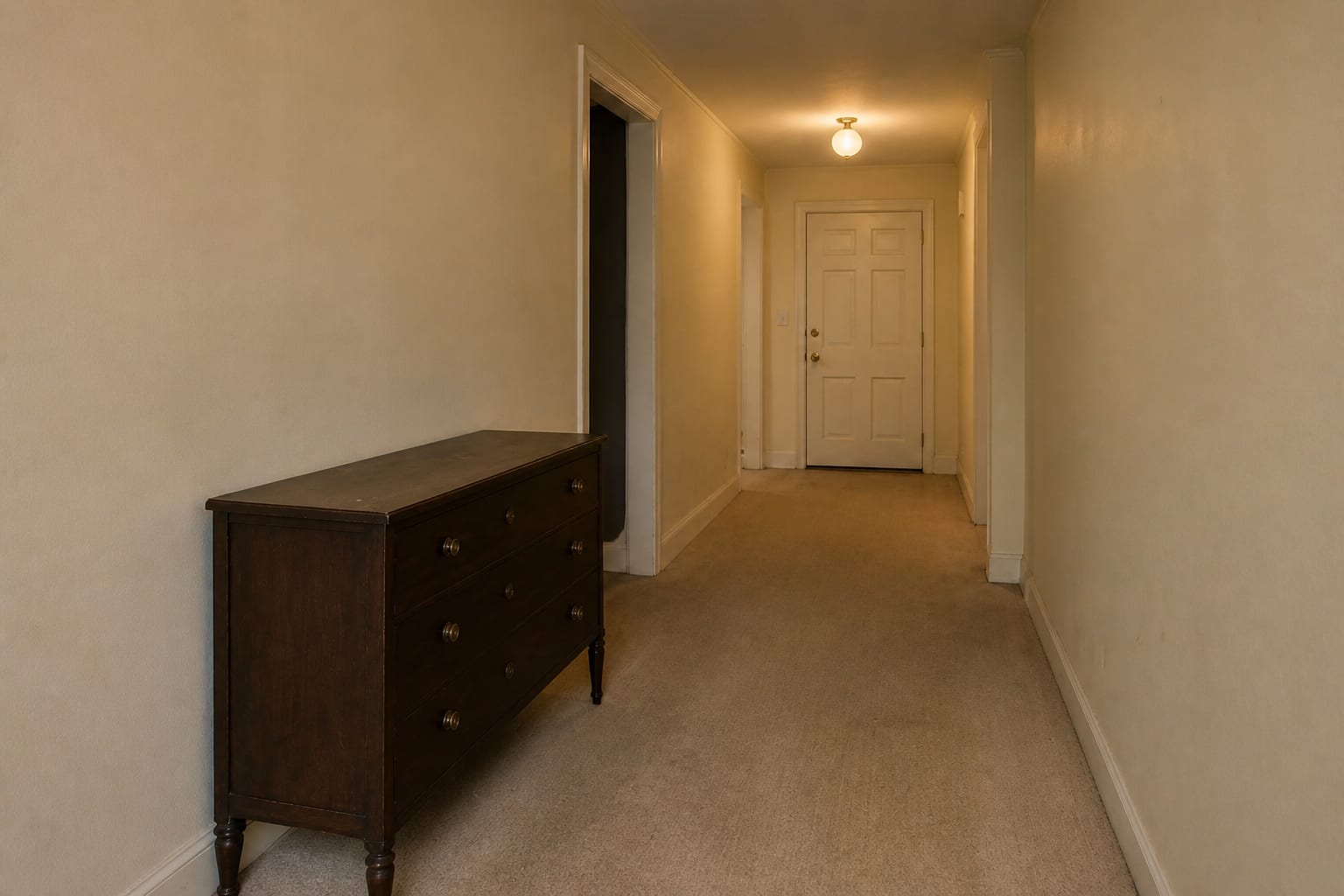
Re-Design is useful here because the preview starts from your actual photo instead of a blank mood board. Upload a straight, well-lit image that shows the floor, ceiling line, windows, doors, fixed fixtures, and the piece you're worried about. Then ask for a controlled version of the pairing that keeps the room's architecture and daily path intact.
Try three focused prompts rather than one fantasy renovation:
- Preview an antique sideboard with a modern dining table
- Test an antique chair beside a modern sofa
- Try an antique chest under a modern mirror
Judge the results by usefulness, not drama. Did the preview keep the same window, floor, and doorway? Did it respect the 30 to 36 inch walking route? Did it preserve the storage, sink access, bed clearance, or chair pullout that matters most? If the output invents architecture or hides the hard part, rerun it with stricter instructions before spending money.
Frequently Asked Questions
Is decorating with antiques out of style?
No. Rooms with one or two good old pieces often feel more current because they avoid a catalog look. The styling around them decides the result, not the age of the piece itself.
How do I update an antique without ruining its value?
Clean gently, repair function, and change the surroundings first. Ask a restorer before painting, stripping, or replacing original hardware, since those changes are hard to reverse.
Can I paint an antique?
Sometimes, but not as the first move. Paint lower-value pieces when the silhouette is useful and the finish is the actual problem you're solving.
Should the antique be the biggest piece in the room?
Not always. It should be the most characterful piece, which can be a chest, mirror, chair, or table rather than the largest object in the space.
How do I find antiques that work with modern furniture?
Look for a strong silhouette, useful scale, sound construction, and one finish you can echo elsewhere. Skip pieces that require the whole room to turn formal.