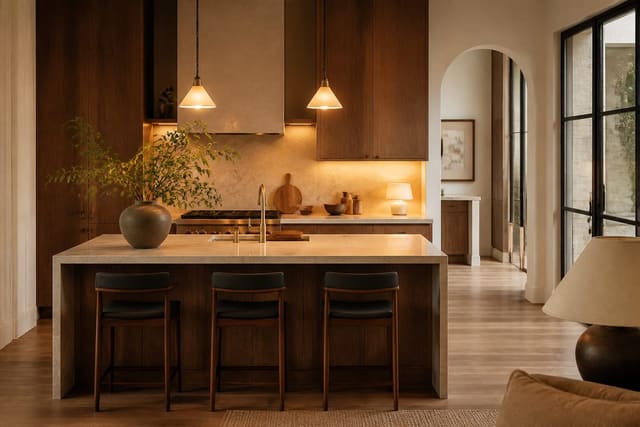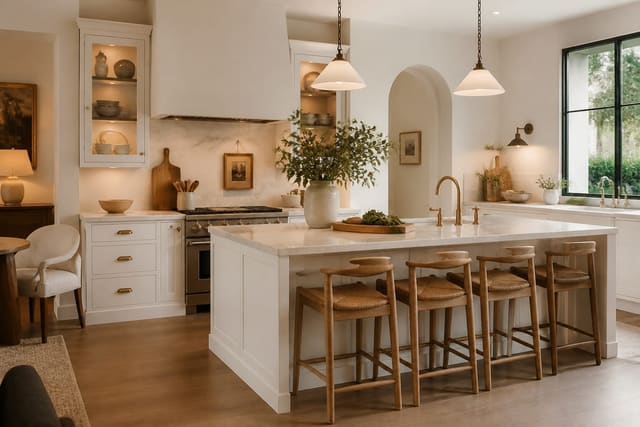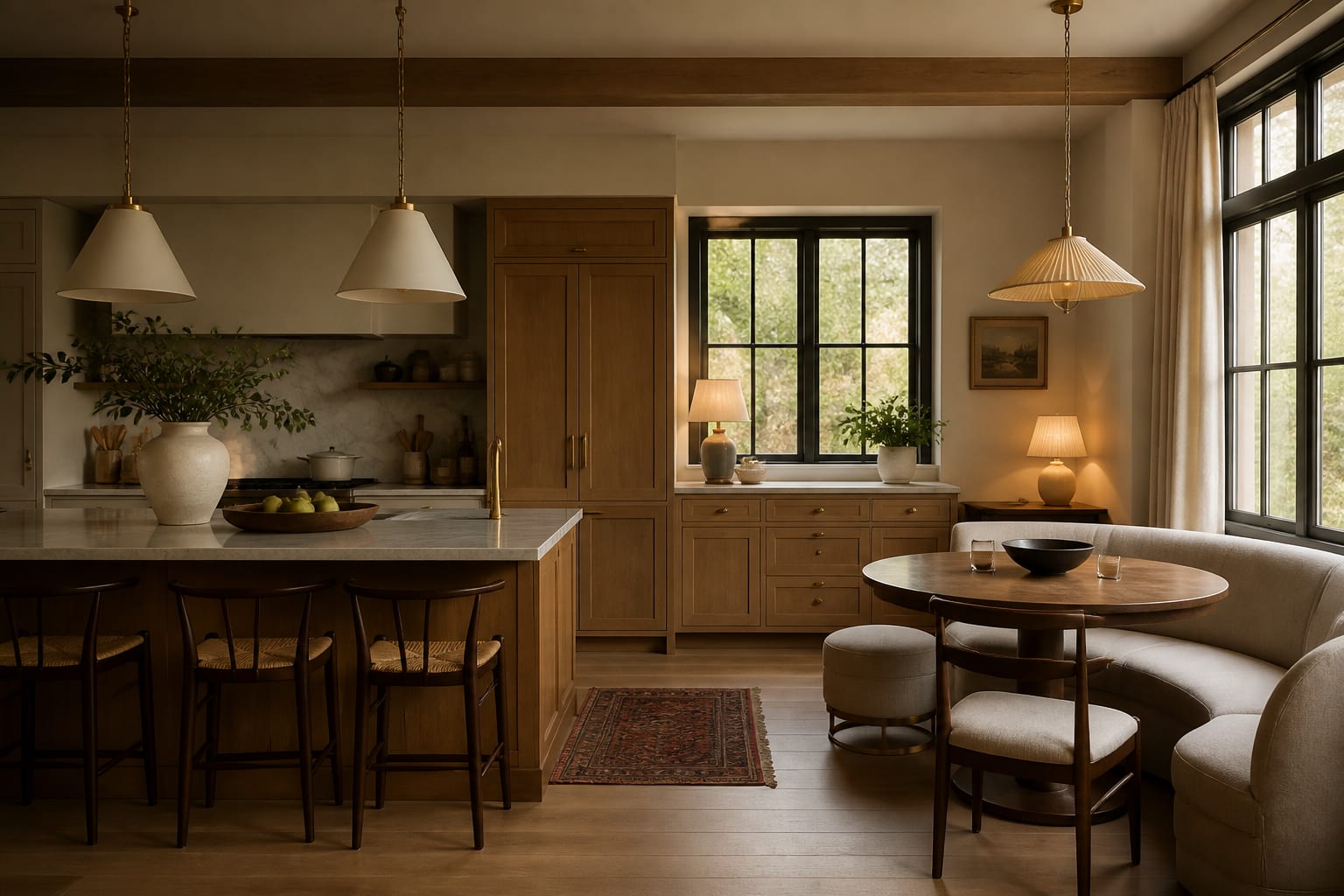
An eat-in kitchen lives or dies on clearances, not on how charming the bench looks in the catalog. The mistake most people make is squeezing a table into whatever corner is left over, then wondering why nobody can pull a chair out without hitting the wall. The better move is to plan the dining zone like a real room within a room, with the same circulation space you would give a formal dining table. Get 36 inches of clearance behind the chairs and the right table size for the footprint, and a casual eating spot becomes the place the family actually gathers rather than a drop zone for mail.
How much space does an eat-in kitchen need?
The clearance behind the chairs is the number that makes or breaks the spot. Plan 36 inches between the table edge and the nearest wall or cabinet so a seated person can push back and stand. If that path is also a walkway through the kitchen, bump it to 44 inches so someone can pass behind a seated diner. Skimp here and the table technically fits but is miserable to use, which is why so many eat-in corners sit empty. Measure the real swing of a pulled-out chair, not just the table footprint.
Table size follows the seat count. Budget 24 inches of edge per person, so a 48-inch round seats four comfortably and a 60-inch round seats six. A rectangular table should be at least 36 inches deep so plates and a centerpiece coexist without crowding. In an open layout, the eating zone can borrow space from an adjacent island; our kitchen island ideas cover pairing an island overhang with a nearby table so the two seating areas do not fight for the same square footage. The goal is a dining zone that reads as deliberate rather than wedged in.
Should you build a banquette or use a table and chairs?
A built-in banquette is the most space-efficient way to seat people in a kitchen, which is why nooks have anchored breakfast corners for a century. Because a bench tucks against the wall and people slide in rather than pulling chairs back, a banquette seats more bodies in less floor area than chairs on every side. An L-shaped or U-shaped bench around a corner can seat six in the footprint a four-chair table would need. Build the seat 18 inches high and 18 to 20 inches deep, and pair it with a table at the standard 30-inch dining height.
The trade-off is access. Sliding into the middle of a banquette is harder than pulling out a chair, so reserve the bench for the wall side and put chairs or a movable stool on the open side for easy in-and-out. Add storage under the bench with a hinged lift-up seat or drawers, and you reclaim space for table linens or rarely used serving pieces. Freestanding chairs win when you need flexibility to add seats for guests or move the table to clean. Many of the best eat-in kitchens combine the two: a banquette on the wall, chairs on the open side.
Eat-in kitchen ideas to try
- Tuck an L-shaped banquette into a corner with storage drawers under the seat and a round pedestal table for easy chair-free access.
- Hang a single oversized pendant or a linear fixture 30 to 36 inches above the table to define the eating zone as its own room.
- Use a round 48-inch pedestal table in a tight kitchen so there are no table legs or corners to trip the traffic flow.
- Run a bench along a window wall with a deep cushion and throw pillows to turn the eating spot into a daytime reading perch.
- Mix a wood table with upholstered chairs and a bench so the casual corner feels collected rather than like a matched dinette set.
- Add a slim 12-inch deep console or floating shelf nearby to hold napkins, candles, and serveware without crowding the table.
- Paint or panel the nook wall a contrasting color to visually separate the dining zone from the working kitchen behind it.
- Choose an extendable table with a self-storing leaf so a daily four-top opens to seat six or eight for holidays.
What finishes make an eat-in kitchen feel like a destination?
The eating zone should feel a notch softer and warmer than the working kitchen so people want to linger there. Bring in upholstery, a cushion on the bench, a rug under the table, and a pendant with a warmer 2700K bulb than the brighter task lighting over the counters. That shift in texture and light is what signals the brain that this is a place to sit, not a place to work. A rug under a kitchen table takes abuse, so choose a flat indoor-outdoor weave that wipes clean rather than a delicate wool.
Color ties the nook to the kitchen while letting it stand slightly apart. In a bright space, the eating area can carry a deeper accent wall or a richer chair fabric; our white kitchen ideas show how a pale kitchen leaves room for a saturated banquette or a wood table to warm the corner. The opposite move works too in moody schemes. A window is the best thing an eat-in kitchen can have, so orient the table toward the light and keep window treatments simple, a Roman shade or a cafe curtain, so the daylight that makes morning coffee pleasant is never blocked.
Preview your eat-in kitchen in Re-Design
It is genuinely hard to judge whether a banquette or a freestanding table suits a corner until you see it in place, because a few inches in either direction changes everything. Photograph the corner or wall you have in mind and upload it to Re-Design to preview the options side by side. You can re-design the same spot with an L-shaped banquette versus a round pedestal table and four chairs, test a contrasting accent wall behind the seating, and swap pendant styles to see which scale anchors the zone. Seeing it rendered against your real windows and cabinet runs shows you instantly whether the chairs clear the wall and whether the nook reads as inviting or cramped, before you buy a single piece.
Frequently Asked Questions
How much clearance do I need behind eat-in kitchen chairs?
Leave 36 inches between the table edge and the nearest wall or cabinet so a seated person can push the chair back and stand. If that space doubles as a walkway through the kitchen, widen it to 44 inches so someone can pass behind the diners. This clearance is the difference between a table people use daily and one that sits empty in a corner.
What size table fits an eat-in kitchen?
Allow 24 inches of table edge per person. A 48-inch round seats four, a 60-inch round seats six, and a rectangular table should be at least 36 inches deep so plates and a centerpiece fit comfortably. Round and oval shapes flow better in tight kitchens because they have no corners to catch hips as people move through the space.
Is a banquette better than a table and chairs?
A banquette seats more people in less floor space because the bench tucks against the wall and diners slide in rather than pulling chairs out. The trade-off is harder access to middle seats, so it works best on the wall side paired with chairs on the open side. Build the bench 18 inches high and add under-seat storage to earn back the footprint.
How do I light an eat-in kitchen table?
Hang a pendant or linear fixture so its bottom sits 30 to 36 inches above the table surface, centered over the table rather than the room. Use a warmer 2700K bulb than the brighter task light over your counters so the eating zone feels relaxed. A dedicated light fixture is what visually separates the dining spot from the working kitchen around it.