Getting Started8 min readJune 10, 2026

Eclectic Interior Design: How to Do Controlled Variety Well

Master eclectic interior design with controlled variety: a unifying palette, the rule of three, balanced eras, and the editing that keeps rooms collected.

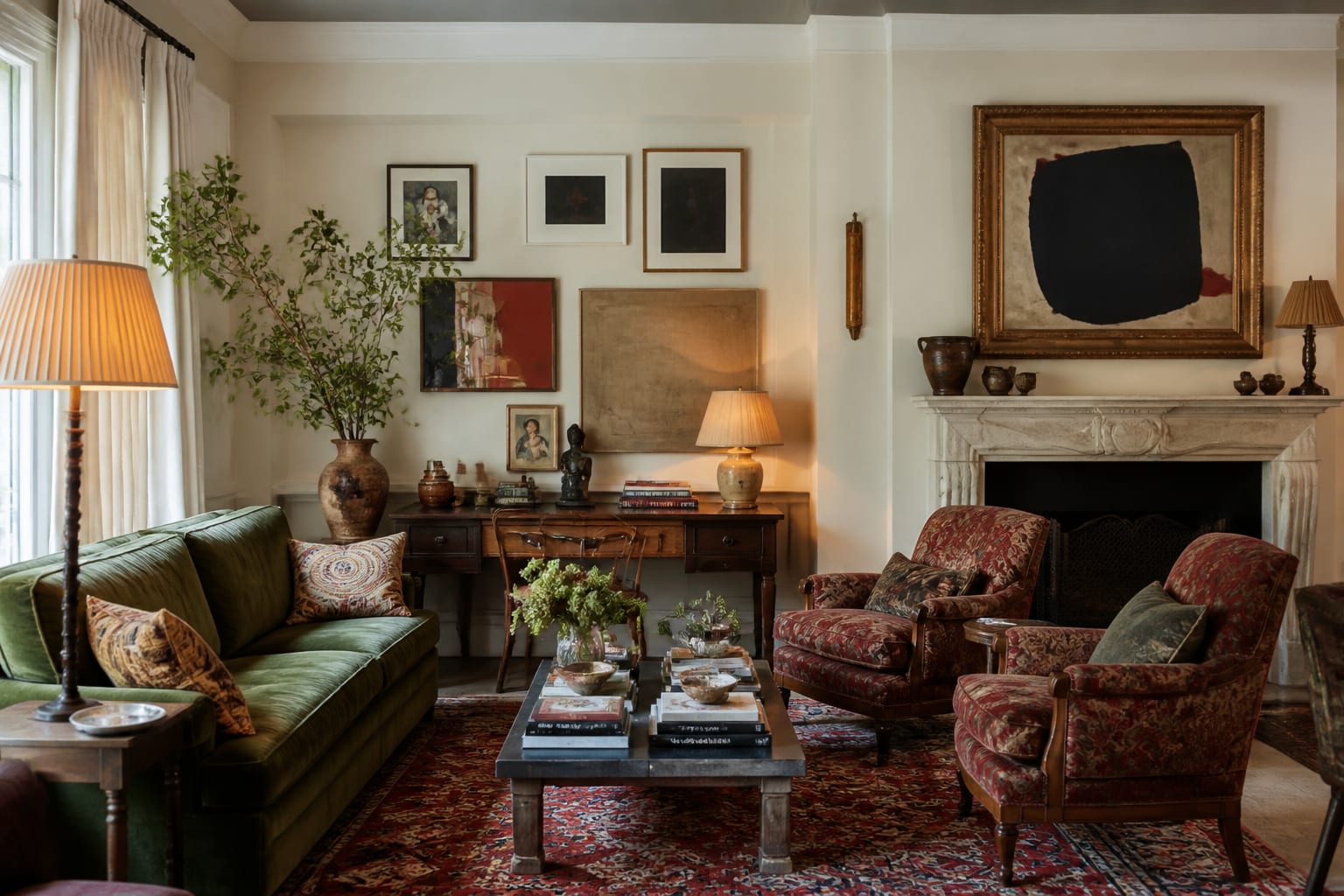
Editorial interior photograph showing an eclectic room with collected art, patterned textiles, vintage furniture, and a disciplined color thread.

Eclectic design is the most misunderstood style because people mistake it for permission to use everything. In reality it is the most disciplined look in the book, demanding more editing than any single-style room. Great eclectic spaces feel collected and personal, full of pieces from different eras and origins, yet they read as one coherent environment because invisible threads hold them together. A tight palette, a repeated material, and a consistent mood do the work that a single style usually provides. This guide explains how to get the variety without the chaos, with measurable rules for how many colors to use, how many eras to mix, and how aggressively to edit so the room reads as curated rather than cluttered.

Anchor the Mix With a Unifying Palette

Eclectic rooms succeed or fail on their underlying structure, and color is the strongest structure available. Before bringing in varied pieces, commit to a unifying palette of three or four colors that will recur throughout the space. This restraint is what separates collected from chaotic: a Victorian chair, a mid-century lamp, and a contemporary rug can share a room peacefully if they all speak the same color language. The palette is the quiet rule that gives you permission to be loud everywhere else.

Pull the palette from a single piece you love, often a patterned rug or a large artwork, since a multi-colored object can hand you a ready-made scheme that already works. Then thread those colors through the room deliberately, repeating each one in several places so no hue feels stranded. A flash of teal on a vintage vase should echo in a modern cushion and again in a piece of art, tying disparate eras into one conversation. The repetition is doing the same job a matching furniture set does in a conventional room, only more invisibly.

Neutrals earn their keep here as the breathing space between bolder moments. A backdrop of warm white, greige, or soft black walls lets the varied pieces stand out without competing, and it keeps an adventurous room from tipping into visual overload. Decide early whether your palette runs warm or cool and hold that undertone consistently, because mixing warm and cool casts is one of the quiet reasons an eclectic room feels off even when every individual piece is lovely. With three or four colors locked and a neutral ground beneath them, you have built the frame that makes genuine variety feel intentional rather than accidental.

See also our guide to How AI Search Cites Interior Design for more on eclectic interior design.

Balance Eras, Textures, and Scale

Variety is the point of eclectic design, but unmanaged variety is just noise, so balance becomes the governing skill. Start with eras: mixing pieces from about three different periods gives a room depth and the sense of having been assembled over time, while pulling from too many at once dissolves the look into a thrift-store jumble. A common, reliable formula pairs an antique or vintage piece, a mid-century element, and something contemporary, letting each era set off the others through contrast rather than crowding.

Texture is where eclectic rooms gain their richness, and it deserves the same deliberate treatment as color. Layer smooth against rough, matte against glossy, and hard against soft so the surfaces play off one another: a sleek lacquered table beside a nubby boucle chair, a polished brass lamp on a weathered wooden console. This interplay keeps a tightly controlled palette from reading flat and gives the room the tactile, layered quality that makes eclectic spaces feel alive. Without varied texture, even a colorful room can feel oddly lifeless.

Scale and proportion are the third axis, and the one people most often neglect. Mixing large and small, tall and low, heavy and delicate creates rhythm and stops the room from feeling monotonous, but it needs balancing across the space so visual weight is distributed rather than clumped in one corner. A massive antique armoire wants something substantial to counter it on the opposite side, whether another large piece or a grouping of smaller ones. Vary the heights of objects on shelves and surfaces too, so the eye moves up and down as well as across. When era, texture, and scale all carry deliberate contrast, the room reads as a confident composition rather than a pile of unrelated things that happened to land in the same place.

For a related angle on eclectic interior design, read How Accurate Is AI Room Visualization.

Use the Rule of Three and Repeated Threads

Eclectic rooms lean hard on a few classic composition principles, and the rule of three is the most useful. The eye finds odd-numbered groupings more dynamic and natural than even ones, so arrange objects, cushions, and vignettes in threes or fives rather than tidy pairs. Three candlesticks of varying heights, a trio of frames, or five books stacked with an object on top all read as intentional clusters rather than clutter. This simple habit brings order to a surface that might otherwise feel random.

Repeated threads are what stitch the whole room together beneath the variety. Beyond the shared palette, pick one or two materials or finishes to echo across different pieces, so a thread of, say, aged brass or warm rattan reappears on a vintage lamp, a modern frame, and a contemporary side table. These quiet repetitions act like rhyme in a poem: you may not consciously notice them, but they make the composition feel coherent. Aiming for roughly 70% cohesion and 30% surprise keeps the room grounded enough to absorb its bolder moments without losing its footing.

That 30% of surprise is where eclectic style earns its name and its joy. Against a cohesive, well-edited backdrop, an unexpected piece, an oversized artwork, a bold antique, a wildly patterned chair, lands as a thrilling statement rather than a mistake. The cohesion is precisely what licenses the risk; without it the surprise reads as chaos. Limit yourself to one or two of these statement moments per room so each retains its impact, and let them breathe with space around them. Handled this way, the repeated threads and the rule of three hold the floor while a few daring choices supply the personality, which is exactly the balance that makes an eclectic room feel curated rather than merely crowded.

Edit Ruthlessly and Let Pieces Breathe

Editing is the discipline that separates a designer's eclectic room from a hoarder's, and it is the step most people skip. Because the style invites variety, it is dangerously easy to keep adding until the room loses all coherence. The fix is to treat removal as part of the process: once a space feels nearly complete, take a few things away rather than adding more, and judge whether the room reads more clearly without them. Restraint at this stage is what turns an accumulation into a composition.

Negative space is the active ingredient, not wasted room. Empty wall, clear floor, and uncluttered surfaces give the eye places to rest and let each piece register on its own terms. A standout antique chair needs space around it to be appreciated, so leave at least 24 inches of clear floor around it and revisit the room over 48 hours before adding more; crowded against other furniture, it simply becomes part of a blur. Build deliberate pauses into the room so the cohesion and the surprises both have room to speak, and resist the urge to fill every gap with one more interesting object you happen to love.

Here are the common mistakes to avoid: - Treating eclectic as permission to use everything, which produces clutter, not character. - Skipping a unifying palette, so varied pieces never find common ground. - Mixing too many eras at once, dissolving the look into a thrift-store jumble. - Forgetting to vary scale, leaving the room flat and visually monotonous. - Overloading on statement pieces until none of them keeps its impact. - Never editing or storing anything, so negative space disappears and cohesion collapses.

Bring the look home with Re-Design

Eclectic rooms are hard to picture in advance because the magic lives in how unlike pieces relate, and that only shows once they share a wall. Before committing to a bold antique or a daring patterned chair, upload a photo of your room to Re-Design and preview the eclectic look against your real palette and proportions. You can test whether your cohesion holds, swap a statement piece, and check how a third era reads before you buy. Seeing the mix rendered at home shows whether the variety reads as curated or crowded, so you edit on screen.

Frequently Asked Questions

What is eclectic interior design?

Eclectic interior design blends pieces from different styles, eras, and origins into one coherent room. Despite the variety, it is not random; invisible threads like a shared palette, repeated materials, and a consistent mood hold everything together. Done well, it reads as a curated, personal collection rather than a jumble, and it demands more editing than most single-style rooms.

How do you make an eclectic room look intentional?

Give the variety a structure. Anchor the room in a unifying palette of three or four colors, repeat one or two materials across different pieces, and limit the mix to about three eras. Aim for roughly 70 percent cohesion and 30 percent surprise, then edit hard so negative space lets each piece register clearly instead of blurring into clutter.

What is the difference between eclectic and cluttered?

Cohesion and editing. A cluttered room piles up objects with no shared palette, no repeated threads, and no breathing room. An eclectic room uses the same variety but ties it together with consistent color and material, balances eras and scale, and leaves negative space. Every piece earns its place, usually carrying a use, a memory, or a clear visual job.

eclectic interior designeclectic decormixed style interiorhow to decorate eclecticwhole homegeneral

Ready to see your space transformed?

Transform your space in seconds. No design experience needed.

Try Re-Design Free

Related Articles

Back to all articles