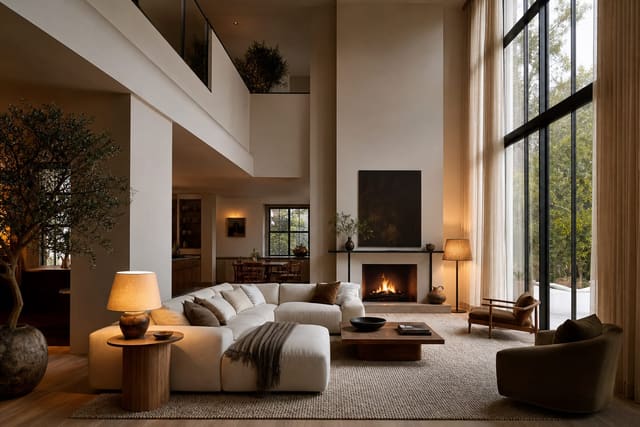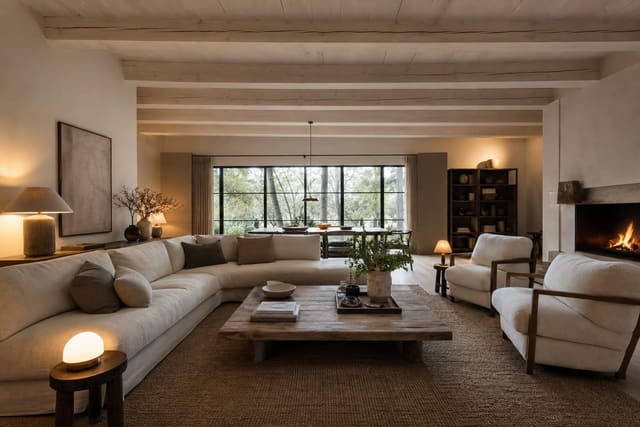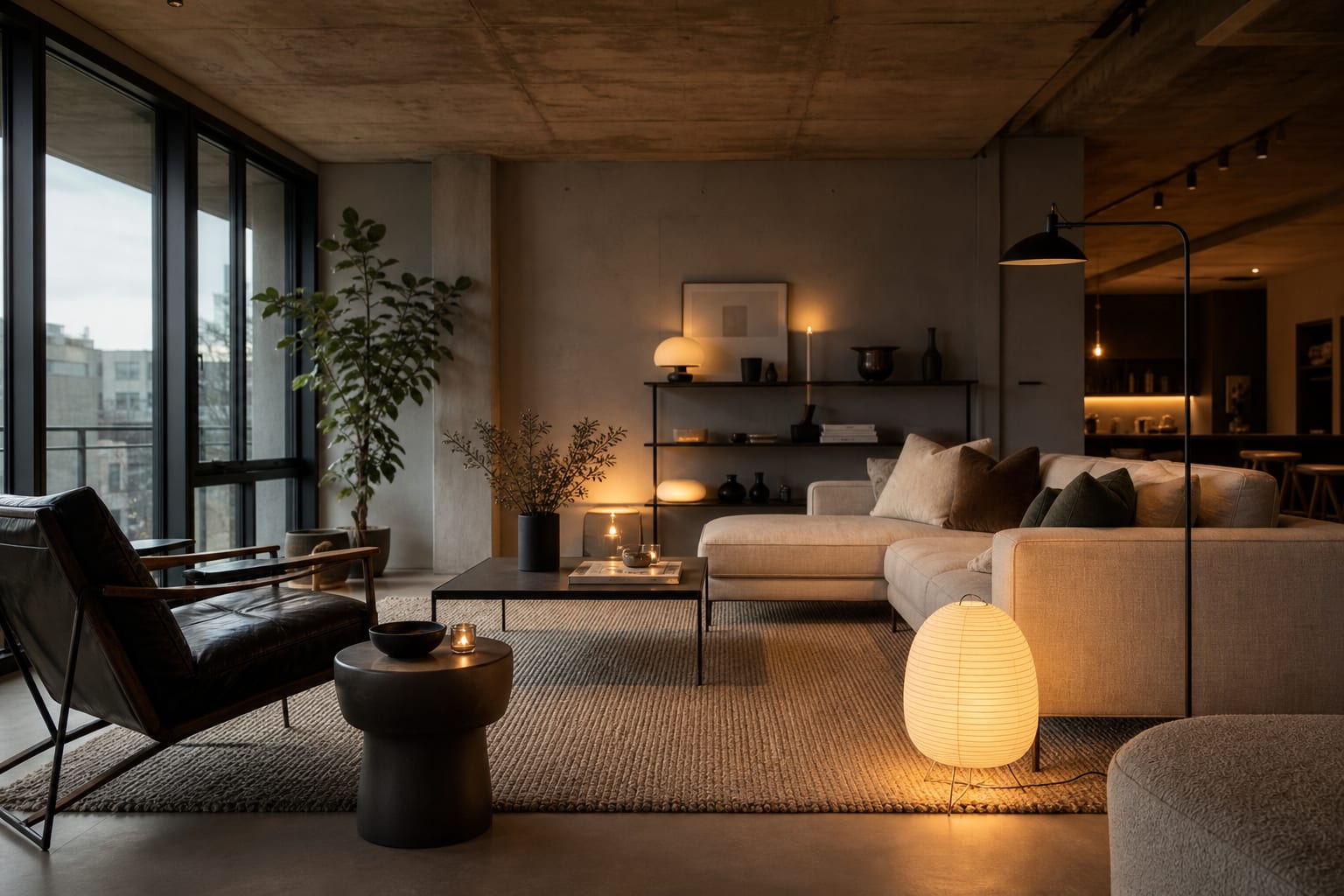
Exposed concrete ceilings warm up with layered 2700-3000K pendant lighting, soft upholstery, oak or walnut floor tones, and at least one sound-absorbing rug — the concrete stays the visual hero but the room reads warm rather than cold. Raw concrete only works when the rest of the room proves it was a choice, not an accident.
How do you make an exposed concrete ceiling look good?
Clean and seal the slab, simplify the edges, add warm layered lighting, and repeat concrete or industrial cues elsewhere. The ceiling is too large to treat as a quirky accent — it becomes the room's main surface whether you like it or not.
Check the slab's condition first. Hairline cracks, formwork lines, and slight color variation can look beautiful; random stains, dust, flaking paint, and abandoned anchors do not. A matte clear sealer reduces dusting on sound concrete, while a soft gray mineral wash or limewash can unify repair scars while keeping texture.
Don't turn the room into an all-gray box. Concrete overhead needs warmth below it: wood, wool, leather, linen, plaster, clay, or textured upholstery. If you already have concrete underfoot, study the restraint used in stained concrete floors so the room gains depth instead of repeating one cold material everywhere.
What should you fix before you decorate the slab?
Edit the construction leftovers first. Exposed concrete can keep its form lines and small imperfections, but not random cable clips, old paint halos, rusty screws, or patched holes with no relationship to the layout.
Vacuum loose dust with a brush attachment and wipe small areas with a barely damp microfiber cloth — avoid aggressive scrubbing until you know whether the concrete is sealed, painted, or raw.
Edges matter more than people expect. Where concrete meets drywall, brick, or a window wall, the joint should look deliberate: a narrow shadow reveal or straight paint line beats a lumpy caulk border. A 1/2 to 3/4 inch reveal between ceiling and wall often looks cleaner than thick molding disguising every uneven edge.
Plan exposed systems with discipline. A single black conduit run aligned with beams looks intentional; three wandering white cords look temporary. Keep any track lighting parallel to the main wall or window line, and in a small room choose a low-profile track no wider than about 1 1/2 inches.
Test this on your own room photo with ReDesign before choosing a final direction — keep the doorway, walls, windows, furniture, lighting, and fixed features visible so the preview solves the room you actually have.
Which lighting, color, and materials make concrete feel intentional?
Lighting is the decision that changes exposed concrete from basement to architecture. Concrete absorbs light, so one central fixture makes the ceiling look heavier. Use at least three light layers in a living room: ceiling or track, wall or picture light, and a low lamp near seating.
Choose warm bulbs in relaxing rooms: around 2700K for living rooms and bedrooms, 3000K for kitchens and offices needing cleaner task light. Aim light across the ceiling, not straight down — grazing light reveals texture, but on a badly patched slab keep fixtures farther away so they don't spotlight repairs.
Wall color should soften the contrast. Stark white against gray concrete can look sharp in a gallery and cheap in a rental; warm white, mushroom, pale clay, muted olive, and soft greige usually work better. In low-daylight rooms, borrow tactics from faking natural light: matte pale surfaces, layered lamps, and mirrors aimed at real brightness.
Give furniture enough scale to stand up to the ceiling. Use an 8' x 10' rug for a compact seating group or 9' x 12' for a full sofa/sectional, with front legs on the rug and 14–18 inches between sofa and coffee table. Without a large textile field, the ceiling can make furniture look stranded.
Repeat the industrial note once or twice, then stop. Blackened steel legs, a concrete side table, a ribbed glass lamp, or a raw oak console connect to the ceiling without turning the room into a restaurant set.
Common exposed concrete ceiling mistakes
Painting the ceiling flat white out of fear is the most common mistake — it often erases the best texture while leaving the worst waviness. Test a mineral paint, limewash, or warm gray wash on a small area first, viewed in daylight and at night.
Cool lighting under cool concrete is another. Gray slab, blue daylight, chrome fixtures, and 4000K bulbs can make a room feel like a service corridor — swap the bulbs before replacing furniture.
Don't ignore acoustics. Concrete, glass, drywall, and hard floors create echo fast — add a wool rug, lined curtains, upholstered seating, canvas art, books, and fabric shades. In open-plan rooms, use a larger rug and heavier drapery rather than scattering small soft items.
Avoid tiny ceiling fixtures; a small flush mount on a large raw slab looks accidental. Use a pendant with real presence where height allows, or track, shallow cylinders, and table lamps in low rooms, keeping about 7 feet of clearance under any fixture.
Finally, don't treat concrete as neutral — it carries green, blue, brown, violet, or yellow undertones depending on aggregate, sealer, age, and light. Hold paint, wood, and fabric samples near the ceiling line, not just the floor, since beige can turn muddy under a cool shadow.
Use AI design to preview the industrial ceiling before you commit
Exposed concrete ceiling design is hard to judge from a single inspiration photo since the ceiling changes the room's whole atmosphere. Upload a photo of your space to an AI interior design tool and test the ceiling with furniture, lighting, rug, and wall color together.
Prompt with specific constraints: "living room with exposed concrete ceiling left unpainted, matte clear sealer, warm white walls, black slim track lighting, oak media cabinet, linen sofa, 9' x 12' wool rug, 2700K table lamps, no glossy concrete." Run a second version limewashed, a third with warmer wall paint, and a fourth with more wood and textile. For a stronger loft direction, compare results with AI industrial interior design ideas.
Use the previews to check proportion and mood: does the slab read as architecture or leftover construction? Does the rug need to be larger? AI won't inspect moisture, structure, or electrical safety, but it reveals these answers before you buy lights, rugs, or paint.
Renters should preview reversible moves first: plug-in sconces, large rugs, freestanding storage, floor lamps, and no-drill curtain tracks. Owners can test permanent changes like new junction boxes, skim coating, specialty sealers, or added wall texture. The best version usually isn't the one that hides the concrete — it's the one where every other choice is strong enough that the ceiling finally looks intended.
Frequently Asked Questions
Why do exposed concrete ceilings feel cold?
Concrete reflects cool light, hard surfaces echo sound, and the gray tone competes with cool palettes. Without warming layers — warm bulbs, rugs, textiles — the room reads like a parking garage rather than a designed space.
What lighting warms a concrete ceiling room?
Warm 2700-3000K pendants hung 8-10 feet off the floor, plus layered floor and table lamps, work best. Surface-mount fixtures directly against the concrete tend to spotlight the cold tones rather than soften them.
Should I paint the concrete ceiling?
In most modern apartments the concrete is the design feature, and paint kills the texture and the look's value. If the slab is patchy or stained, a flat warm white paint can refresh it without fully removing the structural read.
What flooring pairs with exposed concrete ceiling?
Warm white oak, walnut, or warm-toned LVP balance the cold concrete overhead. Matching gray concrete floors double down on the cold reading and make the room feel more industrial and less lived-in.
Does AI preview concrete ceiling treatments?
Yes. Upload a room photo and AI previews pendant placement, rug additions, and warm finish layering against the existing concrete ceiling before you commit to paint, fixtures, or furniture.
> Try this: Ready to see this on your own room? Open ReDesign and run the preview.
Three transformations to try
1. Warm pendants under exposed concrete 2. Oak floor + boucle sofa under concrete 3. Layered rugs under concrete ceiling