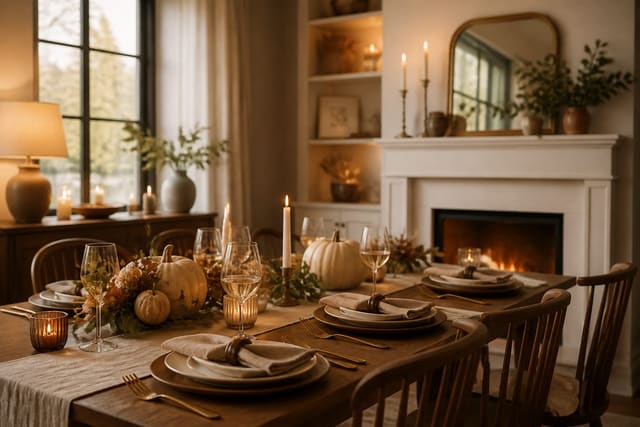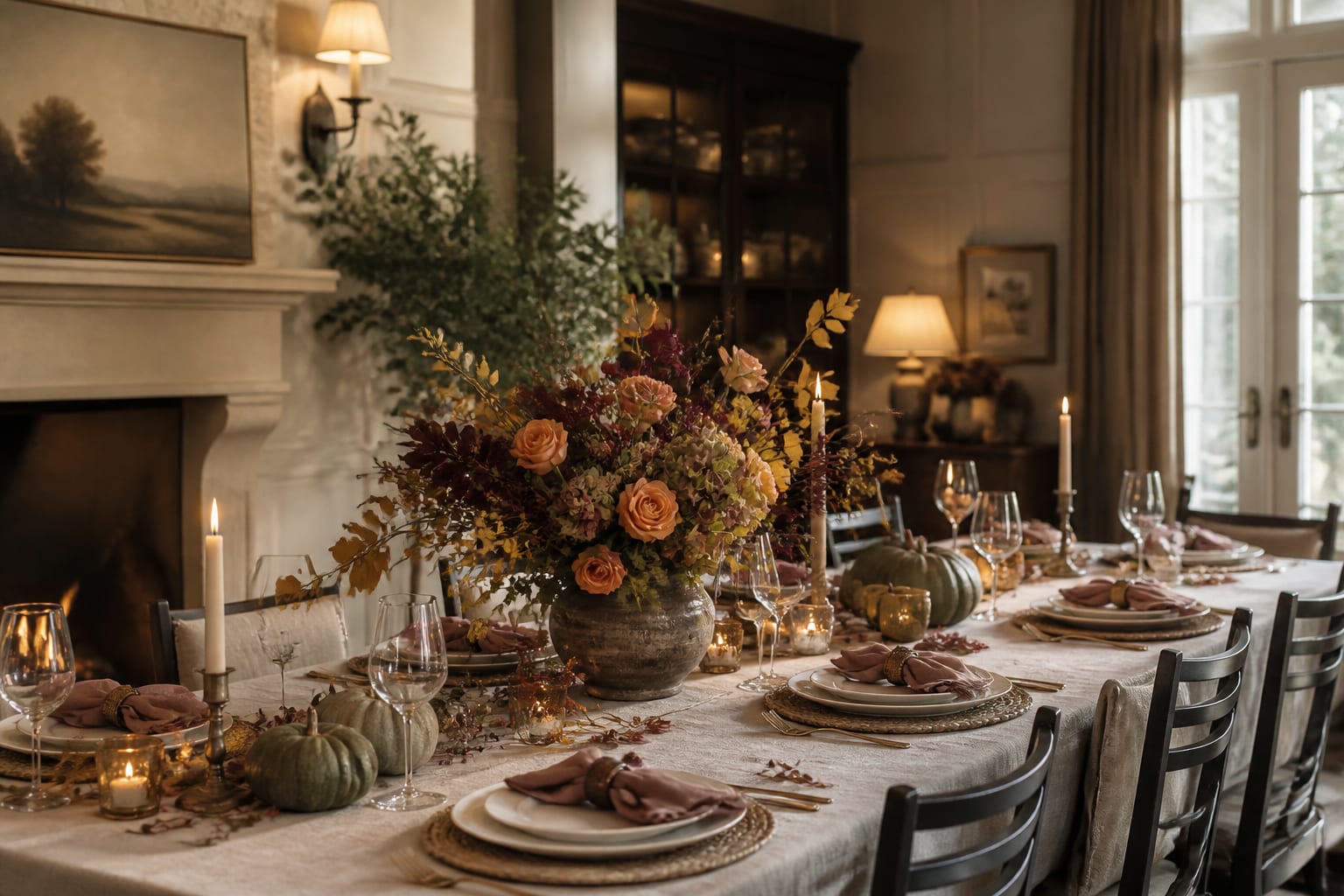
A good fall table is built from texture and restraint, not from a bin of orange plastic pumpkins. The autumn tables that actually photograph well lean on layered linen, low organic centerpieces, and a tight earthy palette that lets the food be the brightest thing in the frame. My strong opinion: ditch the tall floral arrangement that blocks every conversation and build low instead.
Start with the surface, then the height, then the glow. Get those three right and a weeknight dinner suddenly looks like something you planned for weeks. The season does most of the work for you, so the job is editing, not piling on.
Build the table in layers from the surface up
The foundation does most of the styling work. Start with a tablecloth or bare wood, then run a textured linen or cotton runner down the center. A runner that is 14 to 16 inches wide leaves room for plates while still anchoring the middle of the table. Add cloth napkins in a contrasting earthy tone, folded simply and tied with a sprig of eucalyptus or a length of jute twine.
Texture is the whole game in fall. Mix a slubby linen napkin with a smooth ceramic plate and a hammered metal charger, and the table reads collected rather than bought as a matching set. The eye registers the difference instantly, even if guests cannot name why the table feels considered.
Plates are where you can add warmth without spending much. Stack a stoneware dinner plate in a muted glaze over a rattan or wood charger, and you have height, color, and material contrast in two pieces. Skip the seasonal printed plates; a solid earthy glaze ages better and works every autumn you own it.
If you only own one good tablecloth, a runner is the cheapest upgrade you can make. A length of raw-edged linen, a remnant of upholstery fabric, or even a strip of burlap softened with an iron will read more intentional than a bare table. Layering also forgives a table that has seen better days, hiding water rings and scratches under texture rather than asking you to refinish the wood.
Napkin folding deserves more credit than it gets. A loose, relaxed fold draped at each place setting feels current, while a stiff fan or a glass-stuffed pouf feels dated. Tie each one with a single natural element, a sprig of rosemary, a cinnamon stick, or a small dried oak leaf, and the table gains a handmade quality that no store-bought set delivers.
Centerpieces that stay low and seasonal
Height is where most fall tables go wrong. Anything over about 12 inches becomes a wall between guests, and conversation dies behind it. Instead, run a low landscape down the center: a shallow wooden trug or a 24-inch tray filled with small gourds, figs, dried wheat, and a few stems of seeded eucalyptus.
A few low centerpiece ideas worth copying this season:
- A 24-inch wooden tray of mini pumpkins, pomegranates, and brass candlesticks
- Three pillar candles of staggered height on a bed of dried oak leaves
- A row of small bud vases, each holding a single dahlia or chrysanthemum stem
- A shallow bowl of unshelled walnuts, persimmons, and a trailing vine
- Clustered taper candles in mixed-metal holders at 6 to 9 inches tall
The trick with any of these is to keep the footprint narrow so place settings still have room. Leave at least 12 inches between the edge of the centerpiece and the nearest plate, and let the arrangement trail in a loose line rather than a tight dome.
This same low, layered logic carries straight into the holidays, and our thanksgiving table setting ideas show how to scale it up for a bigger crowd without losing the intimacy. A fall table is really a dress rehearsal for the holiday one, built from the same parts.
Foraged and pantry elements keep the cost near zero while raising the polish. A handful of acorns gathered on a walk, a few sprigs of bittersweet, branches with leaves still clinging, or a bowl of unshelled nuts all read richer than anything plastic. Persimmons, figs, small pears, and pomegranates double as decor and dessert, which is the kind of detail that makes a table feel generous. The more the arrangement looks gathered rather than purchased, the more expensive the whole table reads.
Greenery is the connective tissue. A loose garland of seeded eucalyptus or olive branches trailing down the center stitches separate elements into one composition, and it stays handsome for a week before it dries. Let a few stems spill past the runner onto the bare table so the arrangement feels relaxed rather than contained, and the eye reads the whole length as intentional.
Color, light, and making it work in a small room
The palette is what separates a styled fall table from a craft-store one. Pick three tones and commit: rust, cream, and sage, or terracotta, ochre, and chocolate brown. Let metallics like aged brass or bronze be the only shine on the table. Skip anything candy-orange, which is the single fastest way to make a table look cheap.
Light matters as much as color. Candles at face level flatter everyone, so cluster tapers and votives rather than spacing them evenly down the runner. Warm 2700K bulbs overhead, dimmed to roughly half, keep the whole room in the same amber register as the candlelight. Cool white overhead light will fight every warm tone you carefully chose.
Repetition is what makes a small palette feel deliberate instead of sparse. Echo each of your three tones at least twice down the table, so a rust napkin answers a rust candle, and a sage stem answers a sage glaze on a plate. The eye reads that rhythm as a plan. Pull a single color in from the rest of the room, a throw on a nearby chair or the bowl on the sideboard, and the table stops looking like an island and starts looking like part of the space.
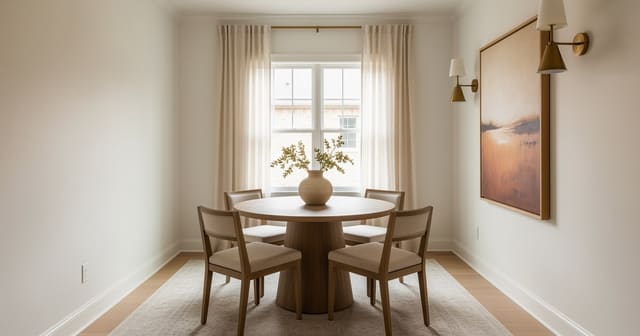
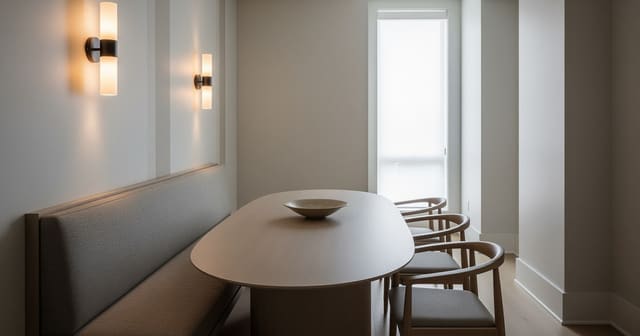
If you are styling a tight space, scale the whole plan down, because a 24-inch centerpiece overwhelms a small table. Our guide to a small dining room under 100 sqft covers how to keep a seasonal table from swallowing the room, and the layout tips in it pair well with these ideas. In a long, tight floor plan, a single runner down the center reads better than a scattered arrangement, which is why the advice in our narrow dining room galley guide translates directly to fall styling.
Use AI design to preview your fall table before guests arrive
Buying pumpkins, candlesticks, and three new napkin colors only to realize the palette fights your wall paint is a familiar autumn mistake. Upload a photo of your dining area to Re-Design and test a fall tablescape in place first. You can preview a rust-and-sage runner against your actual flooring, see whether a brass candle cluster reads warm or muddy under your light, and decide if a low gourd centerpiece suits the room before you spend a cent at the market. Ten minutes of previewing saves an afternoon of rearranging and a pile of returns.