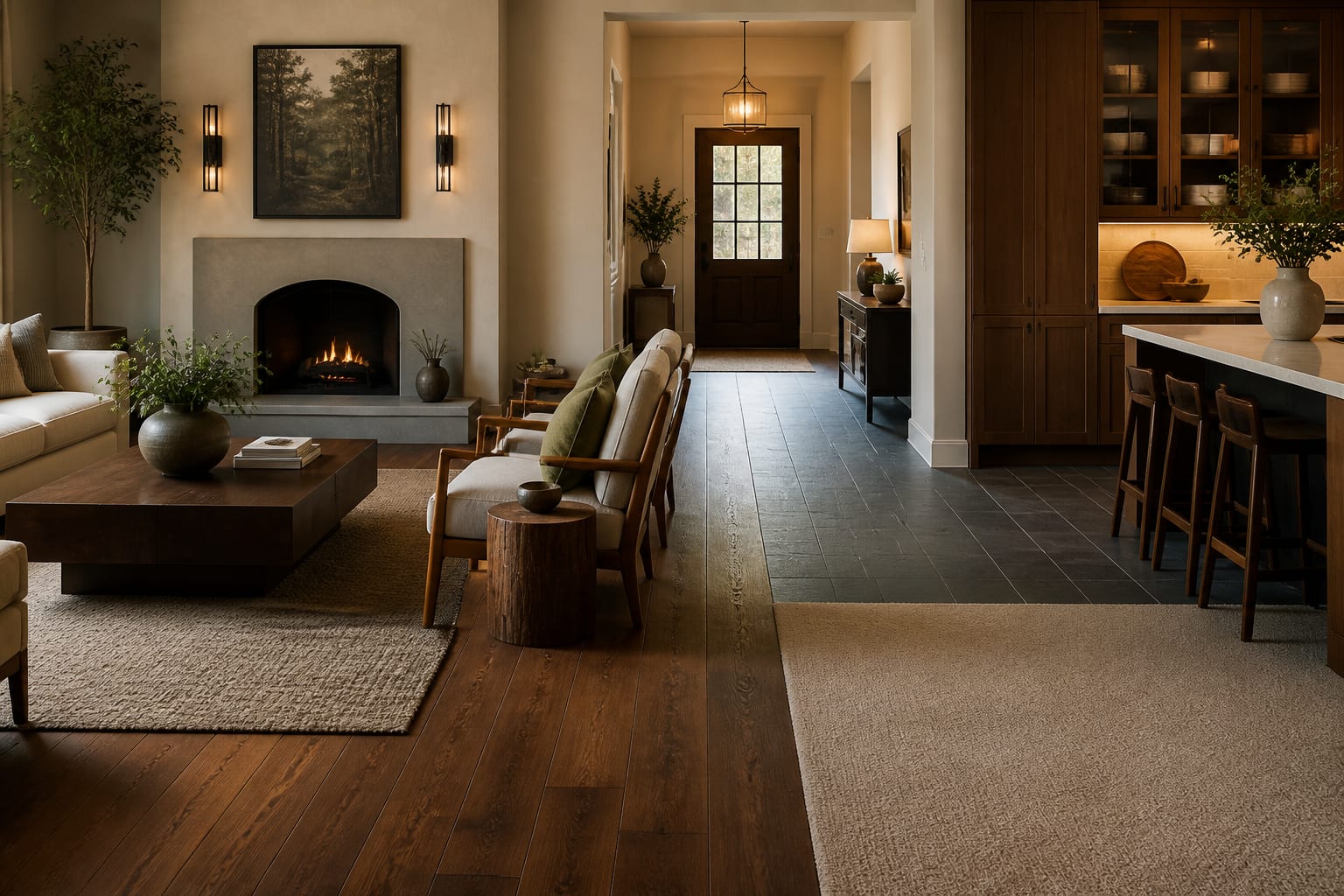
The number that matters is the installed price per square foot, not the sticker price on the box, because labor and prep often cost as much as the flooring itself. For most homeowners, luxury vinyl plank is the smartest dollar in the building right now: it survives kids and dogs, it floats over imperfect subfloors, and it installs for a fraction of hardwood. Hardwood and tile still win on resale and longevity, but you pay for it twice, in material and in labor. Pick the material to the room, not to the trend.
How installed cost actually works
Every flooring quote is really three numbers stacked together: the material, the labor to install it, and the prep underneath. The material is the part homeowners fixate on and the part that varies least between a good deal and a bad one. Labor is where the real money hides, because a slow, skilled install like tile costs far more per hour than clicking vinyl planks together. That is why two floors with similar material prices can land hundreds of dollars apart per room once installed.
Prep is the line that turns a clean quote into a surprise. Removing and hauling old flooring runs $1 to $3 per square foot, and leveling or repairing a subfloor adds another $1 to $4 depending on how bad it is. A floor is only as flat as what is under it, so skipping subfloor prep to save money is how you end up with squeaks, gaps, and a warranty void. Pulling up glued-down vinyl or mortared tile sits at the high end of that removal range, because it is slow, dusty work that a crew bills by the hour. If you are sequencing a whole refresh, paint first: our interior paint cost guide explains why walls go before floors so drips never matter.
Installation method also moves the labor number more than most homeowners expect. A floating click-together LVP floor goes down fast over an underlayment, while a nail-down hardwood or a thinset tile job is slow, skilled labor that a flooring crew prices accordingly. Stairs, intricate borders, diagonal layouts, and small rooms with lots of cuts all add hours and push the per-square-foot rate up. Two homes can buy the identical box of flooring and pay wildly different totals based purely on how complicated the install is.
Cost by material, installed
Here is what each common flooring type costs per square foot fully installed, material plus labor, with the prep extras listed after. Pick the room, then the material:
- Luxury vinyl plank: $3 to $10 installed, the value pick for kitchens, basements, and high-traffic floors.
- Hardwood, solid or engineered: $6 to $22 installed, with exotic species and wide planks at the top.
- Tile, ceramic or porcelain: $7 to $20 installed, driven by labor, layout complexity, and tile size.
- Carpet with pad: $3 to $8 installed, the cheapest comfort underfoot for bedrooms.
- Subfloor leveling and repair: add $1 to $4 per square foot when the base is uneven or damaged.
- Old-floor removal and disposal: add $1 to $3 per square foot, more for glued-down tile.
For a 300-square-foot living room, that means LVP lands around $900 to $3,000 installed while hardwood can reach $6,600, and that is before any subfloor surprises. Always ask for prep to be itemized so the bid does not balloon mid-job.
The expensive mistake is buying one floor for the whole house regardless of how each room gets used. Wet and high-traffic rooms want waterproof, forgiving surfaces, while bedrooms can take softer, cheaper options. Put LVP or tile in kitchens, baths, mudrooms, and basements where water and grit are constant. Save hardwood for living rooms, dining rooms, and hallways where it shows and where resale rewards it. Carpet belongs in bedrooms and few other places, since it traps allergens and wears fastest under heavy traffic. Matching the floor to the room also protects the warranty, since most manufacturers void coverage on a product installed somewhere it was never rated for.
Longevity changes the real cost, not just the install number. Hardwood lasts 30 to 100 years and can be refinished several times, so its high price amortizes over decades, while carpet needs replacing every 5 to 15 years. Tile can outlast the house but cracks if the subfloor flexes, which is exactly why the slow, skilled labor is worth paying for. If a designer is steering your selections, the interior designer cost guide covers how that fee works. And when flooring is one line in a larger build, the home addition cost guide puts it in context against framing and structure.
Common mistakes to avoid
Flooring budgets go sideways in a few repeatable ways. Avoid these and the installed number stays close to the quote:
- Comparing material prices instead of installed prices, so the labor gap blindsides you at the bid stage.
- Skipping subfloor leveling to save money, which produces squeaks, gaps, and voided warranties later.
- Putting hardwood or carpet in a bathroom or basement where moisture destroys it within a few years.
- Forgetting removal and disposal of the old floor, a $1 to $3 per square foot line quotes often omit.
- Buying the cheapest pad under carpet, which makes a decent carpet feel and wear like a cheap one.
The installed-versus-material confusion is the one that wrecks budgets most. A floor that looks cheap on the box can cost double once a skilled crew and subfloor prep are added. Match the warranty to the room too, since most flooring warranties are void in spaces they were never rated for.
Preview flooring in Re-Design
Frequently Asked Questions
How much does flooring installation cost per square foot?
Installed costs run $3 to $10 for luxury vinyl plank, $6 to $22 for hardwood, $7 to $20 for tile, and $3 to $8 for carpet with pad. Those numbers include labor, which often equals or exceeds the material cost. Subfloor prep and old-floor removal add another $1 to $4 per square foot on top.
What is the cheapest flooring to install?
Carpet is usually the cheapest at $3 to $8 per square foot installed, and luxury vinyl plank is close behind at $3 to $10 with far better durability. LVP is the better value for most rooms because it resists water and wear that carpet cannot. The cheapest install is rarely the cheapest floor over its lifetime.
Do I need to replace the subfloor before new flooring?
Not always replace, but almost always inspect and often level or repair. A floor is only as flat and sound as the subfloor beneath it, so leveling or fixing it adds $1 to $4 per square foot. Skipping this step causes squeaks, gaps, and voided warranties, which cost far more to fix after installation.