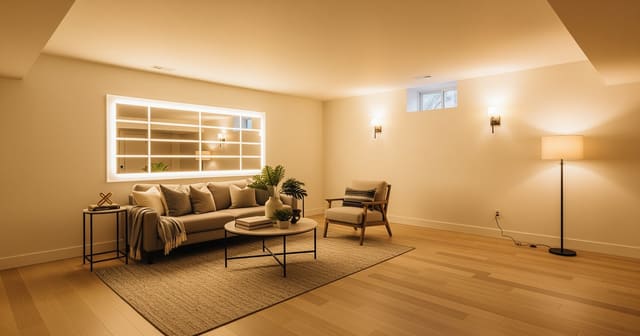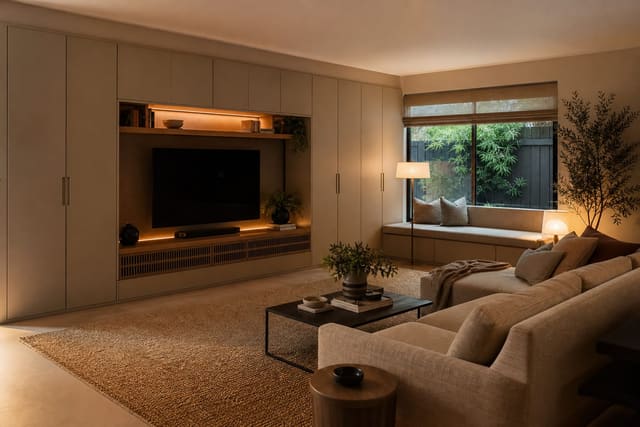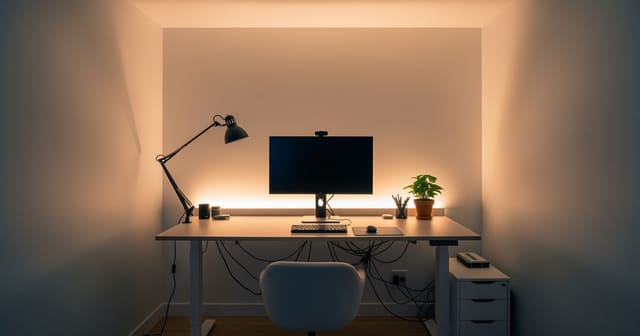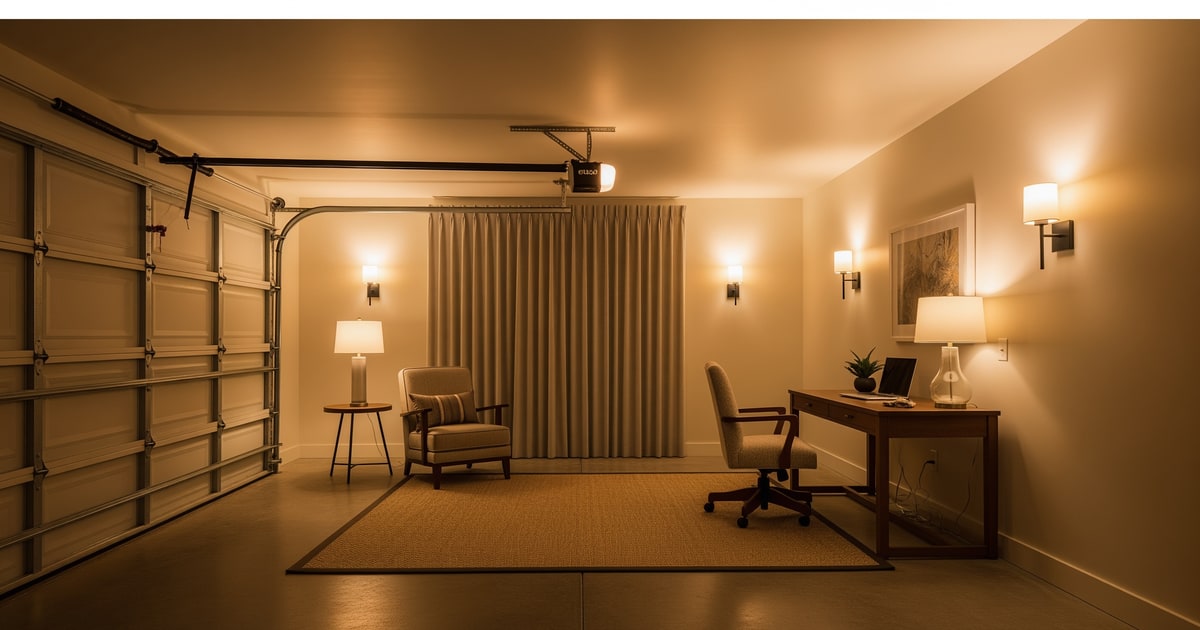
A garage converts to a real-feeling room when the lighting drops the single overhead utility fixture and adds three layers — 3000K recessed cans on a 6 to 8ft grid for ambient, two or three 2700K table or floor lamps for warmth, and a daylight source through one new window or skylight — because original garage wiring almost always under-lights for living use. A converted garage should not keep the lighting personality of a garage. The common mistake is leaving the original fluorescent strip, adding one ceiling fan with a bright bulb, and wondering why the new office, guest room, or den still feels temporary. Lighting is the design move that tells your brain the space is now part of the house. Change the color temperature, fixture height, and glare control, and the same concrete box starts reading like usable square footage.
How do I improve lighting in a converted garage?
Improve lighting in a converted garage by replacing utility fixtures with 2700K to 3000K layered residential light: diffused ceiling fill, wall or lamp-height ambient light, task lighting for the main use, and one low accent source near the floor. The goal is not maximum brightness. The goal is removing the hard overhead glare and cool color temperature that make converted garages feel unfinished even after insulation, flooring, and paint are complete.
The four layers that make it feel residential
- Diffused ceiling fill. Use a flush-mount, track with shaded heads, or recessed cans with wide beam angles. Aim for even coverage, not spotlight pools. In a 12' x 20' garage conversion, four to six low-glare ceiling sources usually beat one bright fixture in the center.
- Wall-height ambient light. Add plug-in sconces, picture lights, or shaded lamps around 60" to 66" off the floor. This is the missing layer in most garage conversions because the original garage had no reason to light the walls.
- Task light for the new function. A desk needs an articulating lamp. A guest room needs bedside lights. A gym needs brighter, broader light near the mirror or mat. The task layer should answer what the room is now, not what the garage used to be.
- Low accent light. A floor lamp, LED strip under a bench, or small lamp on a console softens the floor plane. Garages often have slab floors and low ceilings; low light makes both feel less blunt.
Test this on your own room photo with ReDesign before you choose the final direction; keep the doorway, walls, windows, main furniture, lighting, and awkward fixed features visible so the preview solves the room you actually have.
Color temperature and fixture specs that matter
Keep the living-zone fixtures between 2700K and 3000K. If part of the converted garage still stores tools, put that workbench on a separate 3500K task light so the whole room does not inherit the workshop feel. Use CRI 90+ bulbs anywhere upholstery, paint, or flooring color matters. Put every ceiling and wall layer on a dimmer, especially in rooms that change roles between workday and guest use. Choose diffusers, linen shades, frosted globes, or baffles; bare bulbs and exposed LED tape make the conversion feel unfinished.
A converted garage needs residential light at residential heights. Start with the ceiling because garage ceilings are often flat and low: four to six 800-lumen warm wafer lights can provide even fill in a 12 by 20 foot space, but they need dimmers and a wall layer to stop the room from feeling like a workshop. Add shaded sconces, floor lamps, or picture lights around 60 to 66 inches high so the eye reads furniture and walls instead of one bright ceiling plane. Use 3000K for the main layer, 2700K for lamps, and 90+ CRI if the room will be a bedroom, office, or family room. The basement lighting guide is the closest reference because both spaces have to overcome low daylight and utility finishes.
The finish picks should erase the old garage clues. Matte drywall, a large rug, wood or fabric shades, and warm metal fixtures do more than exposed track heads everywhere. Track can work when the room needs flexibility, but choose a simple architectural rail with shielded heads, not a hardware-store strip that screams storage bay. Owners should wire at least two switched zones before the walls close: general fill and the seating or work area. Renters or temporary users can use plug-in sconces, cord covers, and heavy floor lamps. If the converted garage becomes an office, the task layer from home office lighting keeps the new room from feeling like a bonus space with a desk dropped in.
Garage conversions also need a plan for the former door wall. If the garage door becomes windows or French doors, that wall should receive softer interior light at night so it does not turn into a black mirror. If the door remains, use curtains, a storage wall, or a large textile to reduce the slab-like feeling, then wash that surface gently with lamps. A room can have correct lumens and still feel unfinished when the old garage boundary stays visually loud.
Floor finish changes the light calculation. Polished concrete reflects points of light and can make bare bulbs feel harsher, while carpet tile, cork, vinyl plank, or a large rug absorbs glare and lets you use warmer lamps. If the room will be a gym, choose brighter task light near the mirror but keep it separate from the lounge or office layer. If it will be a guest room, bedside switching matters more than maximum output. The lighting should prove the new use, not simply hide the old one.
Do one night test before closing the fixture plan. Stand at the entry from the house, turn on only the new residential layers, and look for anything that still reads garage: a dark overhead door track, a cold corner by storage, or a bright workbench spilling into the living zone. Fix those tells with a wall light, shade, or separate switch before adding more general brightness.
Common garage conversion lighting mistakes
- Keeping the original fluorescent strip. It is efficient, but it announces "utility room" before anyone notices the furniture.
- Using cool-white bulbs because the room feels dark. 4000K and 5000K make garage drywall, slab floors, and low ceilings read harsher. Add more warm layers instead.
- One ceiling fixture for the whole room. Converted garages are usually long rectangles. A single center fixture creates bright middle, dark edges, and no sense of a finished room.
- Ignoring the garage door wall. If the door was replaced with windows, treat that wall like the room's focal point. If the door remains, soften it with lamps, curtains, or a built-in storage wall.
- No separate task layer. A garage office, gym, or guest room each needs different functional light. Ambient light alone never solves the use case.
- Lighting only the new furniture. A desk lamp or bedside lamp helps the task but leaves the garage shell visible. The ceiling, walls, and floor edge need residential light too.
- Leaving one fluorescent-style strip in the center. That keeps the room psychologically attached to its garage past, no matter how good the furniture is.
Use AI design to preview the garage before you commit
Garage conversions are expensive because every surface is changing at once. Use Re-Design to upload the current garage or half-finished conversion and preview warm ceiling fill, wall sconces, a defined task zone, and softer flooring before buying fixtures. The preview helps decide whether the room wants a guest-suite glow, a focused office plan, or a brighter studio setup.
Frequently Asked Questions
How many recessed lights does a converted garage need?
One 6in recessed can per 35 to 50 sq ft on a 6 to 8ft grid; a typical 400 sq ft 2-car garage needs 8 to 12 cans for general ambient lighting. Use the room photo to compare the visible layout and fixed constraints before committing, because door swings, windows, outlets, storage reach, circulation, and existing furniture decide whether the idea survives daily use.
What color temperature works in a converted garage?
3000K for recessed ambient and 2700K for table and floor lamps reads like an upstairs room; 4000K or higher kept from the original garage shop lighting reads commercial. Keep the preview honest by leaving the problem area visible in the frame, then compare one conservative version against one bolder version before you buy lighting, paint, furniture, or storage.
Should I keep the garage door for natural light?
Glass-panel garage doors deliver daylight and breeze when raised, but they leak air and weather; full conversions usually replace with a window wall or French doors plus a fixed clerestory band. Check the result against ordinary movement first: drawer clearance, chair pullout, walkway width, glare, switch access, and sightlines matter more than a perfect catalog angle.
Do converted garages need GFCI on all outlets?
Yes if any portion was previously rated as garage — code requires GFCI; the conversion permit will list the outlet count and circuit upgrade needed for the new use. Use the image to narrow priorities and measurements before ordering anything custom; final purchases still need real dimensions, outlet locations, installation limits, and product clearances.
Can I install a skylight in a converted garage?
Yes — a 2x4ft fixed skylight at the high point of the ceiling delivers daylight in a way no window can; budget 1,800 to 3,500 dollars installed including drywall patching. If the preview invents architecture or hides the awkward feature you need solved, rerun it with stricter instructions so the result remains tied to your actual room.
> Try this: Ready to see this on your own room? Open ReDesign and run the preview.
Three transformations to try
1. Recessed grid plus table lamps in garage-to-family-room conversion 2. Skylight plus warm sconce wall in garage office 3. Pendant cluster and floor lamps in garage living conversion