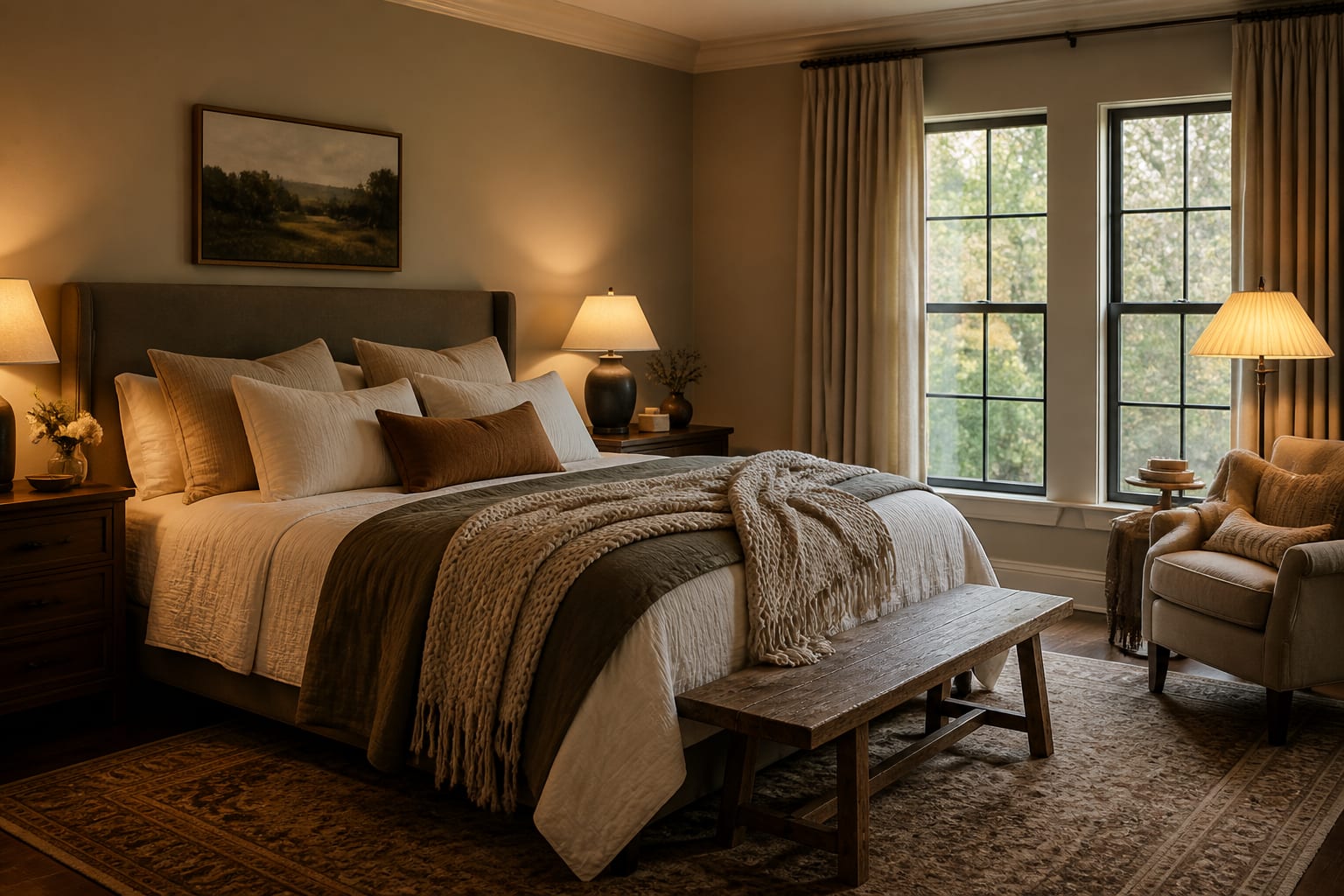
To layer bedding and textiles for a cozy bedroom, start with a fitted and flat sheet, add a lightweight blanket or coverlet, top with a duvet or comforter, fold a heavier throw across the foot, and finish with pillows in graduated sizes. My read after years of restyling beds is that coziness comes from contrast, not from buying more matching pieces. A bed that mixes a crisp cotton sheet with a chunky knit and a brushed flannel simply reads warmer to both the eye and the hand, and it does so on almost any budget.
The honest answer is that most beds look flat because every layer shares the same weight and finish. Three identical smooth surfaces stacked together photograph fine and feel like a hotel that forgot to turn the heat on. The fix is cheaper than a new comforter: you vary texture, weight, and height on purpose, and you let a few layers peek out instead of hiding under one tidy spread.
Start with the base layers that touch you
Layering begins with what your skin meets first, so I spend the most money here and the least on decorative top pieces. A good fitted sheet with a deep pocket of 15 to 18 inches keeps modern mattresses, which often run 12 to 14 inches tall, from popping loose at 3 a.m. Percale, woven at a 300 to 400 thread count, gives you that cool crisp hand, while sateen at a similar count feels warmer and slightly heavier, landing around 120 to 140 GSM. Neither is better; they just behave differently, and that difference is your first chance to introduce contrast.
Over the sheet I add a single mid-weight blanket, usually cotton or a cotton-linen blend at 200 to 300 GSM. This is the layer most people skip, and it is the one that makes a bed feel deep rather than thin. It also lets you regulate temperature without dragging the whole duvet off in summer, since you can sleep under the blanket alone on a warm night and add the duvet back when it cools. If your room runs cold, the same logic that shapes a good bedroom layout applies here: warmth is about zones, and the bed is the one zone you can fully control with fabric instead of a thermostat.
A flat sheet sits between the fitted sheet and the blanket for anyone who likes that crisp tucked feel, though I often skip it on a duvet-forward bed to keep the stack from getting fussy. The point is to make a deliberate choice rather than defaulting to whatever came in the set. Linen is worth a mention here too, since a stonewashed linen sheet runs heavier at roughly 160 to 200 GSM and brings a slubby texture that does half your contrast work before you add a single top layer. It costs more upfront, often two to three times a basic cotton set, but it softens over years rather than wearing out in one.
Build height and contrast with the top layers
The duvet or comforter is your volume layer. A 300 to 400 GSM fill gives that plush, slightly overstuffed look without smothering you, and I size the insert one step up from the mattress, so a queen bed gets a king-size duvet when I want a generous drape that reaches 8 to 10 inches down each side. Fold the top third back to reveal the blanket and sheet underneath, because that single fold is what signals layers exist at all. Without it, all your careful base work disappears under one blank rectangle.
Then comes the throw, the piece that does the most styling work for the least money. Look for these traits when you shop:
- A real textural break from the duvet, such as a chunky 7-gauge knit, mohair, or a brushed wool plaid.
- A finished size near 50 by 60 inches, large enough to actually use, not a 36-inch decorative square.
- A weight you can feel, ideally 1,000 to 1,800 grams, so it holds a sculpted fold instead of slithering off.
Drape it diagonally across the foot of the bed covering the lower third, then crease it loosely with your hands so it has structure rather than lying dead flat. Lighting changes how all of this reads, so pairing your textiles with a warm 2700K bulb the way a thoughtful bedroom lighting plan does makes the same knit look twice as inviting after dark. Cool white bulbs at 4000K wash the warmth right out of wool and linen, which is a quiet reason many carefully styled beds still feel cold.
Get the pillow stack right
Pillows are where layering either clicks or collapses into clutter. I work in rows from the headboard out. The back row is structure: two 26-inch Euro shams stood upright give a tall, hotel-grade backdrop that frames everything in front. Next sit your two actual sleeping pillows in standard or king shams, slightly softer and lower than the Euros. The final accent row is one or two smaller pieces, like a 12-by-20-inch lumbar or a pair of 18-inch squares, in the boldest pattern or color of the whole bed.
Keep the count odd-leaning and restrained. On a queen, five to seven pillows total is plenty; pile on eleven and you spend every morning rebuilding a monument and every night moving it to the floor. Vary the inserts too, since a down-alternative fill holds a plumper shape than a flat polyester one. In a tight footprint, such as a studio apartment bedroom, I drop the Euro shams entirely and let two sleepers plus one lumbar carry the look, because oversized stacks visually swallow small rooms and steal the floor space you need to actually walk around.
Common mistakes to avoid
The most common mistakes to avoid almost all come from matching too hard and contrasting too little. Buying a single bed-in-a-bag set means every layer shares one weight, one sheen, and one color, which is exactly the flatness you are trying to fix. Skipping the mid-weight blanket leaves a gap between sheet and duvet that no amount of pillows hides, and it shows up most in photos, where the bed looks like two layers pretending to be five.
Sizing is the other trap. A duvet insert that matches the mattress size instead of going one up leaves stingy 2-inch side drops that look like a fitted cover stretched over the bed. Cheap sheets under 200 thread count pill within a season and feel papery against the skin, undoing all the comfort you were chasing. The throw mistake is nearly universal: people center a tiny 36-inch square like a napkin instead of draping a real 50-by-60-inch piece across the foot. Color counts matter too; cap yourself at three core colors plus one neutral, or the layers stop reading as layers and start competing.
Use AI design to preview your bedding layers before you commit
Textiles are hard to imagine in the abstract, which is exactly why I reach for Re-Design before ordering a single sham. Upload a straight-on photo of your made bed, and the AI re-renders it with different layer combinations, so you can see a waffle coverlet under a chunky knit throw against your actual headboard and wall color rather than guessing from a swatch on a screen the size of a stamp.
The useful part is iteration speed. Upload one bedroom shot and compare a percale-and-linen scheme against a sateen-and-velvet one side by side, test whether two Euro shams overwhelm your particular frame, and check how a moody plaid throw reads against your existing paint. Watching the AI design render your room with each option turns an expensive trial-and-error shopping spree into a few minutes of looking, so you only buy the textiles that genuinely earn their place on the bed instead of stuffing the closet with returns.