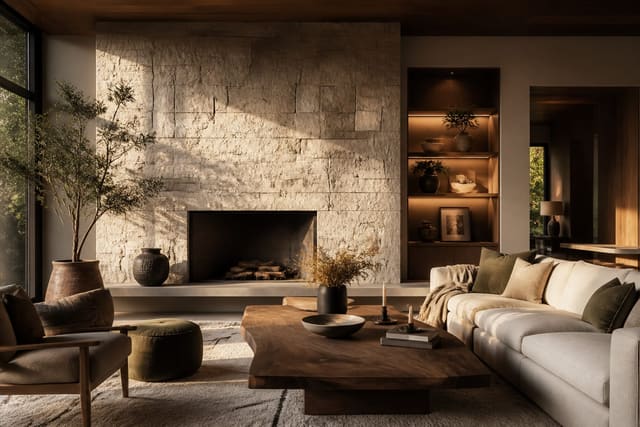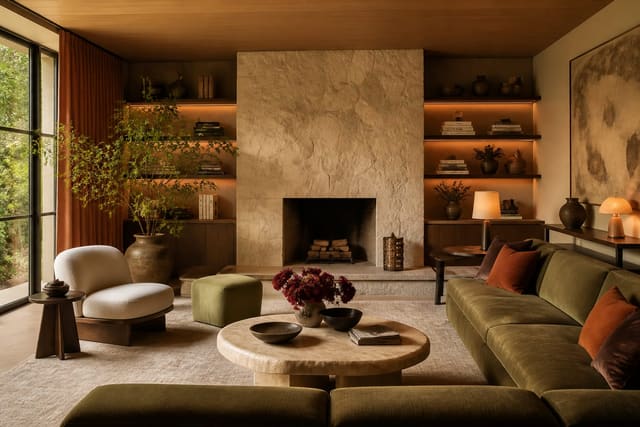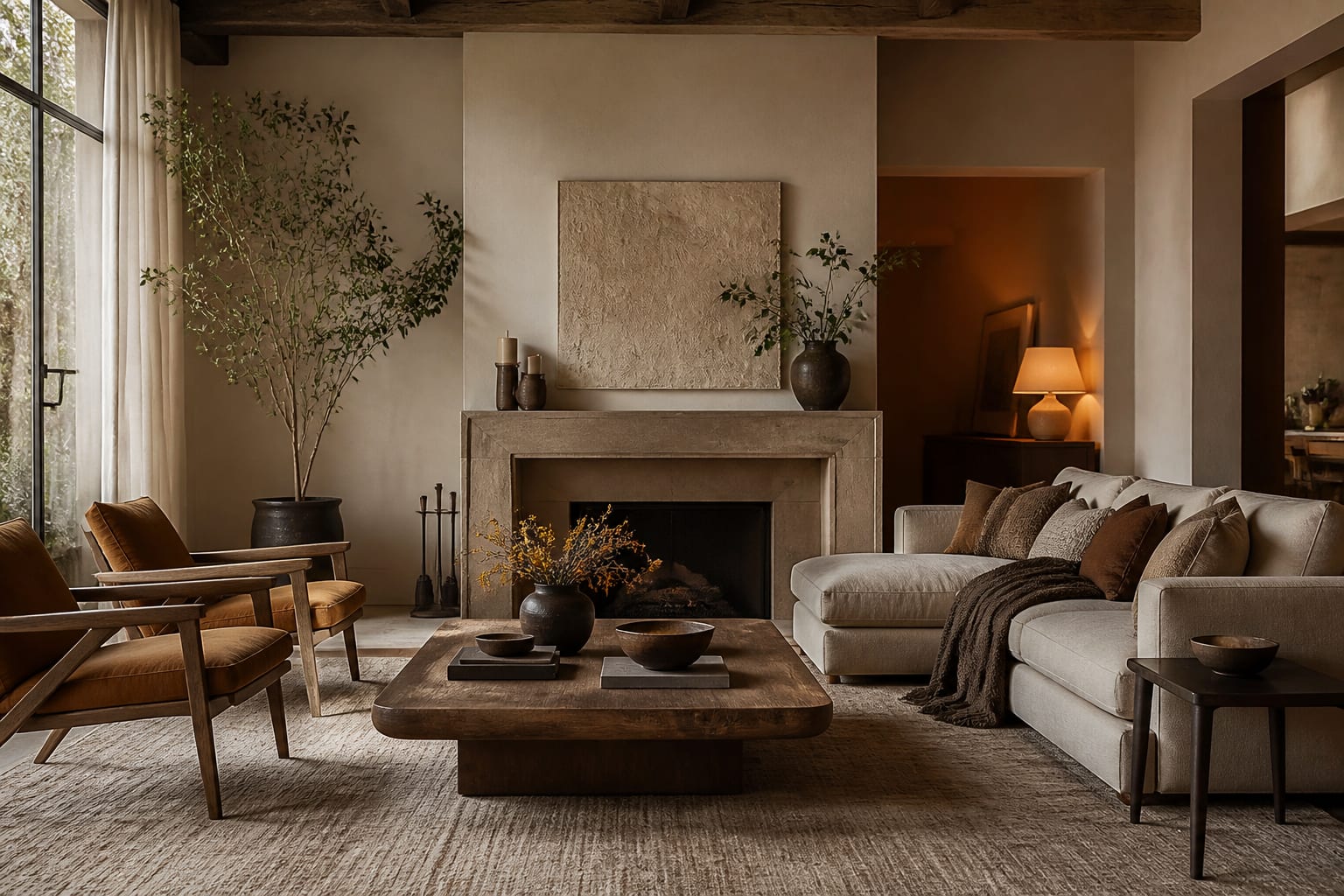
The most useful design movements of this year reward restraint over spectacle. Rooms that feel current in 2026 are warmer, softer, and more tactile than the cool gray boxes of the last decade, and that direction is here to stay. Expect earthy color drawn from clay and stone, furniture with rounded edges instead of hard corners, and walls finished in matte plaster that catches light gently. Vintage pieces return as anchors of character rather than novelties. Statement lighting acts as sculpture you can switch on. Below is a grounded look at the trends with real staying power, why they resonate now, and how to borrow them without gutting a room or chasing every passing fashion.
Warm Minimalism Replaces the Cold, Empty Box
The minimalism people grew tired of was clinical: white walls, gray sofas, and surfaces wiped bare to the point of feeling unlived in. The version gaining ground now keeps the calm and the clean lines but swaps sterility for warmth. The discipline of fewer, better objects remains, yet every piece that stays earns its place through material richness rather than sheer absence. A room can still be quiet while feeling generous to the touch.
This shift shows up in choices that you feel more than see. Oak and walnut replace painted MDF, undyed linen and boucle replace flat cotton, and unlacquered brass replaces chrome so the metal can patina with age. Color creeps back in softly through oatmeal, putty, and mushroom tones that read as neutral but never feel cold. The result is a space that breathes, with open floor and clear surfaces, yet wraps you in texture the moment you settle in.
The practical appeal is durability, both physical and emotional. When you buy fewer pieces, you can spend more on each, choosing solid construction and natural fibers that age into something better rather than wearing out. The look also resists trend fatigue because it leans on timeless materials instead of seasonal colors. To borrow it, start by editing what you already own, keep the surfaces that genuinely earn attention, and then upgrade one or two key pieces in honest materials. A single well-made oak bench or a heavy linen slipcover can pull a whole room toward this warmer, more grounded kind of restraint without a full renovation. The point is not to own less for its own sake but to surround yourself only with things that reward a second glance and a closer touch.
See also our guide to Interior Design Trends 2026 Full Guide for more on interior design trends 2026.
Earthy Palettes and the Return of Real Color
Color confidence is one of the clearest markers of a current room this year. The all-neutral interior is giving way to palettes pulled straight from landscape and stone: clay, terracotta, ochre, olive, sage, and deep oxblood. These hues feel grounding because the eye associates them with earth, sunlight, and natural pigment rather than with paint chips. Even people nervous about color find them easy to live with, since they read as sophisticated neutrals once they are on the wall.
The way color is applied has changed too. Rather than a single accent wall, designers are wrapping entire rooms, including trim and ceilings, in one tone to create an enveloping, cocooning effect. This color-drenching approach makes small rooms feel intentional instead of timid, and it flatters warm artificial light beautifully in the evening. Muddy, complex shades with a touch of gray or brown in them tend to age better than pure, saturated brights, which can feel dated within a season or two.
Green continues to do heavy lifting because it bridges the indoors and the garden, and it pairs naturally with the wood tones already trending. If a full room feels like too much commitment, you can introduce the palette through textiles, ceramics, and a single piece of upholstered furniture, then build from there. The safest path is to choose one earthy anchor color you genuinely respond to, then layer two or three quieter relatives around it. That restraint keeps the scheme from tipping into a costume and lets the warmth come through as something lived-in rather than loudly themed. Test any earthy shade on the wall at different times of day before you commit, because these complex tones shift more than a simple white and can read very differently under morning daylight than under lamplight at night.
For a related angle on interior design trends 2026, read Color Trends 2026.
Curves, Plaster, and Tactile Surfaces
Hard right angles are softening across the board. Curved sofas, rounded armchairs, arched doorways, and circular mirrors all signal a 2026 sensibility because they make a space feel calmer and more inviting to move through. A serpentine or kidney-shaped sofa anchors a conversation area without the rigidity of a boxy sectional, and even small touches, like a round coffee table or a barrel chair, take the edge off a room that feels too severe. The eye relaxes when it has fewer sharp corners to track.
Surfaces are where the year's tactility really lives. Limewash and textured plaster have moved from niche to mainstream because they give walls subtle movement and depth that flat paint cannot match, shifting gently as daylight crosses the room. Microcement on floors and counters, fluted wood on cabinetry, and raw stone with honed rather than polished finishes all push the same agenda: surfaces you want to run a hand across. These finishes also forgive imperfection, which suits older homes and busy households.
The risk with texture is overdoing it, so balance matters. A plaster wall reads best against a few smooth counterpoints, like a lacquered table or a sheet of glass, so the rough and the smooth define each other. If a full plaster treatment feels daunting, limewash paint offers much of the effect in a weekend and can be rolled on by a confident amateur. Start with one focal wall, pair it with natural wood and a single soft curve in the furniture, and the room will pick up the current mood without needing a contractor or a wholesale redesign of the space. Curves and texture work hardest together, since a rounded silhouette against a hand-finished wall is what gives the year's interiors their soft, hand-built character.
Statement Lighting and Characterful Vintage
Lighting has graduated from utility to sculpture. The trend now treats fixtures as the jewelry of a room, with oversized paper lanterns, sculptural plaster pendants, alabaster globes, and slim articulated wall lights doing as much decorative work as a piece of art. A single bold pendant over a dining table or a pair of dramatic sconces flanking a bed can define the whole character of a space, even when everything else stays understated. The fixture earns its keep whether it is switched on or off.
Layering remains the principle that makes lighting feel professional. Relying on one overhead source flattens a room, while combining ambient, task, and accent light at different heights creates depth and lets you shift the mood from bright and functional to low and intimate. Warm bulbs around 2700 kelvin suit the earthy, cozy direction far better than the cooler, bluer light that dominated open-plan kitchens a few years ago. Dimmers turn a static room into one that adapts through the day.
Vintage and antique pieces complete the look by adding the patina and provenance that new furniture cannot manufacture. A single old timber cabinet, a worn leather chair, or an inherited rug introduces age and story that keeps a room from feeling like a showroom. The current approach is to mix one or two characterful older pieces into an otherwise contemporary scheme rather than committing to a full period look. Secondhand sourcing is also the most sustainable way to furnish, which aligns with the broader pull toward longevity. One sculptural light and one vintage anchor are often all a room needs to feel deliberate and personal.
- Warm minimalism: fewer pieces, but richer materials like oak, linen, and unlacquered brass.
- Earthy color-drenching in clay, olive, and oxblood across walls, trim, and ceiling together.
- Curved furniture and arched shapes that soften hard corners and ease movement through a room.
- Textured plaster and limewash walls that catch light and add depth flat paint cannot match.
- Sculptural statement lighting in paper, plaster, and alabaster treated as functional art.
- Microcement, fluted wood, and honed stone surfaces chosen to be touched, not just seen.
- One or two vintage anchor pieces that add patina, story, and a sense of lived-in age.
- Warm 2700-kelvin bulbs on dimmers, layered at several heights for adaptable evening mood.
Bring the look home with Re-Design
Trends look convincing in editorial photos but can fall flat in your own light and layout. Before you color-drench a wall or buy a curved sofa, upload a photo of the actual room to Re-Design and preview the look first. You can test an earthy palette, a plaster finish, or a sculptural pendant against your real proportions and furniture, then compare a few directions side by side. Seeing the style rendered in your space removes the guesswork and the costly returns, so you commit to the 2026 ideas that genuinely suit your home rather than ones that only worked elsewhere.
Frequently Asked Questions
What is the biggest interior design trend for 2026?
Warm minimalism leads the year. It keeps the uncluttered calm of earlier minimalism but trades cold gray and stark white for natural materials, earthy color, and soft texture. The emphasis shifts from owning almost nothing to owning fewer, better pieces in honest materials like oak, linen, and unlacquered brass that age gracefully over time.
Are gray interiors out of style in 2026?
Cool, flat grays are fading fast, especially the all-gray scheme that dominated open-plan homes. Warmer, complex tones replace them: clay, terracotta, olive, and putty. Gray itself is not banned, but it now reads as dated unless it leans warm and pairs with wood and texture. Most rooms feel more current with an earthy base color instead.
How do I follow 2026 trends on a small budget?
Start with low-cost, high-impact changes. Limewash paint gives walls texture for the price of a tin and a weekend. Swap cool bulbs for warm 2700-kelvin ones on a dimmer. Add a single curved secondhand chair or a vintage cabinet for character, and introduce earthy color through cushions and ceramics before committing to full walls.