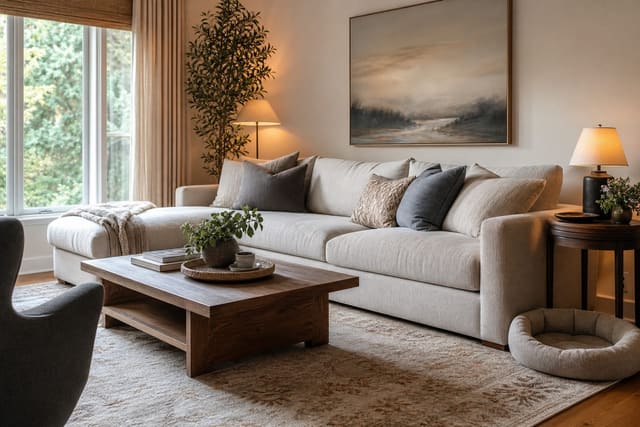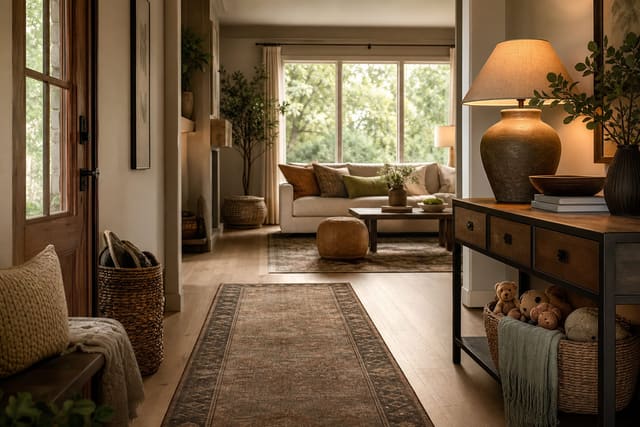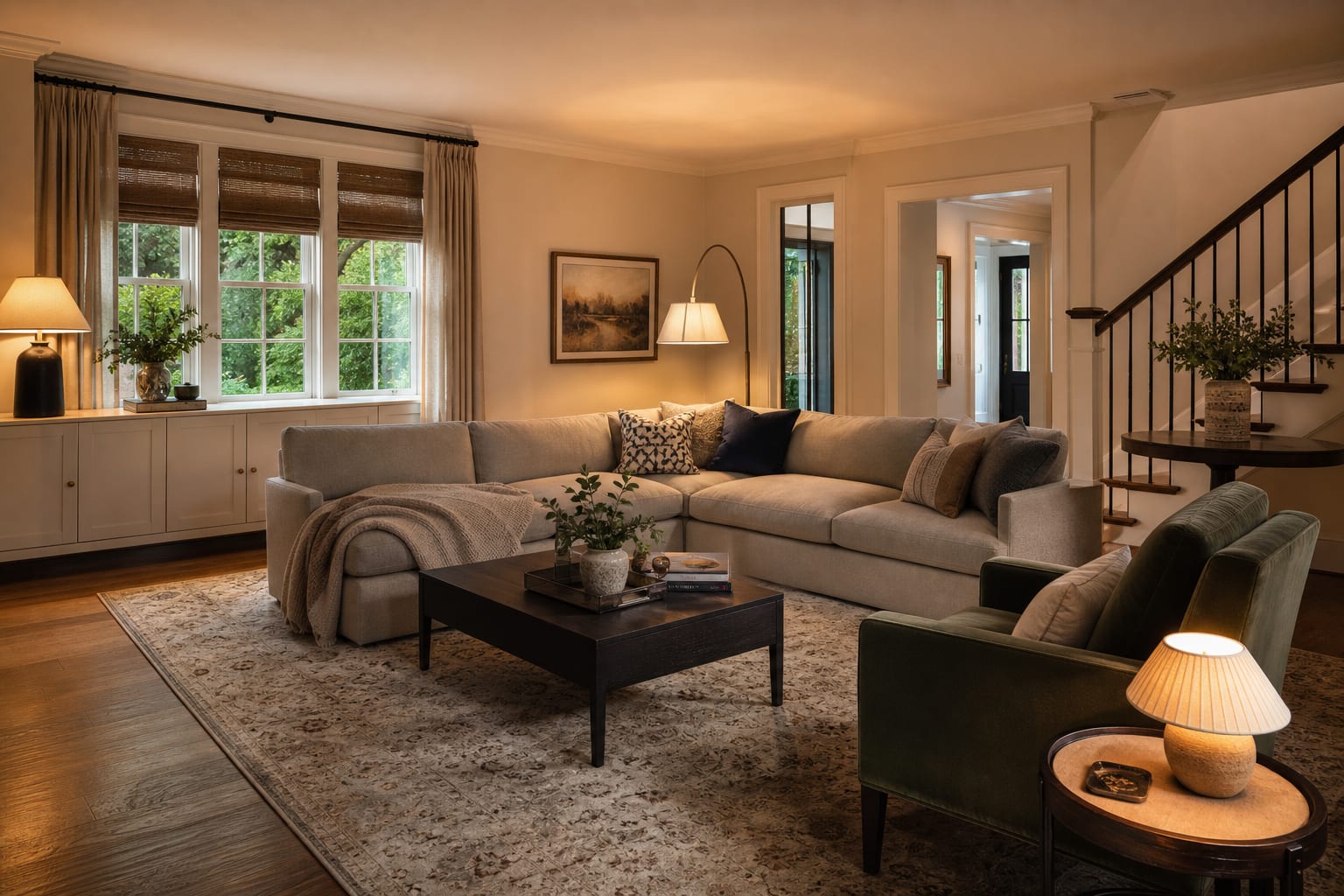
A kid-friendly living room stays adult when performance fabric or leather covers the seating, the rug is wool or indoor-outdoor, the coffee table has rounded edges, and toys hide inside a closed console. Kids get function; the room keeps visual authority. The goal is a space where children actually live and adults don't feel like they surrendered the first floor.
What makes a kid-friendly living room feel grown-up?
Give children's things a clear home, choose durable materials that don't look wipe-clean, and let grown-up scale, lighting, and color lead. The room should say family, not playroom, from the doorway.
Start with the largest adult pieces: a real sofa, a proper rug, useful lamps, and art at adult scale. Choose a tight-weave performance fabric, leather, microfiber, or textured indoor-outdoor fabric in a medium tone — charcoal, camel, olive, denim, taupe, or tobacco hide ordinary kid evidence better than pure white or flat black. Households juggling pets too should apply the same logic from the pet-friendly sofa fabric guide: tight weave first, texture second.
Keep the main traffic path at least 30 inches wide (36 inches where kids run between sofa, kitchen, and stairs). Place the coffee table 16 to 18 inches from the sofa, and pick round or oval shapes over sharp corners. The color palette should belong to the grown-ups: one calm base, one secondary material like wood or leather, and one or two repeated accents. Bright toys can exist, but they need doors, drawers, or baskets.
The storage decision that keeps toys from taking over
Family-friendly living room ideas start with closed storage, not prettier clutter. Open baskets help with a quick sweep, but a room full of visible baskets still reads as toy storage. Mix one or two fast-access bins with cabinets, drawers, ottomans, or a credenza that makes the mess disappear.
Use shallow bins (10 to 12 inches deep) so small hands can manage them independently. A discreet label — brass tag, tape, or picture card inside the door — keeps the system usable without turning the room into a classroom.
A storage ottoman works when it's at least 36 inches wide and firm enough to hold a tray, with soft-close hinges. Leave about 18 inches of clear floor in front of any bench so kids can kneel and put things away.
Flooring must survive the daily reset. A low-pile wool blend, washable flatweave, or indoor-outdoor rug beats a pale high-pile shag. An 8-by-10-foot rug is usually the minimum that lets furniture legs sit on it, so the room looks finished rather than like a play mat floating mid-floor. Before committing to a delicate rug, check the kid-proof flooring guide.
Test finishes on your own room photo with ReDesign before buying — keep the daylight, ceiling line, and main path visible so the preview solves the space you actually have.
Common mistakes that make family rooms look chaotic
- All child-scaled furniture. Tiny tables, chairs, and bins make the room feel temporary; surround one or two kid pieces with adult-scale furniture instead.
- Every toy left visible. Trains, blocks, costumes, and stuffed animals clash visually when displayed together — pick one visible category (like books) and hide the rest.
- Fragile "grown-up" finishes. Glass tables and pale linen look stylish for ten minutes, then invite constant correction. Use rounded corners, washable covers, and forgiving patterns instead.
- No lamps. One overhead fixture flattens everything into clutter. Use three light sources — overhead, a table or floor lamp, and an accent light — with bulbs around 2700K to 3000K and 90+ CRI.
- Ignoring the doorway view. The entrance should show sofa, rug, lamps, and art first; move bin piles to a side wall or cabinet.
Use AI to preview your family living room before you commit
AI design helps here because the hard part is balance: the room must absorb toys without being led by them. Upload a straight photo of the actual room and test versions where the sofa, windows, flooring, and storage stay realistic — a storage wall, darker rug, round coffee table, or performance-fabric sofa can change everything before you buy.
Shoot from the main doorway or back corner so the preview includes the sofa wall, floor, ceiling line, windows, and toy zones. Tidy to a normal good-day level, not a fantasy version. If the room is used at night, capture a second image with lamps on, since fabric color and clutter read differently after sunset.
Run focused comparisons: a closed media cabinet, a storage ottoman with a patterned rug, and toys relocated to a side-wall cabinet. If the best result only works because the sectional, shelves, and windows all vanished, it's dodging your room, not solving it.
Light direction matters too. A north-facing room can make gray upholstery and pale rugs look colder than expected — see north-facing living room colors and lighting if generated options feel flat. Often warmer lamps and one stronger wood tone fix it faster than a new layout.
What should you change first this weekend?
- Edit the toys. Remove broken items, duplicates, and outgrown books, then sort what's left into daily, occasional, and stored-elsewhere zones.
- Fix the largest soft surface. Replace a too-small or too-pale rug with one large enough to connect the seating, in a low pile and forgiving pattern.
- Make the adult layer obvious. Hang art with its center around 57 to 60 inches high, swap toy-colored bins for woven or painted storage, and leave 20% of surfaces empty.
- Set a five-minute reset routine. One basket for active toys, one drawer for games, one shelf for books, one closed cabinet for everything with pieces.
For the broader upload workflow, use the AI design complete guide as the parent checklist, then return here for scale, light, and layout choices.
Frequently Asked Questions
What sofa fabric handles kids and pets?
Performance polyester or polyester-blend fabrics (Crypton, Sunbrella, Revolution) resist juice, marker, and pet hair best. Full-grain leather develops patina and wipes clean, while linen and velvet show marks within a season.
What rug works in a kid-friendly living room?
A flat-weave wool or indoor-outdoor polypropylene rug in a mid-tone or pattern hides crumbs and mud. High-pile shag and cream wool show every spill and become a stress source within a year.
Where do toys go without dominating the room?
Use a 36 to 60 inch console or low credenza with closed doors for everyday toys, plus one lidded basket for the day's rotation. Visible plastic toys everywhere are what tip a room into looking like a daycare.
Should I avoid glass and sharp corners?
Yes — skip glass coffee tables and razor-corner stone tops. Choose rounded-corner wood, upholstered ottomans, or eased-edge stone, and anchor any freestanding bookcase or tall console to a stud.
How do I keep the room photographable for adult moments?
Hide the daily toy rotation in one closed cube and keep a mid-toned throw and a tray that resets surfaces in under five minutes. Design the room to recover quickly from kid use, not to prevent it.
> Try this: Ready to see this on your own room? Open ReDesign and run the preview before you buy, paint, drill, or move furniture.
Three transformations to try
1. Performance-fabric sofa with closed toy console and wool rug 2. Leather sectional with rounded coffee table and rotating basket 3. Indoor-outdoor rug, upholstered ottoman, and wall-mounted TV