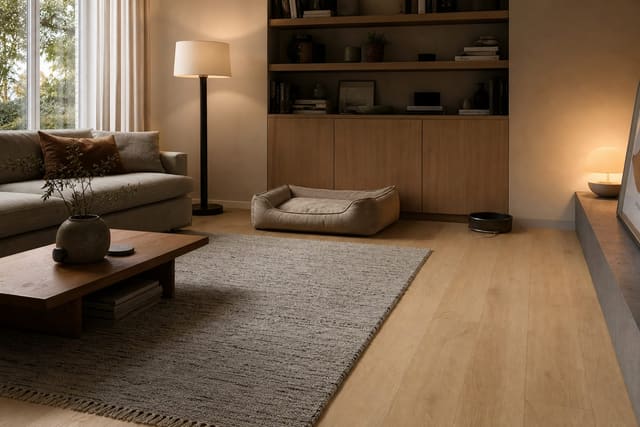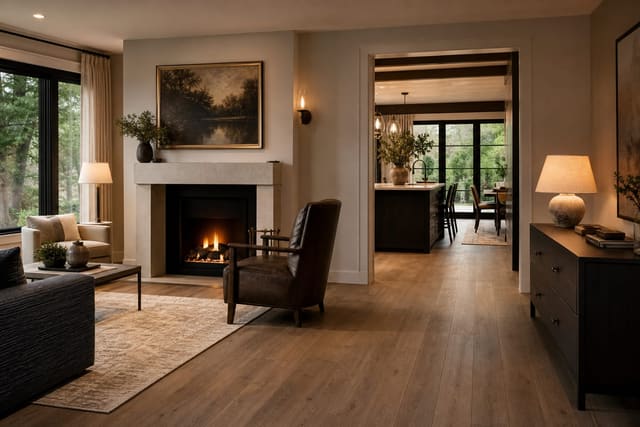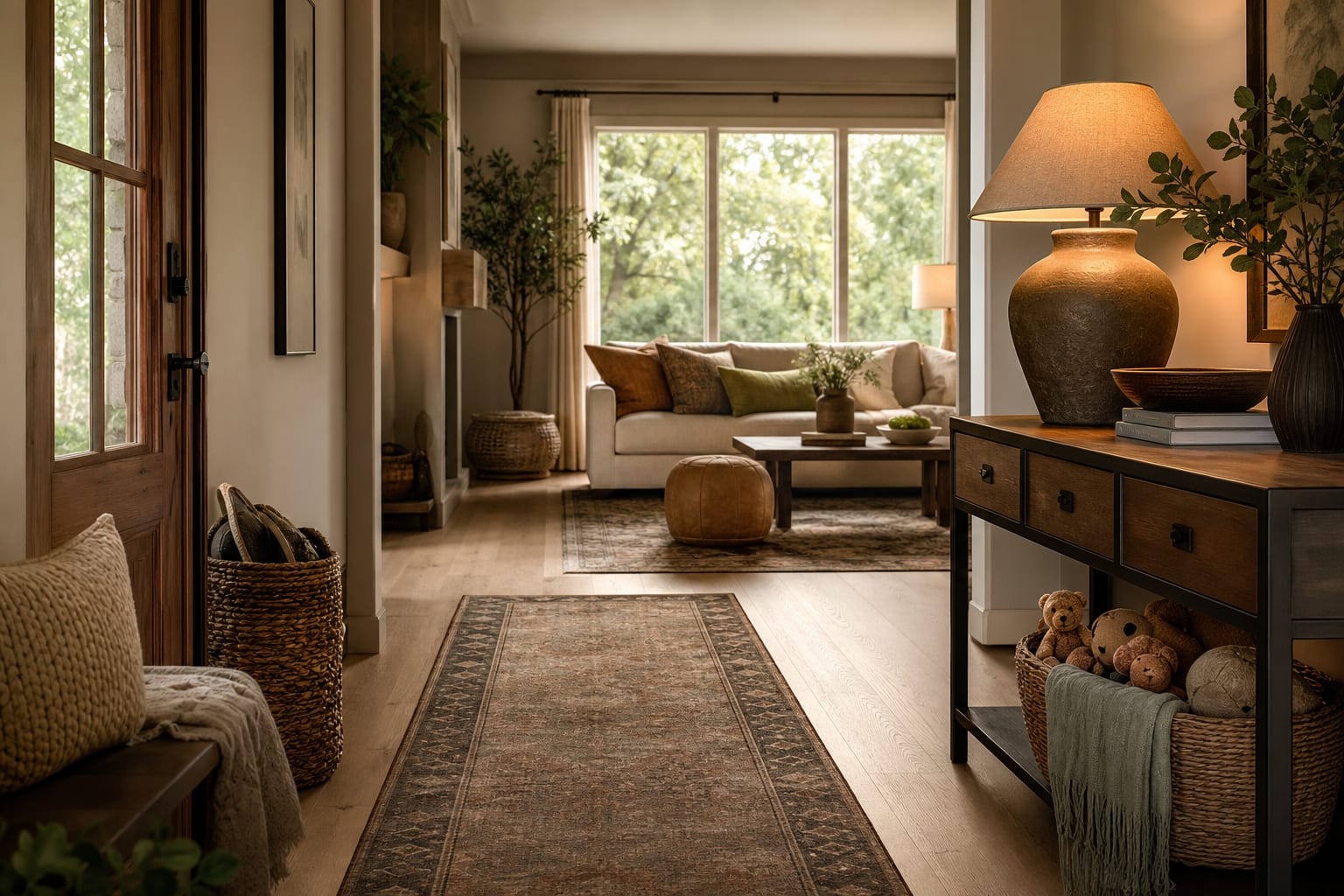
The best flooring for kids durable enough for family life is luxury vinyl plank for spill resistance and impact, engineered hardwood with a tough wear layer for warmth, sealed concrete for extreme wear, and porcelain wood-look tile for bathrooms and entries. Children test floors with scooters, cereal, bath water, and sock slides. Matte LVP in living spaces and porcelain tile in wet zones survive that abuse better than soft pine, glossy hardwood, or bargain laminate.
What is the most durable flooring for kids?
For most homes, that's rigid-core LVP with a 20 mil wear layer, 6-8 mm total thickness, a textured low-sheen surface, and tight locking seams — used in bedrooms, halls, and living areas, with porcelain tile in bathrooms, laundry rooms, and entries. Kids create a different damage pattern than adults: dropped water bottles, wet towels, rolling chairs, playground sand, and craft paint. A kid-proof floor needs surface toughness, water tolerance, forgiving color, and enough give for a toddler to fall safely.
Porcelain tile beats LVP on hardness and water resistance but is louder and colder. Engineered wood is repairable but will show dents as patina. Laminate resists scratches well, but many products falter when spills sit at the seams. If pets share the house, compare wear layers and traction in this pet-friendly flooring guide, since claws and kids stress floors differently.
Which material wins in each room?
Luxury vinyl plank is the best all-around choice: it handles spills, noise, and toy traffic without constant upkeep. Choose 5-9 inch planks in mid-tones like oak, greige, walnut, or hickory — they hide crumbs and scuffs better than black or white finishes.
Porcelain tile is right for anywhere wet messes are routine: bathrooms, mudrooms, laundry rooms, kitchens. Use 12x24 inch tile with roughly 1/8 inch grout lines and a slip-resistant matte or honed finish, never polished.
Engineered hardwood suits families willing to maintain real wood. Pick a matte or wire-brushed finish and a thicker wear layer; oak hides dents better than smooth dark maple or glossy cherry. To coordinate with dark cabinetry or paneling, check undertones against these dark wood paneling options.
Laminate can resist surface scratches well but often struggles with moisture at edges — humidifiers, potty accidents, tipped cups. If care instructions avoid the topic of standing water, treat it as scratch-resistant only, not family-proof.
Cork and rubber work in specific zones: cork for warmth if sealed and protected, rubber for a play-gym corner, though wall-to-wall rubber rarely reads as residential.
Test flooring options on your own room photo with ReDesign — keep doorways, windows, furniture, and fixtures visible so the preview reflects your actual room.
What specs matter more than the showroom sample?
A sample chip can't reveal family-level damage. Confirm plank size, wear layer, total thickness, edge profile, install method, and cleaning rules before choosing a color.
| Spec | Why it matters |
|---|---|
| 20 mil wear layer (LVP) | Handles kitchens, halls, playrooms, not just quiet bedrooms |
| Flat subfloor | Prevents hollow feel and flex under running kids |
| Matte/satin sheen | Hides scuffs better than glossy finishes |
| Mid-tone color | Disguises dust, crumbs, and mud without looking busy |
| Smooth transitions | Avoids trip edges between tile and plank |
Floating floors need a checked, flat subfloor or they'll click and flex under a running child. Finish sheen controls what you notice day to day — matte disguises scuffs, deep fake saw marks trap crumbs and glitter. Color does emotional work too: very dark floors show dust, very pale floors show mud. Plan transitions (reducers, stair noses, rug thickness) before installation, since a 1/2 inch height change becomes a trip hazard.
Common kid-proof flooring mistakes
- Trusting "waterproof" blindly. Check warranty limits on standing water, wet mopping, and cut edges near appliances.
- Using the hardest floor everywhere. Tile in a mudroom makes sense; tile across the whole family room is cold and unforgiving for crawling kids.
- Making the floor the main design statement. Test bold pattern on a washable rug or powder room first — this temporary wallpaper review is a lower-risk way to gauge pattern tolerance.
- Skipping chair protection. Felt pads under dining and desk chairs prevent more damage than toys ever do.
- Buying a floor too delicate for your cleaner. Steam mops and abrasive pads can void warranties; confirm the floor accepts a damp microfiber mop.
How AI design helps you compare floors
Flooring changes every visible plane in a room, so a sample board rarely predicts the real effect. Upload photos from two corners showing the current floor, walls, windows, and furniture — leave toy shelves, rugs, and stroller zones in place, since those objects are why the floor has to perform.
Test three controlled versions: mid-tone matte LVP through living areas, porcelain tile in the wet entry, and engineered oak where warmth matters. Keep wall color and furniture steady, then request practical constraints: low-sheen finish, 20 mil LVP wear layer, 12x24 tile with 1/8 inch grout, washable rugs, and smooth transitions. The right floor should let kids live loudly without looking like a defensive purchase.
Frequently Asked Questions
Is luxury vinyl plank the best kid-friendly flooring?
For most family homes, yes. LVP is fully waterproof, scratch-resistant, soft enough to absorb drops, and typically costs $3-6 per square foot installed.
Is hardwood OK with kids?
Engineered hardwood with a 3-4 mm wear layer and matte finish holds up well. Solid hardwood with a high-gloss finish shows scratches and dents within months.
What about carpet in a kid's room?
Low-pile loop carpet (Berber or level loop) resists traffic and stains better than plush pile. Avoid carpet entirely in spill-prone zones like eating or art areas; use a washable rug over hard flooring instead.
Does sealed concrete work with kids?
Yes, especially in mudrooms, basements, and indoor-outdoor zones. It's the most durable long-term family floor, though cold underfoot and hard on dropped items — pair it with washable rugs in seating areas.
Can AI preview kid-floor options in my house?
Yes. Upload a room photo and AI previews LVP, engineered wood, and tile against your existing trim and thresholds before you commit to a purchase.
> Try this: Ready to see this on your own room? Open ReDesign and run the preview.
Three transformations to try
1. LVP in family room with washable rug 2. Engineered hardwood in playroom 3. Porcelain wood-tile in entry