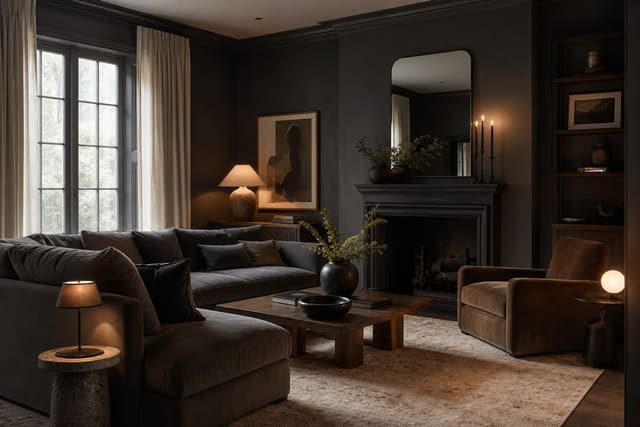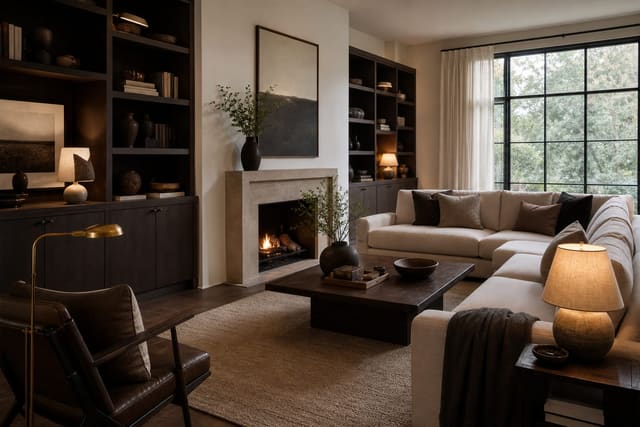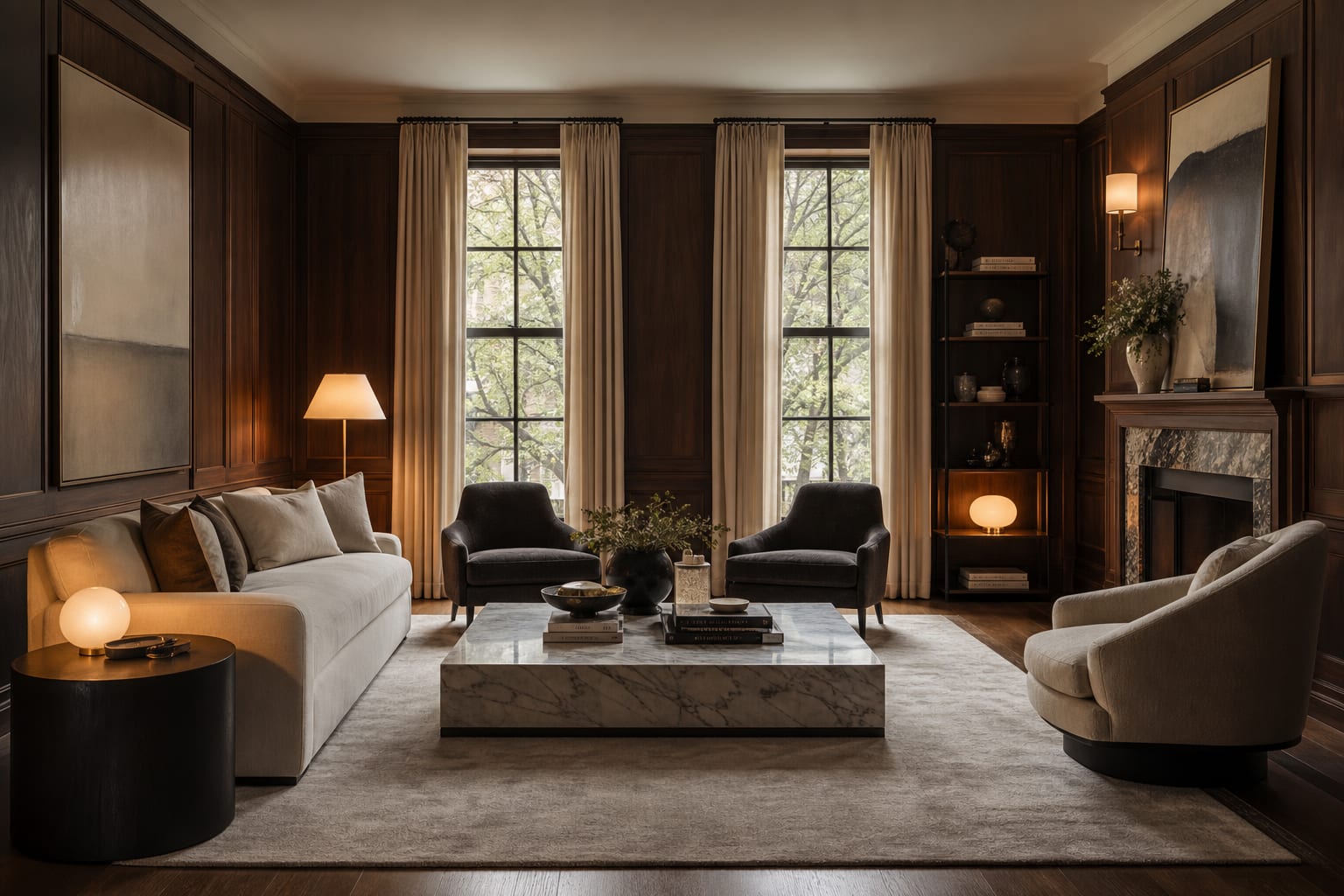
Dark wood paneling has three viable paths: keep it and modernize the surrounding palette, paint it a coordinated color, or remove the paneling and restore the wall beneath. The right dark wood paneling update depends on panel quality, condition, and room scale — not panic. Keep good wood, paint forgettable sheet goods, and remove damaged material.
Should you paint, remove, or keep dark wood paneling?
Paint dark wood paneling when it's thin, low-grade, damaged, or visually swallowing the room. Remove it when the wall behind needs repair or the install was poor. Keep it when the wood has real grain, good trim, and enough presence to anchor the space.
The first fork is quality. Real tongue-and-groove walnut, cedar, oak, or pine can be cleaned, re-oiled, or balanced with lighter textiles. Printed hardboard sheets with fake grooves usually look better painted, since the grain isn't worth preserving.
The second fork is location. A paneled den, library, or dining room handles darkness better than a small, north-facing bedroom. If the room already has a brown floor, brown sofa, and one weak fixture, the paneling may be getting blamed for a lighting problem — compare the wall against the room's overall palette the way you would in a builder beige walls update.
The third fork is condition. Water stains, soft spots, loose seams, bulging boards, or mold smell push the decision toward removal. Cosmetic darkness is designable; hidden moisture is not.
What does the paneling itself tell you?
Check seams, thickness, grain, and trim. Varied grain, real shadow lines, and careful trim work signal an asset worth keeping. Repeating printed knots, visible seams, and slapped-on baseboard make paint or removal an easy call.
Run a hand across the grooves. Shallow grooves in 1/8" or 1/4" sheet paneling still show after paint unless filled. Deeper V-groove or tongue-and-groove boards read as intentional once painted, since the shadow line has real dimension — this is when wood paneling painted white works, provided the grooves are consistent and the room has contrast elsewhere.
Pull one outlet cover before planning demolition. Paneling may hide finished drywall, bare studs, or already-damaged plaster. If the wall behind is rough, removal means drywall repair, skim coating, new baseboards, and repainting adjacent walls — not a one-hour refresh.
Check the finish too. Shiny orange varnish dates a room faster than the dark color itself. If the wood is structurally sound but too glossy, try cleaning, degloss, and a satin clear coat before reaching for primer.
Test your own room photo with ReDesign before committing — keep the doorway, walls, windows, main furniture, and fixed features visible so the preview solves the room you actually have.
Which update gives the most light for the least regret?
Paint is the fastest reset but not always reversible. Once real wood is painted, going back means stripping and sanding with no guarantee of the original finish. Cheap paneling gains from paint; beautiful paneling can turn paint into an expensive apology.
For paint: degrease the wall, scuff any gloss, fill unwanted holes, prime with a bonding primer, then apply two finish coats. One casual coat on dark paneling almost always looks chalky. Satin or eggshell beats flat, since grooves collect dust and fingerprints.
For keeping the wood: add relief at scale — a cream 8x10 rug, floor-to-ceiling linen curtains, pale upholstery, larger art with wide mats, and lamps with 14–18" shades. A few large lighter planes make dark walls read as depth instead of weight.
For removal: price the whole chain — drywall, skim coat, outlet extensions, baseboard, trim paint, and ceiling treatment. A single accent wall is a clean project; paneling wrapping windows and built-ins touches nearly every edge.
A middle path exists: cover one section temporarily with removable paper, large art, a curtain wall, or mounted painted panels to test brightness without destroying the wood. Check the temporary wallpaper brand review first so adhesive and texture don't create a new problem.
Common mistakes that make dark paneling look worse
- All-white overcorrection. White walls, trim, ceiling, and shelves can make remaining wood look harsher. Softened whites, plaster, oatmeal, mushroom, or muted green usually read more deliberate.
- Brown-on-brown stacking. A dark sofa, espresso cabinet, walnut floor, and wood paneling flatten into one mass. Break it with a pale surface, a matte black or bronze line, and linen or jute texture.
- Ignoring the ceiling. A dark ceiling in an 8-foot room shortens it further; a pale ceiling gives the walls room to breathe. Taller rooms can keep a dark ceiling if lamps and upholstery create contrast below.
- Wrong-era accessories. Amber glass, brown shag, and orange art can trap a room in the past. Keep one nostalgic note and edit the rest — the discipline in a 1990s color scheme update applies directly.
- Forgetting lamps. One ceiling fixture guarantees gloom. Use warm 2700K–3000K bulbs, 90+ CRI where possible, and light at seated height with table lamps, floor lamps, or sconces.
How AI design helps you compare the three futures
AI design works well here because the choice is visual and relational — the same wall looks elegant beside cream curtains and dated beside beige carpet. Upload a clear room photo and test three honest versions: painted paneling, removed paneling with new walls, and preserved wood with lighter furnishings.
Frame the shot so paneling, floor, ceiling line, windows, and doorway are visible. If the room is used at night, add a second image with lamps on, since dark wood shifts after sunset. Don't crop out the brown sofa or old carpet — those are often the real source of the heaviness.
Ask for focused changes: one preview painted white with existing furniture, one keeping the wood but adding a pale rug and warmer lamps, one showing smooth walls after removal. If a preview only looks good once every piece of furniture vanishes, it isn't answering the paneling question. The goal is finding which path solves the room with the fewest permanent moves.
What should you do first this weekend?
- Clean one wall, swap in warm bulbs, and clear brown-on-brown clutter before deciding anything permanent.
- Tape a large paper rectangle (24x36", not three small frames) where art or a lighter panel could go.
- Hang a curtain panel near the window to test whether full-height fabric softens the wall.
- Check that your rug reaches the front legs of the main seating — an undersized dark rug makes paneling look heavier.
Then choose the least regrettable path: keep real wood with strong grain and trim, paint inexpensive paneling that needs brightness more than preservation, or remove paneling that's damaged or hiding a wall in need of real repair.
Frequently Asked Questions
Is it worth keeping dark wood paneling in a modern home?
Yes, if it's solid wood rather than 1970s veneer and the grain reads cleanly. Pair it with cream upholstery, brass lighting, and a warm white ceiling so the panels read as intentional architecture rather than a dated leftover.
Should I paint dark wood paneling?
Paint makes sense for thin veneer panels, damaged surfaces, or rooms fighting for natural light. Choose a color in the same warm or cool family as the surrounding walls so the painted panels still read as architecture, not a patch job.
How do I prep dark wood paneling for paint?
Clean with TSP, scuff-sand with 220 grit, prime with a stain-blocking shellac primer like Zinsser BIN, then apply two coats of latex. Skipping the shellac primer almost guarantees grain telegraphing through and tannin bleed later.
What if I want to remove the paneling entirely?
Removal itself is straightforward, but the drywall behind it is often unfinished — budget for skim coat, tape, mud, and a full prime-and-paint cycle. Some 1970s installs have no drywall behind the paneling at all.
Does AI preview painted vs. kept paneling?
Yes. Upload a photo of the paneled room and generate previews of both keeping the wood with coordinated wall colors and painting the panels in several candidate colors before committing to either.
> Try this: Ready to see this on your own room? Open ReDesign and run the preview.
Three transformations to try
1. Dark paneling kept with cream upholstery 2. Painted paneling in deep green 3. Half-wall paneling with drywall above