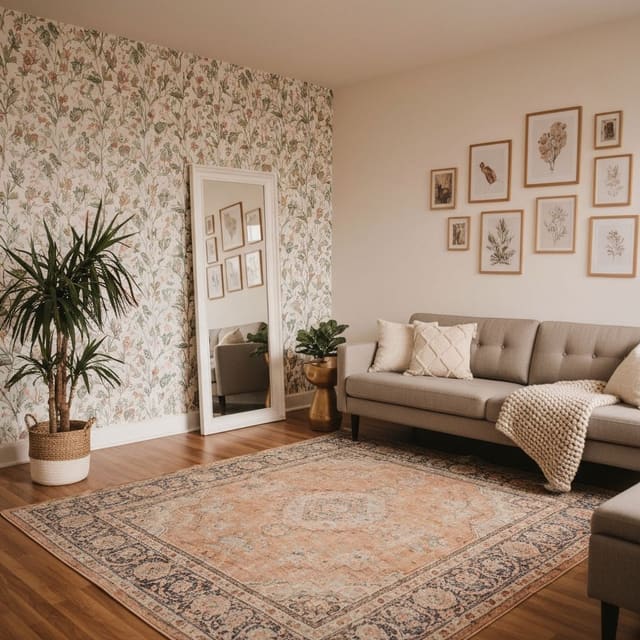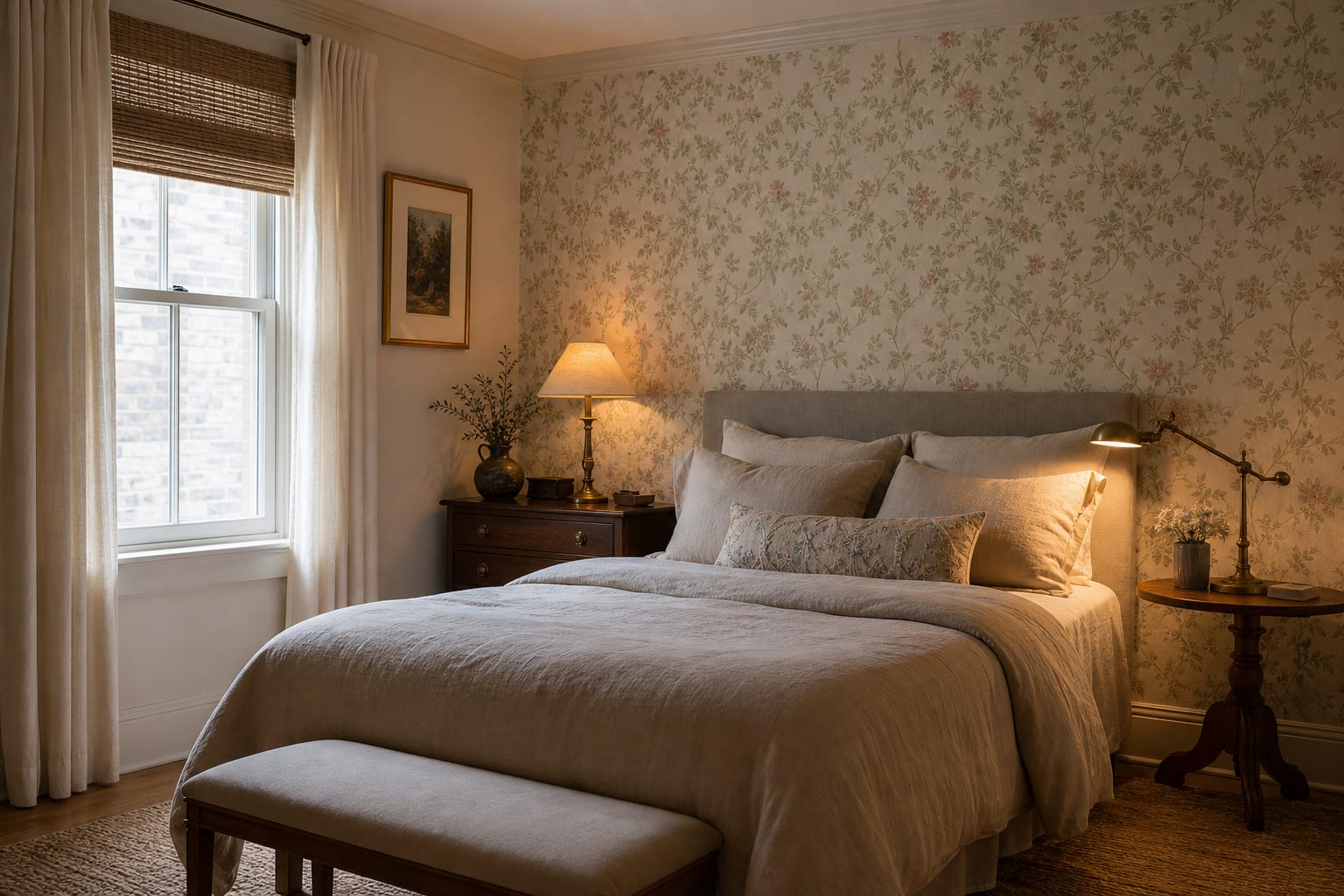
Removable wallpaper works and removes cleanly only on smooth, sound, painted walls — Tempaper and Chasing Paper hold 12 to 24 months when two people install on primed flat or eggshell paint, while textured walls, satin/gloss paint, or solo installs cause most failures. This removable wallpaper review ranks six brands by where they actually hold up and when to skip paper entirely.
Which temporary wallpaper brands actually work and remove cleanly?
The brand matters, but the wall matters more. Matte builder paint, orange-peel texture, old plaster dust, and paint under 2–4 weeks old can defeat even the best adhesive.
- Tempaper — safest all-around renter pick. Substantial enough to reposition, adult-leaning prints, adhesive built for peel-and-stick. Good for powder rooms, headboard walls, dining nooks.
- Chasing Paper — best design-forward choice. Stronger color stories, reads like intentional wallpaper. Best for a visible living room wall; still run a 48-hour test.
- Spoonflower — best when the exact pattern matters. Huge catalog, useful for nurseries and offices. Order an 8"x10" swatch and view from 8–10 feet before committing; large repeats can look loud.
- Wallshoppe — for bolder rooms, not timid walls. Strong in a hallway or single accent wall, but a large motif can feel chaotic in a 5-foot powder room.
- RoomMates — budget pick, use sparingly. Fine for kids' rooms or temporary panels; choose simple stripes or small geometrics over faux grasscloth, which flattens at seams.
- NuWallpaper — low-risk, high-coverage jobs. Works on a pantry or laundry wall; skip the most realistic faux tile, brick, or wood since repetition exposes them fast.
None of these belong on peeling paint, textured plaster, unfinished drywall, or paint that feels chalky under a dark cloth.
How do you test removable wallpaper before buying rolls?
- Check the paint. Wipe a hidden area, let it dry, press painter's tape for 30 seconds — if it pulls color or dust, skip removable wallpaper.
- Order samples, not just rolls. Tape each sample up for 48–72 hours, check it in daylight and lamp light, then peel slowly at a low angle.
- Hang a 12" test strip near a corner, outlet, or window casing. These interruptions reveal stretching, creasing, or white backing at cut lines. Swap blades often; a dull blade tears the paper.
- Wait 2–4 weeks after fresh paint, longer in humid rooms — paint can feel dry while still curing underneath.
For any rental, apply the same restraint as no-trace kitchen updates: change one surface cleanly and know exactly how it comes off before decorating around it.
Test this on your own room photo with ReDesign before choosing a direction — keep the doorway, windows, furniture, and any awkward fixed features visible so the preview solves your actual room.
Which brand belongs in which room?
Match the brand to the abuse level of the room, not just the pattern. A bedroom accent wall tolerates a more delicate finish than a hallway; a powder room can take drama, but a full bath with steam is a different risk.
Use Tempaper or Chasing Paper where seams will be obvious, planning the first panel from the most visible edge with a 1/16"–1/8" overlap rather than a hairline gap. Don't use removable wallpaper as a rescue layer over rough paneling or heavy texture — if the room has dark boards, read the dark wood paneling options that actually work first, since paint or cleaning may be the more honest fix.
Small florals, pinstripes, and soft geometrics forgive seams; oversized murals and faux marble demand flatter walls and more patience. In rooms with kids or pets, put paper above a chair rail or behind a bed rather than at hand height — see this kid-proof flooring guide for the same daily-contact logic.
Common removable wallpaper mistakes that cost renters paint
- Skipping the sample on a small wall. Small walls still have paint chemistry and corners — test for at least two days, then peel while watching the paint edge.
- Papering over texture and hoping pressure fixes it. If the wall feels bumpy under your palm, choose fabric panels or art instead.
- Stretching the paper during install. Pulling hard opens seams later. Smooth from the center outward with a plastic squeegee at 45 degrees.
- Starting with the busiest wall. A wall with two windows and a crooked corner isn't a beginner wall — start behind a bed or bench.
- Assuming all brands are interchangeable. Thicker paper hides wall flaws but fights corners; thinner paper cuts cleanly but shows bumps.
Removal deserves the same patience: warm a corner with a hair dryer, pull the paper back on itself below 45 degrees, and stop if paint lifts. A plastic scraper and mild adhesive remover beat a metal blade.
Use AI design to preview wallpaper before you order rolls
Pattern scale is hard to judge from a swatch and expensive to regret after three panels are up. Upload a straight-on photo of the wall with trim, floor, ceiling line, and furniture visible — don't crop out the outlet or radiator if it's staying.
Ask for three directions: a small-scale neutral print, a mid-scale pattern in the room's existing colors, and one bolder option using the same furniture. If the bold version only works because the preview quietly changed the sofa or lighting, treat it as fantasy, not a shopping plan. Preview a no-wallpaper version too — sometimes a larger headboard and warmer lamps beat the risk to paint.
Frequently Asked Questions
Which removable wallpaper brand is the most durable?
Tempaper, Chasing Paper, and Spoonflower's pre-pasted line outperform cheap vinyl prints on adhesive longevity, color fade, and seam reliability. The price gap looks small next to a six-month replacement cost.
Can removable wallpaper go on textured walls?
No. Orange-peel, knockdown, or sand texture telegraphs through the vinyl within weeks and adhesive fails at the high points. Smooth, primed drywall is the only reliable surface.
Does removable wallpaper damage paint when removed?
On flat or eggshell paint applied at least 30 days before install, removal is clean. On fresh, satin, or gloss paint, removal often pulls paint and the wall needs touch-up.
How long does removable wallpaper actually last?
Expect 12 to 24 months on a quality install in a low-humidity room. Bathrooms and kitchens drop to 6 to 12 months because adhesive degrades faster in steam and grease.
Is removable wallpaper worth it in a rental?
Yes for an accent wall or powder room on an 18-month-plus lease. It's not worth the install effort for a 6 to 12-month stay or a full-room application.
> Try this: Ready to see this on your own room? Open ReDesign and run the preview.
Three transformations to try
1. Tempaper accent wall in living room 2. Chasing Paper full-wall in powder room 3. Spoonflower pre-pasted in bedroom alcove