The best pet friendly flooring options are matte luxury vinyl plank for scratch and moisture resistance, porcelain tile for indestructibility in wet zones, and sealed engineered hardwood with a matte finish for everywhere else. The right pick depends on pet size, claw length, and accident risk — soft wood, bamboo, and gloss laminate are false economy in a pet household.
What is the best flooring if you have dogs or cats?
A pet floor faces two attacks: nail scratches across the surface, and litter or outdoor grit acting like sandpaper underfoot. Accidents test seams as much as the finish, and water bowls hammer the same spot daily. Porcelain tile is toughest but hard and loud; LVP is easier on joints and warmer but cheap versions dent or telegraph subfloor waves; engineered wood looks best but needs a maintainable finish and quick cleanup habits.
If kids share the mess, compare the same wear-layer logic in a kid-proof flooring guide before committing one material to the whole house.
Scratch, stain, and seam comparison
Don't judge pet flooring from a 6-inch showroom sample — it can't show hallway traffic or how a dark plank shows every pale hair.
| Material | Best for | Key specs | Watch out for |
|---|---|---|---|
| Luxury vinyl plank | Living rooms, bedrooms, hallways | 6-8 mm thick, 20+ mil wear layer, attached underlayment, matte texture | Cheap products dent; avoid black, white, or slick gray finishes |
| Porcelain tile | Entries, mudrooms, kitchens, baths | 12x24 in tile, 1/8 in grout joints, slip-resistant finish | Cold underfoot, hard on running dogs |
| Engineered hardwood | Anywhere you want real wood | 3+ mm top veneer, wire-brushed or matte finish | Requires refinishing over time; not truly waterproof |
| Laminate | Budget hallways and bedrooms | Dense, scratch-resistant cores | Weak at seams if standing water isn't allowed by care instructions |
| Cork | Quiet rooms with older pets | Warm, forgiving underfoot | Marks from claws and furniture; needs broad felt pads and non-rubber rug pads |
Test this on your own room photo with ReDesign before you buy — keep the doorway, walls, windows, and main furniture visible so the preview solves the room you actually have.
Where should each floor go in a real home?
A scratch-resistant floor for a hallway isn't necessarily right beside a bathtub or under a sunny cat perch. Assign material by how the room fails.
- Living rooms, bedrooms, hallways: Quality LVP in 5-9 inch plank widths. Add washable rugs in lounging zones, but skip rubber-backed pads that can discolor some finishes.
- Mudrooms, bathrooms, laundry, kitchens: Porcelain tile with grout within two shades of the tile so hair and crumbs don't outline every joint. Add a washable runner covering at least three steps from any outdoor door.
- Dining rooms and home offices: Watch caster chairs grinding litter into the finish. Use flooring-approved chair mats, felt pads, and a rug pad that won't trap moisture.
Color affects how much wear you notice. Very dark floors show fur and shallow scratches; very pale floors show muddy prints and can feel cold. If walls or built-ins are already dark, check floor undertones against dark wood paneling options so the plank doesn't clash.
Common pet flooring mistakes
- Trusting "waterproof" without reading the fine print. Cut edges, transitions, and stair noses can still fail; ask how spills at seams and wet mopping are handled.
- Tiling the whole house. Tile is great near a back door but can be cold, loud, and rough on older dogs elsewhere. Layer in low-profile washable rugs for traction.
- Choosing gloss for showroom shine. Gloss reflects claw arcs and smears; satin or matte with subtle grain hides more.
- Ignoring transitions. A 1/2-inch height jump between tile and plank becomes a trip strip and a claw-catcher — plan reducers and thresholds first.
- Forcing pattern onto the floor. Put personality on a wall or a washable rug instead. Renters can test that appetite safely with a temporary wallpaper brand review rather than a 700-square-foot floor purchase.
How AI design helps you see claws, color, and seams
A plank that looks calm in your hand can turn yellow across an open living room; a charcoal tile that seems practical can make every pale paw print look theatrical. Upload a clear corner photo showing the existing floor, two walls, windows, and main furniture.
Test three controlled versions — mid-tone matte LVP, porcelain tile for the wet-zone direction, and brushed engineered wood — keeping sofa, rug, pet bed, bowls, and daylight consistent. Ask the preview to show low sheen, visible grain, a washable runner by the door, a water bowl mat, 1/8-inch grout if tile appears, and furniture pads. Look for fur-to-floor contrast, window glare, and clashes with cabinets or trim.
The winning floor should feel calm before impressive: it hides ordinary paw traffic, tolerates a missed accident long enough for cleanup, and still looks designed rather than armored.
Frequently Asked Questions
What is the best flooring for dogs?
Luxury vinyl plank handles dog nails, water, and accidents better than any other floor at a moderate price. Engineered hardwood with a matte finish is the higher-end alternative if you want real wood.
Is hardwood ruined by dogs?
Solid hardwood with a high-gloss finish shows nails and scratches fast. Engineered hardwood with a 3-4 mm wear layer and a matte or hand-scraped finish handles dogs well for a decade or more.
Is tile good for pets?
Porcelain tile is indestructible, waterproof, and easy to clean, making it the best choice for high-accident zones like entries, bathrooms, and mudrooms. The tradeoff is a cold, hard surface that's tough on dropped items and aging joints.
Are carpet options pet-friendly?
Solution-dyed nylon and polyester loop carpets handle pet accidents better than wool or plush styles. For serious pet households, swap wall-to-wall carpet for hard surface plus washable area rugs instead.
Can AI preview pet-friendly floors before I buy?
Yes. Upload a room photo and AI design tools can preview LVP, engineered hardwood, and porcelain tile against your existing trim and furniture before you purchase anything.
> Try this: Ready to see this on your own room? Open ReDesign and run the preview.
Three transformations to try
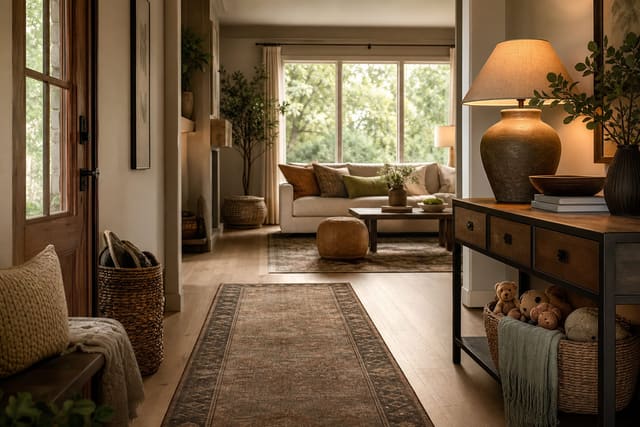
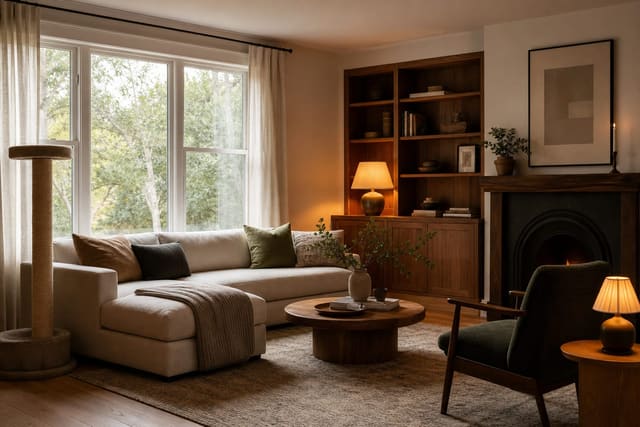
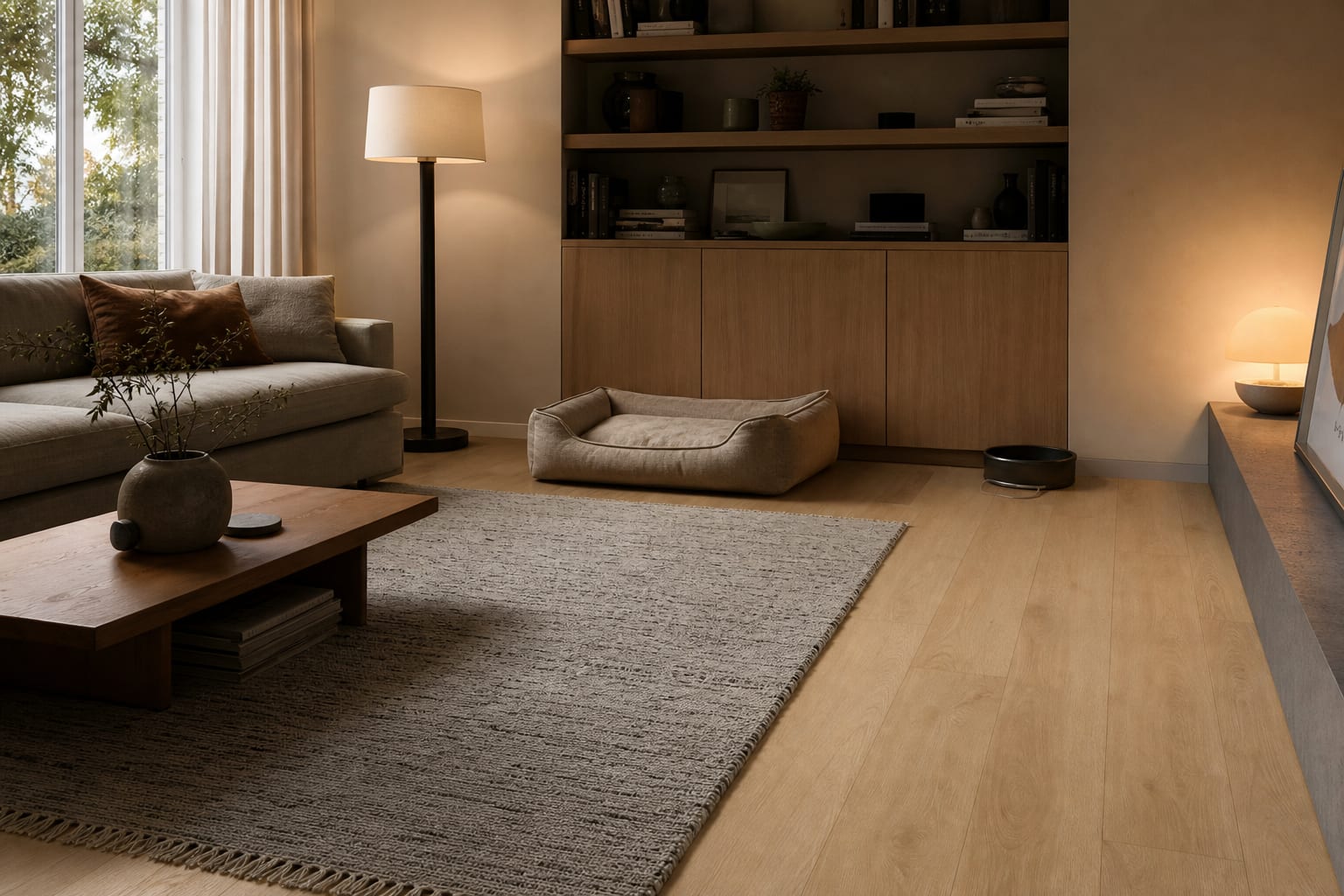
1. LVP in living room with dog crate 2. Engineered matte hardwood with pet 3. Porcelain tile in pet entry zone