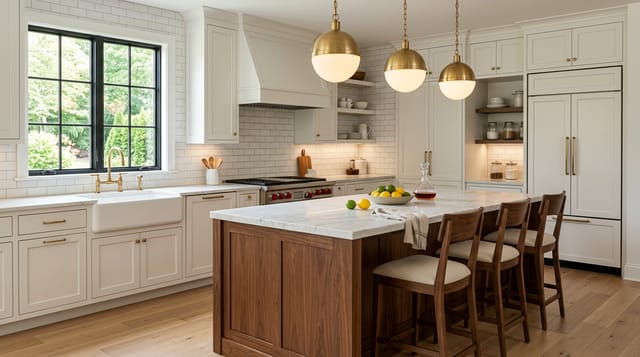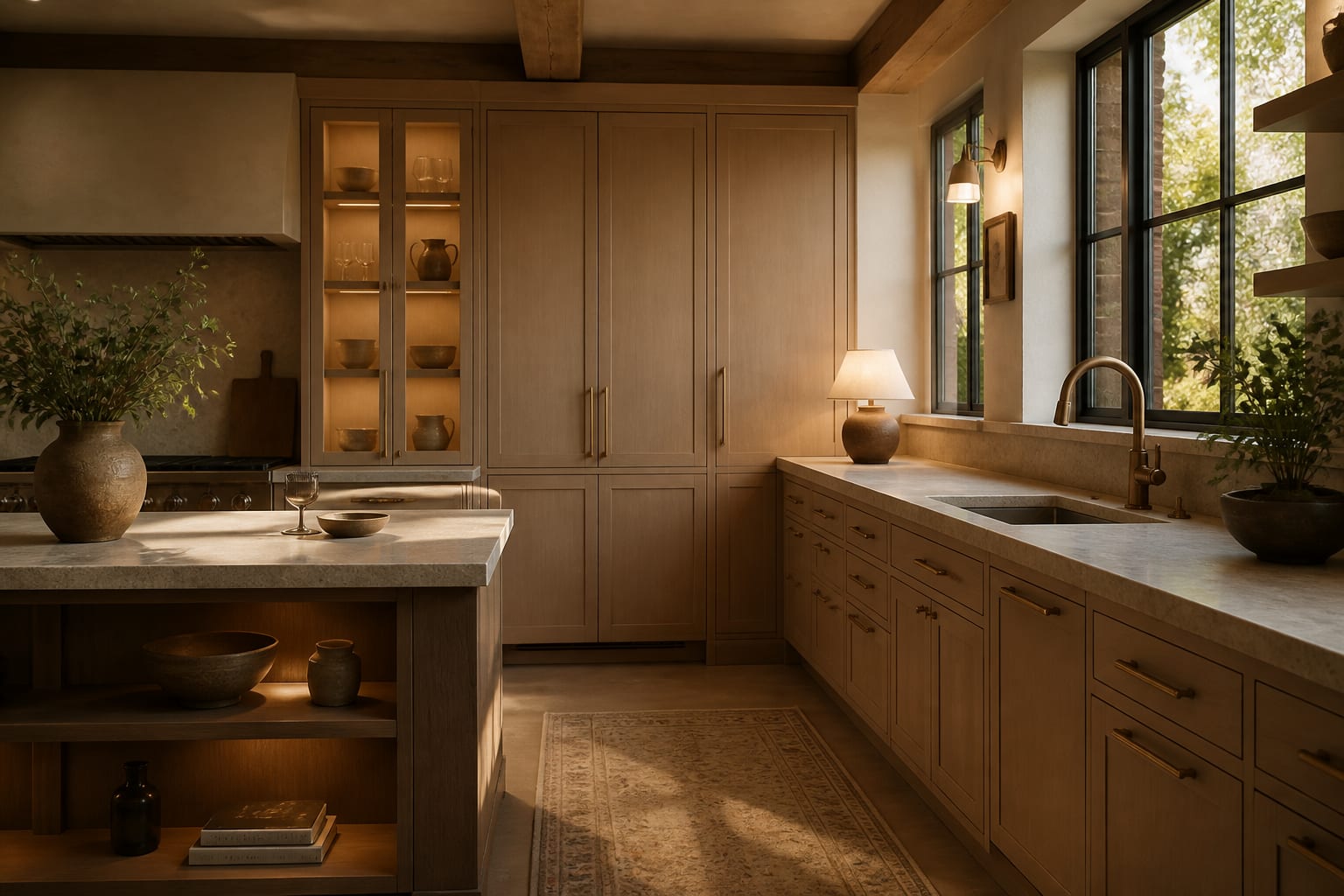
Cabinet hardware is the cheapest upgrade that changes a whole kitchen, and it is the one people get wrong most often. The instinct is to pick a finish you like and order one size for everything, then end up with stubby pulls swimming on tall drawers and oversized handles crowding small doors. The better way is to size each piece to the cabinet it lives on, settle the finish against your faucet and lighting, and place every screw with the same logic across the room. Hardware is jewelry for the kitchen, and like jewelry, proportion and consistency matter far more than the brand name on the box.
Pulls, knobs, and where each belongs
The first decision is what type goes where. The traditional convention is knobs on doors and pulls on drawers, which reads as classic and is easy to live with. A more current look uses pulls on everything, doors included, for a clean, linear feel that suits flat-panel and shaker cabinets alike. Neither is wrong, but pick one logic and apply it across the room rather than mixing knobs and pulls at random, which makes a kitchen feel unplanned.
Knobs work best around 1.25 to 1.5 inches in diameter, large enough to grip easily without looking like a bead. Pulls come as standard bar pulls, cup pulls for a more traditional drawer, and edge or tab pulls for handleless modern fronts. Cup pulls suit drawers but not doors, since they only work for a downward or upward pull. If you are redoing the cabinets as part of a larger refresh, the planning approach in our AI kitchen design guide helps you see how hardware reads against your specific door style before you commit.
Sizing hardware to the cabinet
Size is where most hardware choices succeed or fail, and the key insight is that one size does not fit all. For drawers, scale the pull to the width: a usable rule is a pull roughly one-third the drawer's width, so a 30-inch wide drawer carries a 10 to 12-inch pull comfortably, while a narrow 12-inch drawer wants a 3 to 4-inch pull. Undersized pulls on wide drawers look mean and stranded; oversized handles on small drawers look clumsy. Larger drawers, like a deep pots-and-pans bank, can even take two pulls or a single 18-inch appliance-style pull for balance.
The number that actually controls your install is center-to-center spacing, the distance between the two screw holes, not the pull's overall length. Common center-to-center sizes are 3, 4, 5, and 6.25 inches, and if you are replacing existing hardware you must match the existing holes or be ready to fill and re-drill. Doors are simpler: a single knob or a pull of 4 to 6 inches suits most standard 12 to 18-inch wide doors. Buy one of each candidate first and live with it on a cabinet for a day before ordering 30 of them.
Finish, placement, and consistency
Finish is what ties the hardware to the rest of the kitchen, and the smart move is to coordinate it with your faucet and light fixtures rather than your appliances. Stainless appliances read as a neutral, so matte black, brushed brass, polished nickel, or oil-rubbed bronze hardware can all sit happily nearby as long as it echoes the faucet and pendant metals. Mixing two metals can work deliberately, but it should look intentional, not accidental, so limit it to two and repeat each in at least two places.
Placement is the detail that separates a careful install from a sloppy one. Mount door knobs about 2.5 to 3 inches in from the corner, on the stile, at the bottom for upper cabinets and the top for lowers so they fall near hand height. Drawer pulls are usually centered on the drawer face, though on tall drawer banks mounting them slightly above center keeps the line consistent. Use a simple drilling jig so every hole lands in the same spot, because the eye instantly catches a pull that sits a quarter-inch off from its neighbor. If your layout includes an island or a kitchen peninsula, carry the same hardware logic onto those cabinets so the room reads as one piece.
Common mistakes to avoid with cabinet hardware
Most regretted hardware decisions come down to a short list of errors. Watch for these:
- Ordering a single pull size for the whole kitchen, so wide drawers look starved and small drawers look crowded.
- Matching the finish to stainless appliances instead of the faucet and light fixtures that actually set the tone.
- Buying by overall length and ignoring the center-to-center spacing that has to fit your drilled holes.
- Mixing knobs and pulls or two metals at random until the kitchen looks unplanned rather than curated.
- Eyeballing screw holes instead of using a jig, leaving pulls that sit slightly off-line from their neighbors.
- Choosing a delicate finish like a soft lacquer on a high-use kitchen where daily grease and grip wear it down fast.
The center-to-center mistake is the most expensive in a remodel. People fall for a beautiful pull, order 30, and only then learn the screw spacing does not match the existing holes, forcing them to fill, sand, repaint, and re-drill every drawer front. Measure the spacing on what you already have, or commit to patching, before a single box ships.
See it first in Re-Design
Hardware is small but it sets the entire tone of a kitchen, and a swatch on a website tells you almost nothing about how it reads on your doors. Upload a photo of your kitchen to Re-Design and preview brushed brass against matte black, knobs against long bar pulls, and different finishes next to your real faucet and counter color. You can see whether warm brass softens a white shaker kitchen or whether black pulls sharpen a flat-panel run, and judge the proportion of a long pull on your actual drawers, before you spend on a set of 30 pieces you cannot return.
Frequently Asked Questions
What size pulls should I use on kitchen drawers?
Scale the pull to the drawer width, roughly one-third of it. A 30-inch wide drawer takes a 10 to 12-inch pull, while a narrow 12-inch drawer wants a 3 to 4-inch pull. Deep pots-and-pans drawers can carry two pulls or a single 18-inch appliance-style pull. The goal is a pull that looks proportional, neither stranded nor crowding the face.
Should I use knobs or pulls on cabinets?
The classic convention is knobs on doors and pulls on drawers, which is easy and timeless. A more modern look uses pulls on everything for a clean linear feel. Either works, but choose one logic and apply it consistently across the room. Knobs are best at 1.25 to 1.5 inches; cup pulls suit drawers but not doors.
How do I match cabinet hardware finishes?
Coordinate the finish with your faucet and light fixtures rather than your appliances, since stainless reads as a neutral. Matte black, brushed brass, polished nickel, and oil-rubbed bronze all work near stainless as long as they echo the faucet and pendant metals. If you mix metals, limit it to two and repeat each in at least two spots so it looks intentional.
Where should cabinet hardware be placed?
Mount door knobs about 2.5 to 3 inches from the corner on the stile, at the bottom of upper cabinets and the top of lowers so they sit near hand height. Center drawer pulls on the face, or slightly above center on tall banks. Use a drilling jig so every hole lands in the same spot, since the eye catches a pull that is even a quarter-inch off.