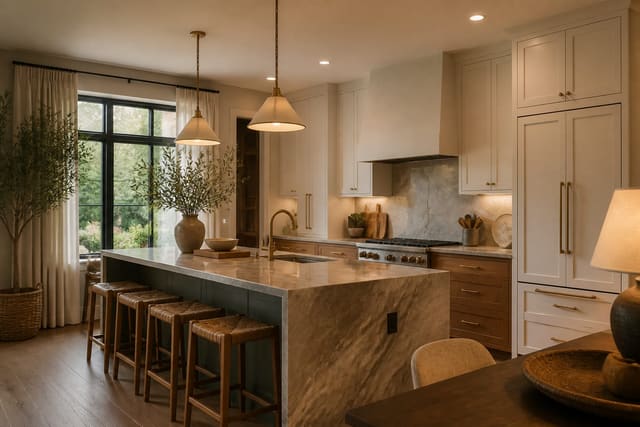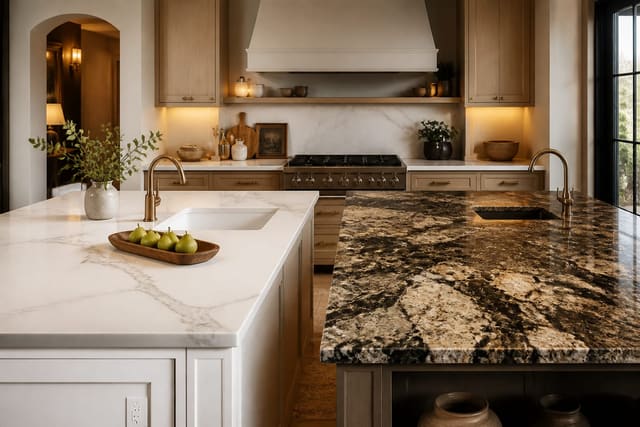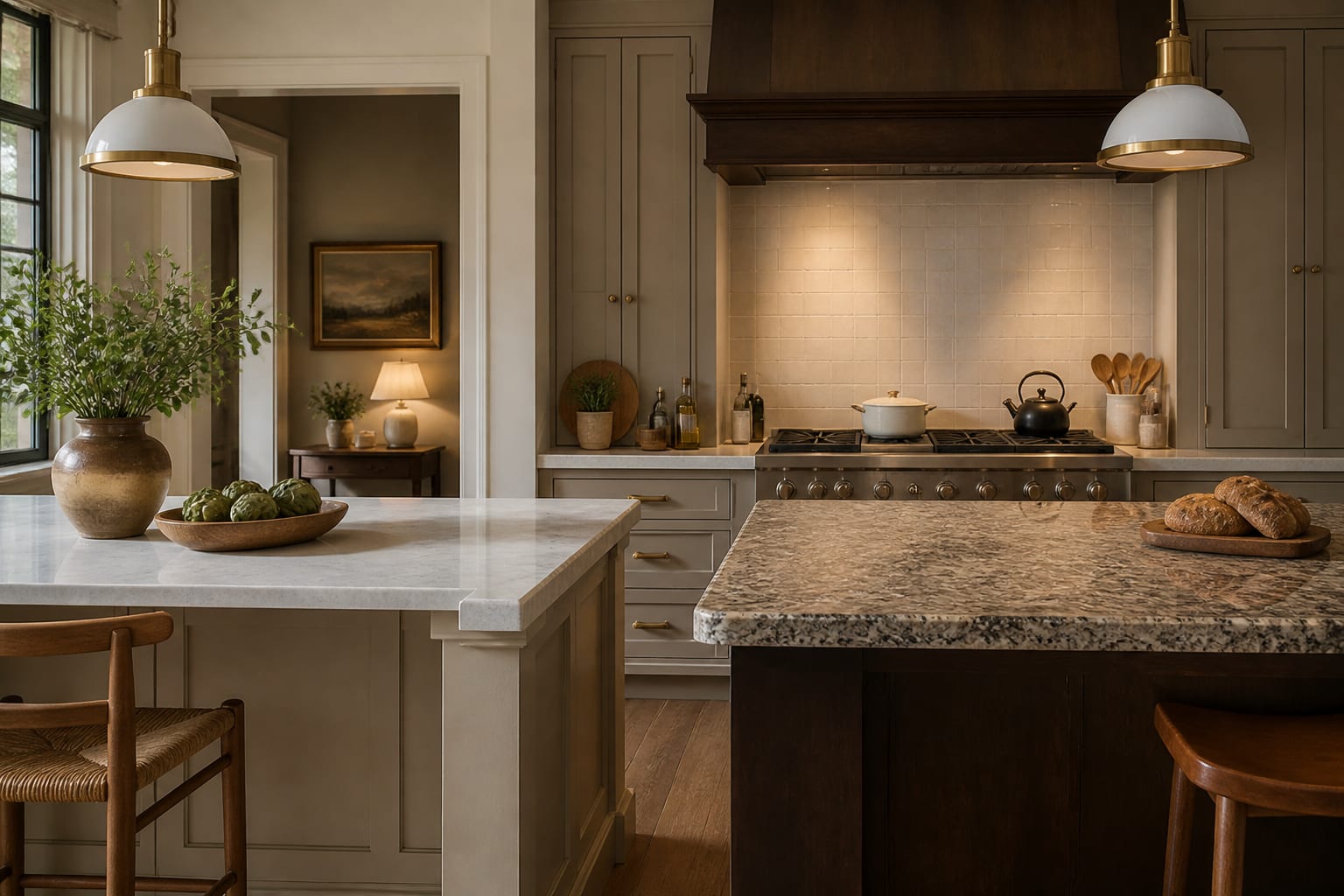
Quartz vs granite comes down to maintenance versus personality: quartz is an engineered, nonporous surface that never needs sealing, while granite is natural stone with unique veining that asks for yearly sealing in return. Both cost roughly the same per square foot, so the real decision is whether you want a scratch-consistent engineered surface or a one-of-a-kind natural slab. Butcher block and laminate remain the budget and warmth alternatives.
Quartz vs granite: which countertop is easier to live with?
The biggest practical difference is sealing. Quartz is engineered from roughly 90% ground stone bound in resin, making it nonporous, so it never needs sealing and resists wine, coffee, and oil stains with just soap and water. That low upkeep is why quartz has overtaken granite in many new kitchens.
Granite, being porous, should be sealed at installation and roughly once a year after — a ten-minute DIY job, but a recurring one quartz skips entirely. Granite pays you back at the stove: it tolerates a hot pot straight off the burner, while quartz can scorch or discolor above about 300°F because of its heat-sensitive resin binder. Quartz wins on daily ease; granite wins near the heat.
See also our guide to Cabinet Refacing VS Replacement Cost for more on kitchen countertop ideas.
How do countertop materials compare on cost per square foot?
Installed, quartz typically runs $50-$120 per square foot, and granite lands close behind at $40-$100 — the two overlap heavily, so price rarely decides between them. Within each material, color, thickness, and edge profile drive cost more than the stone type itself, with exotic colors and waterfall edges pushing toward the top of each range.
Budget options sit clearly below both. Laminate runs about $40-$100 installed, making it the value pick for a rental or quick refresh, though premium printed finishes push toward the top of that range. Butcher block occupies a similar $40-$100 band and adds warmth and a work-friendly surface, at the cost of regular oiling and care around water.
For a related angle, read Quartz VS Granite Countertop.
What about looks, durability, and resale value?
Quartz delivers consistent, repeatable patterns, so the slab you approve is the surface you get, and matching pieces across a long run is straightforward. Granite gives you natural veining no other kitchen owns, but you should approve the actual slab in person since color and pattern vary piece to piece. Want predictability? Choose quartz. Want a one-of-a-kind statement? Choose granite.
Both outlast laminate on durability. Quartz resists scratches and chips slightly better thanks to its uniform body, while granite is extremely hard but can chip at an exposed edge if struck. Both add resale appeal as buyers read stone counters as a quality-kitchen signal; laminate and butcher block rarely move a home's value the same way.
Priorities to weigh: - Decide whether zero maintenance or a unique natural look matters more. - Consider how often hot pans hit the counter, since granite forgives heat that scorches quartz. - Set a realistic per-square-foot budget before falling for an exotic color or edge.
When do butcher block and laminate still make sense?
Laminate has improved dramatically, with printed patterns that convincingly mimic stone and wood at a fraction of the price — a smart pick for a rental, starter home, or tight budget. It installs fast and resists everyday stains, though a sharp knife or hot pan will damage it permanently.
Butcher block answers a different need: warmth and a genuine chopping surface. It demands regular oiling to keep water from staining or swelling the seams. Many kitchens mix materials, pairing a quartz or granite perimeter with a butcher-block island, or using laminate where looks matter less.
| Aspect | Quartz | Granite |
|---|---|---|
| Maintenance | Nonporous, never needs sealing; wipes clean with soap and water. | Porous; seal on install and about once a year after. |
| Heat resistance | Resin binder can scorch above roughly 300°F; use trivets. | Tolerates a hot pot straight off the burner. |
| Cost per sq ft installed | About $50-$120, depending on color and edge profile. | About $40-$100, with exotic colors near the top. |
| Look | Engineered, repeatable patterns; easy to match across runs. | Unique natural veining; approve the actual slab in person. |
| Durability | Uniform body resists scratches and chips slightly better. | Extremely hard but can chip at an exposed edge if struck. |
Bring the look home with Re-Design
Samples never show how a material reads across a whole kitchen. With Re-design, upload a photo of your kitchen and swap a white quartz against a dramatic granite across your real cabinets and lighting in seconds. See whether bold veining that looked great on a chip still works on a long island, or whether butcher block warms up a stone perimeter the way you hoped, before spending the slab budget.
Frequently Asked Questions
Is quartz or granite cheaper?
They overlap heavily: quartz runs about $50-$120 per square foot installed, granite about $40-$100. Granite can edge out cheaper on common colors, but exotic stones and thick edges close the gap. Choose based on maintenance and look, not cost alone.
Can you put a hot pan on quartz?
It's risky. Quartz's resin binder can scorch or discolor above roughly 300°F, so always use a trivet for pots straight off the burner. Granite handles direct heat far better, which is one of its clearest advantages over engineered quartz.
Does granite need to be sealed?
Yes. Granite is porous, so it should be sealed when installed and resealed roughly once a year to resist stains from wine, oil, and coffee. The job takes about ten minutes and most owners do it themselves. Quartz skips this entirely because it's nonporous.
Is butcher block a good kitchen countertop?
Butcher block is excellent where you want warmth and a chopping surface, often as an island paired with stone elsewhere. It runs about $40-$100 per square foot but needs regular oiling, since standing moisture can stain the wood or swell the seams over time.