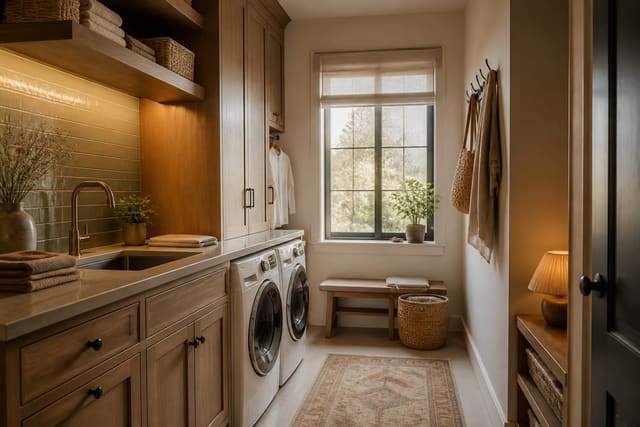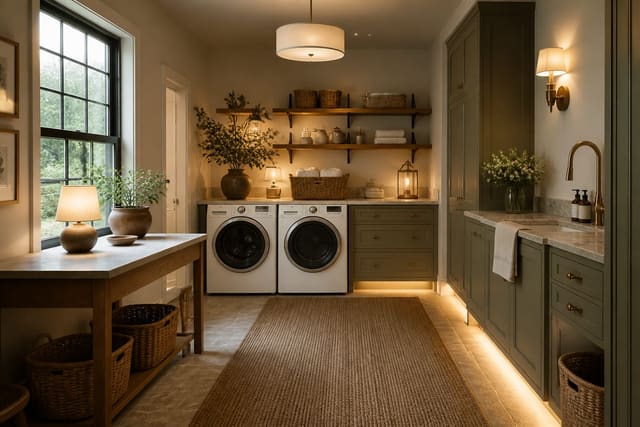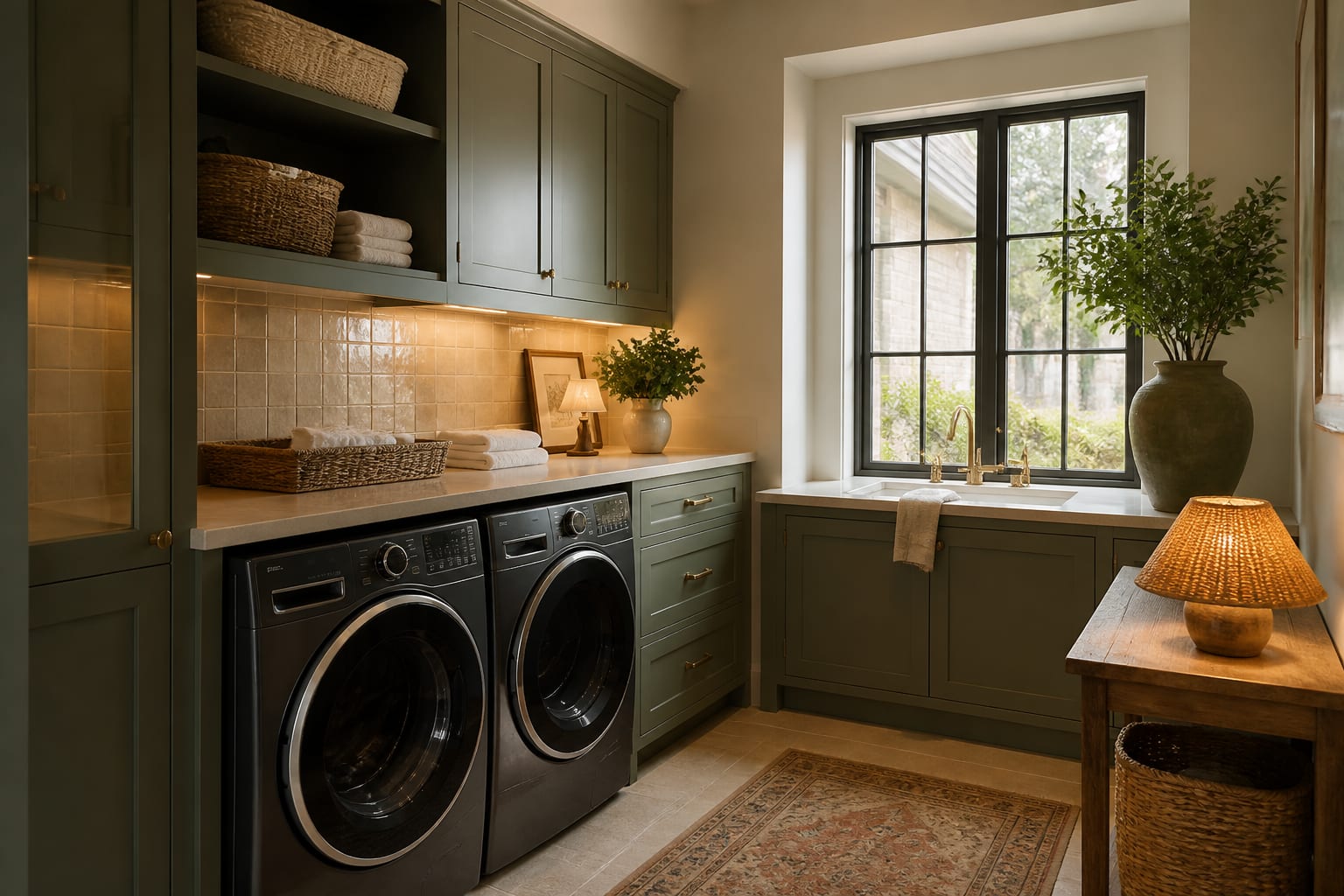
A laundry room is one of the few spaces where you are allowed to choose color purely to lift your mood, and most people waste the chance by defaulting to builder white. There is no client to impress, no resale rule that says a utility room must be neutral, and no risk that a bold choice will date a whole open-plan floor. This is the room to be cheerful on purpose. A sunny yellow, a crisp coastal blue, or a fresh leafy green can turn the least glamorous chore into something you do not dread. The only real constraint is durability, since the room takes splashes and steam.
Match the color to the room's light
Most laundry rooms are short on natural light, tucked into a basement, a hallway, or a windowless closet, and that should steer the palette. In a dark interior room, cool, dusky colors that look elegant in a bright bedroom can read flat and chilly. Warm, light-reflecting tones do more work: a soft buttery yellow, a warm white, or a pale peach bounces what little light there is and makes the space feel sunnier than it is. If the room does have a good window, you have more freedom, and a crisp blue or a deep green will hold up beautifully in daylight.
Lighting and color work together here, so do not judge a paint chip under a single cool fluorescent tube. Swap to 3000K LED bulbs, a clean but warm-leaning white, so colors read true and the room feels bright without going clinical. Test your top two or three colors as large painted swatches on the actual wall and look at them at the times of day you usually do laundry. A yellow that looks cheerful at noon can turn slightly green under evening light, and only a real swatch in the real room will tell you. The same light-first logic that guides any good small laundry room scheme applies to any tight utility space.
Color directions that lift a laundry room
If you are staring at a blank wall, here are palettes that reliably make laundry feel less like a chore. Pick the direction that fits your light and your home's style: - Sunny yellow walls with white cabinets and trim for a genuinely cheerful, light-amplifying scheme in a dark room. - Coastal blue cabinets against white or pale gray walls for a crisp, fresh feel that reads clean and calm. - Soft sage or eucalyptus green throughout, paired with natural wood and brass hardware, for a restful, garden-room mood. - A bold navy lower cabinet run beneath white uppers, grounding the room while keeping the top half light and airy. - Warm terracotta or clay as an accent wall behind the machines, bringing earthy warmth to an otherwise hard-surfaced space. - Crisp black-and-white with a single punchy accent, like a red door or a yellow stool, for a graphic, energetic look. - A patterned floor tile in two or three colors, then pull the wall and cabinet colors straight from that tile so everything coordinates.
Where to put the color: walls, cabinets, or both
Deciding where the color lives matters as much as the color itself. Cabinets are the highest-impact, lowest-cost place to make a statement, because a painted base run fills a big share of the visual field and you are repainting joinery you already have rather than buying new. A two-tone scheme, colored lowers with white or wood uppers, is a reliable way to add personality without closing in a small room. If your cabinets are staying neutral, an accent wall behind the machines carries the color instead and frames the appliances like a backdrop.
Finish is not optional in this room. Walls near a sink, a washer, or a steamy dryer need a scrubbable paint, satin or semi-gloss, so you can wipe off detergent splatter and splashes without rubbing the color away. Flat matte paint looks lovely and will not survive a laundry room. Floors are another color opportunity that doubles as function: a patterned vinyl or porcelain tile hides lint and the occasional spill better than a plain pale floor, and it can set the palette for everything above it. For the broader layout decisions that surround these color choices, a focused look at laundry room layouts helps you decide where cabinets and counters even go first.
Keep a small room from feeling busy
The risk with a cheerful laundry room is overdoing it, because a small space full of competing colors quickly tips from happy into hectic. The discipline is to choose one main color, support it with a white or a soft neutral, and add just a single accent. That might be sunny yellow walls, white cabinets, and brass hardware as the accent, or green cabinets, warm white walls, and a wood countertop. Three roles, no more, keeps a tiny room feeling intentional rather than chaotic.
Let hardworking elements you cannot easily change, the flooring, the countertop, the machines, count as part of the palette rather than fighting them. Stainless or white appliances read as neutrals you can build around. If the room is genuinely tight, keeping the upper walls and ceiling light and reserving the strong color for the lower cabinets or a single wall keeps it from closing in. The same restraint that keeps a hardworking utility or laundry layout feeling calm rather than cluttered applies to color: a clear hierarchy of one dominant tone, one neutral, and one accent almost always beats a free-for-all of favorites.
Test your laundry colors in Re-Design before you buy paint
A buttery yellow or a deep navy can look completely different on your actual cabinets, under your actual lighting, than it does on a tiny paint chip in the store. Rather than buy three sample pots and live with patchy test squares for a week, upload a photo of your laundry room into Re-Design and preview the color schemes against your real machines, cabinets, and floor. You can compare sunny yellow walls against sage green cabinets, see whether a two-tone navy-and-white scheme works with your countertop, and judge how each option reads in your room's dim or bright light. Seeing the cheerful version rendered in your own space is what tells you which palette will genuinely lift the room before you commit to a single gallon.
Frequently Asked Questions
What is the best color for a laundry room?
There is no single best color, but cheerful, light-reflecting choices work especially well because this is a room you want to feel pleasant in. Sunny yellow and warm white lift a dark, windowless laundry; crisp blues and soft greens read clean and calm where there is more daylight. Match the temperature of the color to the room's light, and use a scrubbable satin or semi-gloss finish so it survives splashes.
Should laundry room cabinets be a bold color?
Cabinets are the best place to be bold, since they fill a large part of the room and repainting existing joinery is far cheaper than other changes. A two-tone scheme, with colored lower cabinets and white or wood uppers, adds personality without making a small room feel closed in. Navy, sage green, and coastal blue are all popular, durable choices that pair easily with white walls and brass or black hardware.
What paint finish should you use in a laundry room?
Use a scrubbable finish, satin or semi-gloss, particularly on walls near the sink, washer, and dryer. These finishes let you wipe off detergent splatter, lint, and steam-related marks without rubbing away the paint. Flat matte looks beautiful but will not hold up to the moisture and frequent cleaning a laundry room demands, so save matte for low-traffic rooms.
How do you keep a small laundry room from feeling busy?
Limit the palette to three roles: one main color, a supporting white or neutral, and a single accent. Let the appliances, countertop, and flooring count as neutrals rather than adding more competing tones. In a tight room, keep the upper walls and ceiling light and reserve the strong color for the lower cabinets or one accent wall, which keeps the space feeling open instead of closing in.