A practice space works when the room makes it easy to start, not when it looks like a studio photo. My read is that the biggest barrier to a daily practice is friction, the mat you have to drag out, the clutter you have to clear, the cold floor you dread, so the whole design job is removing those small frictions one by one. Get the floor clear, the light soft, and the materials warm, and you will actually use the space.
I think you do not need a dedicated room to do this well. A protected corner with a clear mat-length of floor, the right light, and a couple of grounding textures does almost everything a full studio does. Calm is mostly about what you leave out.
Idea 1: Protect a clear, mat-sized floor zone
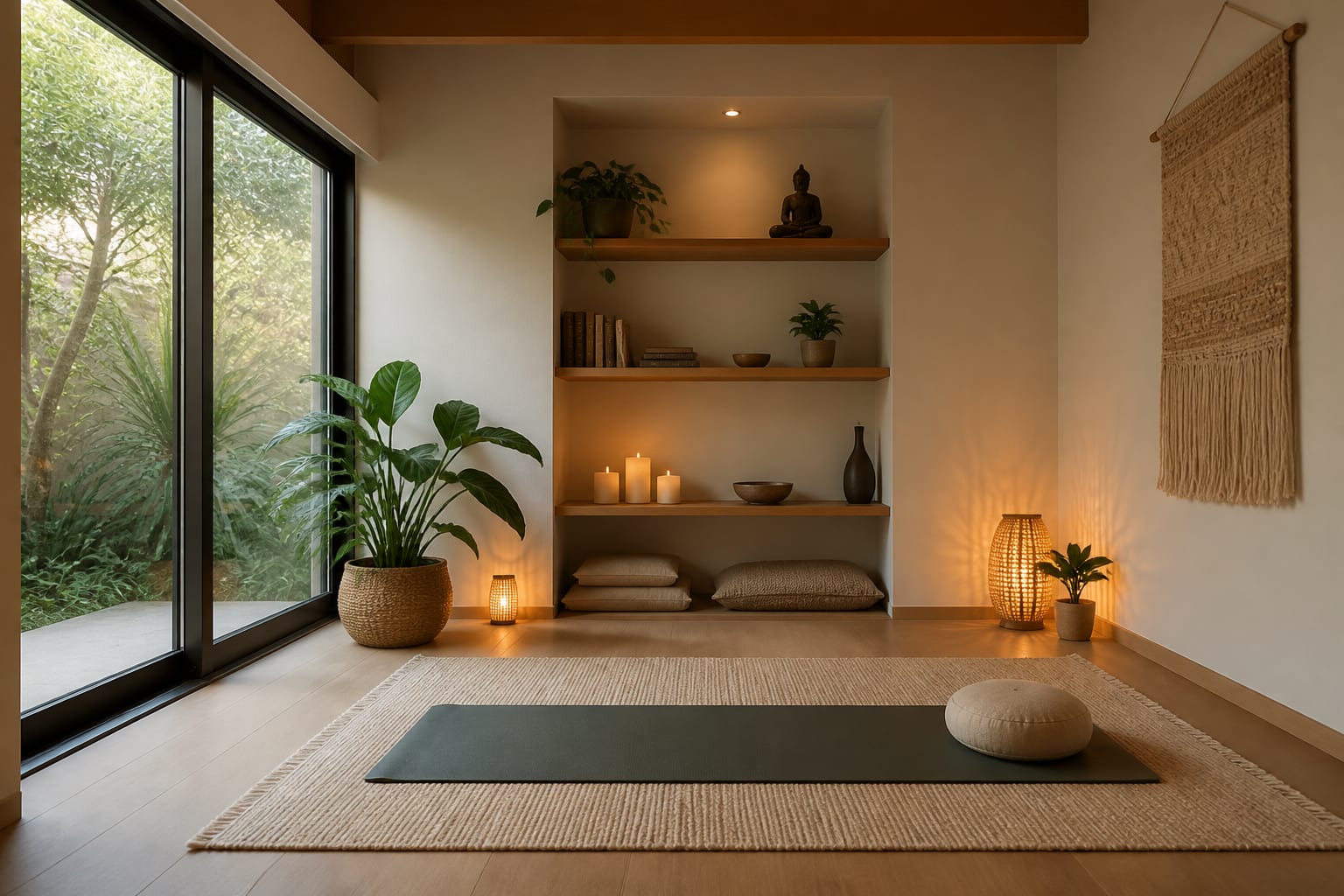
The single most important design decision is floor space, because everything else is decoration around it. A standard mat is about 68 by 24 inches, but practice needs more than the mat: plan a clear zone of at least 7 by 3 feet so you can step wide into a lunge or sweep your arms without hitting furniture. Add roughly 2 feet of clearance overhead and to the sides for full extension in standing poses.
Keep that zone genuinely empty. The discipline is the same one that makes a dual-purpose corner work: define what the space is for and resist filling it. If the room does double duty, use a rug or a change in flooring to mark the practice zone so it stays mentally separate even when furniture lives nearby.
A few moves keep the floor honest:
- Orient the mat toward a window or a calm focal point, not the doorway or a TV.
- Leave 2 feet of buffer on the long sides so wide-leg poses have room.
- Keep the path to the zone clear so you can roll out the mat without moving anything.
- Put nothing breakable within arm's reach of the mat edges.
- Mark the zone with a low-pile rug if the room shares other uses.
When the floor is reliably clear, starting a session costs zero effort, and that is the whole point of designing the space at all.
Idea 2: Layer soft, dimmable light
Harsh overhead light is the fastest way to make a calm room feel like an office. I light a practice space the way you would a bedroom you want to relax in: warm and low, with a dimmer so the level matches the time of day. Bulbs at 2200K to 2700K read as candlelight rather than fluorescent, and a single dimmer switch lets you drop the room to a hush for evening meditation and bring it up gently for a morning flow.
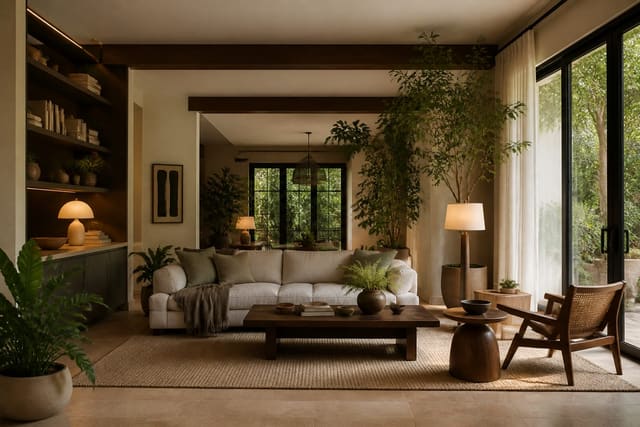
Natural light is the prize when you can get it. A mat placed where soft morning sun lands makes early practice almost effortless, and a sheer panel diffuses any glare so the light stays even across the floor. The soft, gray-day light strategy in my Pacific Northwest interior design notes works perfectly here: lean into diffuse, even light rather than bright direct beams. For evenings, add a low source, a salt lamp, a candle, or a small floor lamp at 2200K, so the room never has to rely on the ceiling fixture.
The rule I follow is that no single light should dominate. Two or three soft sources you can dim beat one bright one every time, because layered low light is what tells your nervous system the day is winding down.
Idea 3: Ground the room with natural materials and plants
Calm is tactile as much as visual, so I build practice rooms around materials that feel warm and grounding underfoot and to the eye. Cork, wool, jute, raw wood, and linen all read as natural and quiet, and they soften sound, which matters more than people expect in a room meant for stillness. A 1/2-inch cork underlayer or a wool rug means the floor is warm before your mat touches it, removing one more reason to skip a cold-morning session.
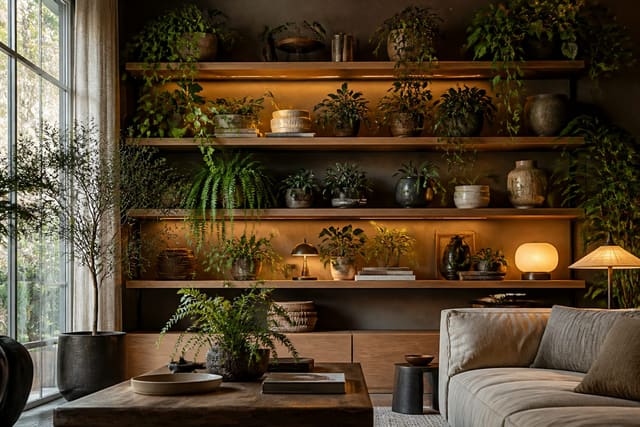
Plants do real work here beyond looks. A few leafy plants soften hard corners, clean the visual field, and add the kind of living presence that makes a room feel settled; the placement logic in my indoor plant styling ideas keeps them from cluttering the practice zone. Keep them at the edges, not in your sweep of motion, and choose low-maintenance varieties so caring for them never becomes another chore.
Sound deserves a thought of its own, because a calm room can still be ruined by echo or by noise leaking in from the rest of the house. Soft materials are your friends here: a wool rug, a fabric wall hanging, even a heavy linen curtain all absorb the hard reflections that make a bare room feel tense. If the space borders a busy hallway, a solid-core door or a draft stopper at the threshold does more for the mood than any cushion.
Finally, control the clutter, because nothing kills calm like visible mess. Store blocks, straps, and bolsters in one closed basket or on a single 24-inch shelf, and keep the palette to two or three muted tones. A room with a few intentional objects and a lot of quiet surface is what lets the mind settle the moment you walk in. When in doubt, remove one more thing; the empty surface is the point, not a gap to fill.
Use AI design to preview your meditation room
The hard part of a calm room is that calm is hard to picture from a paint chip and a furniture list; it comes from how light, color, and empty space combine, which you cannot judge until it is built. Re-Design closes that gap. Upload a photo of the room or corner you want to convert, and the AI design tool re-renders it as a quiet practice space so you can see whether the palette and clearance actually feel restful before you change a thing.
Because you upload your real space, the previews respect your actual window light, wall color, and floor, so the calm you see is achievable in that exact spot. Try a warm muted palette, then a cooler one, add a rug and a plant, and compare which version makes the room feel like somewhere you would willingly sit in silence, all before you buy paint or props.