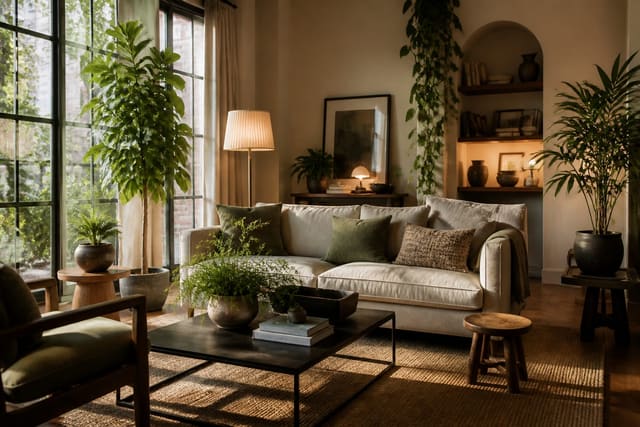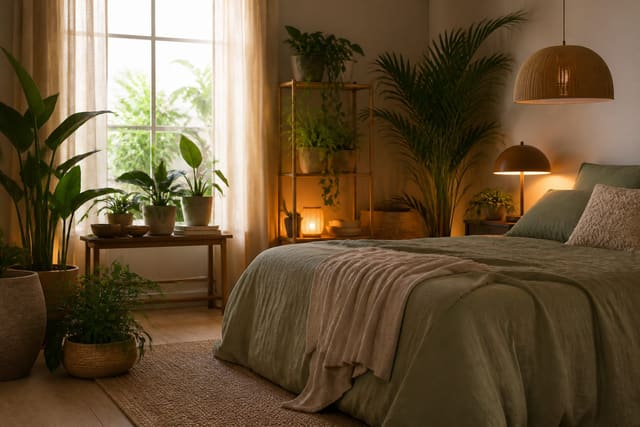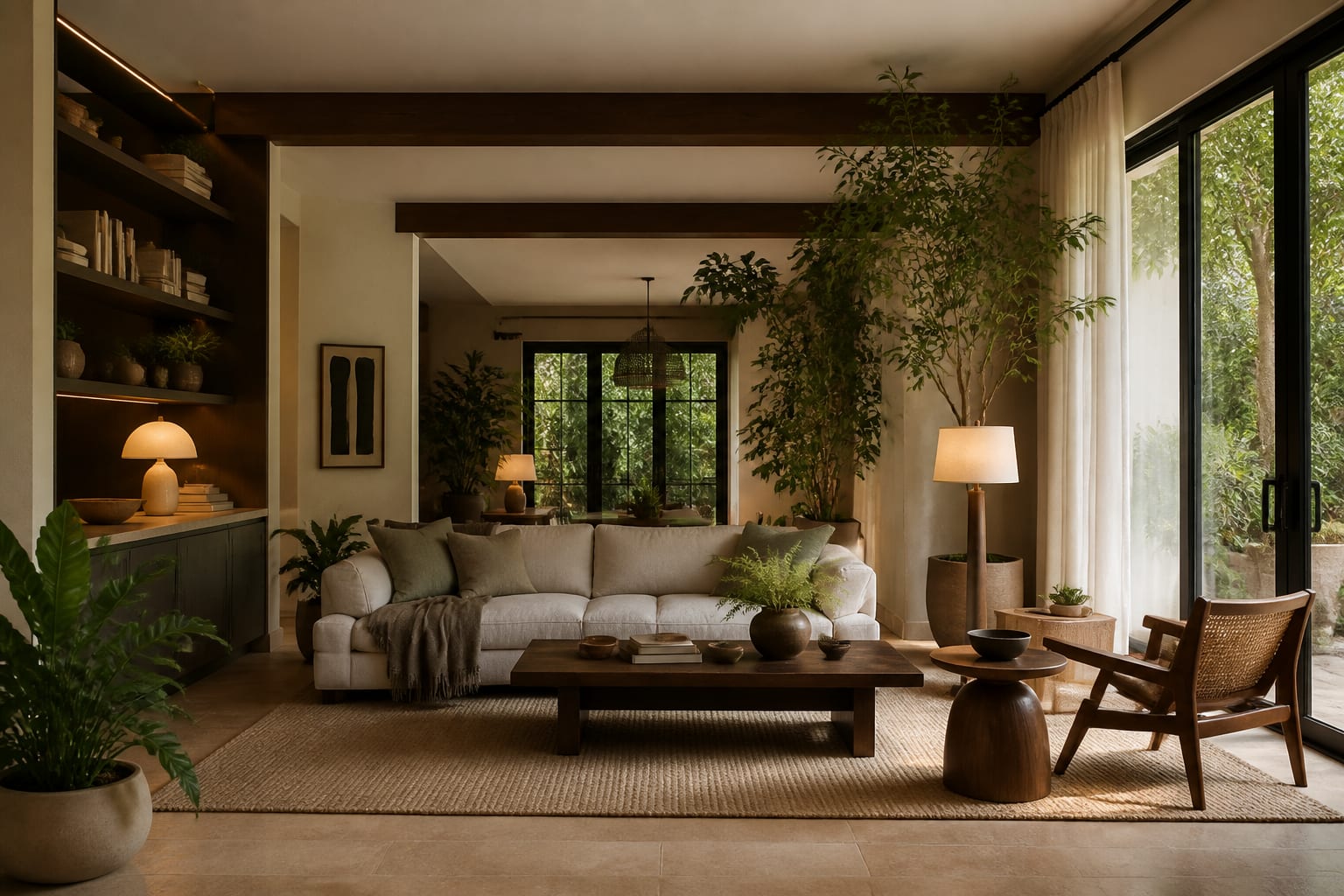
Houseplants look styled, not scattered, when you stop treating them as individual objects and start arranging them like a composition. The difference between a curated room and a cluttered one is almost never the number of plants; it is grouping, height variation, and pot discipline. I tell clients that three thoughtful plants beat a dozen lonely ones placed wherever there was a free surface. Greenery should anchor corners, frame windows, and fill the awkward vertical gaps that furniture leaves behind. Treat plants as a design layer rather than decoration sprinkled on top, and a room reads finished.
How do you group plants so they look styled?
Grouping is the single biggest lever in plant styling, and the rule designers lean on is odd numbers. Clusters of three or five read as deliberate, while pairs feel static and even crowds look accidental. Within a group, vary the height so your eye travels: pair a tall plant standing around 30 inches with a medium one and a low trailing plant to create a stepped silhouette. This triangular arrangement, tallest at the back, draws the gaze across the cluster instead of leaving it flat. Mix leaf shapes too, setting a broad-leafed plant beside something feathery or spiky, so the texture contrast keeps the group interesting up close. Cluster the pots fairly tight, within 8 inches of each other, so they read as one composition rather than three separate objects sharing a shelf. Repeat a group like this in two or three spots around a room and the greenery starts to feel like an intentional layer rather than scattered afterthoughts. Plant stands and stools help enormously here, lifting one plant above its neighbors to build the height variation a flat surface cannot provide. Keep some negative space around each cluster so the arrangement can breathe; a group loses impact when it bleeds into clutter. The same principle scales down to a windowsill, where three small pots of staggered height beat a tidy row of identical ones. Once you start seeing plants as compositions of three rather than individual specimens, every surface in the house gets easier to style and far harder to overcrowd.
See also our guide to Decorating With Plants Design Guide for more on indoor plant styling ideas.
How do you choose and coordinate pots?
Pots do more visual work than the plants themselves, because a coherent set of containers can unify a wildly mixed collection of greenery. The fastest way to make plants look cluttered is a jumble of clashing pots in every color and material, so the discipline is restraint. Pick a palette of two or three pot materials, perhaps terracotta, matte ceramic, and woven baskets, and repeat them around the room. Coordinated does not mean identical; varied shapes within a tight palette look collected rather than matchy. Scale the pot to the plant, allowing roughly 2 inches of clearance between the root ball and the pot wall so the plant has room without swimming in soil. A pot that is too large looks bottom-heavy, while one too small looks cramped and dries out fast. Match the pot's formality to the room: sleek concrete and glazed ceramic suit a modern space, while terracotta and rattan warm a relaxed one. For floor plants, a generous planter at least 12 inches wide grounds a tall specimen and stops it looking spindly. Use cachepots, the decorative outer covers, so you can keep plants in their plastic nursery pots and swap them without repotting. Lift smaller pots onto stands or stacked books to add the height variation grouping needs. The collection reads expensive and considered when the containers speak the same visual language, even when the plants inside them are a budget mix of cuttings and supermarket finds. Pots, not plants, are where styling either holds together or falls apart.
For a related angle on indoor plant styling ideas, read Decorating With Plants Guide.
Where should plants go for both health and impact?
Placement has to serve two masters at once: the plant's health and the room's composition. Start with light, because a plant placed purely for looks in a dim corner will yellow and drop leaves within weeks. Match each species to its needs, keeping sun-lovers within about 3 feet of a bright window and reserving low-light tolerant plants for the darker spots a room inevitably has. Once health is handled, think about where greenery does the most design work. Empty corners are prime real estate; a tall floor plant standing 5 to 6 feet high fills vertical dead space that furniture cannot reach and softens the hard angle where two walls meet. Use plants to frame a window, flank a sofa, or break up a long stretch of blank wall. Trailing plants placed high, on a shelf or a hanging planter, draw the eye upward and add movement to a room that feels too grounded. Bathrooms and kitchens, often forgotten, welcome humidity-loving plants that thrive where others sulk. Avoid blocking walkways or crowding a surface you actually use, since a plant in the way becomes a plant you resent. Group smaller plants on a console or windowsill rather than dotting single specimens across every flat surface, which is the fastest route to clutter. Think in terms of three zones per room rather than scattered points. When placement respects both the light a plant needs and the gaps a room has, greenery stops looking like decoration and starts working as architecture you can rearrange.
How do you keep styled plants looking good over time?
A styled plant display only stays beautiful if it stays healthy, so maintenance is part of the design rather than a separate chore. The most visible killer of a good arrangement is dust, which dulls leaves and blocks the light a plant needs; wipe broad leaves every couple of weeks with a damp cloth and they keep their glossy sheen. Rotate each pot a quarter turn weekly so plants grow evenly toward the light instead of leaning hard in one direction and breaking the balanced silhouette you arranged. Prune leggy growth and remove yellowing leaves promptly, because a few brown tips can drag down an otherwise sharp grouping. Group plants with similar water needs together so a single watering pass keeps the whole cluster happy, rather than overwatering one to satisfy another. Watch for the slow decline that signals a placement mistake: a plant stretching toward a far window or dropping leaves usually wants a brighter or steadier spot, so move it before it thins out entirely. Keep a small stash of replacement plants or be willing to swap a struggling specimen out, since even attentive owners lose a plant occasionally and a gap in a composition is worth filling fast. Refresh the styling seasonally by rotating plants between rooms or adjusting groups as plants grow into new sizes. The collections that look effortless are quietly tended, edited as plants change, and kept clean. Treat the display as a living arrangement that evolves, and it stays looking deliberate for years rather than slowly sliding into a tired, leggy mess.
Here are the common mistakes to avoid: - Lining plants up in a single straight row instead of clustering them in staggered groups - Placing sun-loving plants in dim corners purely for looks, then watching them slowly yellow - Mixing clashing pot colors and materials so the collection reads as cluttered noise - Choosing one giant plant for a tiny surface, or many tiny pots that disappear in a big room - Dotting single plants across every flat surface rather than building two or three intentional zones - Ignoring dust and uneven growth until the styled arrangement looks tired and lopsided
Bring the look home with Re-Design
Plant placement is hard to judge from imagination alone, so test it on screen first. Upload a photo of your room to Re-Design and preview where a tall floor plant, a grouped console arrangement, or a trailing shelf plant would land before you buy a thing. You can compare pot palettes and plant heights against your actual furniture and light, then commit only to the arrangement that genuinely makes the room feel finished.
Frequently Asked Questions
How many plants should I put in one room?
Fewer than you might think. Two or three intentional groupings usually style a room better than plants scattered on every surface. Aim for clusters of odd numbers with varied heights rather than maximizing the count. Three healthy, well-placed plants read as designed, while a dozen struggling ones spread thin read as clutter and create constant maintenance.
Why do my houseplants look messy instead of styled?
Usually it is a lack of grouping, clashing pots, or uniform height. Plants lined up individually or sitting in mismatched containers read as random. Cluster them in odd numbers, vary the heights with stands, and unify the pots into a palette of two or three materials. That structure is what makes greenery look intentional rather than accidental.
Can I put plants in low-light rooms?
Yes, but choose species that tolerate it. Plants like pothos, snake plants, and ZZ plants handle dim corners that would slowly kill a sun-lover. The mistake is placing a high-light plant in a dark spot purely for looks and watching it decline. Match the species to the actual light, and most rooms can hold greenery somewhere.