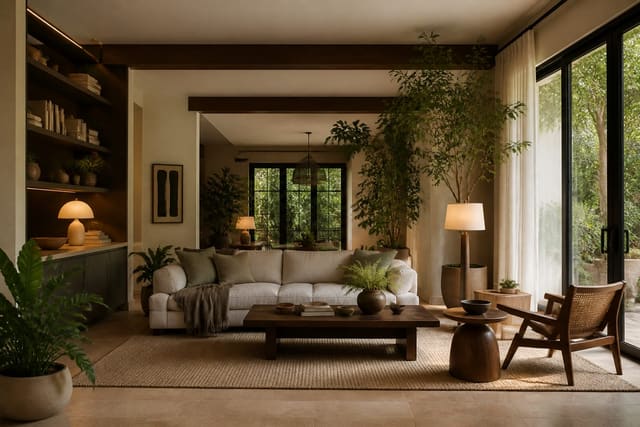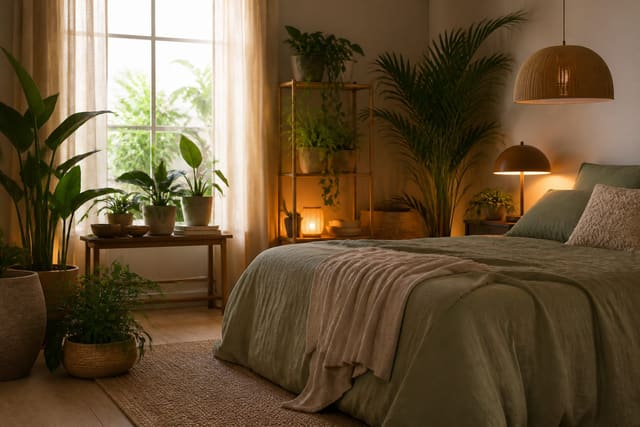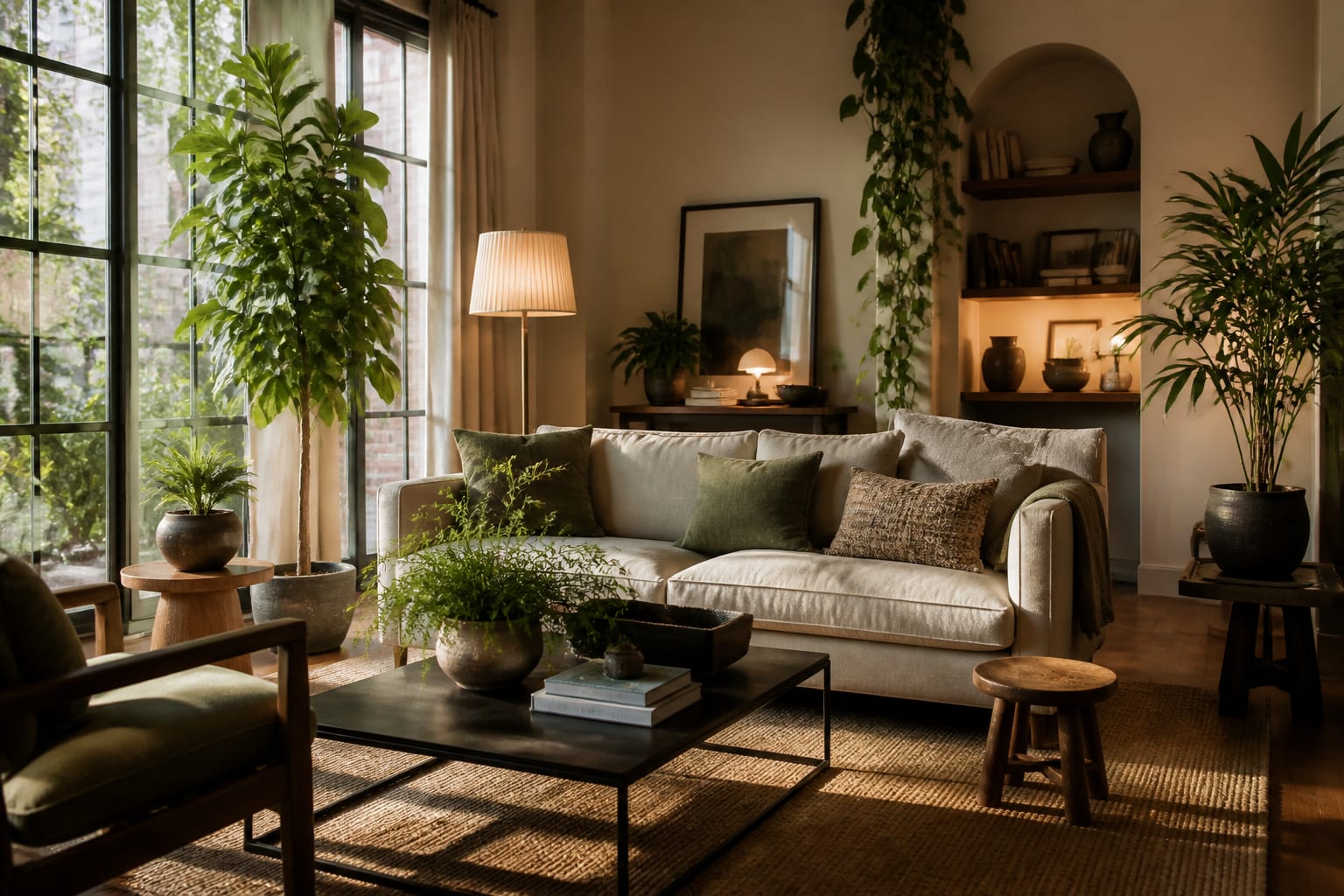
My honest take is that plants are the most forgiving design element in any room, because they bring scale, color, and texture at a fraction of the cost of furniture and you can move them in seconds when something looks off. To use plants as part of your interior design, treat them like the rest of your decor: choose them for the job a spot needs, scale them to the space, and group them so they read as a composition rather than a scatter of pots.
I think most rooms go wrong by buying plants one at a time and parking each where it fits, which is how you end up with seven small pots fighting for attention. The better move is to decide what each plant is doing first: filling a vertical gap, softening a hard corner, adding green to a flat shelf, or screening a window.
Start with light, not looks
The single biggest reason a plant dies or sulks is the wrong light, and a struggling plant never looks good no matter how nice the pot is. Read each spot honestly before you buy. A south-facing window delivers roughly 6 or more hours of direct sun and suits cacti, succulents, and a fiddle-leaf fig set back a few feet. An east or west window gives a few hours of gentler direct light, good for most popular foliage. A north window or an interior wall stays bright but indirect, which snake plants, pothos, and ZZ plants tolerate far better than a fussy calathea.
Match the plant's needs to the spot and the styling gets easy, because a healthy plant is a good-looking plant. For a deeper rundown of which species thrive where, my indoor plant styling ideas break it down room by room, and my broader decorating with plants guide covers care routines that keep the greenery looking sharp.
Use plants for scale, color, and texture
Think of greenery in three design roles. Scale comes from the big pieces: a 5-6 foot floor plant fills the vertical emptiness a sofa and a low table leave behind, doing the same visual work as a tall bookcase for a fraction of the price. Color comes from choosing green as a deliberate accent against your wall and upholstery tones, plus the occasional variegated or burgundy leaf for punch. Texture comes from contrast, the most underused lever of the three.
What to look for when you build a plant grouping:
- A vertical anchor: one tall plant or a plant on a 24-30 inch stand to set the high point.
- A mid-height filler: a bushy plant at 12-18 inches to bridge the gap.
- A trailing element: pothos or ivy spilling off a shelf to soften hard edges.
- A contrast in leaf shape: pair a broad-leaf piece with something fine or feathery.
- A repeated planter: two or three pots in the same material or color to tie the group together.
Mixing finishes and shapes here is the same discipline as combining furniture styles; one cohesive thread keeps variety from turning to noise, much like the restraint in pulling textures together across a whole room. Odd-numbered groupings at staggered heights almost always look more composed than a tidy even row.
Texture deserves a closer look because it's what makes a green-on-green grouping interesting instead of flat. Pair the big glossy paddles of a rubber plant with the fine, ferny fronds of an asparagus fern, then add a trailing string-of-hearts for a third note, and the cluster reads as rich even though every leaf is green. Variegated foliage, with its cream or white marbling, acts almost like a pattern and can stand in for the color a quieter palette is missing. The point is to let leaf shape and finish do the heavy lifting so you don't need a dozen flashy pots to make the corner feel alive.
Place greenery where it does design work
Once you know your light and your roles, placement is about reinforcing what a room already needs. Use a tall plant to fill an empty corner or flank a doorway. Use a trailing plant to break the hard top edge of a tall shelf or cabinet. Use a row of small herbs or succulents to add life to a kitchen sill without crowding the counter. A cluster of three on a coffee table or sideboard, varied in height, reads as styling; a single lonely pot dead-center usually reads as an afterthought.
Planters are part of the decor budget, not an afterthought. Tie them to your palette and to materials already in the room, and the plants instantly look intentional. The bamboo, rattan, and natural-fiber direction in my bamboo interior design ideas pairs beautifully with greenery, since woven planters and warm wood stands make foliage feel rooted in the room rather than dropped in.
Common mistakes to avoid
The common mistakes to avoid almost always trace back to ignoring light. Buying a sun-loving plant for a dim interior corner, or a shade plant for a blazing south window, sets you up for a sad, leggy specimen that no styling can rescue. Fix the light match first.
After that, the errors are about scale and grouping. A tiny 6-inch pot alone on the floor of a big room looks lost; that spot wanted a 5-6 foot plant. Scattering single pots evenly around a room, one here and one there, never builds a composition, so cluster them in odd-numbered groups instead. People also overwater out of love; most foliage plants want the top 1-2 inches of soil dry before the next drink, and constant soggy soil kills more houseplants than neglect. Finally, don't ignore the planters; mismatched pots in clashing colors undercut even healthy plants, while a repeated material pulls the whole display together.
Use AI design to preview greenery in your room before you commit
Live plants are an investment of money and care, and a fiddle-leaf fig that looks perfect in the shop can overwhelm a small corner or disappear in a tall room once it's actually home. Before you commit, upload a photo of your real room to Re-Design and let the AI re-render it with a tall floor plant by the window, a trailing pothos on the high shelf, and a clustered grouping on the sideboard, all scaled to your actual ceiling height and furniture.
Because you upload your genuine space, the AI design works from your real light direction, your real wall color, and your real empty spots, not a generic studio set. Test a 6-foot statement plant against a pair of medium ones, swap a woven planter for a glazed ceramic, and see which arrangement makes the room feel alive instead of cluttered, all before a single leaf comes through your door.