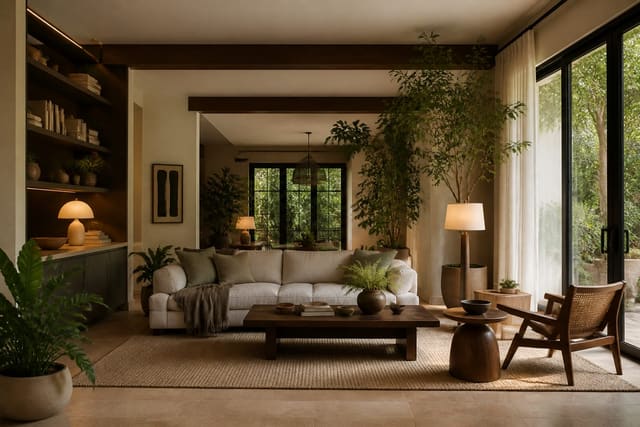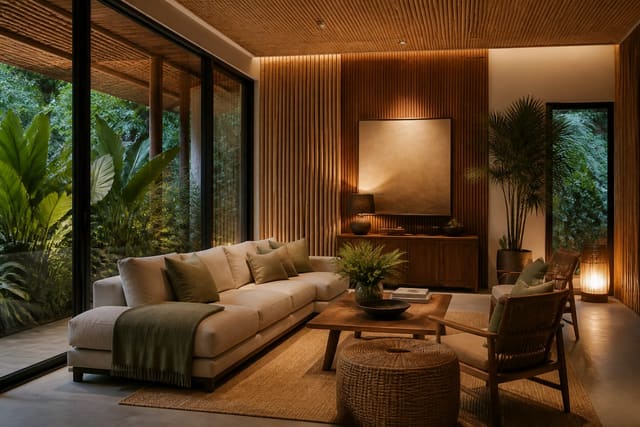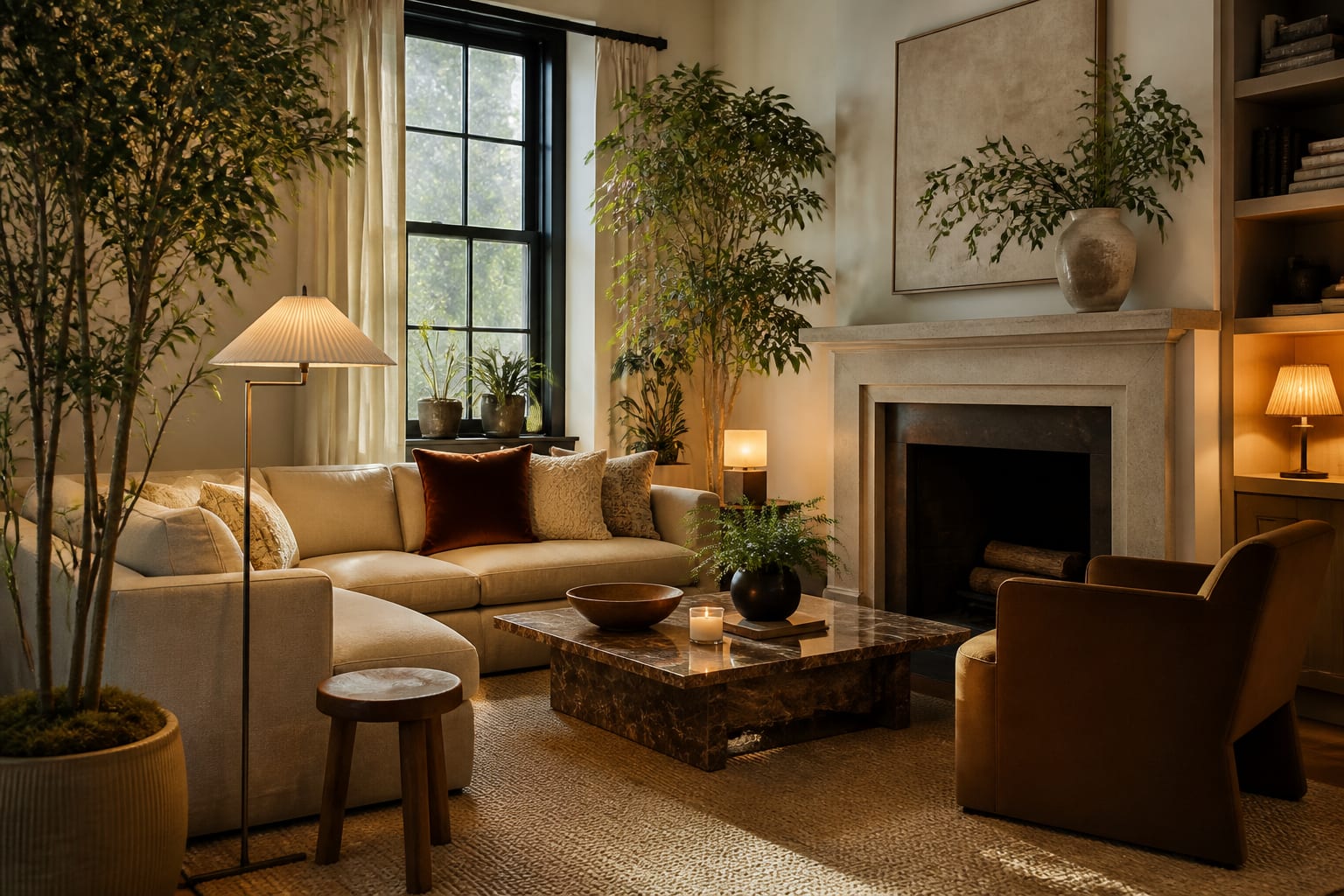
Decorating with plants works when you treat each one as a design object first and a living thing second: right scale for the spot, grouped in odd numbers, and matched to the light it will actually get. Greenery is the cheapest way to make a room feel alive, layered, and lived-in. My read is that most people fail at it not because they lack a green thumb, but because they buy a plant they love and drop it wherever there is a gap, with no thought to light or scale.
A styled plant and a sad plant are often the same species; the difference is placement. A fiddle-leaf fig in a bright corner with a beautiful pot reads as a design choice. The same fig stuffed in a dark hallway in its plastic nursery pot reads as clutter that is slowly dying. This guide handles both halves: the look and the survival.
Match the plant to the light first
Light is the one variable that decides whether a plant lives, and it is the one most people ignore at the store. Before you buy anything, look at where the plant will sit and how far it is from a window. Most popular foliage plants want bright indirect light, meaning within about 3 to 5 feet of a window that gets sun but with the plant out of the direct beam. South and west windows are brightest; north windows are dimmest.
If the spot you want to fill is more than 6 feet from a window or in a genuinely dim room, do not fight it with a fussy plant. Choose a survivor. The reliable low-light crew:
- Snake plant: tolerates 6 to 8 feet from a window and weeks between watering.
- ZZ plant: handles low light and dry air without complaint.
- Pothos: trails happily in medium to low light, forgiving of missed waterings.
- Cast iron plant: nearly indestructible in dim corners.
- Heartleaf philodendron: another trailing option that takes low light.
For rooms that get almost no daylight, lean on the survivor list above, and steal a few arrangement tricks from my indoor plant styling ideas guide so even the low-light corners read as deliberate. A grow light on a timer for 8 to 12 hours a day can also turn a dark corner into a viable plant spot, since most foliage needs roughly 6 to 8 hours of usable light to hold its color.
Style with scale, height, and odd numbers
Once the plant will survive, make it look intentional. The biggest styling lever is scale. One large floor plant, 4 to 6 feet tall, anchors a corner and fills vertical space the way a small tabletop plant never can. If a corner feels empty, a single big plant usually fixes it faster than three little ones.
Grouping is the next lever. Plants almost always look better in odd-numbered clusters of 3 or 5, set at varied heights: one tall on the floor, one medium on a stool or stack of books, one trailing from a shelf above. The height variation creates a little composition instead of a flat row. Spread plants across different heights in the room too, floor, table, shelf, and hanging, so greenery reads as layered rather than lined up on one surface.
The pot is half the styling and the part people skip. A gorgeous plant in a plastic nursery pot still looks unfinished. Slip it into a cachepot or repot it into a ceramic, woven, or terracotta container that fits your room's palette. Natural materials work especially well here; the same woven textures I cover in the bamboo interior design ideas guide make plant corners feel organic and warm. Keep pot finishes loosely coordinated so a plant grouping reads as a collection, not a yard sale.
Placement is also about the room's geometry, not just light. Use plants to soften the spots that feel hard and empty: a tall plant beside a bookshelf to break its straight edge, a trailing pothos on top of a kitchen cabinet to fill dead space near the ceiling, a small plant on a bathroom counter for a hit of life. Bare corners and the dead zone above tall furniture are where greenery earns its keep, since those are exactly the spots that make a room feel unfinished.
Hanging and shelf plants add a layer most people forget. A trailing plant 12 to 18 inches above eye level draws the eye upward and makes the ceiling feel taller, the same trick a high-mounted curtain rod pulls. Macrame hangers, wall-mounted pots, and the top shelf of a bookcase all work. Just be honest about reach: if you cannot comfortably water a hanging plant, it will get neglected, so put the fussiest plants where watering is effortless and save the high spots for forgiving trailers like pothos or philodendron.
Common mistakes to avoid
The most common mistake is buying for looks and ignoring light, then watching a sun-loving plant slowly decline in a dark corner. Match the plant to the actual spot before you fall in love with it.
A second frequent mistake is leaving plants in their plastic nursery pots, which instantly cheapens an otherwise nice arrangement. The container is part of the decor, so treat it that way. A third is the lonely single plant marooned on a windowsill with nothing around it; greenery reads better grouped. People also overwater far more often than they underwater, since most foliage prefers to dry out 1 to 2 inches down before the next drink. And many scatter several tiny pots across a room instead of committing to one statement plant, which makes the space feel busy rather than green. When in doubt, go bigger and group tighter.
Use AI design to test plant placement first
The tricky part of decorating with plants is picturing how a 6-foot fig or a trailing shelf of pothos will actually read in your room before you haul one home and discover it blocks a walkway or vanishes against a busy wall. Re-Design lets you skip the trial and error. Upload a photo of your room and the AI design re-renders it with plants placed at different scales and spots so you can judge the composition in your own space.
Because you upload your real room, the preview keeps your actual light, wall colors, and furniture, so a styled plant corner looks the way it truly would. Test a large floor plant in the empty corner, try a cluster of three on the console, and see which arrangement balances the room before you spend money on pots and greenery.