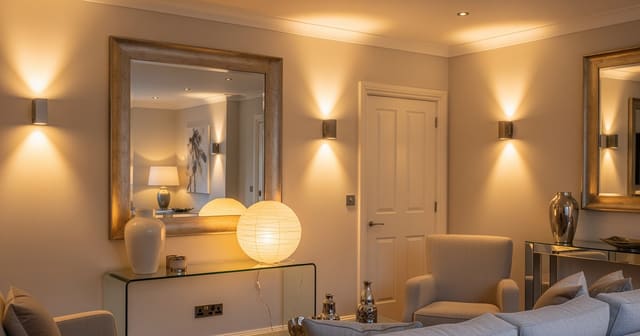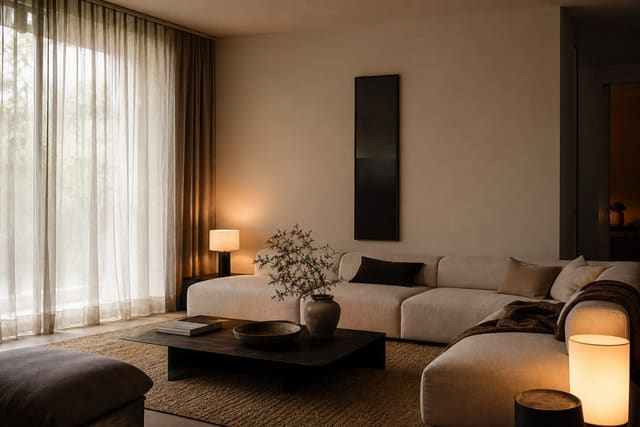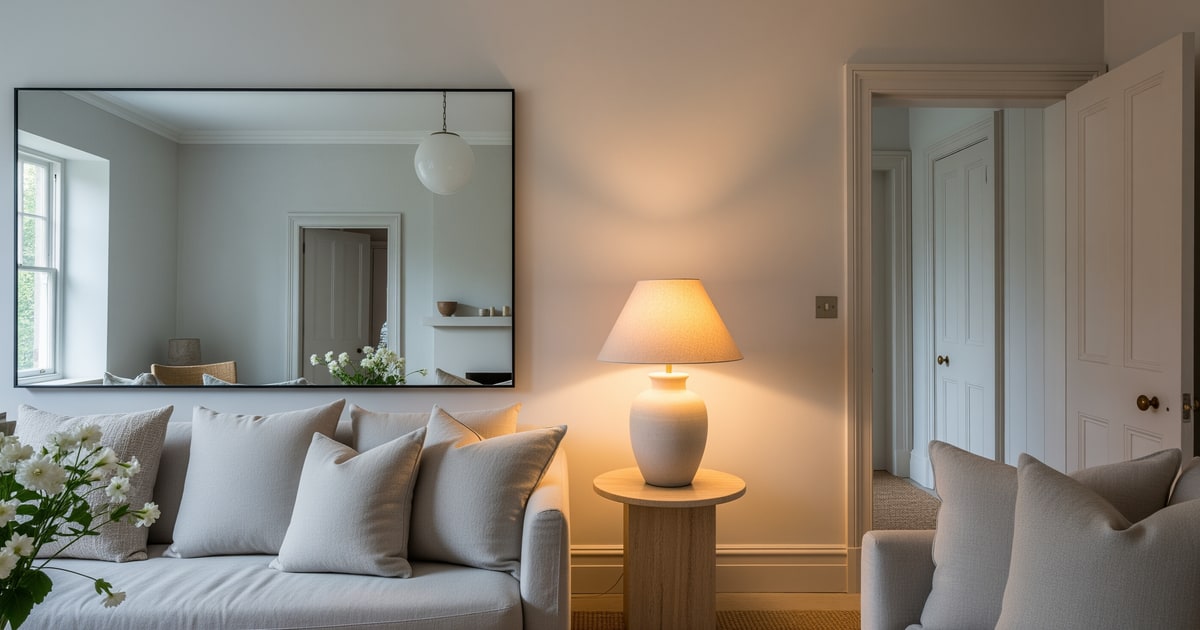
Mirrors amplify light when placed opposite a window (to double the daylight reach), opposite a strong lamp (to multiply the evening light), or on the wall perpendicular to a window (to bounce side-light into the dim half of the room) — and AI previews mirror placement on your room before any install. Mirrors brighten rooms only when they reflect something worth multiplying. The tired version is a small mirror stuck opposite a blank wall, expected to do the work of a window. The useful version treats a mirror like a light-routing tool: it catches daylight, a lamp glow, or a long sightline and sends it deeper into the room. Scale and target matter more than frame style.
How do you use mirrors to make a room brighter?
Use mirrors to make a room brighter by placing one large mirror where it reflects the strongest light source, the brightest wall, or the longest open view, then pairing it with warm layered lighting so it has light to return after sunset. A mirror opposite darkness only doubles darkness. A mirror opposite a window, pale wall, lamp, or doorway can double the perceived depth and light rhythm of the room.
The placement rules that actually work
- Reflect the window, not the clutter. The strongest placement is across from or at a 90-degree angle to a window. If the mirror reflects a laundry pile, TV, or open kitchen mess, it makes the room busier instead of brighter.
- Go larger than decor scale. A 24" mirror is decoration. A 36" x 48" mirror or floor mirror is light architecture. Small mirrors rarely move enough light to matter.
- Use a pale reflection target. A mirror facing a warm white wall, linen curtain, pale rug, or lamp shade returns more useful brightness than one facing a dark sofa.
- Keep the centerline near eye level. For wall mirrors, 57" to 60" from floor to center works in most rooms. Too high and the mirror reflects ceiling; too low and it reflects furniture legs.
Test this on your own room photo with ReDesign before you choose the final direction; keep the doorway, walls, windows, main furniture, lighting, and awkward fixed features visible so the preview solves the room you actually have.
Room-by-room mirror moves
- Living room: place a large mirror on the wall perpendicular to the main window so it catches side light without showing only the window frame.
- Dining room: use a horizontal mirror over a sideboard, but make sure it reflects sconces, art, or the chandelier glow rather than the back of chairs.
- Bedroom: use a full-length mirror near the closet or doorway, angled to catch the window. Avoid reflecting the bed directly if the room already feels busy.
- Entryway: a mirror over a narrow console brightens the first impression and gives a useful exit check. Pair it with a warm lamp so the mirror still works at night.
- Bathroom: mirror width should be close to vanity width. Side sconces reflected in the glass do more than a bigger mirror with bad overhead light.
A mirror amplifies only what it can see. Before buying, stand where the mirror will hang and look at the reflection path: if you see a dark hallway, cluttered shelves, or the back of a sofa, the mirror will double that problem. Aim it at a window, a lamp, a pale wall, or an open doorway. For most rooms, a mirror should be at least two-thirds the width of the console, vanity, or wall zone beneath it; a 24 inch mirror over a 60 inch sideboard looks like a mistake, not a light strategy. Hang the center near 57 to 60 inches high unless the piece is intentionally floor-length. The fake natural light guide helps when the reflected source has to be a lamp rather than a window.
Frame choice changes how much light you actually gain. Thin brass, black metal, pale wood, or frameless edges preserve the reflective area, while chunky carved frames eat the mirror and cast their own shadows. A floor mirror should lean where it reflects vertical space, not a ceiling fan or blank floor. Renters can use leaning mirrors and anti-tip hardware; owners can recess a medicine cabinet, add a mirrored closet door, or build a panel into millwork. In bathrooms, moisture and face lighting change the rules, so cross-check the windowless bathroom guide before assuming a larger mirror alone will fix a dark vanity.
Check the view at night as seriously as the daylight view. A mirror that reflects a window beautifully at noon may become a black rectangle after sunset unless a lamp or sconce also appears in the reflection. Put a small shaded lamp, picture light, or warm wall wash within the mirror's sightline so the piece keeps working after dark. This is why dining room and entry mirrors often need a companion lamp, not just a bigger frame.
Scale should relate to the wall zone. Over a console, the mirror can be 60 to 80 percent of the furniture width; above a fireplace, it should leave breathing room around mantel objects; in an entry, a vertical mirror can be narrow if it gives a full useful check. A mirror squeezed between two door casings rarely amplifies light because the frame is visually trapped. When in doubt, mock the size with painter's tape and photograph it from the doorway.
The best mirror finish is often the one you notice least. A thin metal edge, pale wood frame, or simple black line lets the reflection do the work. Ornate frames can be beautiful, but in a dark room they often add shadow and visual weight. Save the heavy frame for a room that already has generous daylight, then use leaner glass where brightness is the job.
Do not use mirror count as a substitute for one well-placed piece. Two mirrors facing each other can create a fun boutique effect, but in most homes it feels restless and can multiply clutter. One larger mirror with a clean reflection target usually gives more brightness and more calm than a gallery of small reflective objects.
Cleaning and maintenance matter too. A mirror behind a dining bench or near a bathroom sink may catch fingerprints, steam, or chair bumps every day. Choose placement and frame depth you can actually maintain, because a streaked mirror reflects neglect as clearly as light.
Common mirror mistakes
- Mirror opposite a blank dark wall. It doubles the least useful surface in the room.
- Too many small mirrors. Multiple small reflections feel fragmented and decorative, not bright.
- Tinted or smoked mirror in a dark room. Looks stylish in photos but absorbs the light you were trying to amplify.
- Leaning mirror with no safety anchor. Large floor mirrors need anti-tip hardware, especially in rentals with kids or pets.
- Reflecting a problem zone. If the mirror shows cords, open shelving clutter, or an unfinished corner, the room feels twice as chaotic.
- Forgetting nighttime performance. A mirror that only works at noon fails half the day. Pair it with a lamp or sconce so it still reflects warmth after sunset.
- Reflecting the darkest corner. A mirror that doubles a shadow makes the room feel more complicated, not brighter.
Use AI design to test mirror placement first
Mirror placement is hard to judge from a store photo because the real value is what the mirror reflects in your room. Upload a photo to Re-Design and test a floor mirror, a sideboard mirror, and a window-adjacent mirror before drilling into the wall. The best option is usually the one that reflects light and a clean sightline, not the most decorative frame.
Frequently Asked Questions
Where should a mirror go to brighten a dark room?
Directly opposite the brightest light source — opposite the only window for daytime, opposite a tall lamp or wall sconce for evening; this doubles the apparent light count. Use the room photo to compare the visible layout and fixed constraints before committing, because door swings, windows, outlets, storage reach, circulation, and existing furniture decide whether the idea survives daily use.
How big should a mirror be to actually amplify light?
At least 36x48 inches for a meaningful effect; smaller mirrors decorate but do not move the room read on light. Keep the preview honest by leaving the problem area visible in the frame, then compare one conservative version against one bolder version before you buy lighting, paint, furniture, or storage.
Should the mirror be framed or frameless?
Either works for light amplification; choose based on style — frameless reads modern, framed in oak or brass reads designed; both reflect the same amount of light. Check the result against ordinary movement first: drawer clearance, chair pullout, walkway width, glare, switch access, and sightlines matter more than a perfect catalog angle.
Can I lean a mirror against the wall instead of mounting?
Yes — a tall floor-leaning mirror (60-72 inches) amplifies light dramatically and reads designed; just check it sits at a stable lean angle and is anchored to the wall above for child safety. Use the image to narrow priorities and measurements before ordering anything custom; final purchases still need real dimensions, outlet locations, installation limits, and product clearances.
Does AI preview mirror placement?
Yes — upload the room photo and AI previews mirror placement opposite windows and lamps so you confirm the bounce direction before any install. If the preview invents architecture or hides the awkward feature you need solved, rerun it with stricter instructions so the result remains tied to your actual room.
> Try this: Ready to see this on your own room? Open ReDesign and run the preview.
Three transformations to try
1. Mirror opposite window doubling daylight 2. Floor-leaning mirror bouncing lamp light 3. Mirror perpendicular to window for side-light