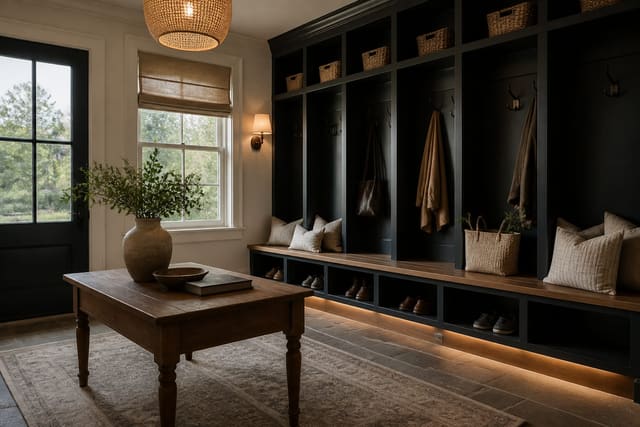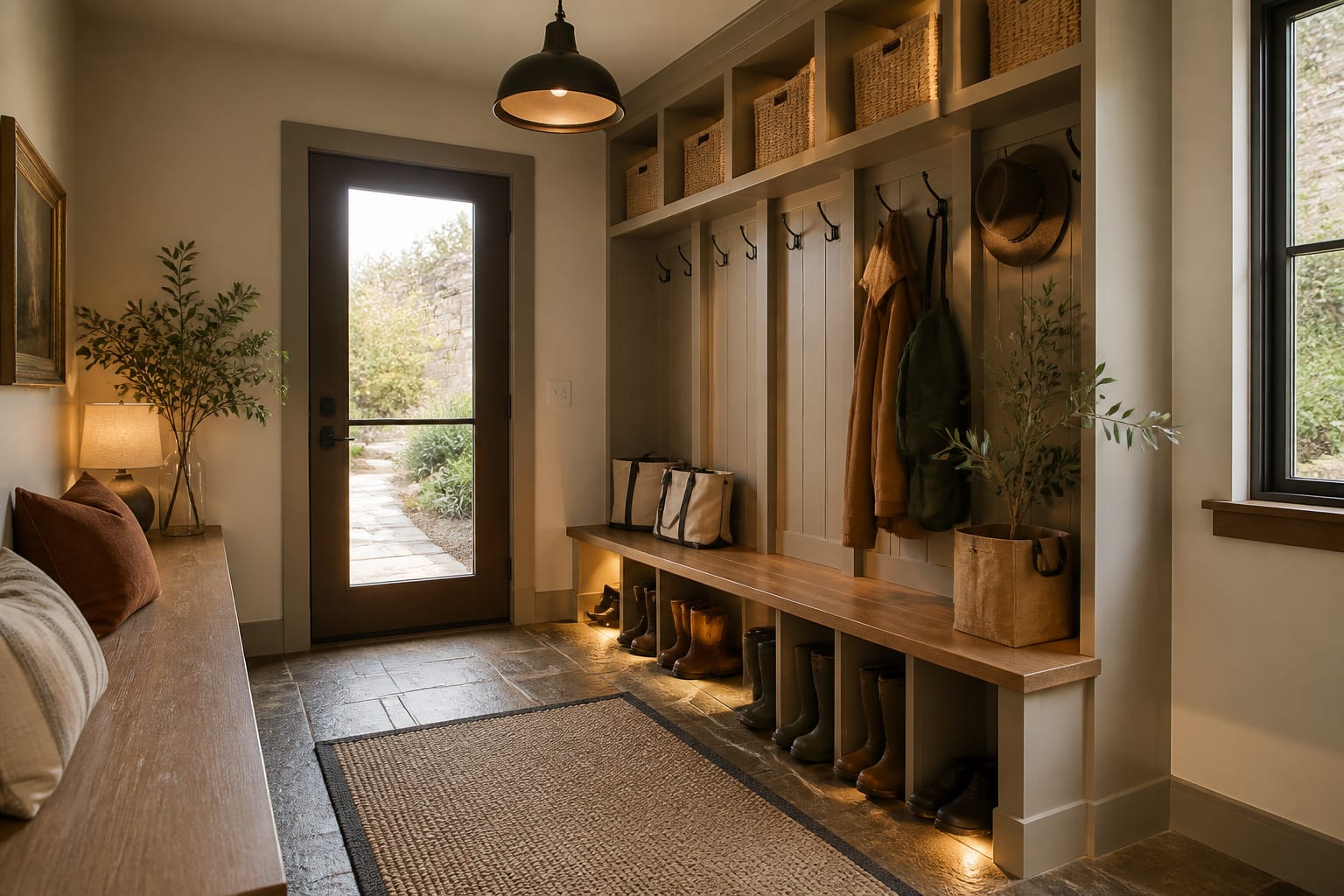
The best mudroom ideas turn a chaotic entry into a working drop zone: a bench near 18 inches high, low hooks sized two per person, durable porcelain or sealed concrete flooring, and a dedicated cubby for each family member. Get those four elements right and coats, shoes, and bags stop spreading past the door.
How Should You Lay Out a Mudroom?
Trace the path your family takes from the door inward, then place catch points along that line so nothing forces a backtrack. Shoes come off first, so a bench or low shelf belongs nearest the entry. Coats come off next, so hooks land just past the bench at shoulder height for adults and lower for kids.
Depth matters more than width. A bench needs about 16 inches of seat depth, with roughly 30 inches of clear floor in front so two people can pass while one ties laces. If the mudroom doubles as a passage to the kitchen, keep that runway open and push storage to the walls.
Think in vertical zones: floor for shoes and boot trays, bench for seating, wall for hooks, and a shelf above the hooks for hats and gloves. Stacking functions this way lets even a four-foot stretch of wall serve a full household. Reserve the top shelf, often above seven feet, for seasonal gear you rarely touch.
See also our guide to Mudroom Locker Ideas for more on mudroom ideas.
What Storage Holds Up to the Daily Load?
Hooks beat hangers every time, since people will toss a coat onto a hook in one motion but rarely fish out a hanger on the way through the door. Plan for at least two hooks per person, one for the jacket and one for a bag, and mount them on a sturdy backing board rather than straight into drywall.
Cubbies give each person a visible, assigned spot, which is the real key to keeping things off the floor. A cubby roughly 14 inches wide and 16 inches deep swallows a backpack, shoes, and a folded sweatshirt. Open cubbies photograph cleaner but show every mess, so a bin or canvas basket inside hides the chaos while keeping the system simple.
Don't skip the small, slippery items that cause the most arguments. A shallow drawer or wall-mounted tray near the door corrals keys, sunglasses, and the dog leash. Labeled bins on a high shelf hold gloves and sunscreen by season, and closed lower cabinets hide shoe piles entirely if you can fit them.
For a related angle on mudroom ideas, read Mudroom Bench Storage Ideas.
What Materials Hold Up Best in a Mudroom?
Flooring is the first decision. Porcelain tile resists scratching and wipes clean, sealed concrete shrugs off salt and water, and luxury vinyl plank feels warmer underfoot while still handling moisture. Avoid hardwood and untreated natural stone, since tracked-in grit and standing water will ruin both within a few seasons.
Walls deserve the same scrutiny. Run beadboard, shiplap, or a wipeable semi-gloss paint up to bench height, since that lower zone collects scuffs from boots and bags. Above that line you have more freedom for a flat finish or wallpaper, since it sits out of the splash zone.
Benches and cubbies should be built from materials that take a hit. Solid wood or plywood with a durable laminate outlasts particleboard, which swells the moment water reaches it. Choose outdoor-grade fabric for any cushions, and use a rubber or powder-coated metal boot tray that pulls out for cleaning.
What Lighting and Finishing Touches Make a Mudroom Work?
A single overhead fixture handles general light, but a small sconce or under-shelf strip helps you see into cubbies and find the matching glove. Warm light around 2700K to 3000K keeps the space inviting rather than clinical, which matters in a room you pass through dozens of times a day.
A mirror near the door earns its spot fast: it lets you check your look on the way out and bounces light through what is usually a windowless space. Hang it where light can actually reach it.
Small comforts make the room one people actually use. A washable runner rug defines the path and traps grit, a clock keeps the morning rush honest, and a charging shelf with a hidden outlet keeps phones off the kitchen counter. A chalkboard or message board catches notes and permission slips right where everyone passes.
Bring the Look Home with Re-Design
Picturing a mudroom is hard when you're staring at an empty corner or a cluttered entry. With Re-Design you upload a photo of the space and preview built-in benches, hook walls, and flooring swaps in your actual room before committing to a purchase or a carpenter. Test a tile color against your wall paint, or see whether floating cubbies suit the wall better than a bulky cabinet.
Frequently Asked Questions
How much space do I need for a functional mudroom?
You can build a working mudroom in as little as four feet of wall and three feet of floor depth, fitting a narrow bench, a row of hooks, and a shelf above. Larger families benefit from a full closet or a six-foot run, but a tight, organized strip beats a roomy, disorganized one every time.
What flooring holds up best in a mudroom?
Porcelain tile leads for durability and easy cleaning since it resists scratches and water without sealing. Sealed concrete is nearly indestructible and suits modern homes well, while luxury vinyl plank offers a warmer, softer surface that still tolerates moisture. Skip hardwood and unsealed stone, since grit and standing water damage both quickly.
How do I keep a mudroom from becoming a dumping ground?
Assign every family member a specific cubby or basket and use closed bins to hide the inevitable mess. Match storage to actual habits: hooks for coats people toss, a tray for wet shoes, a drawer for keys. When each item has one obvious home, clutter has nowhere to pile up and spread.
How many hooks should a mudroom have?
Plan for at least two hooks per person, one for an everyday coat and one for a bag or scarf. Mount them on a sturdy backing board rather than directly into drywall so they hold up to years of daily yanking without pulling loose.