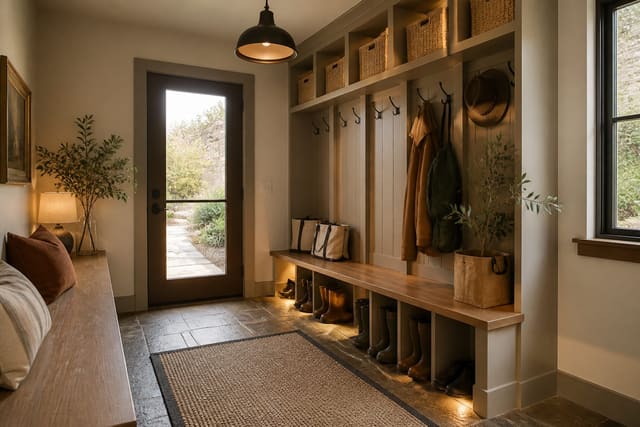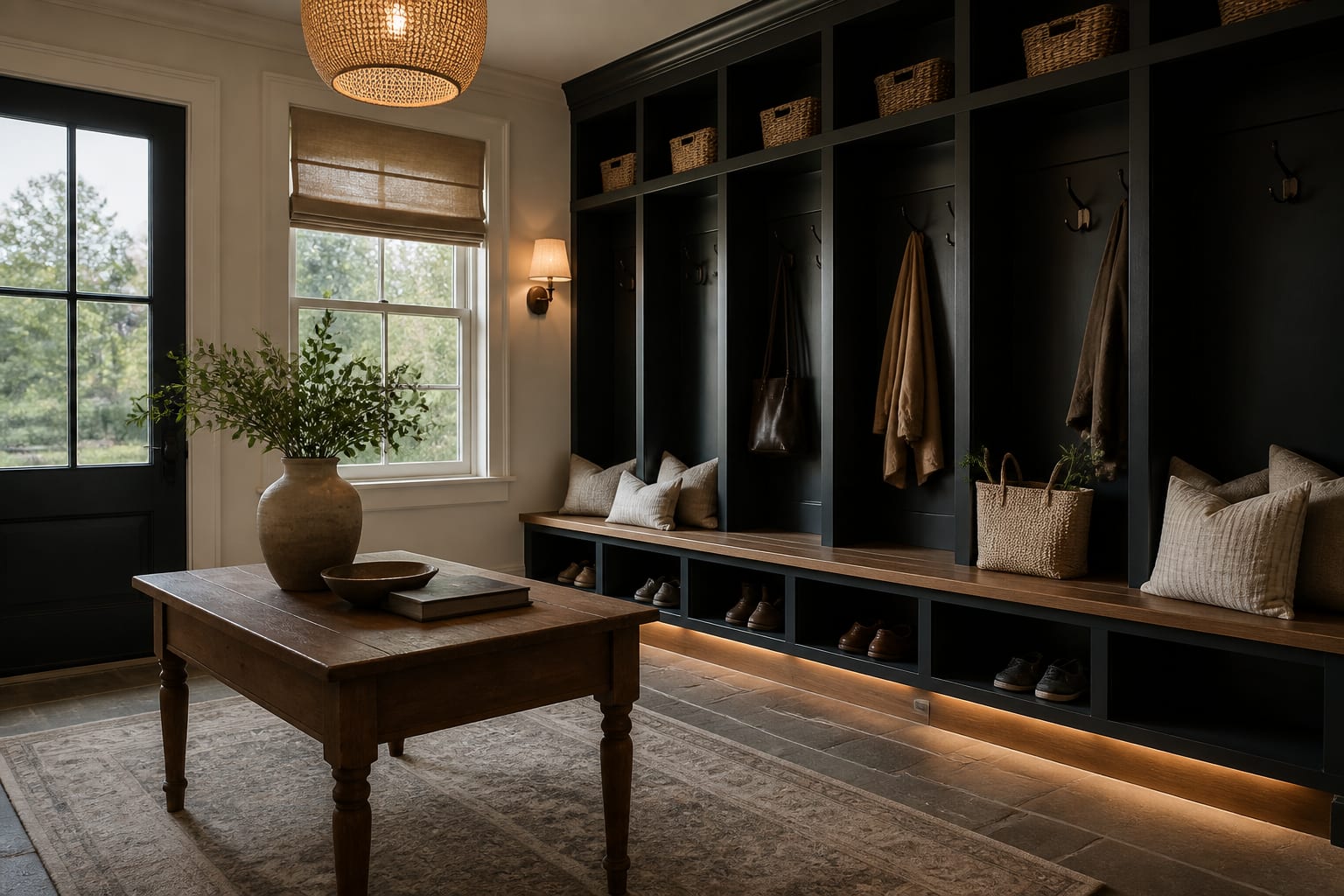
A well-built mudroom locker gives each person a 12 to 16 inch wide column, an 18 inch bench for removing shoes, hooks staggered for kid and adult heights, an upper shelf for seasonal gear, and open shoe storage underneath. Size every element to your family's height and gear, not a generic template, and the entry stops being a pile.
How wide should each mudroom locker be?
Width per person determines whether lockers feel generous or cramped. Plan 12 to 16 inches per column, enough for a hanging coat plus a backpack without sleeves tangling. Lean toward 16 inches for adults with bulky winter coats; 12 inches suits small children and fits more columns on the same wall.
Depth matters too: aim for 14 to 18 inches so a coat hangs without crushing and a shoe bin fits underneath. Count family members and add one shared column for guests or sports gear if space allows. A four-person layout runs roughly 56 to 64 inches total, fitting most mudroom or garage-entry walls; narrower 12 inch kid columns paired with one 16 inch adult column makes tight walls work.
See also our guide to Mudroom Ideas for more layout options.
What is the right bench height?
The bench is where shoes go on and off, so its height decides how usable the whole locker is. An 18 inch seat works for the widest range of users, matching a standard dining chair. Build it 16 to 18 inches deep so it supports the thighs without jutting into the walking path.
Leave 30 to 36 inches of clearance in front so someone can bend over to tie shoes and stand back up. The 18 inch height also opens a generous space underneath for shoe storage, whether open cubbies, pull-out bins, or a lower shelf. Use solid wood or a wipeable top rather than upholstery, and anchor the bench to wall studs so it doubles as a step for the upper shelf.
For more on this, read Mudroom Bench Storage Ideas.
How high should hooks and shelves go?
Hook height is where lockers most often fail children, who can't reach adult-set rows. Mount kid hooks around 38 to 42 inches so a young child hangs a coat unassisted, and adult hooks near 60 inches for longer coats needing clearance. In a shared column, run both heights, with lower hooks handling smaller items.
Double hooks hold more in the same width, letting one column carry a coat, backpack, and hat. Set an upper shelf at 60 to 72 inches for seasonal storage: winter gloves and hats, or summer sunscreen and pool bags. Label baskets by person or season so the high shelf stays organized instead of becoming a forgotten dumping ground.
What storage and materials hold up in a mudroom?
Below the bench is prime real estate for shoes that otherwise pile at the door. Open cubbies about 12 inches wide and 8 to 10 inches tall hold a pair of adult shoes each, while a pull-out bin hides clutter behind a clean front. Give wet boots a removable rubber or metal tray with a lip so runoff stays off the floor.
Materials decide how lockers age in a high-traffic, weather-exposed entry. Use moisture-resistant MDF or plywood with a durable paint or laminate finish rather than raw particleboard, which swells when wet. Pair a wipeable bench top, washable wall paint or beadboard, and a sealed or tile floor to shrug off mud, salt, and snowmelt.
Bring the look home with Re-Design
Built-in lockers are a commitment, so it helps to preview the entry wall virtually before a carpenter measures anything. Upload a photo of your mudroom and test how many 12 to 16 inch columns fit, where the 18 inch bench lands, and whether the upper shelf clears the door swing. Seeing staggered kid and adult hook rows against your real wall confirms the layout fits your family before the build starts.
Frequently Asked Questions
How wide should each mudroom locker be per person?
Plan 12 to 16 inches of width per column, enough for a hanging coat plus a backpack without sleeves tangling between neighbors. Lean toward 16 inches for adults with bulky coats and 12 inches for small children, which lets more columns fit along the same wall.
How high should a mudroom bench be?
An 18 inch seat height works for the widest range of users, matching a standard dining chair so adults and kids can both sit to deal with laces. Build it 16 to 18 inches deep with 30 to 36 inches of clearance in front for bending over comfortably.
What height should mudroom hooks be for kids versus adults?
Stagger them: mount kid hooks around 38 to 42 inches so a young child hangs a coat unassisted, and an adult row near 60 inches for longer coats needing clearance. Double hooks let one column carry a coat, backpack, and hat in the same narrow width.
What materials hold up best in a mudroom?
Use moisture-resistant MDF or plywood with a durable paint or laminate finish, never raw particleboard, which swells when wet. Pair a wipeable bench top, washable wall paint or beadboard, and a sealed or tile floor to shrug off mud, salt, and snowmelt.