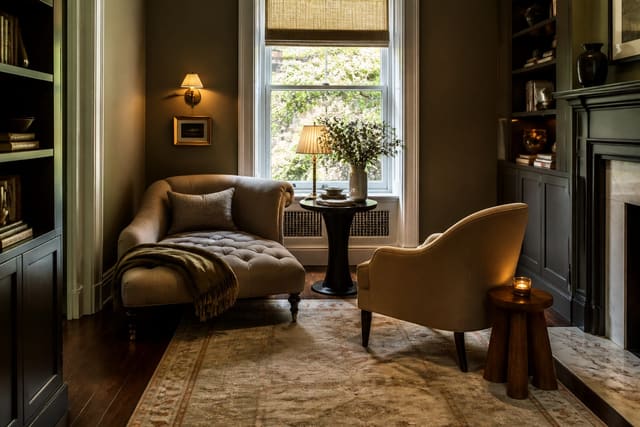
Most people look at an awkward alcove, a bay window, or the dead space under a staircase and see a spot for a plant they will forget to water. That is a waste of square footage you already paid for. The better move is to give that corner one clear job, then size it like a real piece of furniture instead of cramming in a leftover chair. A nook works when it has a defined purpose, the right clearances, and its own pool of light. Get those three things correct and a three-foot corner can outperform a room twice its size.
Start by giving the nook one job
The difference between a nook that gets used daily and one that becomes a junk shelf is purpose. Decide up front whether the corner is for reading, eating, working, or storage, because that single choice sets every dimension that follows. A reading nook wants a deep seat and a focused lamp. A breakfast booth wants a table at the right height and a wipeable cushion. A work corner wants a 24-inch-deep surface and a task light that will not bounce off a screen.
When you try to make one corner do everything, it does nothing well, and the indecision shows. Pick the job that matches the traffic the corner already gets. A landing you pass twenty times a day is a poor place to read in peace but a fine spot for a slim console and a piece of art. A quiet bedroom corner that nobody walks through is exactly where a deep chair and a reading nook setup will actually get used. Match the function to the foot traffic and the nook designs itself.
Size the seating like real furniture
The most common nook failure is seating that looks charming and feels terrible. A built-in bench is still a seat, so it follows the same rules as any chair. Build the seat platform 18 inches off the finished floor and 18 to 20 inches deep, which lets an adult sit with feet flat and knees at a comfortable angle. Go deeper than 20 inches and you need a stack of pillows just to reach the backrest, which eats the space you were trying to save.
For a breakfast booth, set the table so its top sits 12 inches above the seat, the same drop you find in any well-built dining setup. That usually means a 30-inch table over an 18-inch bench. Leave 24 inches of width per person along the bench so nobody is wedged shoulder to shoulder. If the nook is a corner banquette, plan for the inside corner to be the least usable seat and do not count it in your capacity. A cushion of 2 to 3 inches of foam with a firm wrap holds its shape far longer than a soft 4-inch pad that flattens in a season.
Clearance is the spec people skip. You need at least 24 inches to slide into a fixed banquette seat, and a full 36 inches if the path doubles as a walkway. Crowd those numbers and the nook becomes a place people avoid.
Light it like a destination
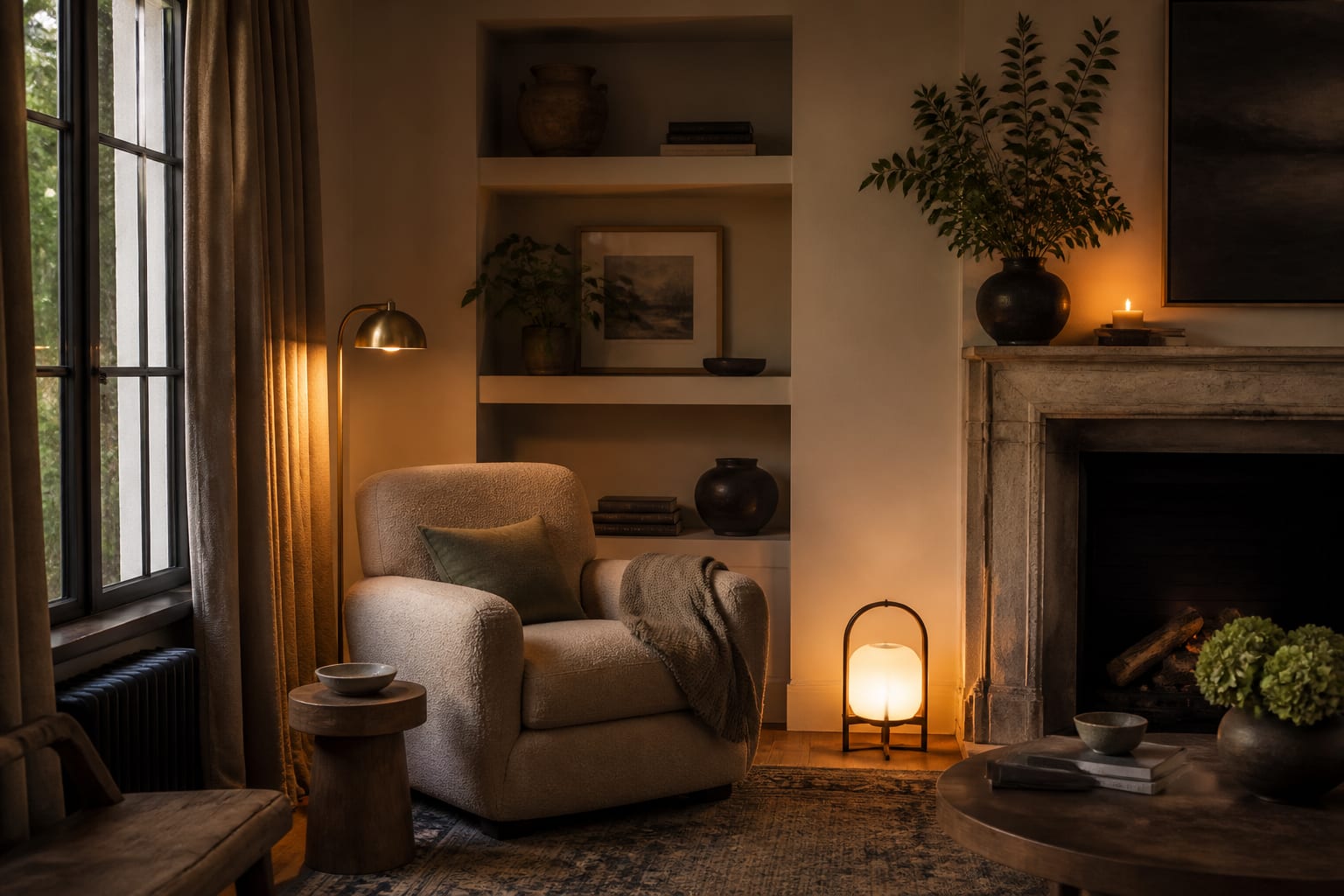
A corner reads as a real nook the moment it has its own light. Overhead ceiling light flattens the space and makes it feel like part of the room it sits in, not a retreat carved out of it. Give the nook a dedicated source instead. A plug-in swing-arm wall lamp mounted 15 to 20 inches above the seat throws a reading pool exactly where you need it without eating surface space. A small pendant dropped so its bottom sits 30 to 36 inches above a booth table puts warm light on the table without glaring across it.
Stick with 2700K bulbs for a lounging or reading nook so the corner feels warm after dark, and step up to 3000K only if the nook is a work surface where you want a crisper light. Put the fixture on its own switch or a smart plug so the nook can glow while the main room stays dim. That single pool of light is what signals the corner is somewhere to settle in, and it costs less than $40 to add.
Nook ideas worth stealing
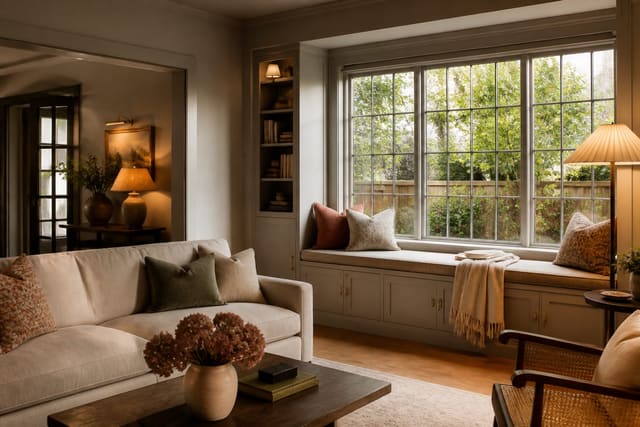
If you are staring at a corner and drawing a blank, start here. Each of these turns a specific kind of dead space into something useful: - Build a window-seat reading nook into a bay window with a 20-inch-deep cushioned lid that lifts for blanket storage underneath. - Tuck an L-shaped breakfast banquette into a kitchen corner, with the bench seats hinged for hiding seasonal serving ware. - Slide a 24-inch-deep desk into a closet, add a counter-height stool, and close the doors on the whole office at the end of the day. - Floating shelves and a single deep chair turn the end of a hallway into a quiet reading corner that the rest of the house walks past. - Carve a pet nook under a stair run with a cushioned base and a low arched opening so the dog bed stops blocking the hall. - Mount a fold-down 14-inch shelf and a stool in an entry corner for a drop-everything spot that folds flat when nobody needs it. - A daybed in a tall stair landing becomes a sunny napping nook, with baskets below for the throws and books it collects.
A reading or napping nook pairs especially well with a window seat when you have the natural light, since the glazing does half the design work for you.
Preview your nook in Re-Design before you build
A built-in is expensive to redo, so the worst time to discover the seat is too shallow or the bench overwhelms the corner is after the carpenter has framed it. Skip that gamble. Upload a photo of the actual corner into Re-Design and preview a window seat, a banquette, or a tucked-in desk in the exact space before anyone cuts a board. You can test a deep lounging cushion against a slim bench, try a painted built-in versus stained wood, and see how a pendant or sconce changes the mood of the corner. Seeing the proportions in your own room, against your own walls, tells you in seconds whether the idea fits or fights the space, so you commit to a layout you have already watched work.
Frequently Asked Questions
How deep should a built-in nook seat be?
Build the seat platform 18 to 20 inches deep and 18 inches off the floor, the same proportions as a comfortable dining chair. That depth lets an adult sit with feet flat and back supported without a wall of pillows. Going past 20 inches forces you to add cushions just to reach the backrest, which wastes the very space you were trying to conserve in a small corner.
What is the best corner in a house for a nook?
The best corners are ones that are already underused and not on a main path. Bay windows, stair landings, closet bump-outs, and the dead end of a hallway top the list. Match the corner to a job that fits its traffic: a quiet bedroom corner suits reading, while a busy landing is better for a slim console than a place to sit and concentrate.
How do I light a reading nook?
Give the nook its own light source rather than relying on the room's overhead fixture. A plug-in swing-arm lamp mounted 15 to 20 inches above the seat puts a reading pool right where you need it. Use a 2700K bulb for warmth, put it on its own switch or smart plug, and the corner instantly reads as a destination instead of leftover space.
Can I add a nook without a remodel?
Yes. Plenty of nooks need no construction at all. A deep chair, a floor lamp, and a small bookshelf make a reading corner anywhere. A bistro table and two chairs create a breakfast nook in a kitchen corner. A plug-in wall lamp and a cushion turn an existing window ledge into a seat. Save the built-ins for spots where you want hidden storage or a permanent footprint.