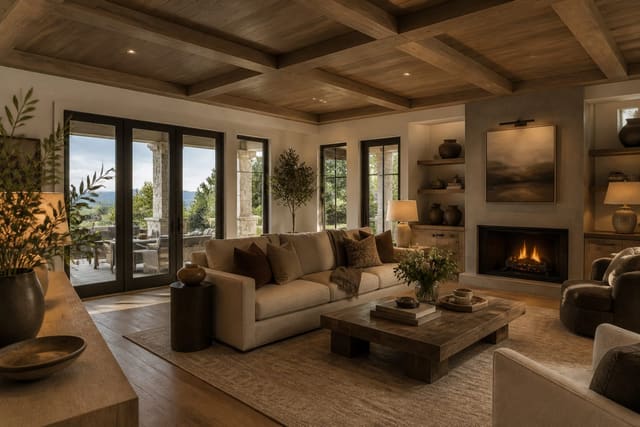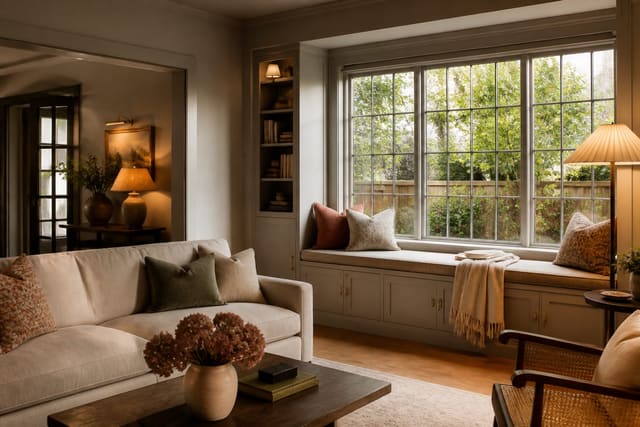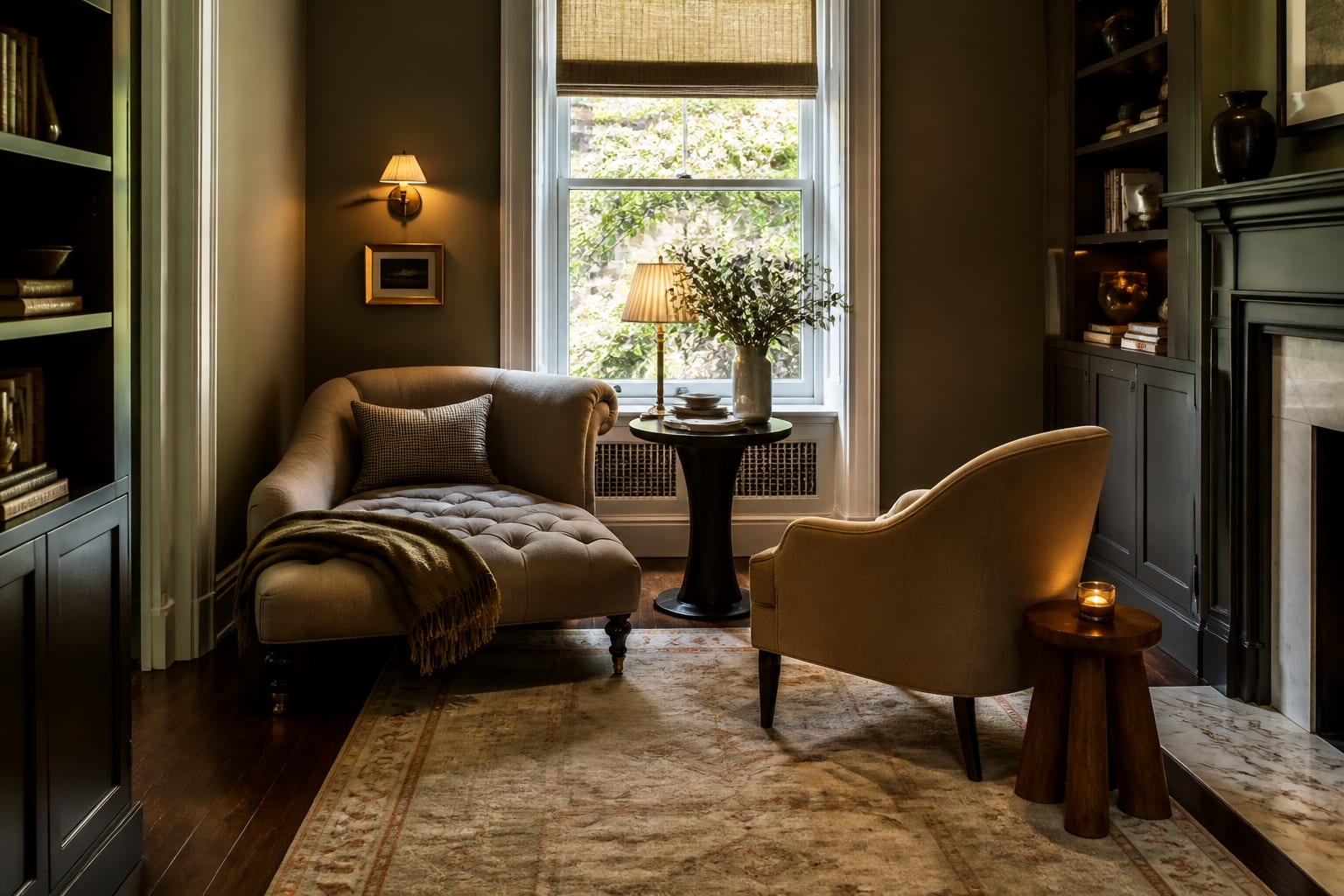
A reading nook fails when it looks good in a photo but hurts your back after ten minutes. The best nooks are built around the body first and the aesthetic second, which means seat depth, back support, and a light you can aim matter more than the throw blanket. I push clients toward a defined corner with a wall behind you, because a sense of enclosure is what makes a space feel safe enough to disappear into a book. Get the bones right and the styling almost takes care of itself.
Where should a reading nook actually go?
Location decides whether a nook gets used or becomes a dust-collecting display. I look for a corner that catches daylight for part of the day, sits away from the main traffic path, and has a wall you can lean a chair or bench against. A spot beside a window is the obvious favorite, because morning or afternoon light reduces the strain that drives people back to the couch. But windows are not the only good answer. The dead corner of a bedroom, the wide landing at the top of a staircase, and the awkward alcove beside a fireplace all make strong candidates because they are already semi-enclosed. Avoid placing a nook directly under a ceiling vent, which will make you cold and restless within minutes. You also want enough clearance that a side table and a floor lamp do not crowd a doorway. If your only option faces a blank wall, lean into it with art or a tall plant so your eye has something soft to land on between chapters. The goal is a pocket of the home that feels separate without requiring a separate room. When the corner already suggests boundaries, you spend far less on furniture trying to invent them. A nook that fights its surroundings never settles, so choose the spot that wants to be quiet and let the rest of the room continue its busier life around it.
See also our guide to Statement Ceiling Ideas for more on reading nook ideas.
What seating gives you hours of comfort?
Comfort over time, not first impressions, is the test that separates a real reading chair from a prop. The classic answer is a deep armchair with a high back that supports your head when you tilt it back to think. Look for a seat depth around twenty inches with firm cushioning, because a sofa-soft seat that swallows you feels great for five minutes and ruins your posture by minute thirty. A wingback or a chair with defined arms gives you a place to rest a book or prop an elbow, which sounds minor until you spend an evening without it. Window seats are the romantic option, and they work beautifully when you add a thick, supportive cushion and several pillows against the cold glass and hard frame behind you. If floor space is tight, a chaise or a generous accent chair with an ottoman buys you the ability to stretch your legs, which most people underrate. Pair any chair with a footrest, since elevating your legs slightly takes pressure off your lower back during long sessions. Test the height too: your feet should rest flat or near flat, and the seat should let you rise without a struggle. Upholstery matters for the long game. Choose a fabric that resists pilling and hides the inevitable coffee splash, like a tight-weave performance textile, so the nook ages well rather than looking tired after one winter of heavy use.
For a related angle on reading nook ideas, read Window Seat Ideas.
How do you light a nook without straining your eyes?
Lighting is where most reading nooks quietly fail, because an overhead fixture throws shadows across the page and creates glare. The fix is a dedicated, aimable task light positioned behind and to the side of your shoulder, so the beam falls onto the page rather than into your eyes. A floor lamp with an adjustable arm or a swing-arm wall sconce both do this well, and the wall version frees up floor space in a tight corner. Aim for a warm-to-neutral bulb in the range that feels like late-afternoon sun, since cool blue light keeps your brain alert when you are trying to wind down at night. Brightness should be enough to read crisp text without squinting but not so harsh that the rest of the room disappears into blackness, which strains your eyes through constant contrast adjustment. I like a small amount of ambient light in the background, a dimmed lamp or a candle across the room, so the page is the brightest thing but not the only lit thing. Put the task light on its own switch or a smart plug so you can dim it as the evening wears on. If the nook sits by a window, add a sheer or a blind that softens midday glare without killing the view. Layering matters here: one strong reading light, one gentle background source, and control over both. Get that combination and your eyes stay comfortable for hours instead of tiring after a single chapter.
How should you style and store books in the nook?
Styling should make the corner feel like yours without burying the function under decoration. Start with the surface you will actually use: a small side table or a stack of sturdy books sized to hold a mug, a phone, and reading glasses within easy reach. Storage is the next priority, and the smartest move is keeping your current rotation close while sending the rest to shelves elsewhere. A narrow bookcase, a wall-mounted ledge, or a basket on the floor all keep five to ten books at hand without crowding the seat. Texture does the emotional work. Layer a chunky knit throw over the chair arm, add two or three cushions in different weaves, and put a soft rug underfoot so your feet land on something warm. Keep the palette calm and slightly warmer than the rest of the room, since muted tones lower the visual noise that competes for your attention. A single plant introduces life and softens the hard lines of furniture and shelving. Resist the urge to over-accessorize. Every object you add is something your eye has to ignore while reading, so edit ruthlessly and keep only what earns its place. Hang one piece of art or a small mirror to reflect light if the corner feels dim. The finished nook should look gathered rather than staged, like a place a real person retreats to most evenings. When the styling supports the act of reading instead of distracting from it, the corner becomes the seat everyone in the house quietly competes for.
- Tuck a deep armchair into a corner with a swing-arm lamp aimed over your shoulder
- Build a cushioned window seat with thick padding and pillows against the cold frame
- Hang a wall-mounted ledge for your current reads to keep the floor clear
- Layer a chunky throw, mixed-weave cushions, and a soft underfoot rug for warmth
- Add a small side table sized for a mug, glasses, and your phone
- Place a tall plant beside the chair to soften the hard lines and add life
- Use a sheer blind to cut midday glare without sacrificing the daylight
- Define the zone with a dimmable background lamp so the page stays the brightest point
Bring the look home with Re-Design
Before you commit to a chair size or paint color, upload a photo of the corner to Re-Design and preview options in seconds. You can test a deep armchair against a window seat, swap throw and rug colors, and see how a warmer palette reads in your actual light. It is the fastest way to avoid ordering a chair that overwhelms the space or a fabric that clashes with your floor.
Frequently Asked Questions
How much space do I need for a reading nook?
Less than people expect. A workable nook fits in about a four-by-four-foot corner, enough for a chair, a slim side table, and a lamp. Window seats use even less floor area. The key is clearance so the seating does not block a walkway, plus enough room to fully extend your legs comfortably.
What is the best chair for a reading nook?
A firm, high-backed armchair with a seat depth around twenty inches gives the upright support long reading sessions demand. Defined arms hold a book or a drink, and a matching ottoman lets you stretch your legs. Avoid overly soft, deep sofas, which feel cozy briefly but ruin your posture within half an hour.
How do I make a reading nook feel cozy?
Layer texture and control the light. Add a chunky throw, several cushions in different weaves, and a soft rug underfoot. Use one warm, aimable task light plus a dim background source so the page glows without harsh contrast. A sense of enclosure, achieved with a wall behind you, does most of the cozy work.