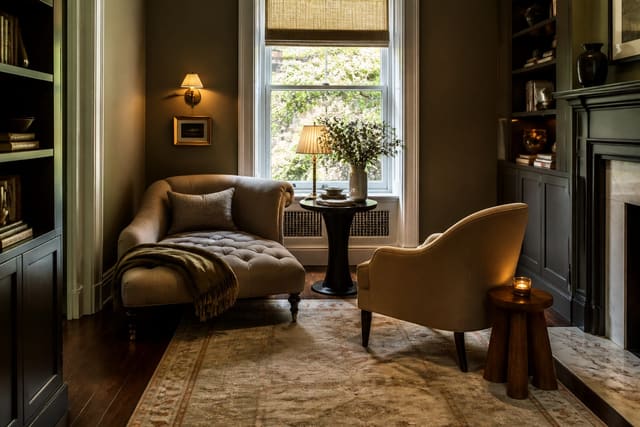
The ceiling is the most overlooked surface in almost every home, and treating it as blank white space is a wasted opportunity. I call it the fifth wall on purpose, because a considered ceiling can do more for a room's character than any throw pillow or gallery wall ever will. A bold ceiling draws the eye up, adds drama, and makes a space feel intentional from top to bottom. It is also one of the few design moves that genuinely surprises people, since so few rooms have one. Done with the right scale, a statement ceiling reframes the entire space below it.
Should you paint the ceiling a bold color?
Painting the ceiling is the lowest-risk way to make a big statement, and it is where I steer most people first. A saturated color overhead instantly redefines a room, and because paint is reversible, the stakes feel low even when the effect is dramatic. Deep, moody shades like charcoal, forest green, or navy create intimacy and work beautifully in rooms you want to feel cozy, such as a bedroom, a dining room, or a study. Counterintuitively, a dark ceiling can make a room feel larger by blurring where the walls end, since the eye stops registering a hard boundary overhead. For a softer move, carry the wall color up onto the ceiling so the whole envelope reads as one continuous, enveloping shade, which is a designer trick that makes modest rooms feel considered and complete. A high-gloss finish on the ceiling reflects light and adds a lacquered, jewel-box quality, though it demands a smooth surface because gloss shows every flaw. Color drenching, taking one shade across walls, trim, and ceiling, has become a favorite for exactly this reason. If a fully painted ceiling feels like too much, a subtle tint a shade or two off the walls still adds warmth without shouting. The room's light matters: test the color overhead before committing, because shades read very differently when light bounces down rather than across. Paint is the gateway to ceiling design, the move that proves the fifth wall is worth your attention before you invest in anything more permanent.
See also our guide to Reading Nook Ideas for more on statement ceiling ideas.
When does ceiling wallpaper make sense?
Wallpaper on the ceiling is the boldest statement in this entire category, and it pays off most in rooms where you want guests to stop and look up. Dining rooms, powder rooms, entryways, and bedrooms are the natural homes for it, because these are spaces people linger in or pass through deliberately, and a surprising ceiling rewards the glance upward. A patterned ceiling adds depth and personality that flat paint cannot match, whether you choose a moody botanical, a metallic geometric, or a subtle textured grasscloth. The trick is matching the pattern's scale to the room. A large, sprawling print can overwhelm a small space, while a tight, intricate pattern reads as rich and immersive in a powder room where the whole surface is close overhead. I often pair a papered ceiling with quieter walls so the two do not compete, letting the ceiling be the clear hero. In a bedroom, papering only the ceiling above the bed creates a canopy effect that frames the space and makes the room feel custom. Practically, ceiling wallpaper is more demanding to install than wall paper, so it is one of the few ceiling moves worth hiring out unless you are genuinely experienced. Removable peel-and-stick options lower the commitment for renters and the hesitant, letting you test a bold idea without permanent consequences. The reason wallpaper wins for impact is simple: a ceiling is the one surface a guest does not expect to be decorated, so a beautiful pattern overhead lands as a genuine surprise every time.
For a related angle on statement ceiling ideas, read Window Seat Ideas.
What architectural treatments add ceiling character?
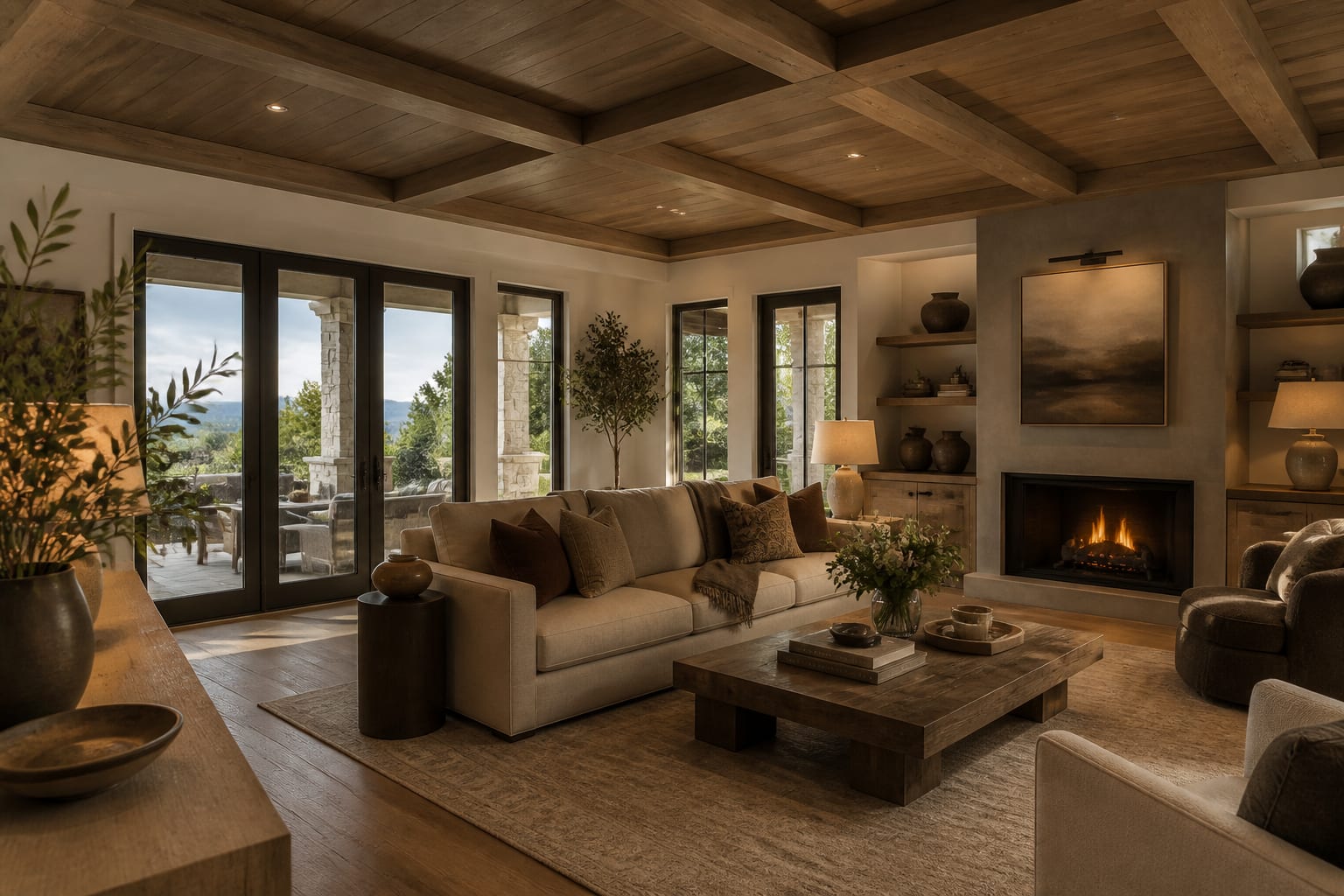
Beyond color and pattern, architectural treatments build character into the ceiling through texture, shadow, and craftsmanship that paint can only suggest. Exposed or applied wood beams are the classic choice, adding warmth and a sense of structure that grounds a room, equally at home in a rustic farmhouse and a clean modern space depending on the wood and spacing. Coffered ceilings, with their grid of recessed panels framed by molding, bring formal depth and a tailored quality that suits dining rooms and libraries. For a lighter touch, simple applied molding in a geometric pattern, or a ceiling medallion centered around a light fixture, adds detail without a major build. Planked ceilings, using tongue-and-groove or shiplap boards, deliver texture and a crafted feel that works wonderfully in kitchens, porches, and cottages. Tin or pressed-metal tiles offer vintage charm and intricate pattern, reflecting light in a way flat surfaces never will. The key consideration with all of these is ceiling height. Beams and coffers add visual weight and can crowd a low room, so they shine where you have height to spare, while a low ceiling stays better served by paint or a slim molding. These treatments cost more and commit you further than paint or paper, but they read as permanent architecture rather than decoration, which is precisely their appeal. A room with a well-built ceiling feels built rather than decorated. When you want character that looks original to the home, texture and millwork overhead deliver it in a way no flat finish can match.
How do you choose the right ceiling treatment for your room?
Choosing the right treatment comes down to ceiling height, room function, and how much commitment you want. Start with height, because it rules out certain moves immediately. Tall ceilings can carry anything, including dark colors, heavy beams, and bold patterns that would crush a low room. A standard or low ceiling stays safer with light-to-medium paint, glossy finishes that bounce light, or slim molding that adds detail without weight. Next, consider the room's job. A bedroom or dining room invites drama and intimacy, so a dark color or a papered ceiling rewards the experiment. A kitchen or bathroom suits durable, washable finishes and benefits from planking or paint that handles moisture. Hallways and entryways are perfect low-stakes places to surprise people, since you only pass through and a bold ceiling there delights without dominating daily life. Match commitment to confidence. Paint is reversible and cheap, making it the right first step for the cautious. Wallpaper raises the stakes but peel-and-stick versions soften the risk. Architectural work is the deepest commitment and reads as permanent, so reserve it for spaces you are sure about and homes you plan to stay in. Always factor in the lighting, because a treatment that looks rich in a bright room can feel oppressive in a dim one, and vice versa. The throughline across every good ceiling decision is intention. A ceiling treatment should feel deliberate, scaled to the room, and connected to everything below it, so the whole space reads as one considered design rather than a gimmick stuck overhead.
- Paint the ceiling a deep charcoal or forest green to add instant cozy drama
- Color drench a small room by carrying one shade across walls, trim, and ceiling
- Wallpaper a powder room ceiling with a tight, intricate pattern for an immersive effect
- Create a canopy by papering only the ceiling above the bed in a bedroom
- Install exposed or applied wood beams to ground a room with structure and warmth
- Add a coffered grid of recessed panels and molding for formal dining or library depth
- Use a high-gloss lacquered finish overhead to reflect light and add a jewel-box quality
- Center a ceiling medallion around a light fixture for detail without a major build
Bring the look home with Re-Design
A statement ceiling is hard to picture from a paint chip, which is exactly why you should preview it. Upload a photo of your room to Re-Design and see a deep ceiling color, a bold wallpaper, or wood beams rendered against your actual walls, trim, and lighting. You can compare a charcoal ceiling to a papered one in seconds, judge the scale honestly, and commit only to the treatment that makes the whole room feel intentional.
Frequently Asked Questions
Does a dark ceiling make a room feel smaller?
Not necessarily. A dark ceiling can actually make a room feel larger by blurring where the walls end, so the eye stops registering a hard boundary overhead. It adds intimacy and drama, which suits bedrooms and dining rooms. The effect depends on lighting, so test the color in your room before committing to the full ceiling.
What room is best for a statement ceiling?
Rooms where people linger or pass through deliberately work best, such as dining rooms, bedrooms, powder rooms, and entryways. These spaces reward a glance upward with a genuine surprise. Hallways are great low-stakes options. The key is matching the treatment's boldness to the room's height and function so it feels intentional rather than overwhelming.
Is a statement ceiling expensive?
It depends entirely on the treatment. Paint is the cheapest and most reversible option, making it an easy first move. Wallpaper costs more and is harder to install. Architectural work like beams, coffers, or planking is the biggest investment because it reads as permanent. Start with paint to test the idea before committing to anything structural.