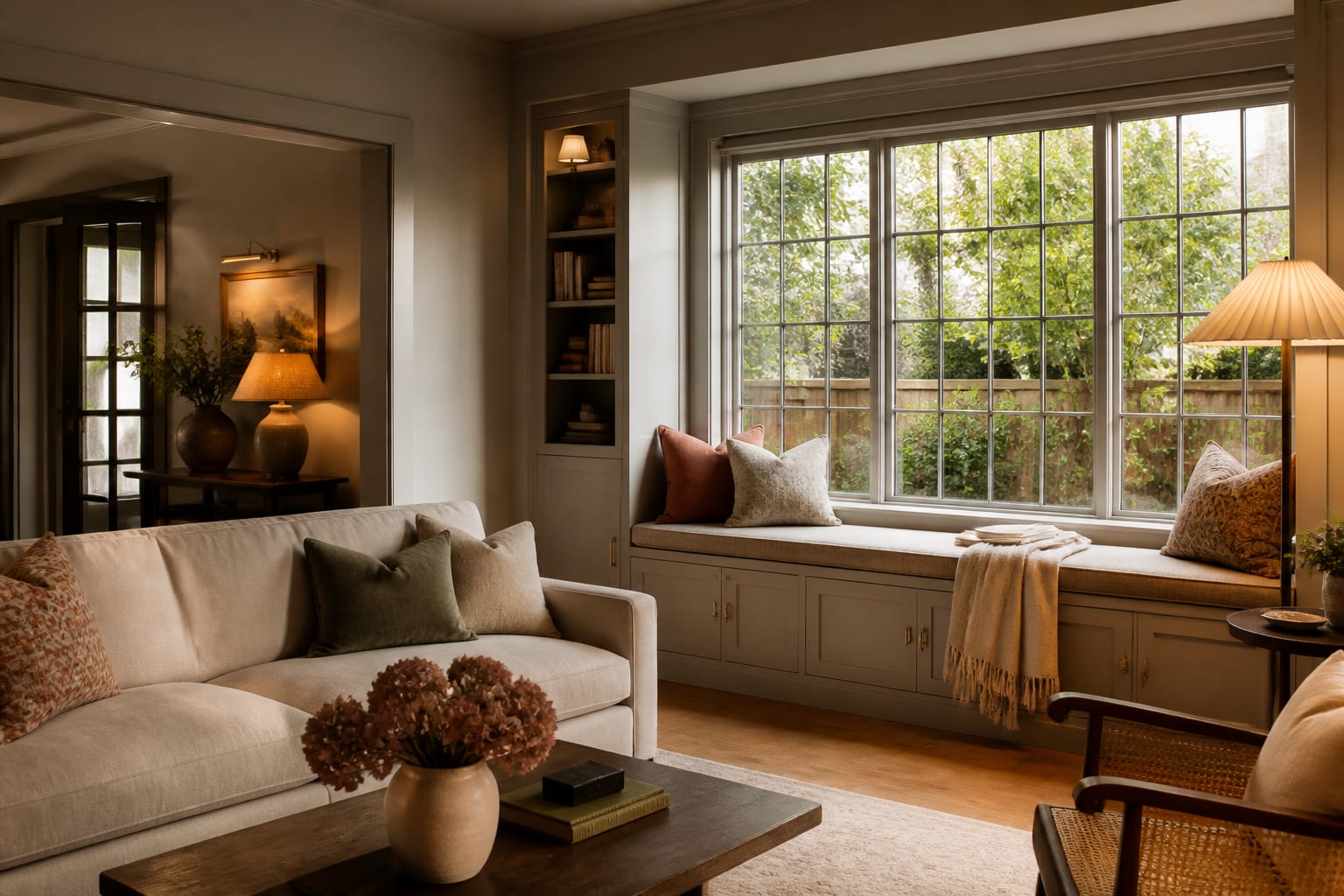
A window seat is one of the highest-return small moves in a home, but most fail because they are built like a shelf instead of a chair. Comfort lives in the numbers: seat height, cushion depth, and back support decide whether anyone sits there or it becomes a catch-all ledge. Get those right and a forgotten bay window becomes the spot everyone fights over with morning coffee. Treat the seat as real seating, borrow the dimensions of a good sofa, and wrap it with storage and soft layers. The window does the rest, pouring in light no chair can replace.
What makes a window seat genuinely comfortable?
Comfort comes down to dimensions borrowed from good furniture, not from whatever leftover space the window allows. Set the finished seat height, cushion included, at 17 to 19 inches off the floor, the same range as a dining chair or sofa, so feet rest flat and standing back up feels natural. Build any lower and adults sink awkwardly; build higher and legs dangle. Depth is the second lever: a seat 20 to 24 inches deep lets someone tuck their legs up and lean back, while a shallow 14-inch ledge only works for perching. If your window opening is shallow, extend the bench out into the room rather than settling for a narrow strip. The cushion itself should be at least 4 inches of high-density foam, ideally 5, because thin pads compress to nothing and the whole point evaporates. A back is what separates a seat from a sill, so either run the bench against a wall and pile firm pillows, or build a low upholstered backrest angled slightly off vertical. For a true lounging nook against a bay, make the seat long enough to stretch out, around 60 inches, and add a bolster at one end. Pay attention to the front edge too; a rounded or chamfered nose stops the cushion from cutting into the backs of knees. None of this is expensive, but skipping it produces the most common failure I see, a beautiful built-in bench that nobody ever actually sits on because it was sized for looks instead of bodies.
See also our guide to Reading Nook Ideas for more on window seat ideas.
How do you build storage into the base?
The cavity under a window seat is prime real estate, and there are two clean ways to use it. Lift-up lids hinged at the back open the entire seat top to a deep bin below, swallowing blankets, seasonal gear, or board games; use soft-close or torsion hinges and a safety stay so the lid never slams on small fingers. The downside is that you must move the cushion and anyone sitting to get inside, so reserve lids for items you reach for occasionally. Front-facing drawers or cabinet doors solve the access problem because you can open them while the seat stays in use, which makes them better for things grabbed daily like shoes, toys, or library books. A common hybrid runs a row of cubbies or baskets along the kick space and a single lift-lid above for bulky bedding. Size the opening generously; a clear interior of 14 to 16 inches deep holds standard storage baskets, and dividing a long bench into two or three compartments keeps contents from sliding into one heap. Ventilate the box with a few discreet holes or a slatted back if you store anything that needs air, like cushions or linens, to prevent musty smells. Match the drawer fronts and door style to the room's other millwork so the bench reads as part of the architecture. Done thoughtfully, a 5-foot window seat can replace an entire dresser worth of storage while doubling as the coziest place in the house, which is hard to beat in a tight floor plan.
For a related angle on window seat ideas, read Statement Ceiling Ideas.
Where does a window seat work best?
Bay and bow windows are the obvious champions because their three-sided projection creates a natural alcove the seat simply fills, and the wrapping glass floods the bench with light from multiple angles. A bay seat that follows the angles, with three cushions meeting at the mullions, feels custom because it is. Dormer windows in attic and upstairs rooms hide another perfect candidate; the kneewall under a sloped ceiling is usually wasted, and a bench there carves out a tucked retreat with a low, sheltering roofline that kids especially love. Kitchen breakfast nooks pair a window seat with a table for a banquette that seats more people in less space than chairs, ideal where square footage is tight. A landing or stair window, often an orphaned spot, becomes a reading perch with a single deep cushion and a sconce. Even a plain flat window benefits when you flank it with two tall bookcases and bridge them with a bench between, manufacturing the alcove that the architecture lacks. That flanking move is my favorite trick for ordinary rooms because it instantly makes a builder-grade window feel designed. Consider what the seat looks out on; a bench facing a garden or a tree earns daily use, while one staring at a fence may want a sheer to soften the view. Orientation matters for comfort too, since a south-facing seat bakes in afternoon sun and may need a shade, while a north window stays cool and even all day long for reading.
How do you style a window seat to feel inviting?
Softness sells a window seat, so layer textiles until the bench practically asks you to sit. Start with the fitted seat cushion in a durable, tight-weave fabric that resists sun fading, then pile on pillows of varying sizes against the back; an odd number, say five or seven, looks collected rather than staged. Mix a couple of larger 22-inch pillows for real back support with smaller lumbar and accent pieces for visual interest. A folded throw at one end signals comfort and gives a quick layer for a chilly read. Keep the color story tied to the room but allow the seat to be a touch richer or more textured, since it is meant to feel like a treat. Window treatments frame the whole composition; Roman shades or simple panels that clear the cushion let light in while softening the hard glass edge, and a sheer behind heavier drapes lets you dim glare without going dark. Add task lighting so the seat works after sunset, a swing-arm sconce or a small table lamp on an adjacent shelf. If the bench flanks bookshelves, style those with books and a few objects so the nook reads as a destination. Ground deeper bays with a small round side table for a mug and a stack of magazines. Finally, edit the storage you tucked below so the visible surfaces stay calm; the magic of a window seat is the contrast between soft layered comfort and the clean architectural lines of the bench it sits on, light pouring over both.
- Fill a bay window with three angled cushions meeting at the mullions for a wrap-around, custom-feeling perch.
- Carve a reading nook into a dormer kneewall under a sloped attic ceiling for a sheltered retreat.
- Build a kitchen banquette window seat that seats more diners than chairs in the same tight footprint.
- Flank a plain window with two tall bookcases bridged by a bench to manufacture an instant alcove.
- Add front drawers under the seat for shoes and toys you grab daily without moving cushions.
- Install lift-up lids with soft-close hinges to hide bulky blankets and seasonal gear below the seat.
- Mount a swing-arm sconce beside the bench so the nook stays usable for reading after dark.
- Turn a stair landing window into a single deep-cushion perch with a sheer to soften harsh glare.
Bring the look home with Re-Design
Wondering whether a window seat will feel cozy or cramped in your space? Upload a photo of the window and Re-Design shows the bench in context, so you can judge seat height against the sill, test cushion colors, and see whether flanking bookcases improve the proportions. Preview a bay build versus a simple flat-wall bench before you measure for millwork, and decide if the nook earns the space it takes.
Frequently Asked Questions
How tall should a window seat be from the floor?
Aim for a finished height of 17 to 19 inches including the cushion, matching a standard chair or sofa. This lets feet rest flat and makes standing up easy. Going lower forces an awkward low crouch, while going higher leaves legs dangling, which is exactly why so many built-in benches sit unused.
Do I need a structural support under a window seat?
For a built-in bench, yes. Frame the base with a ladder of 2x4 supports anchored to the floor and wall studs, then skin it with plywood. This carries an adult's weight plus storage contents without flexing. A freestanding bench can rely on its own legs but should still be pushed tight against the wall for stability.
What is the best cushion for a window seat?
Use high-density foam at least 4 inches thick, wrapped in batting for a soft edge, and covered in a tight-weave fabric rated for sun exposure since the seat sits in direct light. Removable, washable covers with a zipper make cleaning realistic. Thin pads compress flat within weeks and undo all your comfort planning.