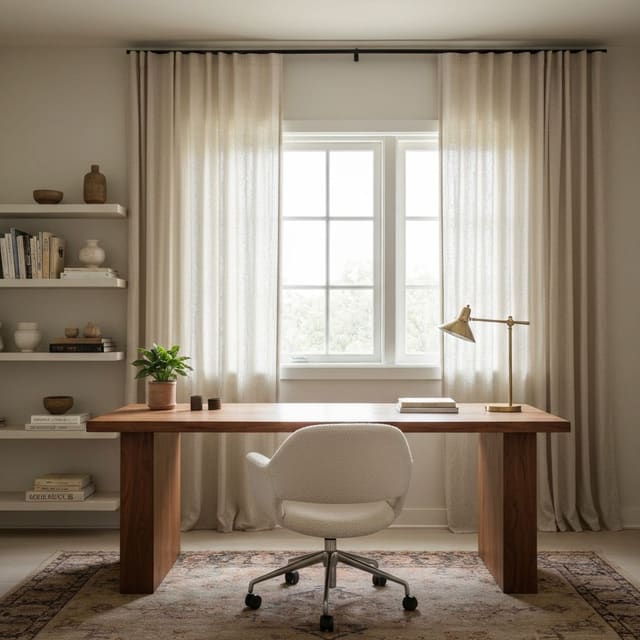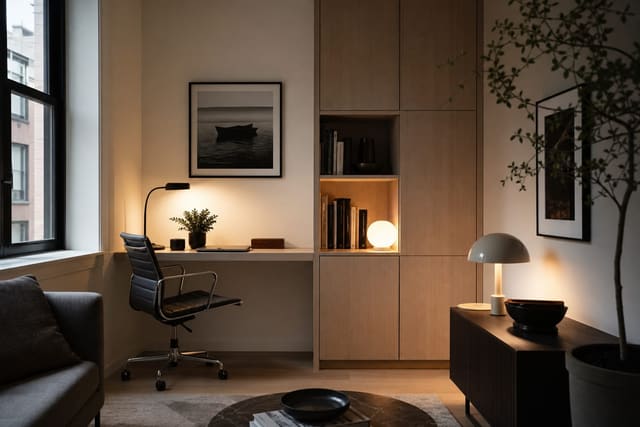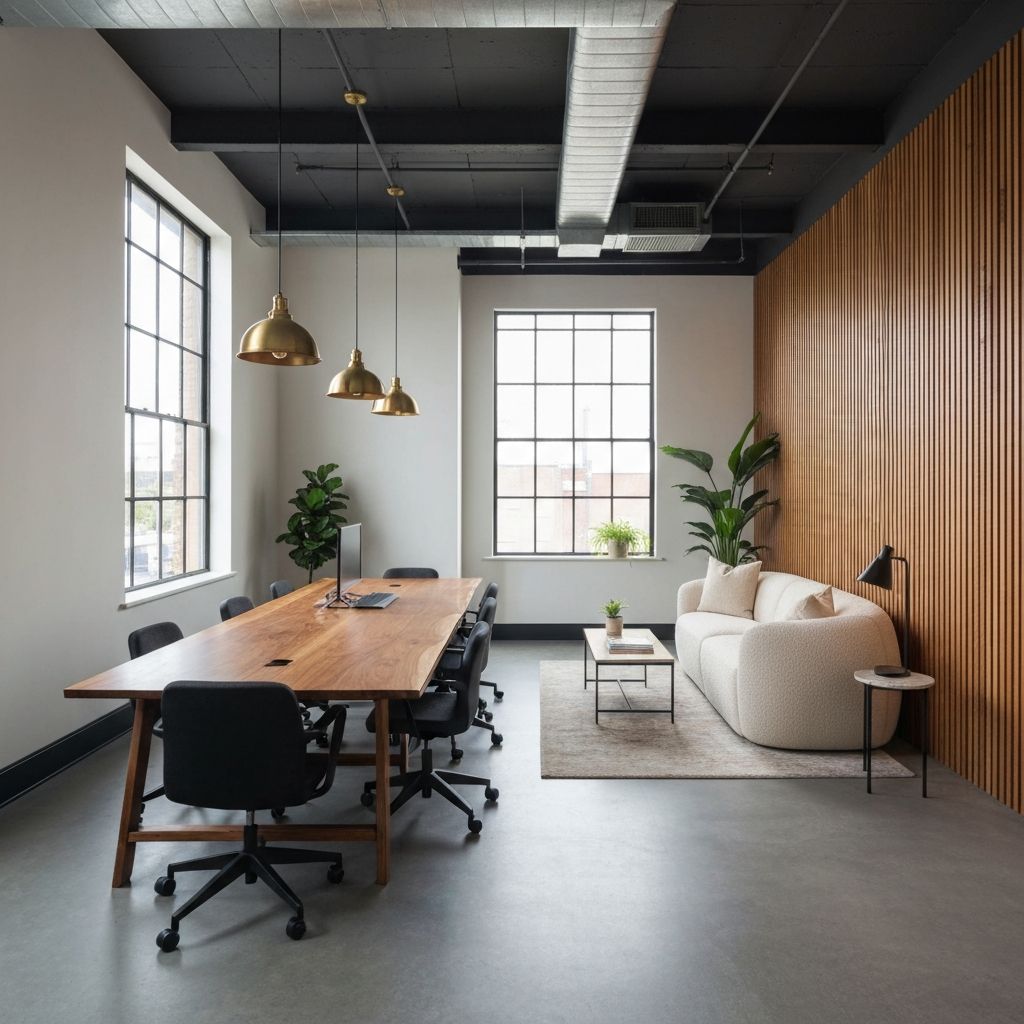
A small business office reads like a real business when each person owns a defined desk wall, the meeting zone is a separate 60-inch round table or banquette (never a desk pushed sideways), and one shared storage and printer wall handles the back-office mess so client-facing zones stay clean. For small businesses, office design has stopped being an aesthetic question and become a strategic one. With hybrid and remote work giving people more options than ever, the office your team actually wants to come into is the one that matters. Office design is now a recruiting tool, a brand expression, a culture document, and a sales asset — all rolled into one. The good news: you don't need a Fortune 500 budget to get any of it right. You just need to make a handful of deliberate decisions before signing a contractor's proposal.
Why small business office design matters more than ever
A well-designed small business office accomplishes four things at once:
- It attracts talent. Candidates form an opinion about your company within thirty seconds of walking in for an interview. A bland, beige office signals an uninspired company. A considered, branded office signals a company worth joining.
- It retains talent. People come into a beautiful office more often, and the ones who come in more often tend to stay longer.
- It closes clients. Sales meetings held in a thoughtful, branded space convert better than meetings held in a generic conference room.
- It compounds your brand. Every photo posted by an employee on LinkedIn or shared by a client is free marketing. Office design that photographs well is brand marketing that runs 24/7.
The fundamentals of small business office design
Every successful small office, regardless of industry, gets the same set of fundamentals right.
- A clear front-of-house. A reception desk, lounge, or coffee bar in the first 30 feet of the office sets the tone for everything that follows. Guests should know within five seconds where to wait and what your company feels like.
- A mix of work modes. People do different kinds of work and need different kinds of space. The right office has focus rooms (single-occupant, soundproof), collaboration zones (a long table or modular seating), phone booths (for video calls), and lounge areas (informal seating).
- One signature element that photographs. A custom mural, a sculptural pendant, a wall of plants, a neon sign of your tagline. One memorable design element drives every employee photo on LinkedIn.
- Layered lighting that flatters faces. Overhead, task, and ambient — at warm color temperatures. Cool fluorescent lighting makes everyone on Zoom look exhausted; warm layered lighting flatters in person and on camera.
- Acoustic treatment. Open offices fail when they're acoustically uncontrolled. Carpet tiles, fabric ceiling panels, and upholstered booths fix this for less than people think.
- A real kitchen or coffee bar. Not a microwave on a counter. A proper coffee setup, good water, and a few benches turn the kitchen into a culture hub.
Test this on your own room photo with ReDesign before you choose the final direction; keep the doorway, walls, windows, main furniture, lighting, and awkward fixed features visible so the preview solves the room you actually have.
For a useful room-planning comparison, keep Home Office Design: Build a Workspace That Helps You Focus, Compact Home Office Ideas: The Minimum Footprint That Still Works, and AI Interior Design: The Complete Guide to What It Does, What It Cannot Do, and When to Use It nearby so this retrofit stays connected to the adjacent lighting, storage, scale, and layout decisions in the same photo-led workflow.
Designing each zone of a small business office
Reception and front-of-house
- A real desk or counter, not a floating table.
- One signature light fixture.
- Two comfortable lounge chairs and a low coffee table.
- A subtle logo on the wall behind the desk.
- A water station, a coat rack, and clear wayfinding signage.
Conference rooms
- One main conference room with seating for 8-10, the largest you'll realistically need.
- A second smaller "huddle" room for 4-6 people.
- Real video conferencing in every room — not a webcam clipped to a laptop.
- Glass walls with frosting or curtains for privacy.
Focus and phone rooms
- One soundproof phone booth per 6-8 employees.
- Comfortable seating, a small surface, and a wall outlet.
- Warm lighting and acoustic absorption inside.
Open work areas
- Mix of desks, communal tables, and lounge seating.
- Real chairs (ergonomic, not aesthetic-only).
- Acoustic panels and zoned lighting.
- A real plant or two — not the dusty fake kind.
Small business office design cost benchmarks
Without renovation, you can transform a small office for $50-$150 per square foot in furniture, finishes, and signage. With renovation (drywall, glass, acoustic ceilings), expect $150-$400 per square foot. AI design tools let you preview directions for free before allocating any of that budget.
Common small business office design mistakes
- Open floor of identical desks. open offices fail acoustically and on focus; a mix of zones is the only layout that survives a full work week.
- Skipping acoustic treatment. reverberant rooms ruin Zoom calls and concentration; soft surfaces are a non-negotiable, not a finishing touch.
- Fluorescent or cool LED overheads. cool light makes every employee look exhausted on camera; 2700K to 3000K across all fixtures fixes it.
- No real kitchen. a microwave on a counter is not a culture move; a proper coffee bar with bench seating is where the team actually connects.
- Conference rooms without real video. a webcam clipped to a laptop is the dead giveaway of a startup that has not figured out hybrid meetings yet.
- A bland reception that signals nothing. an empty waiting bench tells candidates and clients you do not care about the impression; the first 30 feet are brand-marketing real estate.
Use AI design to preview your office before signing a contractor
The single most expensive office mistake is committing to a design direction before seeing it. AI design lets you photograph an empty office or floor plan and preview multiple directions — moody and editorial, bright and modern, biophilic and warm — before you sign a proposal. Walk into a contractor meeting knowing exactly what you want, and you'll save weeks of revisions and tens of thousands of dollars in change orders.
Frequently Asked Questions
How much space does a small business office need per person?
Plan for 50 to 80 square feet per workstation (desk, chair, side storage), 50 to 80 square feet for a 4-person meeting table, and 30 to 50 square feet for a shared printer and storage zone. Use the room photo to compare the visible layout and fixed constraints before committing, because door swings, windows, outlets, storage reach, circulation, and existing furniture decide whether the idea survives daily use.
Should each person have their own desk or share a desk pair?
Dedicated desks per person work best when each role needs a screen setup; shared desks work only when staff rotate days, otherwise productivity drops and territory disputes start. Keep the preview honest by leaving the problem area visible in the frame, then compare one conservative version against one bolder version before you buy lighting, paint, furniture, or storage.
Where should the meeting table go in a small office?
Closest to the entry door so clients walk in and sit down without crossing the work zone; meeting tables tucked at the back force visitors past the printer, supply shelf, and personal workstations. Check the result against ordinary movement first: drawer clearance, chair pullout, walkway width, glare, switch access, and sightlines matter more than a perfect catalog angle.
How do I handle the printer, supplies, and shipping in a small office?
Dedicate one wall to closed shelving and a printer cabinet, ideally near a back door or staff zone; open shelving with paper and supply boxes destroys the professional read in 30 seconds. Use the image to narrow priorities and measurements before ordering anything custom; final purchases still need real dimensions, outlet locations, installation limits, and product clearances.
What lighting setup makes a small office look professional?
Layer 3500K overhead with 3000K desk task lamps and 2700K accent in the meeting zone; mixed warm task light and slightly cooler overhead reads more business-like than pure warm or pure cool. If the preview invents architecture or hides the awkward feature you need solved, rerun it with stricter instructions so the result remains tied to your actual room.
> Try this: Ready to see this on your own room? Open ReDesign and run the preview.
Three transformations to try
1. Three-desk wall with shared printer zone behind 2. Meeting table near entry with closed back-office 3. Banquette meeting nook with adjacent desk pair