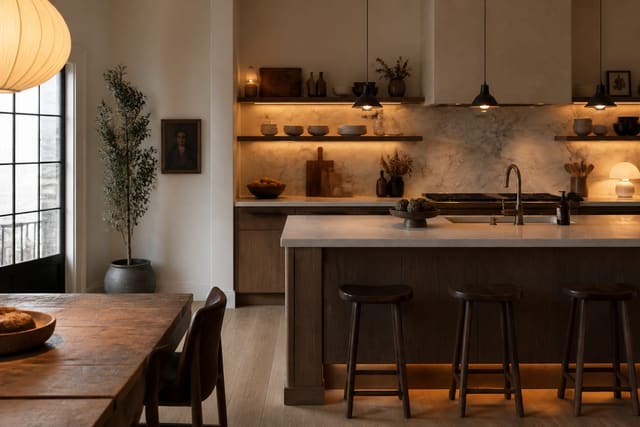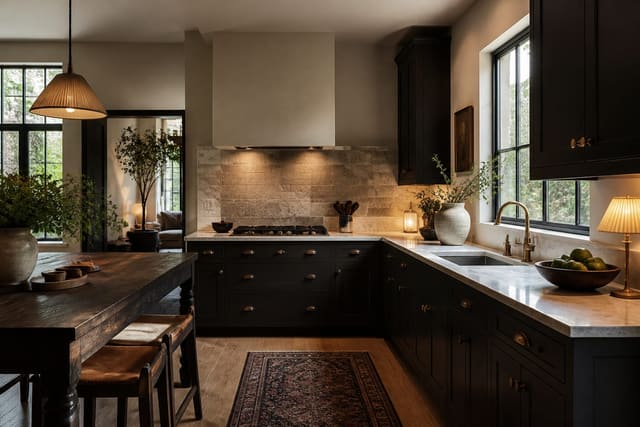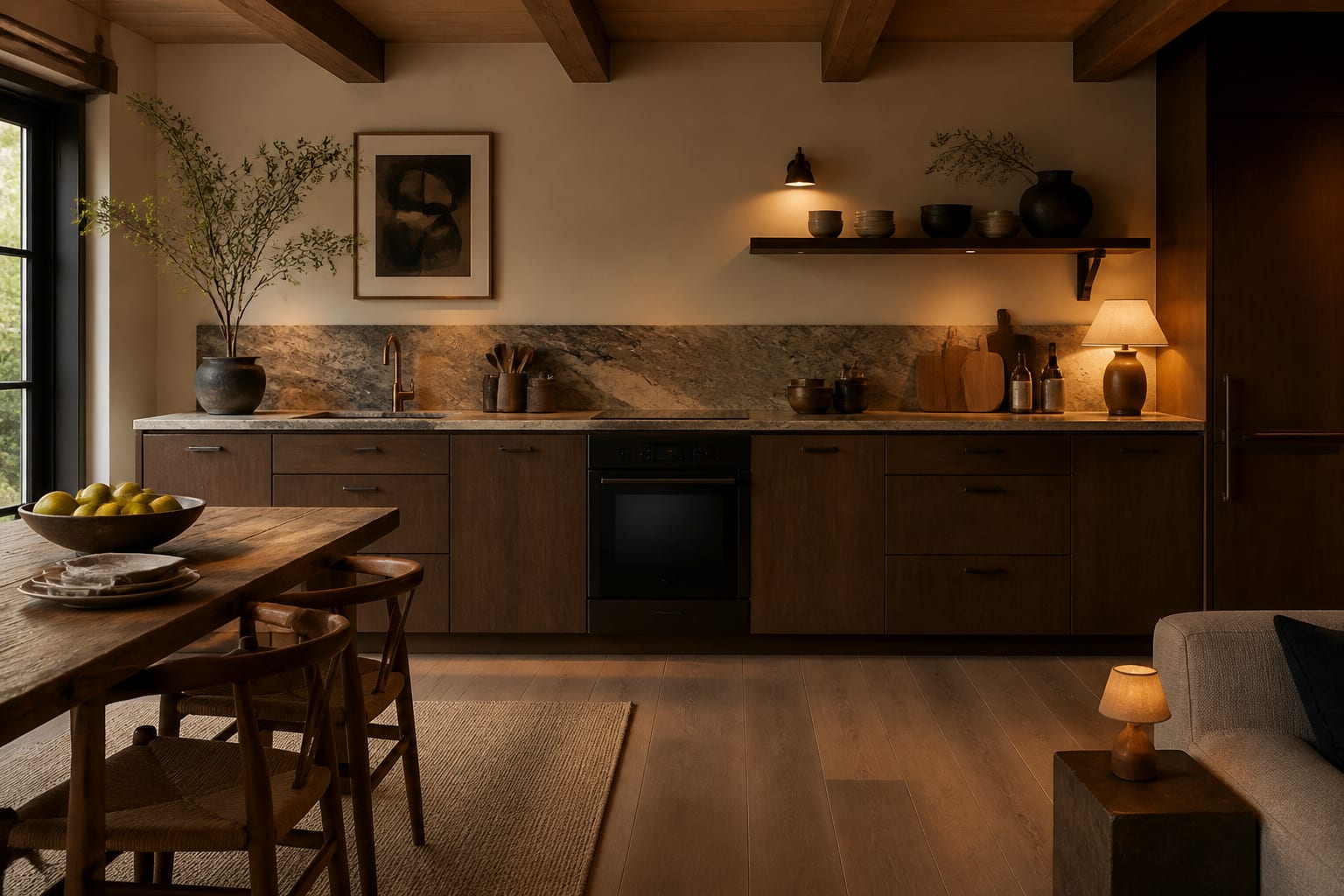
A one-wall kitchen lives or dies by the order of its three workstations, so decide that before you pick a single finish. When the sink, range, and refrigerator share one 10-12 ft run, every inch of counter between them becomes prep, landing, and staging space at once. The single-wall format is honest about its limits, which is exactly why it rewards planning over decoration. Treat the wall as one continuous tool, push storage to the ceiling, and borrow prep room from a freestanding island a few feet away. Done with intent, a single run feels efficient rather than cramped.
How should you order the sink, range, and fridge on one wall?
On a single 10-12 ft wall the appliance sequence does the work that a triangle does in a bigger room, because everything sits in a straight line and you move side to side instead of pivoting. The most reliable order puts the refrigerator at one end, the sink in the middle, and the range at the other end, so unloaded groceries travel toward the wash zone and then toward the cooktop. That flow keeps raw ingredients moving in one direction and shortens the steps a single cook repeats dozens of times a night.
Give the sink a generous middle position because it is the busiest fixture, then protect counter on both sides of it for drying and stacking. The range belongs near the end of the run rather than tight against a wall return, since you want clearance for pot handles and a body standing in front of it. Leave the fridge an end spot where its full door swing opens into open floor, not toward the working counter, so nobody gets pinned against the cabinets during a busy meal.
See also our guide to Open Shelving Kitchen Ideas for more on one wall kitchen ideas.
How much counter and landing space does a single run need?
Counter is the scarcest resource on a one-wall layout, so spend it on the spots that earn it. Aim for a minimum of 18 inches of uninterrupted surface on the side of the sink where you set dirty dishes, and another 24 inches on the side where clean items drain or get put away. Beside the cooktop, hold 15 inches of heat-safe landing so a hot pan always has somewhere to go the instant it leaves the burner.
The refrigerator wants 15 inches of counter on its handle side for unloading bags, which is easy to forget when the fridge sits at the end of the wall. If your total run is closer to 10 feet than 12, shrink cabinet widths rather than these working zones, because a kitchen with no landing space feels broken no matter how pretty it looks. When the math will not fit, that is the signal to pull prep duties off the wall entirely and onto an island.
For a related angle on one wall kitchen ideas, read L Shaped Kitchen Ideas.
How do you add storage and prep space when there is only one wall?
A single wall cannot store everything at standard 36 inch counter and 30 inch upper heights, so the answer is vertical. Carry wall cabinets to the ceiling at 9 or 10 feet and reserve the top tier for seasonal platters and appliances you reach for twice a year. Swap a few base cabinets for deep drawers, which hold pots far better than a shelf you have to crouch and dig through.
Prep room is the other gap, and a freestanding island or rolling cart solves it without rebuilding the wall. Set the island so its near edge sits 36 to 42 inches from the counter face, which is wide enough to open a dishwasher and still squeeze past. A cart on locking casters works in a tight loft because you can roll it against the wall when the floor needs to stay clear. Either piece doubles as casual seating and quietly turns a one-wall kitchen into something closer to a galley.
Does a one-wall kitchen suit apartments and open lofts?
The single-wall format earns its popularity in apartments and lofts precisely because it claims only one wall and leaves the rest of the floor plan open. That openness is a design asset: with no upper cabinets wrapping a corner, the kitchen reads as part of the living space rather than a separate, closed room. Hiding the run behind a matching cabinet front or a tall pantry tower lets it disappear when guests arrive.
The trade-off is that one wall offers less total storage and counter than an L or U, so editing your belongings matters more here than in any other layout. Lean into the strengths instead of fighting them. A continuous backsplash, integrated appliance panels, and lighting tucked under the uppers make a short run feel deliberate and calm. For a studio or a narrow loft galley, that restraint is often the whole point, and it photographs beautifully against an open living area.
Here are the common mistakes to avoid: - Putting the range at the very end of the wall with no landing counter for hot pans. - Letting the refrigerator door swing back over your only stretch of working counter. - Stopping the wall cabinets at standard height and wasting two feet of vertical storage. - Squeezing an island closer than 36 inches and blocking the dishwasher or oven door. - Spreading the three appliances so far apart that the counter between them disappears. - Choosing shallow base shelves instead of deep drawers for the few cabinets you have.
Bring the look home with Re-Design
Before you commit to an appliance order or a new tall-cabinet run, see it in your own space first. With Re-design you upload a photo of your current kitchen wall and preview a single-run layout against your real floor and light in seconds. Try the fridge at the left end, then drag it right, and watch how the counter rebalances. You can test ceiling-height cabinets, a different backsplash, or a small island parked a few feet off the wall, all from one upload, so you spend money on the version you already liked on screen.
Frequently Asked Questions
What is the ideal length for a one-wall kitchen?
A run between 10 and 12 feet fits a standard refrigerator, a 30 inch range, a sink, and the landing counter each needs. Shorter than 10 feet forces compromises on prep space, while much longer than 12 feet starts wasting steps between the fridge and the cooktop on a straight line.
Can you fit a dishwasher in a single-wall kitchen?
Yes, place a 24 inch dishwasher directly beside the sink so its drain and supply lines tie into the existing plumbing. Keep it on the side away from your main prep counter, and confirm you still have at least 21 inches of standing room in front of the open door.
Should a one-wall kitchen have an island?
If the floor allows a 36 to 42 inch aisle, an island is the single best upgrade for a one-wall kitchen because it adds the prep surface the run cannot. In tighter rooms a rolling cart on locking casters gives the same benefit and tucks away when you need the floor clear.