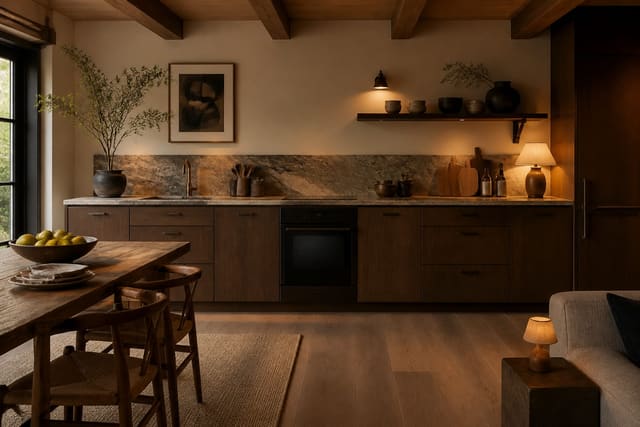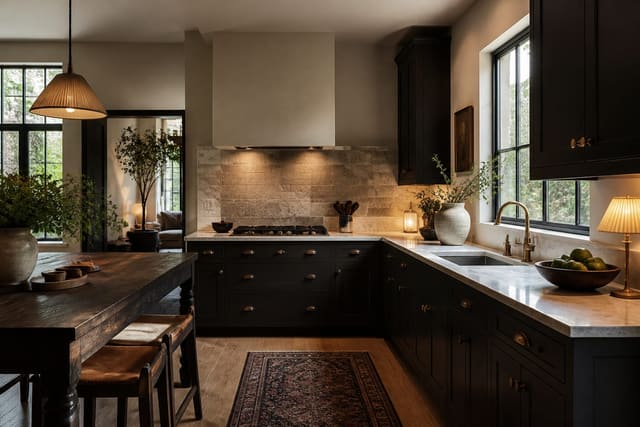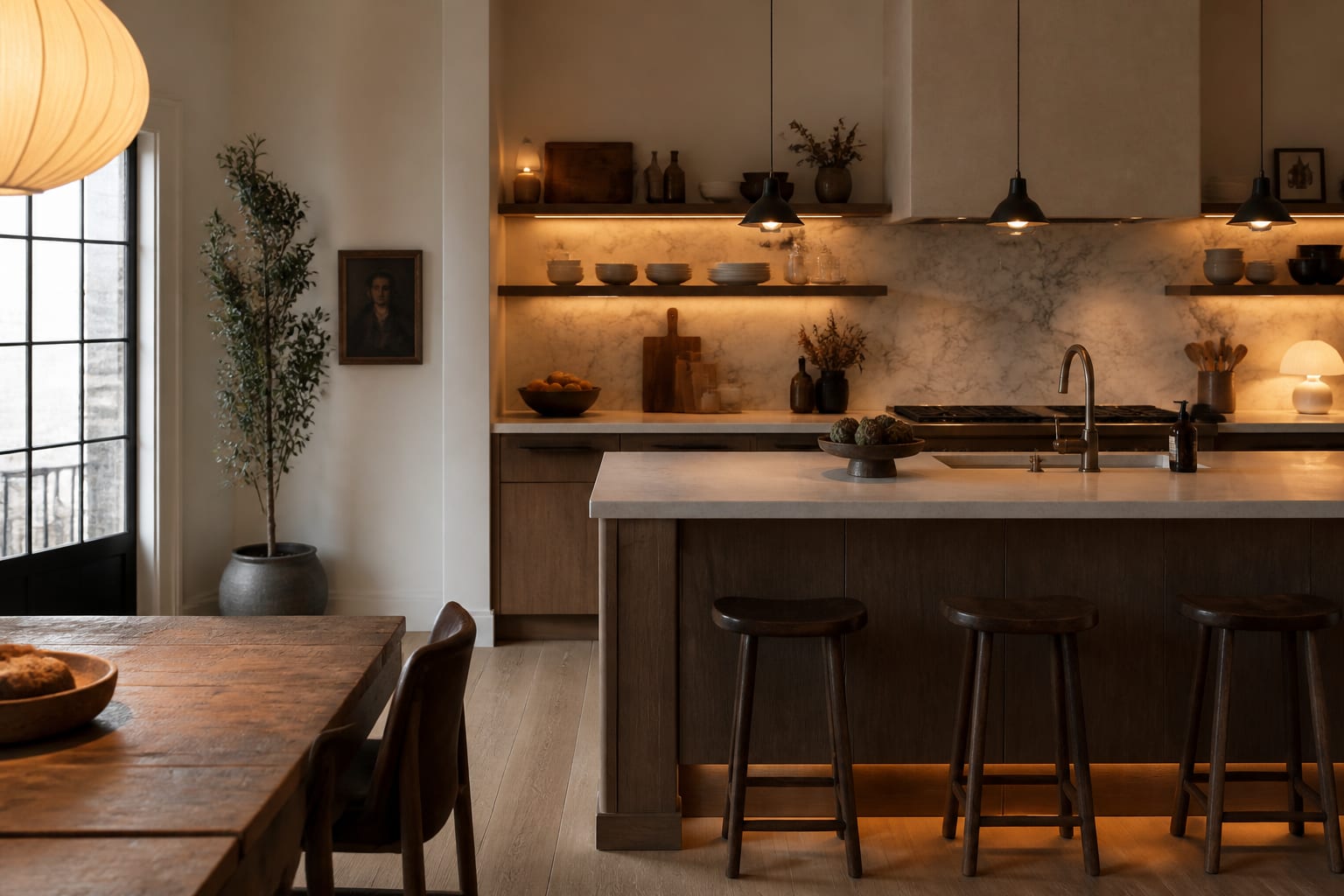
Open shelving is the most polarizing trend in kitchens, and the honest answer is that it works brilliantly in some homes and disastrously in others. Done right, it makes a kitchen feel airy, personal, and custom; done wrong, it becomes a dust-collecting clutter shelf you resent. The difference comes down to dimensions, placement, and ruthless discipline about what goes on display. This guide gives you the real specs for depth, spacing, and mounting, then covers what to store, how to mix shelves with closed cabinets, and the upkeep that keeps it looking intentional rather than chaotic.
Shelf depth, spacing, and how high to mount
The dimensions are what separate functional open shelving from a decorative afterthought, so get them right before anything else. For depth, 10 to 12 inches is the sweet spot, deep enough to hold dinner plates, bowls, and glasses securely but shallow enough that the shelf does not loom over the counter or steal headroom. Anything shallower than 10 inches struggles to hold standard plates safely, while anything past 12 inches starts to feel bulky and casts heavy shadow on the worktop below. For vertical spacing, plan 12 to 16 inches between shelves; 12 inches handles plates and short glasses, while 15 to 16 inches gives clearance for taller glasses, pitchers, and stacked bowls you need to lift out. Mount the lowest shelf so it clears the counter and any backsplash by at least 18 inches, matching the standard counter-to-upper-cabinet clearance, so you keep room to work and use small appliances beneath it. If you stack two or three shelves, keep the top one within easy reach, generally no higher than 72 inches to the top shelf, or you will need a stool for daily items and they will simply go unused. In a kitchen with 9-foot ceilings, that still leaves room for two or three well-spaced shelves above the counter. Measure your actual dishes before fixing the spacing, since a household of tall highball glasses needs more vertical room than one of short tumblers.
See also our guide to One Wall Kitchen Ideas for more on open shelving kitchen ideas.
Mounting and bracket choices that hold up
Open shelves carrying dishes hold serious weight, and a shelf that sags or pulls loose is both a hazard and an eyesore, so mounting is not the place to cut corners. A single shelf stacked with stoneware plates can easily exceed 40 pounds, so every shelf must anchor into wall studs or into solid blocking added behind the drywall during a renovation. Never rely on drywall anchors alone for a working kitchen shelf. For brackets, you have three broad choices. Visible metal brackets, in iron or brass, read industrial or traditional depending on finish and carry heavy loads dependably, making them the safe pick for a hardworking shelf. Floating shelves with a concealed internal bracket give the cleanest, most modern look, with the wood appearing to grow from the wall, but they demand a thick shelf, ideally 2 inches or more, to house the hidden rod and resist sagging across the span. Keep any unsupported floating span under about 36 inches, or add a hidden support, because long floating shelves droop under load over time. The third option, a simple ledge with a lip, suits cookbooks and lighter display. Match the shelf material to the load and look: solid hardwood like oak or walnut handles weight and ages well, while thick reclaimed timber adds character. Whatever you choose, level the shelves precisely, since open shelving makes even a slight tilt glaringly obvious against the horizontal lines of the cabinets and counter.
For a related angle on open shelving kitchen ideas, read L Shaped Kitchen Ideas.
What to store and how to style it
Open shelving only looks good when what sits on it earns the spot, so storage strategy is really styling strategy. The golden rule is to display what you use daily and what looks good doing it. Everyday dishes, bowls, mugs, and drinking glasses are ideal because constant use keeps them dust-free and the act of taking them down and replacing them is effortless. Group matching sets and stack them in neat columns rather than scattering mismatched pieces, since repetition reads as deliberate while variety reads as clutter. Mix in a few sculptural elements for warmth: a wooden cutting board leaning at the back, a couple of ceramic vessels, a small stack of cookbooks, and a plant or stems of greenery soften the rows of dishes. Stick to a tight palette, ideally whites, woods, and one or two accent tones, so the shelves read as a cohesive vignette rather than a yard sale. Leave breathing room; cramming every inch makes the shelves feel chaotic, whereas a little negative space around groupings makes them look styled. Keep the busy, mismatched, and unattractive items, the plastic containers, the random mugs, the cereal boxes, behind closed doors where they belong. Vary the heights and textures across a shelf, alternating stacks with a single tall object, so the eye moves along it pleasantly. The kitchens that pull off open shelving treat each shelf like a small still life, edited and intentional, not like raw extra storage.
Mixing open shelves with closed cabinets and upkeep
The smartest open shelving is rarely an entire wall of it, and the most livable kitchens use shelves strategically alongside closed storage. A common winning formula keeps the bulk of dishes, pantry goods, and ugly necessities behind closed lower cabinets and tall pantries, then opens just one wall or one stretch above the counter for display. That balance delivers the airy, custom look people want from open shelving while hiding the chaos people forget it exposes. Open shelves flanking a window, bracketing a range hood, or filling a single section beside otherwise closed uppers all read intentional and keep the practical storage out of sight. Now for the part the trend never mentions: upkeep. Open shelves near a cooktop collect a film of cooking grease and airborne dust, so items you rarely use will need washing before guests ever see them. The fix is to store only high-turnover pieces on open shelves, so daily use keeps them clean, and to position shelves away from the heaviest grease zone right beside the range if you can. Plan on a quick wipe-down of the shelves themselves every week or two and a deeper clean periodically. If you cook greasy food often or hate dusting, lean toward fewer open shelves and more glass-front cabinets, which give a similar light feel while sealing the contents from grime. Be honest about your habits before committing a whole wall to open display.
Here are the common mistakes to avoid: - Mounting shelves only into drywall anchors, so a load of stoneware plates eventually sags or tears loose. - Making shelves shallower than 10 inches, leaving dinner plates perched precariously on the front edge. - Cramming every inch with mismatched pieces, so the shelves read as cluttered rather than styled. - Placing open shelves right beside the range, where cooking grease films everything you put on display. - Spanning a floating shelf over 36 inches without hidden support, guaranteeing a visible droop under load. - Opening an entire wall instead of mixing a few shelves with closed cabinets that hide the everyday clutter.
Bring the look home with Re-Design
Open shelving is hard to picture until it is on your wall, and removing cabinet doors is not easily undone. Upload a photo of your kitchen to Re-Design and preview open shelves in place of your upper cabinets, testing depth, placement, and a mix of shelves with closed storage. Seeing how the open look reads against your backsplash and window helps you decide where shelves genuinely improve the room and where closed cabinets serve you better.
Frequently Asked Questions
How deep should kitchen open shelves be?
Aim for 10 to 12 inches deep. That range holds dinner plates, bowls, and glasses securely without the shelf looming over the counter or stealing headroom. Below 10 inches, standard plates perch on the front edge unsafely; past 12 inches, the shelf feels bulky and casts heavy shadow on the worktop. Match the depth to your largest everyday dishes.
Do open shelves get greasy and dusty?
Yes, especially near the cooktop, where a film of cooking grease and airborne dust settles over time. The practical fix is to store only high-turnover items that get used and washed often, position shelves away from the heaviest grease zone, and wipe the shelves every week or two. If you cook greasy food often, glass-front cabinets stay cleaner.
Should I replace all my cabinets with open shelving?
Rarely a good idea. The most livable kitchens mix a stretch of open shelves with mostly closed cabinets, keeping ugly necessities and rarely-used items hidden while displaying daily dishes. That balance gives the airy, custom look without exposing clutter or creating a heavy cleaning burden. Open one wall or one section, not the entire kitchen.