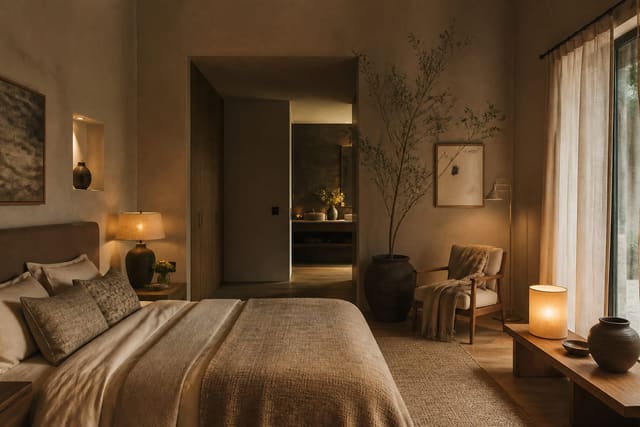
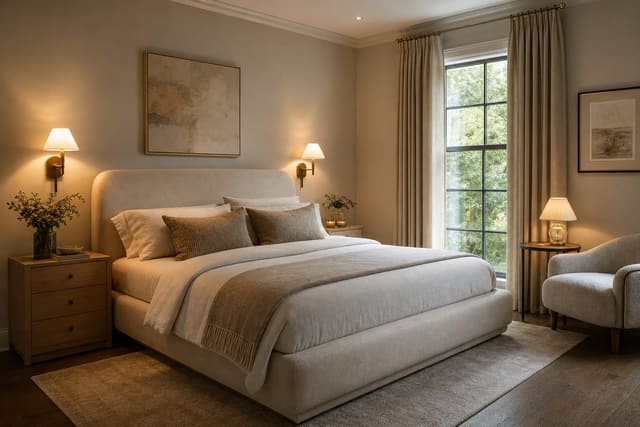
Organic modern bedroom ideas soften a clean, contemporary base with curved furniture, natural materials, and a warm earthy palette so the room feels grounded instead of sterile. Swap chrome and stark white for oak, plaster, boucle, and clay while keeping modern design's uncluttered discipline. The result is a calm, tactile retreat built to help you actually slow down and sleep.
How do you choose furniture for an organic modern bedroom?
Lead with a curved or arched upholstered headboard in warm oak or plush boucle. Its soft silhouette immediately relaxes the room and pulls the eye away from the boxy lines most bedrooms default to. Repeat rounded shapes throughout with soft-cornered or circular nightstands, a barrel-back reading chair, and a round mirror or pendant so the curve reads as intentional rather than random.
Keep furniture low and grounded: platform beds and short dressers make ceilings feel higher and the room more serene. Favor solid, sculptural pieces in natural wood with visible grain over glossy or heavily detailed ones, and let a few stand apart so their shapes are easy to read.
See also our guide to Warm Minimalist Bedroom Ideas.
What colors and finishes build the right palette?
Build the room around warm neutrals like sand, oatmeal, clay, terracotta, and soft taupe, then deepen it with olive, rust, or warm brown. These hues feel enveloping in a way cool grays and bright whites never do, and they wear well across seasons.
A limewash or matte plaster wall finish in a soft earthy shade adds handcrafted depth that flat paint lacks, catching light beautifully. Layer bedding within a narrow tonal range, a linen duvet, a chunky knit throw, a few textured cushions, so texture and tone create interest rather than bold pattern or contrast.
For a related take, read Small Master Bedroom Luxurious.
How do you layer natural materials and texture?
Combine smooth and rough surfaces deliberately: crisp linen sheets, a nubby wool throw, a jute or wool rug, and rattan or cane detail on a bench or headboard. This contrast is what keeps a calm room from feeling flat.
Repeat wood in several places, an oak bed, a walnut nightstand, a wooden tray, so it feels woven through the scheme. Stone, ceramic, and woven fiber add further texture without introducing loud color.
| Material | Where to use it | Effect |
|---|---|---|
| Oak or walnut | Bed frame, nightstand, tray | Warm, grounding repetition |
| Linen | Sheets, curtains | Crisp texture, soft light filtering |
| Wool or jute | Rug, throw | Cozy underfoot texture |
| Rattan or cane | Bench, headboard detail | Woven, organic contrast |
| Plaster or limewash | Walls | Handcrafted depth |
How should you handle lighting, plants, and decor?
Skip a single bright overhead and build light from a few low, warm sources: ceramic table lamps, a small reading sconce, and a dimmable pendant. This lets the room shift from morning brightness to a calm evening glow without glare.
Add one or two sculptural plants, a fiddle-leaf fig, olive tree, or trailing pothos, to bring living green into the palette without crowding corners. Keep decor restrained: a piece of nature-inspired art, the textiles already doing the work, and clear surfaces. Negative space around the bed and windows reinforces calm more than another accessory ever could.
Quick checklist: - Anchor the room with a curved or arched upholstered headboard in boucle or linen - Choose low platform beds and short dressers - Repeat rounded forms with circular nightstands, a barrel-back chair, and a round mirror - Finish walls in limewash or matte plaster in clay or sand - Layer linen sheets, a knit throw, and textured cushions in related earthy shades - Ground the bed with a wool or jute rug and soften windows with linen curtains - Add one sculptural plant to bring living green into the palette - Light with warm ceramic lamps and a dimmable pendant instead of harsh overheads
Bring the look home with Re-Design
Testing a look on your own room beats guessing from catalog photos. With Re-Design you can upload a picture of your bedroom and preview an organic modern scheme instantly, a curved headboard, clay plaster walls, a jute rug, against your real light and layout. Seeing it in your space first means you buy the pieces that genuinely fit, not the ones that only looked right online.
Frequently Asked Questions
What makes a bedroom organic modern rather than just modern?
Organic modern keeps modern design's clean, uncluttered base but softens it with curved forms, natural materials, and warm earth tones. Where plain modern can feel cool and hard-edged, the organic version adds tactile texture and rounded shapes for a grounded, soothing feel.
What colors suit an organic modern bedroom?
Draw from nature with sand, oatmeal, clay, terracotta, and taupe, deepened by olive, rust, or warm brown. These earthy tones feel enveloping and restful. Avoid stark white and cool gray, which work against the warm, grounded mood the style aims for.
How do I add texture without making the room cluttered?
Layer materials rather than objects. Mix linen, wool, jute, rattan, and wood so surfaces differ in feel while sharing a tonal family. Keep decorative items few and leave negative space, letting texture contrast create depth instead of clutter.
Do I need a curved headboard to get this look?
A curved or arched headboard is the fastest way to signal organic modern, but it is not mandatory. You can achieve the same softness with rounded nightstands, an arched mirror, and curved lighting if your existing bed frame is straight-lined.