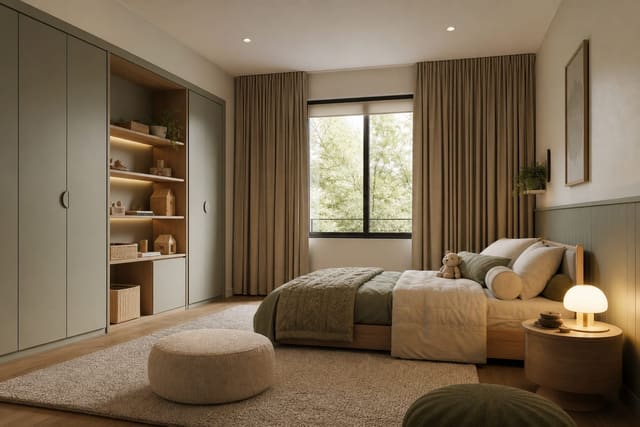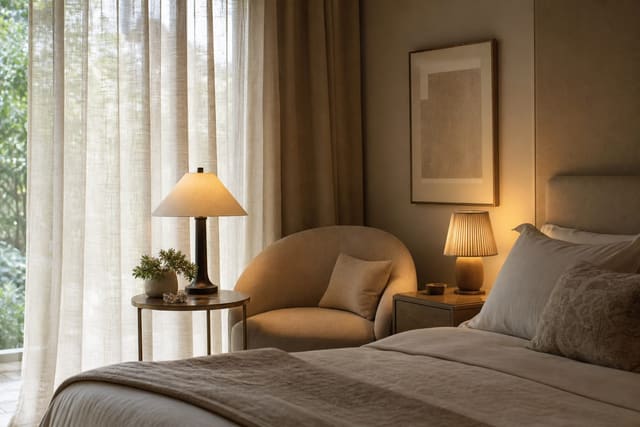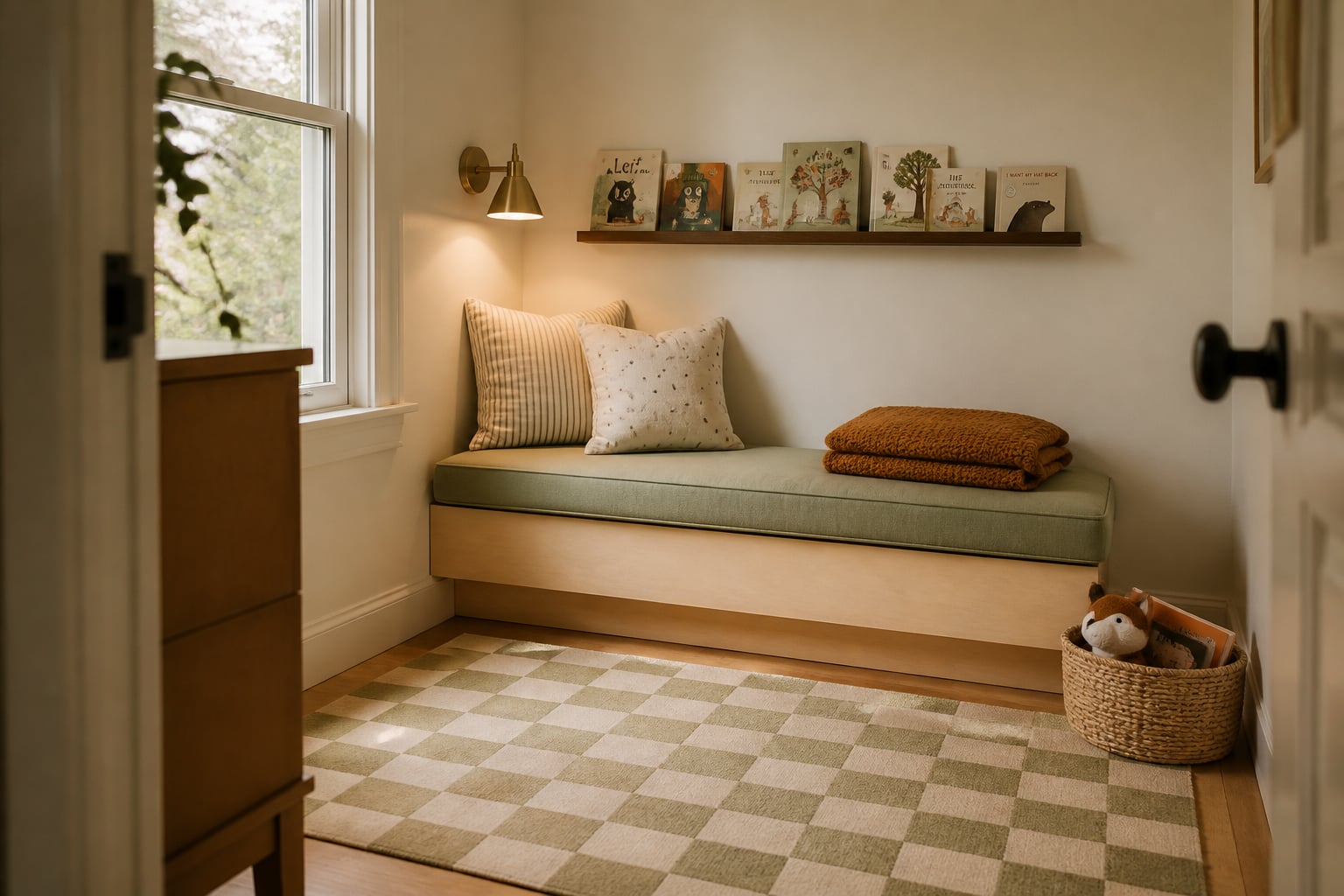
A kids reading corner works when you give a child a soft seat at their height, warm 2700K light, front-facing books within reach, and one clear edge—rug, shelf, or curtain—that signals "this is where stories happen." These kids reading corner ideas work in bedrooms, playrooms, hallways, and living rooms alike.
What makes a kids reading corner feel inviting?
A reading nook succeeds when a child-size seat, warm task light, visible books, and one clear edge come together. The edge can be a rug, curtain, low shelf, or painted panel, but it has to be obvious.
Match seat height to age: 10 to 12 inches for preschoolers, 14 to 16 inches for early elementary. A floor cushion should be at least 24 inches wide for one child, or 36 inches if a sibling or parent joins.
Keep the palette quieter than the book covers. Picture books already bring color, so a muted wall, a natural basket, and one playful print beat a themed explosion. For sensitive kids, apply the same restraint used in a sensory-friendly bedroom for children: fewer competing shapes, softer contrast, and calming materials.
Which seat works best for your child?
Design around how your child actually reads, not the chair you wish they used.
- Wall-hugging seat for tight rooms. A 28 to 42 inch upholstered chair, foam lounger, or bench fits beside a dresser or under a window; push it against a wall for back support and a clear path.
- Floor seating for kids who read near toys. A dense-pad rug with two firm pillows supports lying down and stacking books; leave 24 inches of open floor so it doesn't feel like a trap.
- One adult perch for bedtime reading. Borrow the logic of a bedroom sitting area design: a compact chair, small table, and lamp serve both parent and child without taking over the room.
Skip oversized beanbags unless the cover is washable — they swallow small kids, block doors, and collect crumbs. A firmer cushion with a removable cover works better.
Test this on your own room photo with ReDesign before finalizing the layout; keep the room structure, daylight, and main path visible so the preview reflects your actual space.
How do you place books, light, and boundaries in real rooms?
Books, light, and comfort all need to sit within arm's reach, or the nook turns decorative.
Mount two or three picture ledges with the lowest shelf 18 to 24 inches off the floor for young children; for older kids, a 30 to 42 inch bookcase keeps the top shelf reachable. Rotate 12 to 20 visible titles instead of displaying everything.
Light should be warm and aimed at the page, not the eyes. Use a 2700K lamp or sconce mounted 18 to 24 inches above the seat back, and secure any exposed cords with channels away from climbing zones.
Define the edge with what fits the room: a 4x6 rug beside a bed, a 30-inch bench with shelves in a hallway (keep 32 inches of path clear), or a low cart or curtain panel in a shared living room. In small rooms, skip the tent-plus-chair-plus-canopy pileup — a slim shelf, floor cushion, and wall light often read as more luxurious than a crowded corner, the same logic behind making a small master bedroom feel luxurious.
What mistakes ruin a kids reading corner?
- Placing it too far from the bed. If bedtime reading is the habit, keep the nook within 3 to 6 feet of the bed, or fold the bed itself into the reading zone.
- Letting open shelves hold everything. Reserve front-facing shelves for current books; hide crafts and loud toys in opaque bins.
- Choosing fragile materials. Swap dry-clean fabrics for washable cotton canvas, performance velvet, or denim, and pick a low-pile rug (about 1/4 inch) that's easy to vacuum.
- Over-enclosing the space. Full tents trap heat and dust and block a parent from sitting nearby; try a half canopy or open curtains first.
- Designing only for toddlers. Use adjustable shelves and a cushion sized for longer legs so the corner still works in a few years.
How can AI help you preview the corner before you buy?
Small additions crowd a child's room fast — a chair can block a closet swing, a canopy can lower the ceiling, and a rug can clash with the bedding once everything is in one frame.
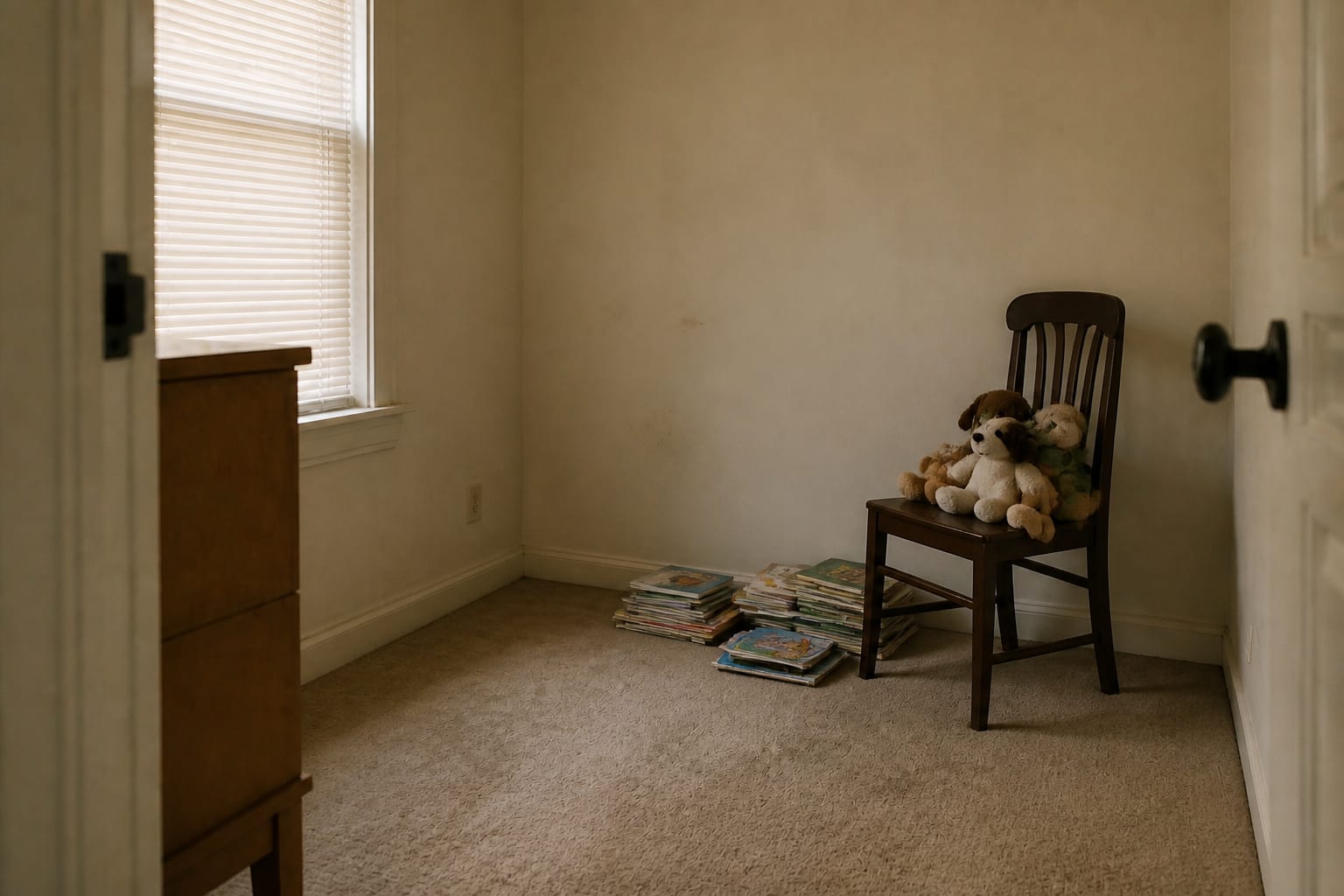
Upload a photo taken from a corner that shows the bed, window, and floor path, keeping the real furniture in place. Ask for a child-size nook with 2700K lighting, low front-facing shelves, washable textiles, and a defined rug or wall boundary.
Test three versions — floor cushion, small chair, and bench or window-side if the room allows — changing one variable at a time so you can see whether the seat, shelves, rug, or light is doing the work. Check walking clearance, cord placement, book reach, and whether an adult can join comfortably.
The best version is the one where a child can grab a book, find the light, settle in, and leave the room calm. Use the AI design complete guide for the broader upload workflow, then return here for scale and layout specifics.
Frequently Asked Questions
What chair or seat works in a kids reading corner?
Use a 28-inch bean bag, a child-scale armchair, or a low floor cushion with back support — anything where the child's feet rest on the floor and the book reaches eye level without arm strain.
How tall should a kids bookshelf be in a reading corner?
Cap the bookshelf at 36 to 42 inches so the child can pull books down without climbing. Front-facing display ledges, 5 to 7 inches deep, sell more books than spine-out shelving for kids under 8.
What lighting works in a kids reading corner?
Use a warm 2700K plug-in lamp with a tap or rocker switch the child can reach; overhead lighting alone is too flat for sustained reading and creates glare on glossy book covers. Chair pullout, walkway width, glare, and storage reach matter more than a perfect catalog angle.
Where in a room should the reading corner go?
Pick the calmest corner away from the toy bins and door swing — a window corner, a closet recess, or a low-traffic wall next to the bed work well. A corner near the play zone competes with toys and rarely wins.
How do I keep the reading corner from turning into a stuffed-animal pile?
Use one lidded bin for stuffed animals away from the chair, keep only one or two companions on the seat itself, and rotate visible books every two weeks so the corner stays the place to read, not the place to dump.
> Try this: Ready to see this on your own room? Open ReDesign and run the preview before you buy, paint, drill, or move furniture.
Three transformations to try
1. Bean bag with front-facing book ledges and tap lamp
2. Window-corner cushion bench with 36-inch low bookshelf
3. Closet-recess reading nook with curtain and string lights